Alameda County Passes Laura's Law Unanimously
(Nov. 18, 2015) The Alameda County’s Board of Supervisors this week adopted Laura’s Law by a unanimous vote making it the fourteenth California county to add this valuable tool to the list of treatment options for people with serious mental illness.
 This vote is a victory for mental health advocates who have long called for passage of assisted outpatient treatment (AOT) in their county. This vote is a victory for mental health advocates who have long called for passage of assisted outpatient treatment (AOT) in their county.
“In Alameda every 48 minutes someone is placed in a costly emergency psychiatric evaluation because he or she has been deemed a danger to himself or herself or others,” wrote Alameda Supervisor Wilma Chan in the San Francisco Chronicle earlier this year. “This is the highest rate in the state of California.”
“I have watched paranoid schizophrenia rob my son of all personal dignity, of all ability to gauge what is real,” wrote Gloria Davidson in the hope that her story might reinforce the desperate need for Laura’s Law in Alameda County. “On the continuum of illness, he has been robbed of his ability to choose a path that creates the life his supporters now have.”
The law is named after Laura Wilcox, a university student who was shot to death while she was volunteering in a mental health clinic by a man with untreated schizophrenia. The law was passed to provide a pathway to recovery for the individuals most at risk for violence, incarceration, homelessness and other ills because they struggle to stay in treatment.
Even though Alameda will make fourteen counties using the law, families in the state’s other forty-four counties that have not yet implemented the law remain virtually powerless to help their loved ones and communities escape the consequences of untreated severe mental illness.
Visit our Laura’s Law page for useful tips and information about the law.
To comment, visit our Facebook page.
Visit our blog archive to read all our recent posts.
The Criminalization of Mental Illness Can No Longer Be Ignored
(Nov. 17, 2015) People suffering with severe mental illness are criminalized at an alarming rate in our country. This year alone has brought many tragic encounters between corrections staff and inmates with mental illness. Here are just a few examples:
 Natasha McKenna was arrested early this year on a charge of assaulting a police officer while suffering a psychotic break due to untreated schizophrenia and bipolar disorder. The 37-year-old mother was taken to the Fairfax County jail in Virginia and had been there for about a week before she was shocked four times with a Taser during an altercation with jail deputies. McKenna lost consciousness following the struggle and died four days later, on Feb. 7. Natasha McKenna was arrested early this year on a charge of assaulting a police officer while suffering a psychotic break due to untreated schizophrenia and bipolar disorder. The 37-year-old mother was taken to the Fairfax County jail in Virginia and had been there for about a week before she was shocked four times with a Taser during an altercation with jail deputies. McKenna lost consciousness following the struggle and died four days later, on Feb. 7.
A twenty-five-year-old diagnosed with bipolar disorder, Keaton Farris was passed through four jails while awaiting a bed at the overburdened Washington state psychiatric hospital. Farris died of dehydration and malnutrition while behind bars. “Keaton died because he was labeled a behavioral problem, a danger, and an inconvenience,” wrote the Daily Herald. ”He died while he was in a mental health crisis and unable to care for himself. He needed help from the people paid to care for him in the jail.”
Arrested in April for stealing five dollars’ worth of junk food from a 7-Eleven, 24-year-old Jamycheal Mitchell was ordered to a state psychiatric hospital to be treated for paranoid schizophrenia. But like an increasing number of the mentally ill, he sat in the Hampton Roads regional jail in Portsmouth, Virginia for months as he waited for a bed to open. While incarcerated, Mitchell dropped a horrifying 65 pounds. Then, on August 19, 2015, Mitchell’s severely emaciated body was found unresponsive on the floor of his cell. He had starved to death while in jail custody.
An inmate with mental illness at the Santa Clara County Jail in California, 31-year-old Michael James Tyree died in late August at the hands of three correctional officers in what Santa Clara County Sheriff Laurie Smith called a “brutal murder.” According to reports, three deputies entered Tyree's single-person cell and viciously beat him. The county medical examiner-coroner said Tyree died of internal bleeding from multiple blunt force injuries.
The criminalization of mental illness can no longer be ignored.
Yesterday, we launched our first-ever, crowd-fundraising campaign to end the criminalization of serious mental illness across the country. The Treatment Advocacy Center is one of the only organizations giving a voice to the voiceless and working to fix our broken mental health system.
Please help us in this fight. Make a donation today.
To comment, visit our Facebook page.
One Year after Tanisha Anderson's Death
(Nov.16, 2015) Last Thursday marked one year since the death of Tanisha Anderson, a 37-year-old mother diagnosed with bipolar disorder, who was killed during an altercation with Cleveland police (“Vigil marks anniversary of Tanisha Anderson’s fatal encounter with Cleveland police,” Cleveland.com, Nov. 12).
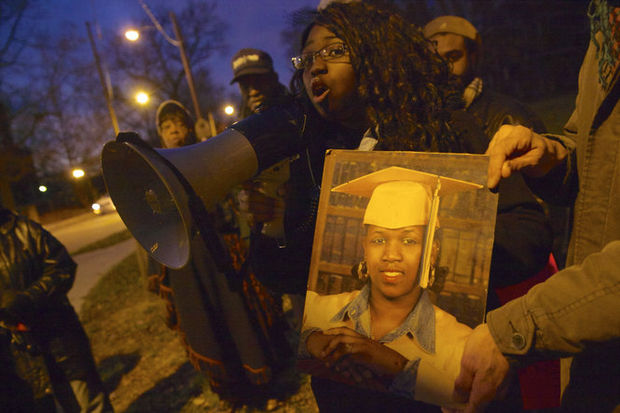 Tanisha Anderson hasn't been forgotten. A vigil held on the anniversary of her death brought 30 people huddled together in the cold—near the neighborhood home where officers fatally restrained Anderson—to keep her memory alive. Tanisha Anderson hasn't been forgotten. A vigil held on the anniversary of her death brought 30 people huddled together in the cold—near the neighborhood home where officers fatally restrained Anderson—to keep her memory alive.
"She was an extremely loving person and an extremely giving person. She just wanted to please," said Jasmine Johnson, Anderson's sister.
"Losing her to a senseless act of violence...blows my mind every day," Johnson said. "There are so many things [the police] could have done to avoid this."
Officers responded to Tanisha Anderson's home last November after her family called 911 for help.
Anderson was behaving erratically due to untreated severe bipolar disorder. The officers who arrived at the home were supposed to take Anderson to the hospital, where she would undergo a mental health evaluation. But, as they escorted Anderson to the back of the police cruiser, she became afraid and refused to get inside.
According to police reports, Anderson struggled with the officers and kicked at them, and then suddenly went limp. However, Anderson's brother said he watched as one of the officers used a takedown move to put her face down on the pavement.
The Cuyahoga County medical examiner ruled that Anderson was killed when police restrained her in a prone position. Heart disease and bipolar disorder were also cited as factors that contributed to her death.
The tragic encounter occurred just weeks before the U.S. Department of Justice released the results of its investigation that found people with mental illness are subject to cruel and unnecessary force at the hands of poorly trained Cleveland law enforcement.
The city and the Justice Department have signed a deal that aims to improve how officers respond to mental health crises, among other department overhauls.
The memorandum of understanding with the Alcohol, Drug Addiction and Mental Health Services Board of Cuyahoga County outlines reforms including the creation of a Mental Health Response Advisory Committee that will help police develop relationships and build support among the community and mental health providers.
The memorandum also mandates that all officers, call-takers and dispatchers receive crisis intervention training. Committee members will conduct annual reviews of the police department's crisis intervention program to determine its effectiveness, according to the memorandum.
It remains to be seen what, if any, impact the memorandum will have upon the interaction between law enforcement and people with severe mental illness in Ohio.
However, one thing is for certain: Tanisha Anderson’s death was and remains a tragedy, and it must never be forgotten.
To comment, visit our Facebook page.
Ignoring Homelessness Is Not a Solution
(Nov. 13, 2015) Don’t give homeless people handouts, said New York City Police Commissioner Bill Bratton this week in what he believes is a logical solution to the city’s homeless problem (“NYPD Commissioner Bratton says panhandlers would move on if they didn’t get money –but advocate says ‘he’s mistaken’,” New York Daily News, Nov. 10).
 “My best advice to the citizens of New York City . . . . Don’t give,” Bratton said, speaking to reporters at City Hall on Monday about the rampant homeless population in the city. “My best advice to the citizens of New York City . . . . Don’t give,” Bratton said, speaking to reporters at City Hall on Monday about the rampant homeless population in the city.
“One of the quickest ways to get rid of them is not to give to them,” he added.
But advocates for the homeless and mentally ill recognize the commissioner’s remarks are uninformed at best and heartless at worst.
“If he thinks the number of people in need is going to diminish because people don’t give, he’s mistaken,” said Mary Brosnahan, executive director of the Coalition for the Homeless. Brosnahan called for more supportive services.
Of course, New York City’s homeless problem is a multi-faceted problem that deserves a multi-faceted solution. But, given the high number of homeless who suffer from untreated severe mental illness, a common-sense solution is to eliminate barriers to mental illness treatment.
People with untreated serious mental illness comprise one-third, or 200,000 people, of the estimated 600,000 homeless population, and an even higher percentage among homeless women and among individuals who are chronically homeless.
In many cities such as New York, homeless people with severe psychiatric illnesses are now an accepted part of the urban landscape and make up a significant percentage of the homeless who ride subways all night, sleep on sidewalks, or hang out in the parks. The quality of life for these individuals is abysmal. Many are victimized regularly.
Surely, those who call the streets home in the “City of Dreams” - many of whom suffer with untreated and severe mental illness – once dreamt of a different life for themselves.
It may be easy to turn a blind eye to the homeless epidemic in New York, as Commissioner Bratton suggests, but the conscionable thing to do is to help.
Read our 2014 backgrounder on serious mental illness and homelessness to learn more.
(Photo: Christian Science Monitor/Getty)
To comment, visit our Facebook page.
Visit our blog archive to read all our recent posts.
Treatment, Not Jail, for Veterans – guest commentary
(Nov. 11, 2015) The brave men and women of our Armed Forces never fail our nation in battle, and we have a duty not to fail them after they re-enter civilian life. In particular, we must not fail those who come home and become involved with the criminal justice system. Many of these veterans need treatment, not incarceration. The good news is that a grassroots movement across America has given rise to more than 200 Veterans Treatment Courts designed to give justice-involved veterans a better way forward.
 One defendant before a Veterans Treatment Court was "Alison," an Afghanistan war veteran from Grafton County. After leaving military service, she experienced acute onset of schizophrenia, which went undiagnosed and untreated. One day, her car veered off the road and became stuck in a snowbank. Police arrived to assist, but Alison flashed back to Afghanistan and believed they were a threat to her. She became belligerent and was charged with assaulting a police officer and resisting arrest. One defendant before a Veterans Treatment Court was "Alison," an Afghanistan war veteran from Grafton County. After leaving military service, she experienced acute onset of schizophrenia, which went undiagnosed and untreated. One day, her car veered off the road and became stuck in a snowbank. Police arrived to assist, but Alison flashed back to Afghanistan and believed they were a threat to her. She became belligerent and was charged with assaulting a police officer and resisting arrest.
But instead of being tried and jailed, she was referred to a Veterans Treatment Court where a Veterans Justice Outreach specialist, or VJO, worked with the court to arrange an array of services, including psychiatric assistance, medication monitoring and employment assistance. Alison signed a contract, agreeing to receive mental health treatment for at least a year and to be monitored by the court. Nearly a year later, Alison has "graduated" from the program, continues to receive treatment and has not re-entered the criminal justice system.
However, the Veterans Justice Outreach program faces an uncertain future. It was created by the VA as an innovative way to address the crisis of countless thousands of veterans who were being locked up and denied treatment. But, this is an ad hoc program with no clear legislative authorization. A new President or VA secretary could abruptly cancel it.
This is why I have introduced the bipartisan Veterans Justice Outreach Act, which would recognize the VA's authority to work with veterans prior to incarceration and would recognize in the U.S. Code the ongoing work of VJOs in all 50 states. This would give permanence and stature to the Veterans Justice Outreach program.
It is a sacrosanct principle, instilled in members of our Armed Forces: Never leave a warrior behind on the battlefield. This is true in a war zone, and it should be true in the battles that some veterans face after they return to civilian life. Those who have run-ins with the law deserve treatment, not incarceration.
U.S. SENATOR JEANNE SHAHEEN
NEW HAMPSHIRE
Read the entire column here.
To comment, visit our Facebook page.
Visit our blog archive to read all our recent posts.
"He Could Have Been Anyone's Son"
(Nov. 10, 2015) It is a sad reality that mental illness is often criminalized in this country, as individuals suffering with severe psychiatric disorders are arrested, typically for petty offenses, and placed in a criminal justice system ill-equipped to help them. By default, jails and prisons have become our nation’s “defacto mental institutions” and deal with our most vulnerable citizens.
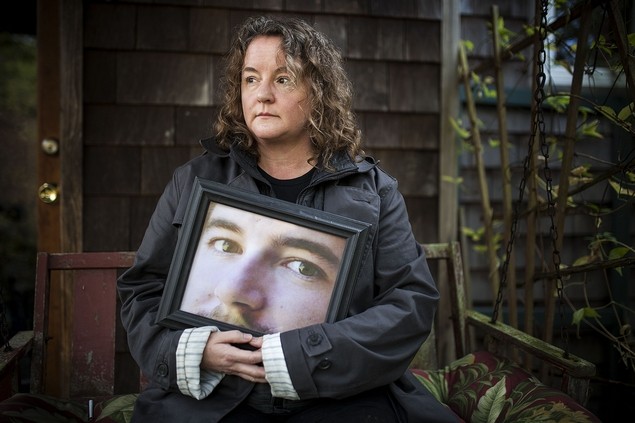 “What Jail Can’t Cure,” a new, four-part special report by the Daily Herald, takes a closer look at this phenomenon as it occurs in the state of Washington – where the odds are 3.1 to 1 that a person with mental illness will be placed behind bars rather than in a public psychiatric bed. “What Jail Can’t Cure,” a new, four-part special report by the Daily Herald, takes a closer look at this phenomenon as it occurs in the state of Washington – where the odds are 3.1 to 1 that a person with mental illness will be placed behind bars rather than in a public psychiatric bed.
Part one of the series chronicles the life and death of Keaton Farris, a 25-year-old diagnosed with bipolar disorder. He could have been anyone’s son.
Keaton Farris was in the throes of a mental health crisis, but was behind bars for a property crime. He was passed through four jails while awaiting a bed at the overburdened state psychiatric hospital. Then, while in jail custody last April, Farris died of dehydration and malnutrition.
Jail officials later claimed they didn't know Farris was mentally ill because they didn’t get his medical records and he didn't arrive with any medication.
But, how could that be? Farris’ parents said they had frequently called to check on their son and told corrections officers he was bipolar and needed his medication.
“I told them if he got his medication, they'd like him,” Farris’ father said. “I think he probably would have been immediately manageable if he'd been given his medication.”
An investigation into Farris’ death found that corrections officers had documented that Keaton refused water and meals, talked to himself, cried in the corner of his cell, and was found naked on the floor of his cell pretending to swim in a half-inch of cold water. Yet no one called for a mental health professional.
“Keaton died because he was labeled a behavioral problem, a danger, and an inconvenience,” concluded the Daily Herald. ”He died while he was in a mental health crisis and unable to care for himself. He needed help from the people paid to care for him in the jail.”
Farris' story is not an isolated incident. There are now 10 times more individuals with serious mental illness in prisons and jails than there are in state mental hospitals, according to a 2014 Treatment Advocacy Center report.
The consequences of failing to treat mentally ill inmates are usually harmful and sometimes tragic. The ultimate solution to this problem is to maintain a functioning public mental health treatment system so people with serious mental illness do not end up in prisons and jails in the first place.
Read our 2014 report, “The Treatment of Persons with Mental Illness in Prisons and Jails: A State Survey,” to learn more.
(Photo: Tiffany Ferrians holding a portrait of her son, Keaton Farris/The Daily Herald)
To comment, visit our Facebook page.
Visit our blog archive to read all our recent posts.
LOCATION, LOCATION, LOCATION: “GOLD–STANDARD” SCHIZOPHRENIA TREATMENT VARIES BY STATE
Dramatic differences exist in how widely clozapine – widely regarded as the “gold standard” of schizophrenia treatment – is prescribed from state to state, according to a new report published by the Treatment Advocacy Center.
“Clozapine for Treating Schizophrenia: A Comparison of the States” found that, in South Dakota, nearly 16% of individuals with schizophrenia on Medicaid receive clozapine (trade name: Clozaril). In Nevada, Oregon and Louisiana, only 2% do.
“The use of clozapine can be regarded as a measure of the effort being made by a state to treat individuals with schizophrenia who are most in need of treatment,” concluded the report authored by Treatment Advocacy Center founder E. Fuller Torrey, MD, and three distinguished co-authors.
And based on Medicaid and pharmacy prescription data, not much effort is being made.
Only six states were found to be reaching what a prominent psychopharmacologist calls the “bare minimum” of treating at least 10% of the candidate population with clozapine. At the other end of the spectrum, in nine states, fewer than 3% of candidates were receiving it.
This compares with Germany, where 20% of the candidate population receives clozapine; China, 30%; and Australia, 35%. Nationwide in the US, fewer than 5% of individuals with schizophrenia are being treated with clozapine.
Click here to see where your state ranks.
Clozapine is the only antipsychotic medication ever approved by the FDA for the prevention of suicide and for treating the 20-30% of people with schizophrenia whose symptoms are treatment-resistant. It is considered the most effective medication in particular for individuals who are suicidal or violent, half of whom improve on the drug.
At the same time, clozapine must be discontinued in 1 out of every 6 individuals because of side effects, according to the report. The most serious side effect is a condition called neutropenia, in which white blood cells are significantly reduced. Neutropenia is extremely rare – occurring in about 8 in every 1,000 individuals taking the medication – but can result in death if unaddressed. Individuals taking clozapine undergo regular blood testing to monitor their white blood cell counts.
Read the full report, “Clozapine for Treating Schizophrenia: A Comparison of the States,” to learn more.
The study is based on an analysis of data collected by the Institute for Health, Health Care Policy and Aging Research at Rutgers University for the Stanley Medical Research Institute, a supporting organization of the Treatment Advocacy Center. It is co-authored by Michael B. Knable, DO and Cameron Quanbeck, MD, members of the Treatment Advocacy Center board of directors, and John M. Davis, MD, professor of psychiatry at the University of Illinois at Chicago and a member of the organization’s Psychiatric Advisory Board.
A Major Victory for Mental Health Reform
(Nov. 6, 2015) The Helping Families in Mental Health Crisis Act (HR 2646) made it out of the health subcommittee markup Wednesday with all provisions intact to help the most severely mentally ill.
 Introduced by Representatives Tim Murphy (R-PA) and Eddie Bernice Johnson (D-TX), this landmark bill has the tremendous bipartisan support of 162 Representatives, and focuses on mental health reform for those with severe mental illness and their families who are struggling to get necessary care for their loved one. Introduced by Representatives Tim Murphy (R-PA) and Eddie Bernice Johnson (D-TX), this landmark bill has the tremendous bipartisan support of 162 Representatives, and focuses on mental health reform for those with severe mental illness and their families who are struggling to get necessary care for their loved one.
“The whole point of advancing mental health reform is to help people most in need — the severely mentally ill, particularly people who may not understand they have an illness,” said Treatment Advocacy Center Executive Director John Snook. “Keeping these vital provisions intact means that for the first time, evidence-based mental health services will be targeted to help those with severe mental illness and the families who care for them.”
Key provisions for the most severely ill that will remain in the bill as it advances include:
- Creates an Assistant Secretary of Mental Health and Substance Use Disorders to coordinate efforts and elevate the importance of mental health and severe mental illness in the federal government;
- Awards funding to states and local jurisdictions to implement lifesaving, evidence-based treatment programs, called “assisted outpatient treatment” (AOT) laws for people who are too sick to maintain treatment themselves;
- Reforms the IMD exclusion to increase the availability of psychiatric inpatient beds; and
- Clarifies HIPAA to ensure mental health professionals are legally permitted to share critical diagnostic criteria and treatment information with parents or caregivers of patients with serious mental illness.
At yesterday’s markup, lawmakers heard from an audience of families who have felt powerless to prevent their loved ones’ deterioration.
Mothers of children battling mental illness were among those who attended the committee markup to show their support for the bill, wearing neon pink stickers that said “Show Compassion Not Politics” urging members to keep provisions that would protect their loved ones.
Tanya Shuy, a Maryland resident who lost her 26-year-old daughter, Caitlyn, to suicide this year said she is determined to see a change in the system that sent her daughter to the grave.
Maintaining the bill’s focus on severe mental illness during the markup process was one of the most important steps toward meaningful mental health reform. After nearly 12 hours, the bill moved to the Energy and Commerce Committee with a bipartisan vote of 18 ayes and 12 nays.
To become law, the Helping Families in Mental Health Crisis Act also requires approval by the Energy and Commerce Committee, the House of Representatives, the Senate, and President Obama.
The Treatment Advocacy Center is among the many groups who applaud Representatives Murphy and Johnson. We also applaud the mental health advocates and families affected by serious mental illness for rallying together during this watershed moment for mental health reform and giving a voice to the voiceless.
To comment, visit our Facebook page.
Visit our blog archive to read all our recent posts.
“We Need Action, Not Silence”
(Nov. 4, 2015) “The body count is always climbing,” Representative Tim Murphy (R-PA) reminded colleagues today at the health subcommittee markup of the Helping Families in Mental Health Crisis Act (HR 2646). “We need action, not silence” (“Congress clashes over mental health laws: ‘The body count is always climbing',” Media General, Nov. 4).
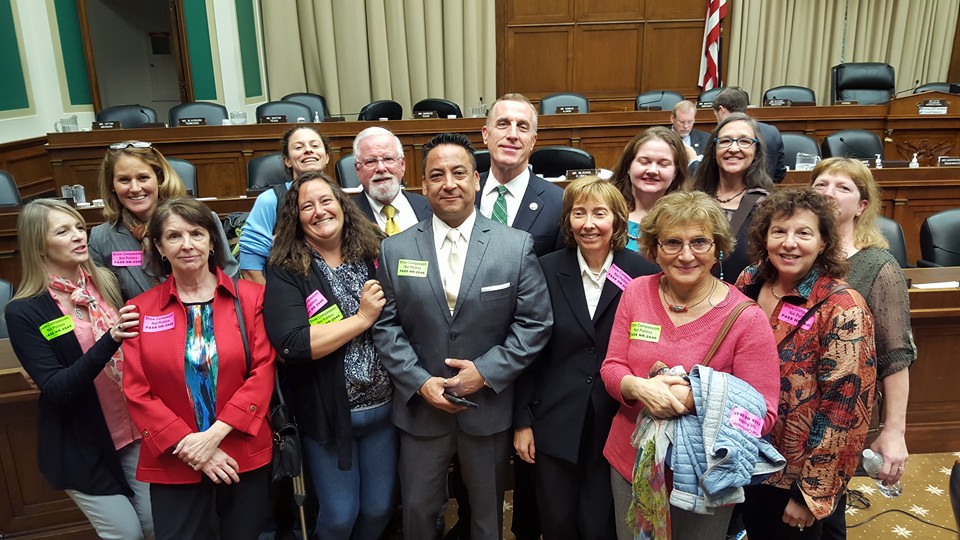 Mothers of children battling mental illness were among those who attended the committee markup to show their support, wearing neon pink stickers urging members to pass Helping Families. Mothers of children battling mental illness were among those who attended the committee markup to show their support, wearing neon pink stickers urging members to pass Helping Families.
Tanya Shuy of Maryland was among them. She lost her 26-year-old daughter Caitlyn to suicide this September. Less than two months later, she is determined to see a change in the system she says sent her daughter to the grave.
“The biggest problem was HIPAA,” Shuy said. Despite her daughter receiving inpatient treatment for suicidal ideation, Shuy explains, “No doctors would speak to me. The hospital won’t speak to me…I don’t have a doctor who’s told me, ‘This is what your daughter had.’”
“That’s why I support this bill,” Shuy said.
The current version of the Helping Families in Mental Health Crisis Act aims to clarify that mental health professionals are legally permitted to share critical diagnostic and treatment information with the parents or caregivers of patients experiencing serious mental illness.
Rep. Murphy has already gathered 158 cosponsors for his landmark bill, coauthored by Representative Eddie Bernice Johnson (D-TX), and says it will deliver resources for Americans in desperate need of mental health treatment, clear HIPAA red tape for their families, institute a mental health office in the Department of Health and Human Services, and free up federal dollars for additional mental health research and assistance.
Today will bring a first vote for the legislation by the full health subcommittee. To become law, it would also require approval by the Energy Committee, House of Representatives, Senate and President Obama.
The Treatment Advocacy Center is among those who thank Representative Murphy and all of the mental health advocates and families affected by serious mental illness for rallying together during this watershed moment for mental health reform and giving a voice to the voiceless.
To comment, visit our Facebook page.
Visit our blog archive to read all our recent posts.
A Mental Health Plan with Promise – guest commentary
(Nov. 3, 2015) It is a cycle we all know too well: a breaking news alert of an incident of mass violence in a small town or on a college campus closely followed by reports of the perpetrator's history of mental illness. Political leaders are quick to tweet prayers to the victims' families, and rail over laws on mental health or gun control. But no tangible commitments are made or action taken, and the legislative effort is soon forgotten.
While the vast majority of individuals with serious mental illness are non-violent, we have learned that many individuals who committed mass violence lacked the treatment they needed and deserved. In many instances, perpetrators of mass violence sought mental health treatment prior to turning to aggression. But oftentimes, because of federal barriers and archaic regulations, access was either denied or even unavailable, and their illness went untreated.
Federal policy is to blame for the shortage of psychiatric beds, leaving individuals with serious mental illness nowhere to go. These men and women in need of medical care are cast aside, left alone on a park bench, locked up in a jail cell or left in the shadows of a homeless shelter, where their illness only worsens.
Our mental health system is in crisis, and it has been for several decades. To say otherwise is offensive to the millions of American families and caregivers who have been trapped in a cruel system that shut them out as their loved ones deteriorate. While the federal government spends approximately $130 billion each year on mental health, basic services are not available for patients in need of care.
Together, we have worked on a bipartisan crisis mental health bill to provide millions of Americans treatment before tragedy.
The Helping Families in Mental Health Crisis Act empowers parents and caregivers to access care before a mental health condition becomes a mental health crisis; fixes shortages of inpatient beds; helps reach underserved and rural populations; expands the mental health workforce; drives evidence-based care; provides alternatives to institutionalization; integrates primary and behavior care; increases physician volunteerism; advances critical medical research; and puts teeth into the existing parity laws that require health insurers to cover mental health and substance abuse care in the way they cover physical health care.
Quite simply, this legislation provides us the needed tools to save lives. Every person has a right to treatment, and a right to be well. Our bill not only has widespread bipartisan support, it has also garnered endorsements from nearly every police and mental health organization in this country. Expressing our grief and condolences are important and should happen, but millions of Americans deserve more than these gestures. In moments like this, leaders take action. We urge every congressman and congresswoman to join us in supporting the Helping Families in Mental Health Crisis Act. The time is now.
REPRESENTATIVE TIM MURPHY (R-PA)
REPRESENTATIVE EDDIE BERNICE JOHNSON (D-TX)
Read the column here.
(Photo: Donald Lee Pardue/Flickr)
To comment, visit our Facebook page.
Visit our blog archive to read all our recent posts.
|
|