Three Years after Sandy Hook, Need for Mental Health Reform Ever–Growing
(Dec. 14, 2015) Today marks the 3-year anniversary of the Sandy Hook Elementary School shooting that took 28 lives and injured many more. Since 2012, mass shootings appear to have increased, revealing what many believe is a failure of the country’s mental health system to safeguard against such tragedies (“Murphy hopes to pass the Helping Families in Mental Health Crisis Act,” WESA, Dec. 10).
 In the wake of Sandy Hook, Representative Tim Murphy (R-PA) in 2013 launched an investigation into a range of mental health programs and issues as part of the ongoing national dialogue on violence, guns and mental illness. In the wake of Sandy Hook, Representative Tim Murphy (R-PA) in 2013 launched an investigation into a range of mental health programs and issues as part of the ongoing national dialogue on violence, guns and mental illness.
“What we found is we’re spending a lot of money, we have a lot of programs…but they’re not coordinating and they’re not working,” said Rep. Murphy in a recent interview with Essential Pittsburgh.
Also among the findings was that, of the estimated 10 million people with severe mental illness, 4 million of them are receiving little to no treatment. This large number is concerning, as people not receiving treatment are more likely to be violent than those receiving treatment. But receiving treatment can be very difficult under current mental health laws.
A major part of the problem comes from the antiquated laws on mental health, Murphy says. For example, privacy issues surrounding HIPAA make it difficult for families to find out information about their mentally ill loved one. Furthermore, a person can’t legally be compelled to seek mental health treatment unless they are on the verge of killing someone.
In response, Representative Murphy, along with Representative Eddie Bernice Johnson (D-TX), introduced the bipartisan Helping Families in Mental Health Crisis Act (HR 2646) in an effort to fix major issues with the US mental health system that may contribute to the likelihood of mass shootings.
“I’m calling attention to those things people don’t want to pay attention to,” Murphy said. “It’s uncomfortable for us to have our nice world shattered by someone like me who is saying that America is a mess, that we have ignored this.”
The Murphy-Johnson bill includes provisions to increase the use of court-ordered outpatient treatment for qualifying individuals with untreated mental illness, increase psychiatric hospital beds, clarify HIPAA, and decrease the criminalization of mental illness, among other important provisions.
Last month, HR 2646 made it out of the health subcommittee markup with all provisions intact to help the most severely mentally ill. To become law, the bill also requires approval by the Energy and Commerce Committee, the House of Representatives, the Senate, and President Obama.
The Treatment Advocacy Center supports the efforts of Representative Murphy and commends him for challenging the status quo to provide treatment before tragedies like Sandy Hook happen again.
To comment, visit our Facebook page.
Visit our blog archive to read all our recent posts.
RESEARCH WEEKLY: How RAISE Models Work in Early Psychosis (Part 2)
(Dec. 9, 2015) The goal of the NIMH-funded project called RAISE – Recovery After Initial Schizophrenic Episode – was to develop and test a “real world” early-intervention approach that would work in the fragmented US health care system to change the course and prognosis of psychotic disorders. Other countries had been using coordinated first-episode models with good results for decades. Could the US replicate their results with its far-flung, multi-payer system?
The answer, according to authors of several papers in an issue of Psychiatric Services devoted largely to first-episode treatment, is a virtually unqualified “Yes.” Authors describing both of the RAISE-funded models and an independent early intervention program in Connecticut declare that the core components can be carried out in a variety of non-academic community settings.
If successful early intervention models are to become widely available to the mostly young adults at risk for first psychotic episodes, this transferability is essential. The following is a summary of reports in Psych Services’ special section on first-episode response describing how RAISE-like programs work across multiple settings and what is still to be learned about them.
Core Components
The two NIMH-funded RAISE programs – NAVIGATE and RAISE Connection – and Connecticut’s Specialized Treatment Early in Psychosis (STEP) program share four core components.
- Individual therapy (sometimes called “individual resiliency training” or IRT) to help participants develop coping strategies, learn how to manage psychosis and set and achieve personal goals. Addressing the trauma of experiencing a first episode of psychosis and resulting self-stigmatization are among the specialized aspects of this therapy.
- Individualized medication management that relies on shared decision-making for the selection of medications to reduce symptoms and minimize side effects and medical impacts. Because the participant has not previously taken antipsychotic medications, lower dosages are utilized.
- Family education and engagement to educate loved ones about psychosis and treatment, reduce family stress, increase family support for the individual in treatment and to “instill hope.”
- Supported employment and education to help the individual recovering from a first episode return to work or school in a competitive environment.
The components are delivered by multidisciplinary teams that typically include a medication prescriber (physician or nurse), clinicians who provide training and case management and a specialist in re-entry to school or work. The teams tend to work with smaller caseloads.
Results from the first two years of RAISE programs and from Connecticut’s STEP program are encouraging. A randomized controlled trial involving 120 enrollees found that STEP care reduced hospitalization and improved employment within the first year of participation. RAISE Connection, operating in New York and Maryland, found that participation improved symptom control and increased the likelihood individuals stayed in treatment.
The Unknowns
For all their early success, a number of questions remain to be answered about the early-intervention models.
At a briefing at the NIMH in September, Nina R. Schooler, one of the researchers involved in NAVIGATE, told an audience, “We have seen the results for two years,” but we have yet to see what they will be after five years. Will the positive outcomes be sustained over time?
NIMH grants and other subsidies got RAISE off the ground; funding mechanisms will need to be found to keep them there. “For RAISE to work, considerable program effort and cost must be devoted to finding people in the early stages of illness and persuading them to engage in treatment,” the authors of one Psych Services paper wrote. Yet an increasing number of states are cutting their mental health budgets or “treading water,” according to a National Alliance on Mental Illness study released December 7. How will the comprehensive early intervention be paid for?
The research to date has focused on outcomes from the combined components. As the programs roll out in varying settings with variable funding and staffing levels, ad hoc, “real world” adjustments to the model are inevitable. As they are made, understanding the role each component plays could minimize the impact on outcomes these compromises are likely to have. What is the impact of each core component?
Half the counties in the United States do not have a single mental health professional within their limits. The best models in the world will be ineffective without the clinicians and specialists to staff them. Where will the professionals come from?
doris fuller
Chief of Research and Public Affairs
References from Psychiatric Services, 66(7), July 2015:
- Dixon, L. B., et al. Implementing coordinated specialty care for early psychosis: The RAISE connection program; pp. 691-698.
- Frank, R. G., et al. Paying for early interventions in psychoses: A three-part model; pp. 677-679.
- Lucksted, A., et al. Client views of engagement in the RAISE Connection program for early psychosis recovery, pp. 699-704.
- Mueser, K. T., et al. The NAVIGATE program for first-episode psychosis: Rationale, overview, and descriptions of psychosocial components; pp. 680-690.
- Srihari, V. H., et al. First-episode services for psychotic disorders in the US public sector: A pragmatic randomized controlled trial; pp. 705-712.
See also: The Why and Who of RAISE (Part 1).
Next week: What We Don’t Know Is Hurting Us
To comment, visit our Facebook page.
Visit our blog archive to read all our recent posts.
How Can We Fix Our Mental Health Care System? – guest commentary
(Dec. 8, 2015) I am writing about a very private topic — mental illness. For centuries it carried great shame, and it still carries a deep stigma. I know it intimately. My son has suffered from schizophrenia for a quarter century. At his core he is intelligent, exceptionally creative and a giving and loving human being, yet the inner voices prevent him from functioning in society.
 As his mother, I have suffered alongside him for 25 years. His present means of support comes from his brother and me. Because of a federal grant, he’s been forced out of his housing and is sometimes called an “in-betweener,” left to fend for himself. As his mother, I have suffered alongside him for 25 years. His present means of support comes from his brother and me. Because of a federal grant, he’s been forced out of his housing and is sometimes called an “in-betweener,” left to fend for himself.
It is easy to make judgments, to write someone off as crazy and turn away from lending supportive action. Perhaps because it is frightening to look at these reflections, fearing our own potential for extremes of thoughts, behavior, beliefs or actions we pretend it doesn’t exist, doesn’t affect “me.” Yet in New Mexico, 1 in 5 are touched in some way by mental illness.
Did you know that starting in the 1980s, mental hospitals were closed, services cut and thousands were left unaccounted for? Withdrawal of support leads to a chain of events: mentally ill on the streets with no services, police expected to deal with their actions — often as criminal behavior — shootings, outcry of police brutality, national news coverage. There is also the expensive problem of incarcerating thousands of the mentally ill rather than treating them. Thousands more are warehoused in nursing homes or group homes, which are understaffed by workers with few qualifications.
After many hospitalizations, my son was sent to live in a shabby group home for men with no staff on-site. It felt barren; there was little nourishing food. Anything of value that my son owned was stolen. Rent and food was $500 a month, the majority of his disability money.
Eventually he found Casa Milagro in Santa Fe, an interactive community with caring staff. Medication was monitored and he attended therapy; he contributed with cooking and cleaning chores. There were regular meetings with staff and residents. My son did well and became high-functioning. He had to leave Casa Milagro because he was not initially homeless.
Ironically, their federal grant, called Continuum of Care, designed to alleviate homelessness, may force those like my son who are turned out to become homeless, without supported housing and consistent case management, even proper medical care.
My son has moved to a small room, where he lives alone, without medication monitoring or other support. I fear the pattern of cycling hospitalizations or police involvement. The mentally ill are not going away. Recurring hospitalization and incarceration as a strategy make no economic sense. Supported housing and supervised medical care is more effective, more humane and much, much less costly.
Become proactive to help break the chains of ignorance, neglect and abuse. Contact both your New Mexico state and federal legislators and make your voice count to reduce hospitalizations. Patients require continuing therapy and treatment once released to avoid costly recidivism and personal trauma.
LINSAY LOCKE
JEMEZ SPRINGS, NEW MEXICO
Read the entire column here.
To comment, visit our Facebook page.
Visit our blog archive to read all our recent posts.
Another Death Confirms Criminalization of Mental Illness has Reached Crisis Levels
(Dec. 4, 2015) A 50-year-old Denver jail inmate with severe mental illness died last month after he was removed from life support following an altercation with deputies while in jail custody (“Denver jail inmate Michael Marshall removed from life support following confrontation with deputies,” ABC Denver 7, Nov. 21).
 Diagnosed with paranoid schizophrenia, Michael Lee Marshall was arrested on November 7, for trespassing and disturbing the peace, and was transported to the Denver Downtown Detention Center. Diagnosed with paranoid schizophrenia, Michael Lee Marshall was arrested on November 7, for trespassing and disturbing the peace, and was transported to the Denver Downtown Detention Center.
According to a law enforcement source, Marshall had been in the downtown jail for four days when he began acting erratically, was confronted by deputies and suffered a medical emergency, after which he was transported to the hospital.
Shockingly, neither jail officials nor hospital staff notified Marshall’s family about what had happened.
“We found out about the incident on the news,” said Marshall’s sister, Brenda Wright, “and we found out through a family member that he was in the hospital.”
Wright said that the hospital wouldn’t provide information about the patient and wouldn’t even confirm he was there until family members paid his bond.
“I understand there’s a HIPPA law,” Wright said. “I understand you can’t release any information, but I just wanted to know what happened and where my brother was.”
Family members eventually learned that Marshall had suffered extensive brain damage from oxygen deprivation.
The Denver Sheriff’s Department has been plagued for several years with problems, among them excessive force causing death or injury.
Marshall’s death adds to a slew of inmates with mental illness who have died while in custody in jails and prisons across the country this year. In Colorado, a person with severe mental illness is four times more likely to be languishing behind bars than receiving psychiatric treatment in a hospital.
The criminalization of mental illness in our nation’s jails and prisons has become a crisis of epic proportions.
How many more deaths is it going to take before those in power grow a conscience and recognize that it is beyond time to reject criminalization as an acceptable substitute for proper mental health care?
To comment, visit our Facebook page.
Visit our blog archive to read all our recent posts.
House Leadership Calls for Passage of the Helping Families in Mental Health Crisis Act
(Dec. 3, 2015) Mental health reform will be at the top of the 2016 agenda, said House Speaker Paul Ryan today in an interview with “CBS This Morning.”
 Ryan specifically highlighted the Helping Families in Mental Health Crisis Act (HR 2646), legislation introduced by Tim Murphy, a Republican from Pennsylvania and the only clinical psychologist in the House, and Eddie Bernice Johnson, a Democrat from Texas and psychiatric nurse. Ryan specifically highlighted the Helping Families in Mental Health Crisis Act (HR 2646), legislation introduced by Tim Murphy, a Republican from Pennsylvania and the only clinical psychologist in the House, and Eddie Bernice Johnson, a Democrat from Texas and psychiatric nurse.
John Snook, executive director of the Treatment Advocacy Center, said the following regarding the speaker’s remarks:
“The Treatment Advocacy Center commends Speaker Ryan for addressing our nation’s mental health crisis. The Helping Families in Mental Health Crisis Act would revamp the country's mental health system and ensure people with severe mental illness and their families receive the care they need.
“By increasing the number of inpatient psychiatric beds in the United States, authorizing court-ordered outpatient treatment and clarifying HIPAA, this bill makes critical changes to help the most severely ill. Our current system abandons such people to the most devastating consequences of untreated psychiatric diseases - including incarceration, homelessness, victimization and violence."
Last month, the Helping Families in Mental Health Crisis Act was passed out of the House Energy and Commerce health subcommittee markup with all provisions intact to help the most severely mentally ill. House leadership has indicated plans to move the landmark bill to a full Committee markup early next year, with the goal of moving it to the floor for a vote. The legislation has the tremendous bipartisan support of 166 cosponsors, over a quarter of whom are Democrats.
Other prominent voices are also calling for passage of the landmark legislation:
“The Helping Families in Mental Health Crisis Act will fundamentally change the way we treat people with severe mental illness in this country,” said Representative Johnson about the legislation she coauthored with Representative Murphy. “We need to move from a reactive standpoint, where we cry out for reform in the wake of tragedy, to a proactive stance, where our healthcare system provides opportunities for people who suffer from mental illness and empowers their families and caregivers to provide proper treatment. We must use this piece of legislation to transform our broken system – doing so is not only compassionate, but essential.”
The bill “would improve our disastrous mental health system, perhaps reducing the number of people who snap and turn to violence,” said New York Times columnist Nicholas Kristof about HR 2646.
“Most critically, the Murphy-Johnson bill provides incentives to fund expanded treatment, called assisted outpatient treatment (AOT), only for those with a long history and pattern of proving a danger to themselves or others,” said Norman J. Ornstein, a resident scholar at the American Enterprise Institute.
To comment, visit our Facebook page.
Visit our blog archive to read all our recent posts.
RESEARCH WEEKLY: The Why and Who of RAISE (Part 1)

(Dec. 2, 2015) With recent mass media coverage, the NIMH’s seven-year-old Recovery After Initial Schizophrenia Episode project – RAISE, for short – has gone mainstream, not necessarily with all its details intact. In the first of two reports, Research Weekly highlights the more precise reporting in a special section on RAISE and other early-intervention services published in the July issue of Psychiatric Services.
Why RAISE?
Recognition that comprehensive and aggressive early treatment can change the trajectory and prognosis of schizophrenia and other psychotic disorders is not new. Damage to cognitive and social functioning from psychosis is known to be most dramatic in the first five years after the onset of psychosis. Thus, shortening the duration of untreated symptoms has become seen as a key to improving long-term outcomes.
In countries with unified health systems – Canada, Australia, Great Britain, Norway – collaborative, multidimensional early intervention treatment models have been widely used for decades. (Dr. E. Fuller Torrey advocated them more than 30 years ago in his groundbreaking book, Surviving Schizophrenia.) In Great Britain, for example, there is a statutory requirement for response to initial psychotic episode within two weeks; median durations of 50 days were reported in 2013. In the US, Addington et al. write in Psych Services, median duration is 74 weeks.
The goal of RAISE was to develop and test an early-intervention model that would work in “real world” of the fragmented US health system, with its thousands of community settings and multitude of payers. The NIMH funded two contracts to this end, from which emerged:
- NAVIGATE, which was tested in 34 sites in 21 states and was the subject of the widely publicized September 2015 report in The American Journal of Psychiatry.
- RAISE Connection, which was tested at two sites, one in Baltimore and one in New York City.
Unassociated with RAISE, Connecticut has operated STEP (Specialized Treatment Early in Psychosis) since 2006, which has also reported improved outcomes that are included in the special Psych Services section.
Beyond the success of established early intervention models combining therapy, family support and other treatment modalities with medication, the Affordable Care Act created a new awareness among lawmakers that the existing approach to financing care for long-term disorders was expensive. States and the federal government were beginning to consider that, if earlier intervention produced better outcomes, it might reduce taxpayer costs. Headline violence involving young adults was heightening public awareness of the “paucity of readily available, youth-friendly mental health services” in the United States.
The convergence of all these factors led to RAISE.
The Who of RAISE
RAISE was developed for and tested in a narrow population, a key feature that has been overlooked in some general reporting on its results.
Both NAVIGATE and RAISE Connection primarily targeted individuals from 15-35 years of age, when psychotic spectrum disorders such as schizophrenia and schizoaffective disorder are most likely to develop and before treatment has begun. (Individuals up to the age of 40 were accepted only if they were experiencing a first episode of psychosis.) The duration of symptoms and whether symptoms were active or stable were not determining factors, but being untreated was. Generalizing from the RAISE findings to the entire population of people with psychotic disorders, as some mass media reports have done, is a misrepresentation of the findings.
As the authors of “The NAVIGATE program for first-episode psychosis” wrote in Psychiatric Services, “People with a first episode of psychosis often encounter challenges, barriers and contradictory information about engaging with mental health services, with long delays and multiple pathways into treatment, often through the criminal justice system. When treatment is found, it is often not well suited to address the unique needs of those persons who, along with their family members, often struggle with the dual challenges of understanding the complex and confusing nature of psychosis and entering the similarly complex and often confusing mental health system.” The authors describe this moment as “the haze of mental illness and the maze of the mental health system.”
References from Psychiatric Services, 66(7), July 2015:
- Addington, J., et al. Duration of untreated psychosis in community treatment settings in the United States; pp 753-756.
- Dixon, L. B., et al. Implementing coordinated specialty care for early psychosis: The RAISE connection program; pp. 691-698.
- Essock, S. M., et al. State partnerships for first-episode psychosis service; pp 671-673.
- Mueser, K. T., et al. The NAVIGATE program for first-episode psychosis: Rationale, overview, and descriptions of psychosocial components; pp. 680-690.
Next week: How RAISE Models Cut through the Haze and the Maze
To comment, visit our Facebook page
Visit our blog archive to read all our recent posts.
Treatment Can Work Better Than Jail – guest commentary
(Nov. 25, 2015) Regarding a recent News Tribune editorial:
 The editorial did a great job of informing how we can prevent the criminalization of mental illness. I agree that “Many of these people wouldn’t be in prison in the first place if they’d had decent care.” The editorial did a great job of informing how we can prevent the criminalization of mental illness. I agree that “Many of these people wouldn’t be in prison in the first place if they’d had decent care.”
Inmates with mental illnesses cost more to incarcerate than other inmates. The National Alliance on Mental Illness reported that prisoners who have behavioral health disorders cost the United States close to $9 billion a year.
Studies have shown that people with mental health disorders who go through mental health court are less likely to offend than before entering the program. Research has found that serious mental illness is higher among prisoners than it is in the general population, and more than 70 percent of prisoners with a serious mental illness also have a substance use disorder.
Providing mental health treatment outside correction facilities is socially just and cost effective, and it can improve racial disparities. We must continue mental health court and invest in community mental health treatment with jail diversion programs in order to provide effective treatment.
GANITA MUSA
SEATTLE, WASHINGTON
Read the full column here and editorial here.
To comment, visit our Facebook page.
Visit our blog archive to read all our recent posts.
NEW! Brain, Behavior and Public Policy Research – Weekly
(Nov. 24, 2015) The Treatment Advocacy Center talks regularly about its mission of improving access to mental illness treatment.
 Now we are poised to improve access to mental illness treatment research – and more. Now we are poised to improve access to mental illness treatment research – and more.
Beginning December 1 and publishing most Tuesdays, Research Weekly is our newest public service, offering followers reader-friendly summaries of brain, behavior and public policy research from the journals, conferences and other expert sources not readily accessible to the public.
Brain research into the causes of severe mental illnesses. Studies of treatment modalities and their effectiveness. Findings about individual and social outcomes when individuals with psychiatric disease are untreated. Evidence about results that different public policies produce.
“Much of the research that would help individuals, families and professionals living or working with psychiatric disease be better informed and more proactive is inaccessible or hard to understand,” said Doris A. Fuller, chief of Research & Public Affairs and editor of the new publication. “Research Weekly will digest and report the most relevant of these in everyday language.”
Supporters who receive our weekly News Roundup will automatically receive Research Weekly beginning December 1.
Please share this exciting new resource with your friends.
To comment, visit our Facebook page.
Visit our blog archive to read all our recent posts.
First Responders Endorse Evidence–Based Practices for People with Severe Mental Illness
(Nov. 23, 2015) An organization representing emergency preparedness and response practitioners has endorsed assisted outpatient treatment and other evidence-based practices as effective interventions for people with severe mental illness who struggle with voluntary treatment adherence.
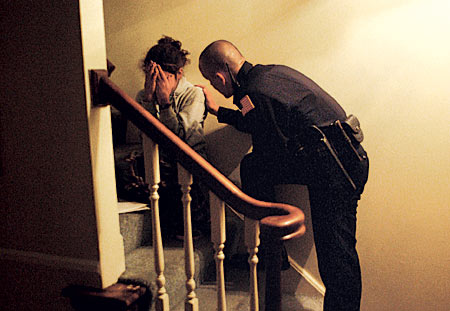 The InterAgency Board for Equipment Standardization and Interoperability (IAB) – whose mission is to strengthen the nation's ability to prepare for and respond safely and effectively to emergencies and disasters – said the prevalence of untreated severe mental illness in U.S. communities places an unmanageable burden on first responders and law enforcement across the country. The InterAgency Board for Equipment Standardization and Interoperability (IAB) – whose mission is to strengthen the nation's ability to prepare for and respond safely and effectively to emergencies and disasters – said the prevalence of untreated severe mental illness in U.S. communities places an unmanageable burden on first responders and law enforcement across the country.
“Our nation’s public mental health system is failing to meet the treatment needs of individuals with severe mental illness,” the IAB said in a paper containing recommendations to address serious mental illness. “However the lack of treatment manifests in each case, the burden of addressing it in the community has largely fallen to first responders––police, fire and medical––and to our nation’s sheriffs.”
The agency recommended several policies and practices proven to help the most challenging individuals with severe mental illness receive the care they need to avoid further psychiatric deterioration, criminality and/or self-harm:
- Implement assisted outpatient treatment (AOT),
- Improve inpatient civil commitment standards, and
- Restore a sufficient number of inpatient psychiatric beds.
Voting at their annual meeting in Virginia, the recommendations were officially adopted by the IAB after consensus was reached by the Executive Committee and the Leadership Team. This endorsement adds more weight to the momentum building in states and in Congress to reduce the criminalization of mental illness.
The Treatment Advocacy Center has served as a resource on interactions between law enforcement and people with severe mental illness by publishing the following reports:
The IAB is a voluntary working group of over 150 emergency preparedness and response practitioners from a wide array of professional disciplines dedicated to strengthening the nation's ability to prepare for and respond safely to emergencies and disasters.
To comment, visit our Facebook page.
Visit our blog archive to read all our recent posts.
Hundreds of Thousands of Mentally Ill "Locked in Limbo"
(Nov. 19, 2015) A six-part, investigative series by the Argus Leader found that South Dakota routinely jails mentally ill defendants for half a year or more without trial because of a backlog of court-ordered mental health exams in the state, aggravated by a cap on evaluations at the state's mental health hospital (“Locked in limbo,” Nov. 11).
 The first installment in the series tells the story of Ronnie Medenwaldt, a 72-year-old, schizophrenic South Dakotan. The first installment in the series tells the story of Ronnie Medenwaldt, a 72-year-old, schizophrenic South Dakotan.
Neighbors called 911 last February after hearing banging and other loud noises coming from Ronnie Medenwaldt’s apartment. When police arrived, Medenwaldt answered the door with a knife and refused to leave. He was arrested and jailed for three months before a judge ordered a mental health evaluation.
Medenwaldt sat in the Minnehaha County Jail for another eight months waiting for a competency evaluation. This is not unusual in South Dakota, the Argus Leader investigation found.
“What we are talking about is people sitting in the jail because they are mentally ill,” said Alecia Fuller, an attorney with the Pennington County Public Defender’s office.
Public defenders and mental health advocates rail against a system that doesn’t provide the necessary treatment for inmates and won’t pay for the basic evaluation that may resolve the case.
"That makes me so furious," said Phyllis Arends, executive director of the National Alliance on Mental Illness Sioux Falls. "Jails are not treatment facilities. People are just being held and receiving nothing to help them get better."
Stories like Medenwaldt’s highlight a trend of people with mental illnesses being swept into the criminal justice system.
We have placed hundreds of thousands of severely mentally ill individuals in prisons and jails that are neither equipped nor staffed to handle such problems. It is a situation that is grossly unfair to both the inmates and the corrections officials and should be the subject of public outrage and official action.
Resources from the Treatment Advocacy Center on South Dakota:
To comment, visit our Facebook page.
Visit our blog archive to read all our recent posts.
|
|