WATCH LIVE: BREAKING THE CYCLE: MENTAL HEALTH AND THE JUSTICE SYSTEM
The U.S. Senate Judiciary Committee will hold a full committee hearing Wednesday morning to examine the intersection between mental illness and the criminal justice system.
 Fear of a tragic encounter between law enforcement and her son haunts Donna Smith. Her son has been diagnosed as bipolar with psychotic features and careens from crisis to crisis, regularly encountering police in North Carolina. Fear of a tragic encounter between law enforcement and her son haunts Donna Smith. Her son has been diagnosed as bipolar with psychotic features and careens from crisis to crisis, regularly encountering police in North Carolina.
“What an unconscionable position to put a police officer in, having to make a split decision on whether this person is in need of medical treatment, or is dangerous, or both,” Smith said in a recent article discussing the mental health system that has abandoned her son, leaving him to the responsibility of police officers.
A bill to decriminalize mental illness in our criminal justice system, the Mental Health and Safe Communities Act of 2015 (SB 2002), stands before the Senate. If passed, it would take great strides to address the system failures that Smith fears will one day result in the death of her son.
“If we are to prevent tragic encounters that too often occur between police and someone with mental illness, then we need a more responsive mental health system and we need to stop relying on law enforcement to be primary responders in a psychiatric crisis,” said John Snook, executive director of the Treatment Advocacy Center.
“The bill would expand evidence-based programs to provide treatment for people with mental illness before they become entangled in the criminal justice system,” he continued. “It would also provide funding for mental health screenings and interventions in jails, increase training for police officers on how to interact with someone in a psychiatric crisis, provide continued support for mental health courts, and expand data collection on the criminalization of mental illness.”
Watch the hearing live
Wednesday, February 10, 2016 at 10:00 AM
CONTACT YOUR SENATORS. Tell them to support the Mental Health and Safe Communities Act of 2015 (SB 2002).
AOT in New Mexico is Halfway to Reality
(Feb. 5, 2016) For well over a decade, the Treatment Advocacy Center has been working with New Mexico lawmakers, families and caregivers to pass an assisted outpatient treatment (AOT) law in the state. New Mexico is one of only 5 states with no such law.
 In 2015 we came tantalizingly close -- passing AOT in both houses of the state legislature, but ran out of time to reconcile tiny differences between the versions. In 2015 we came tantalizingly close -- passing AOT in both houses of the state legislature, but ran out of time to reconcile tiny differences between the versions.
For this year's "short session," we are back on the horse. Treatment Advocacy Center Policy Director Brian Stettin is in Santa Fe, assisting our bill sponsors Sen. Mary Kay Papen (D-Las Cruces) and Rep. Paul Pacheco (R-Albuquerque). Last week, Gov. Martinez sent lawmakers a message requesting action on AOT.
Good news: The AOT Act (SB 113) passed the New Mexico Senate Friday afternoon by a vote of 29 ayes and 9 nays. The bill now moves to the House.
Will the House pass it before the session ends at noon on February 18? Stay tuned.
This e-mail address is being protected from spambots. You need JavaScript enabled to view it
to join the fight for this long-overdue, life-saving measure.
To comment, visit our Facebook page.
Visit our blog archive to read all our recent posts.
Grandmother Turns Grief over Losing Grandson into Good
(Feb. 4, 2016) The grandmother of 3-year-old Ji’Aire Lee – who was found dead on a playground swing after his mother had pushed his lifeless body for nearly two days – visited the Maryland House of Delegates early this week to talk to state lawmakers about mental-health reform legislation named after her deceased grandson (“Her grandson died on a playground swing. Now she’s fighting for reform,” the Washington Post, Feb. 1).
 Vontasha Simms said her daughter had been diagnosed with schizophrenia and depression before her grandson’s death, and had been hospitalized twice after mental breakdowns. Vontasha Simms said her daughter had been diagnosed with schizophrenia and depression before her grandson’s death, and had been hospitalized twice after mental breakdowns.
But, despite pleading with authorities to help her daughter, help never came and tragedy ensued.
“It’s too late for him,” said Vontasha of her grandson. “Maybe I can save someone else.”
Since Ji’Aire’s death, his grandmother has become an advocate for increasing mental-health services in Maryland in an effort to save other families from the tragedy that has befallen her own.
Vontasha testified before the Charles County Board of Commissioners, urging it to push through a state law that would make it easier for parents or close relatives to take supervisory control over adults suffering from mental illness, and take charge of their minor children.The board put the legislation, called “Ji’Aire’s law,” at the top of its priorities for the 2016 legislative session.
The bill is meant to identify cracks in the mental health system that allowed Ji’Aire to die. It calls for a work group named after Ji’Aire to study Maryland’s system and identify changes necessary to help adults with serious mental illness and their children.
Vontasha Simms said she believes an examination of the mental health system could be helpful. “They are taking a step in the right direction,” Vontasha said, adding that she would like to be appointed to the work group, if the legislation is approved.
It's important to note that Maryland is one of only five states that do not authorize involuntary treatment in the community, often called “assisted outpatient treatment (AOT)” or “outpatient commitment.”
Had AOT been available in Maryland, who knows how different the outcome could have been for Ji’Aire and his family?
To comment, visit our Facebook page.
Visit our blog archive to read all our recent posts.
Lives Hang in Balance While Committee Democrats Delay Comprehensive Mental Health Reform
(Feb. 3, 2016) In a partisan power play, a group of House Energy & Commerce Committee Democrats yesterday introduced the Comprehensive Behavioral Health Reform and Recovery Act -- their own watered-down version of the bipartisan comprehensive mental health reform already moving through the House.
 "Playing partisan political games with mental health reform is an insult to people with severe mental illness trapped in our broken mental health system," said John Snook, executive director of the Treatment Advocacy Center. "Untreated mental illness is a matter of life and death. How long do the families of those with a severe mental illness need to wait before Congress finally takes mental health reform seriously?" "Playing partisan political games with mental health reform is an insult to people with severe mental illness trapped in our broken mental health system," said John Snook, executive director of the Treatment Advocacy Center. "Untreated mental illness is a matter of life and death. How long do the families of those with a severe mental illness need to wait before Congress finally takes mental health reform seriously?"
The proposed bill encourages the same failed federal policies that have for too long ignored people with the most severe psychiatric diseases, Snook said.
"If the bill's authors are really committed to reforming the system, they should support the bipartisan Helping Families in Mental Health Crisis Act, not double down on the failed policies that got us here in the first place. Partisanship must not stand in the way of real mental health reform."
Some of the most glaring failures of the Comprehensive Behavioral Health Reform and Recovery Act include that it:
- Fails to prioritize the treatment of severe mental illness: Despite its official mission to reduce the impact of mental illness on America's communities, SAMHSA does not employ a single psychiatrist. The bill would continue that failed mindset, even going so far as to eliminate the requirement that the assistant secretary for mental health and substance use disorders be a medical professional.
These failures would be compounded by wasting taxpayer money to commission yet more unnecessary studies of SAMHSA's failures. The evidence is clear - from GAO reports, numerous committee hearings and investigations - SAMHSA is failing in its mission to coordinate an effective federal response to serious mental illness.
- Takes money from proven programs to waste on unproven feel-good awareness campaigns: This bill would fail to continue federal funding for proven programs like assisted outpatient treatment (AOT), while wasting $5 million on "awareness campaigns" to reduce stigma, despite a lack of evidence that such campaigns make any difference.
"Time wasted means more deaths, more warehousing of those with mental illness in our jails and prisons and more unnecessary suffering," Snook said. "Congress must stop playing games and commit to making real reforms."
To comment, visit our Facebook page.
Visit our blog archive to read all our recent posts.
RESEARCH WEEKLY: Two New Antipsychotics: What Do We Know about Them?
(Feb. 2, 2016) In the second half of 2015, the Food and Drug Administration (FDA) approved two new antipsychotic medications for oral use in the United States. Both are simply "me-too" drugs and do not add anything useful to the list of antipsychotics already available.

The first of these is brexpiprazola (trade name: Rexulti). The conception and birth of this drug makes an interesting story. It is manufactured by Otsuka Pharmaceuticals in partnership with Lundbeck. Otsuka also manufactures aripiprazole (Abilify), approved and heavily promoted for the treatment of schizophrenia, bipolar disorder, depression and autism. Sales of Abilify from mid-2013 to mid-2014 totaled $7.2 billion which, according to the research firm IMS Health, made Abilify the most profitable drug in the United States.
When Abilify Went Generic
Unfortunately for Otsuka, Abilify's patent expired; in 2014, a generic version was introduced. This means that, over time, the price of generic aripiprazole will fall sharply, along with Otsuka's profits. So what did Otsuka do? It simply introduced a chemically slightly altered version of aripiprazole, tested it against a placebo as the FDA requires, and presto—brexpiprazole (Rexulti) is being marketed as a new drug ... and sold for the treatment of schizophrenia and depression at about the same high price as Abilify was originally sold for. This is all perfectly legal. Since brexpiprazole has never been compared to aripiprazole in any published trial, it is not known whether it is any different at all.
In fact, aripiprazole (Abilify) is only an average antipsychotic when compared to other antipsychotics. In a definitive comparison of 15 antipsychotic drugs published in 2013 in Lancet, aripiprazole was rated as only average on efficacy and acceptability, considerably behind clozapine and amisulpride1 (which is sold in Europe, but not in the US).
Bottom line: According to the highly respected Medical Letter of August 17, 2015, "There is no reason to prescribe brexpiprazole over generic aripiprazole, which has a much longer record of efficacy and safety and should soon cost much less."
Cariprazine (Vrylar)
The other new antipsychotic to come to market in 2015 was cariprazine (trade name: Vraylar), manufactured by Forest Laboratories. Like the majority of existing antipsychotics already on the market, cariprazine has effects on both dopamine and serotonin receptors. There appears to be nothing unusual about it, including its side effects. Approved by the FDA for the treatment of both schizophrenia and bipolar disorder, it can be taken by mouth once daily, with or without food. The recommended dose for schizophrenia is 1.5 to 6 mg. per day and for bipolar disorder 3 to 6 mg. per day.
Consistent with FDA regulations, cariprazine was only tested against a placebo and to date no study has been carried out comparing it to any other existing antipsychotic. Bottom line: There is no reason so far to expect cariprazine to be any better than any of the existing antipsychotics. As a new antipsychotic on patent, it is likely only to be distinguished by its high cost.
E. FULLER TORREY, MD
Associate Director of Research, Stanley Medical Research Institute
Founder and member of the board, Treatment Advocacy Center
Co-chair, Psychiatric Advisory Board to the Treatment Advocacy Center
* Disclosure: John Davis, MD, the senior author on the Lancet paper, is on the staff of the Stanley Medical Research Institute, a supporting organization of the Treatment Advocacy Center, and a member of the Treatment Advocacy Center's Psychiatric Advisory Board.
References:
1 Leucht S, Cipriani A, Spinali L, et al. Comparative efficacy and tolerability of 15 antipsychotic drugs in schizophrenia: a multiple-treatments meta-analysis. Lancet 2013; 382: 951-962.
Next Week: What the Latest Schizophrenia News Means to Patients, Families and Communities
Research Weekly is a summary published as a public service of the Treatment Advocacy Center and does not necessarily reflect the findings or positions of the organization or its staff. Full access to research summarized may require a fee or paid subscription to the publications.
To comment, visit our Facebook page.
Visit our blog archive to read all our recent posts.
Another ACLU Settlement, but Confinement Still Possible for People with Mental Illness
(Feb. 1, 2016) No mentally ill inmate will be placed in solitary confinement for more than thirty days, according to a settlement between the American Civil Liberties Union, Indiana Protection & Advocacy Services and Department of Corrections. In addition, inmates will receive individual and group counseling, as well as more recreational opportunities (“Lawsuit settlement makes Indiana leader in inmate mental health treatment,” Fox 59, Jan. 28).
 In 2008, the American Civil Liberties Union filed a lawsuit against the Indiana Department of Corrections for its excessive use of solitary confinement for mentally ill prisoners. In 2008, the American Civil Liberties Union filed a lawsuit against the Indiana Department of Corrections for its excessive use of solitary confinement for mentally ill prisoners.
“Segregation, not surprisingly, is toxic particularly to those who are mentally ill,” said ACLU Indiana Legal Director Ken Falk. “There were a lot of prisoners in there for punishment because they had misbehaved because of their mental illness.”
With 5,600 mentally-ill inmates, the Indiana Department of Correction houses more people with psychiatric problems than all other facilities across the state combined. The Marion County Jail is the leading mental health facility in Indianapolis, with almost 900 offenders on daily medication.
“These are all prisoners who will be getting out. It is to society’s advantage, all of our advantage, to treat their mental illness the best we can in prison,” said Falk about the DOC settlement.
Falk said a new 250-bed facility for the mentally ill at Pendleton Correctional Facility is evidence of DOC’s shift towards better strategies, policies and treatment of offenders suffering from mental illness.
The ACLU and advocacy groups will continue to monitor the system for three years.
Last week, the ACLU settled another lawsuit against the Pennsylvania Department of Health for long wait times for inmates to be transferred to a psychiatric hospital after being found incompetent to stand trial.
As awareness and outrage about the criminalization of mental illness across the country continues to grow across, we expect to see a wave of states settle similar lawsuits in the future.
We commend the ACLU for bringing these lawsuits against the state prison systems for the deplorable way our criminal justice system handles people with mental illness.
But the problem remains. If we really want to get serious about reducing solitary confinement we should ensure that people who enter jail receive the treatment they need, when they need it. In its current state, the American prison system is incapable of adequately meeting the mental health needs of its inmates.
Read the Treatment Advocacy Center’s 2014 report, “The Treatment of Persons with Mental Illness in Prisons and Jails,” to learn more.
To comment, visit our Facebook page.
Visit our blog archive to read all our recent posts.
Police Shooting Involving Mental Illness Fits Troubling Pattern
(Jan. 29, 2016) In another horrific encounter between someone in a psychiatric crisis and law enforcement, Michael Noel, a 32-year-old Louisiana resident, was shot and killed during a struggle when he resisted police efforts to take him into protective custody and drive him to the hospital (“Mentally ill man’s deadly shooting fits troubling pattern,” Associated Press, Jan. 25).
 Noel, diagnosed with paranoid schizophrenia was agitated and showing familiar signs that he needed help the morning of December 21. His mother, Barbara, called 911, a call she had made many times during her son’s long struggle with severe mental illness. Noel, diagnosed with paranoid schizophrenia was agitated and showing familiar signs that he needed help the morning of December 21. His mother, Barbara, called 911, a call she had made many times during her son’s long struggle with severe mental illness.
This was the fourth time in less than eight months that Barbara had obtained an order to have her son involuntarily treated at a hospital. The orders say he had been suicidal, hallucinating, hearing voices and talking to imaginary people.
Michael’s mother and aunt say they witnessed the shooting in the living room of their home. Both said Michael wasn’t armed and never posed a threat before one of the deputies shot him once in the chest.
Barbara Noel remembers screaming, “They killed him! They killed him!” after her son collapsed and died on the floor without saying a word.
“They never gave him CPR,” Barbara said of the officers. “They never said they were sorry.”
It is unacceptable that people in mental health crisis get killed when they call for help. On the other hand, it’s unacceptable to put the burden on police when the mental health system should be responsible for them.
A 2015 Treatment Advocacy Center report found that people with untreated mental illness are 16 times more likely to be killed during a police encounter than other civilians approached or stopped by law enforcement.
Stories like these have unfortunately become a commonplace of American life. Every day we read headlines about another person suffering with mental illness killed in a deadly encounter with police. The onus is on us as a country to consider this unacceptable and reform our broken mental health system in an effort to prevent further tragedies.
Read “Overlooked in the Undercounted: The Role of Mental Illness in Fatal Law Enforcement Encounters” to learn more.
To comment, visit our Facebook page.
Visit our blog archive to read all our recent posts.
Domenicis Join the Fight for AOT in New Mexico
(Jan. 28, 2016) During his distinguished career as New Mexico’s six-term U.S. Senator (1973 – 2009), Pete Domenici was known as a champion of people with severe mental illness. In retirement, Senator Domenici and his wife Nancy are still at it, having joined the call to bring assisted outpatient treatment (AOT) to the state they love.
 Last week, as state lawmakers gathered in Santa Fe for the start of the 2016 “short session,” the Domenicis sent an urgent appeal to Governor Susana Martinez, asking her to issue a “Governor’s Message” calling for legislation to authorize AOT. (In “short session” years, non-budgetary bills can only be introduced at the Governor’s request.) Last week, as state lawmakers gathered in Santa Fe for the start of the 2016 “short session,” the Domenicis sent an urgent appeal to Governor Susana Martinez, asking her to issue a “Governor’s Message” calling for legislation to authorize AOT. (In “short session” years, non-budgetary bills can only be introduced at the Governor’s request.)
In making their case, the Domenicis wrote:
We believe AOT is an essential tool in helping certain individuals with severe mental illness live safely in the community, and we lament that New Mexico is one of only five states without such a law. … The effectiveness of AOT in improving outcomes for the most challenging patients has been widely recognized. Just last month, Congress appropriated $15 million for 2016 to support the creation of local AOT programs across the United States. New Mexico jurisdictions cannot compete for this funding until AOT is authorized by state law.
Click here to view the full letter.
We are delighted to report that two days ago, Governor Martinez issued the needed message. The bipartisan bill, sponsored by Sen. Mary Kay Papen (D-Las Cruces) and Rep. Paul Pacheco (R-Albuquerque), will now start making its way through legislative committees, hopefully reaching the Governor’s desk before the session closes on February 18. Treatment Advocacy Center Policy Director Brian Stettin is already in Santa Fe, preparing for the imminent committee hearings.
Please stand with the Treatment Advocacy Center and the Domenicis to bring this long-overdue, life-saving measure to New Mexico.
This e-mail address is being protected from spambots. You need JavaScript enabled to view it
if you are interested in opportunities in the coming weeks to share your own perspective with legislators on the need for AOT.
To comment, visit our Facebook page.
Visit our blog archive to read all our recent posts.
ACLU Settles Suit against Pennsylvania for Long Bed Waits
(Jan. 27, 2016) Criminal defendants in Pennsylvania routinely wait months, sometimes years, in county prisons before being transferred to state psychiatric hospitals for treatment to restore them to competency, according to a lawsuit filed last October by the American Civil Liberties Union.
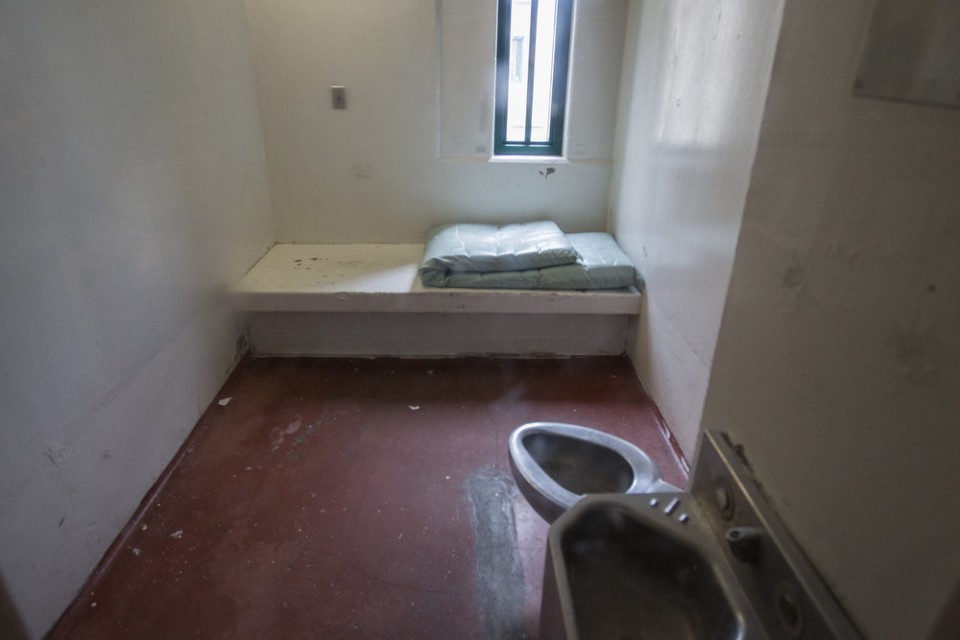 The complaint argued that treatment delays violate the constitutional rights of defendants to due process and their rights to adequate mental health treatment under federal law. In recent years, Federal courts have ruled that a defendant committed to a state hospital shouldn't wait longer than a week to be transferred. The complaint argued that treatment delays violate the constitutional rights of defendants to due process and their rights to adequate mental health treatment under federal law. In recent years, Federal courts have ruled that a defendant committed to a state hospital shouldn't wait longer than a week to be transferred.
The issues raised by the ACLU's lawsuit were explored last year as part of PennLive's Patients to Prisoners series, which found that defendants deemed incompetent to stand trial were waiting an average of 297 days for transfers to state psychiatric hospitals.
Now, a day before a trial scheduled in federal court, the ACLU of Pennsylvania and the state Department of Human Services announced yesterday that they have reached a settlement agreement (“ACLU, state reach tentative settlement in lawsuit over delays to treat mentally ill,” PennLive, Jan. 26.).
Allowing mentally ill defendants to languish behind bars rather than transferring them to facilities with the resources to provide the treatment they so desperately need is unconscionable.
The following resources from the Treatment Advocacy Center provide data and other information about the treatment of Pennsylvania inmates with severe mental illness and treatment options in the state:
A copy of the lawsuit and the ACLU Pennsylvania announcement are available online.
To comment, visit our Facebook page.
Visit our blog archive to read all our recent posts.
RESEARCH WEEKLY: January Digest
(Jan. 26, 2016)
-
Natural Defense against Bipolar Disorder
Naturally occurring neurological resiliency may explain why some individuals at high risk for bipolar disorder do not develop the disease even when other members of their families do. The finding suggests that neuroplasticity could become the basis for developing new interventions.
Dima, D., et al. (5 January 2016). Connectomic markers of disease expression, genetic risk and resilience in bipolar disorder. Translational Psychiatry. (Summary on Medical Daily)
-
Bipolar and sleep.
A comparison of the sleep and circadian patterns in 136 people with bipolar disorder and 422 of their relatives without the condition found significant differences in a dozen specific characteristics such as average length of time spent awake per day and average amount of activity per day. "These variants, in turn, could provide clues to new approaches for both preventing and treating BP."
Pagani, L., et al., Genetic contributions to circadian activity rhythm and sleep pattern phenotypes in pedigrees segregating for severe bipolar disorder. Proceedings of the National Academy of Sciences. (Summary on Medical News Today)
-
Negative Symptoms and Lost Neurons
Significant loss of one type of cell in a tiny area of the brain's memory center called CA2 was found linked to the social deficits of schizophrenia in a mouse study. The same changes, which emerge during the equivalent of young adulthood in the mice, were found in postmortem examinations of people with the disease. There currently are no medications for the "negative symptoms" of schizophrenia: social withdrawal, reduced motivation and decreased emotional involvement common. A better understanding of the mechanisms underlying these symptoms could suggest new directions for treatment.
Piskorowski, R.A., et al (6 January 2016). Age-Dependent Specific Changes in Area CA2 of the Hippocampus and Social Memory Deficit in a Mouse Model of the 22q11.2 Deletion Syndrome. Neuron. (Summary on Health Daily)
-
Marijuana Use and Schizophrenia Risk
"Considerable evidence" suggests that a key ingredient of marijuana increases the risk of developing schizophrenia-related symptoms in early adulthood. The ingredient changed the brains of adolescent rates at the molecular level.
Renard, J., et al. (4 January 2016). Adolescent Cannabinoid Exposure Induces a Persistent Sub-Cortical Hyper-Dopaminergic State and Associated Molecular Adaptations in the Prefrontal Cortex. Cerebral Cortex. (Summary on Medical News Today)
-
Mental Illness, Young Adults and the ER
Emergency room visits by young adults with mental illness have increased significantly since implementation of the Affordable Care Act. "Significant barriers to care for mental health issues persist, leaving these patients little choice but to seek care in the only place they know they can get it: the ER."
Hernandez-Boussard, T., et al. (6 January 2016). Relationship of Affordable Care Act implementation to emergency department utilization among young adults. Annals of Emergency Medicine.

Doris A. Fuller
Chief of Research and Public Affairs
Summarized in RESEARCH WEEKLY in January:
Next Week: Two New Antipsychotics: What do We Know About Them?
Research Weekly is a summary published as a public service of the Treatment Advocacy Center and does not necessarily reflect the findings or positions of the organization or its staff. Full access to research summarized may require a fee or paid subscription to the publications.
To comment, visit our Facebook page.
Visit our blog archive to read all our recent posts.
|
|