Florida Governor Orders Reform of Mental Health System in Crisis
(Sept. 14, 2015) Governor Rick Scott made an executive order last week to begin looking at ways to reform Florida’s failing mental health system (“Gov. Scott makes executive order in attempt to reform mental health care,” Action News Jax, Sept. 10).
 "For the first time in our state, we are trying to look at mental illness on the front end and ensure we find the best way to support individuals with mental health needs in their communities before they are committed to the custody of supervision of the state," said Governor Scott. "For the first time in our state, we are trying to look at mental illness on the front end and ensure we find the best way to support individuals with mental health needs in their communities before they are committed to the custody of supervision of the state," said Governor Scott.
“We’re spending quite a bit of money as a state and what I want to do is organize that where we provide the best service we can at a price our taxpayers can afford to pay.”
Scott has directed the Department of Children and Families secretary Mike Carroll to develop a model for mental health services in Florida and streamline the budgeting process.
“We have to constantly improve our current system so it can get better,” said Carroll. “Many state agencies, local law enforcement, courts and local governments all provide care and we must better coordinate these agencies to address fragmentation in the current system.”
But the problem is quickly nearing crisis level (“State’s handling of mental health nearing crisis,” NBC2 News, Sept. 10).
More than 500,000 Floridians live with a serious mental illness, but the state is one of the worst in the nation when it comes to providing treatment.
Judges in Lee County, for example, often must decide to jail those with mental health issues because there's simply nowhere else to put them.
“We’re sort of busting at the seams with regards to people in the system,” said Lee County Mental Health Judge Andy Swett.
Florida’s problems might stem from the fact that the state’s mental health laws are being poorly utilized.
While Florida received a C+ grade for the quality of its laws in our survey of mental health commitment laws across the states, the state received an F for its use of the laws.
Clearly, reforms in Florida are long overdue, and Gov. Scott’s push to “look at mental illness on the front end” is a step in the right direction.
Read the Treatment Advocacy Center report “Mental Health Commitment Laws: A Survey of the States” to learn more.
To comment, visit our Facebook page.
Visit our blog archive to read all our recent posts.
Mother's Battle to Save Son Lost to Preventable Suicide
(Sept. 11, 2015) Cindy Thomas visited practically every court, hospital, mental health center, and police station in Baltimore, Maryland while fighting to get treatment for her two sons with severe mental illness.
 But help was hard to come by, and the battle was ultimately lost when Thomas’ eldest son, Jordan McBride, ended his own life at just 30 years old (“Confronting barriers to suicide prevention,” Baltimore Sun, Sept. 9). But help was hard to come by, and the battle was ultimately lost when Thomas’ eldest son, Jordan McBride, ended his own life at just 30 years old (“Confronting barriers to suicide prevention,” Baltimore Sun, Sept. 9).
McBride developed severe depression with psychosis in his late teens and early 20s. Over the course of his illness, his behavior became increasingly erratic and he attempted suicide several times.
"Despite many hospitalizations and trials of medications, the depression was always there," Thomas said. "He felt hopeless and that he would never get any better. There were brief times of happiness, but they were fleeting and would not last."
Thomas tried her best to help her son, but encountered obstacles at every turn.
"My biggest one was getting my kids admitted to the hospital and keeping them there long enough until they were stable to come home," she said.
Cost was another issue. At times, Thomas had to pay out of pocket for her son’s outpatient therapy.
Thomas said her health insurance company regularly denied her claims for her son’s medical bills, once refusing to pay a bill because it listed "self-harm" as the reason for Jordan's hospitalization.
Sadly, in February 2013 McBride successfully committed suicide.
"It was the thing I feared for so many years, and it finally happened," Thomas said.
In 2013, 569 people died of suicide in the state of Maryland. It is the 11th leading cause of death overall in the state.
It should also be noted that Maryland is one of only five states that do not currently authorize assisted outpatient treatment (AOT), or outpatient commitment.
In order to ensure that Maryland residents with severe mental illness and their families do not fall victim to suicide and other preventable tragedies, the state must:
- Establish AOT in Maryland,
- Restore a sufficient number of beds to create access to inpatient care for qualifying individuals in crisis, and
- Make active use of the state’s civil commitment laws to provide more timely treatment to individuals in psychiatric crisis and reduce the consequences of non-treatment on them, their families and their communities.
(Photo: Christian Ostrosky/Flickr)
To comment, visit our Facebook page.
Visit our blog archive to read all our recent posts.
Woman Who Advocated to Save Lives Couldn’t Save Her Own
(Sept. 10, 2015) Amanda Baker, 26, took her own life last month, just over a year after advocating for expanded mental health treatment in Ohio (“Advocate takes own life a year after testifying for expanded mental health treatment,” Columbus Dispatch, Sept. 4).
 Baker struggled with both physical and mental health issues — anxiety attacks, severe depression, and manic episodes. Baker struggled with both physical and mental health issues — anxiety attacks, severe depression, and manic episodes.
But Baker’s mother says she had trouble getting treatment for her daughter despite her obvious need, due to the limited number of psychiatric beds available in Ohio and because Baker was sometimes too sick to realize she needed help.
After one brief hospitalization, Baker told her mother, “This is not right what they do to people. We’re going to make changes and get something done.”
Shortly after, Baker testified in support of Senate Bill 43 — a law allowing judges to order outpatient treatment for people with mental illness.
“My mom and I have a great relationship,” Baker said in her testimony. “But when you’re manic, you’re impulsive, you have rage, and your actions are beyond your control. My mom was unable to get me treatment despite her best efforts. If I ever find myself in that situation again, I want my loved ones to be able to get me treatment whether I think I need it or not.”
In June 2014, Baker attended a bill-signing ceremony in Ohio Governor John Kasich’s office. A photo from the event shows Kasich with his arm around Baker’s shoulder in the center of a group of lawmakers and advocates.
“It’s just such a tragedy,” Kasich said, upon hearing news of Baker’s death. “A loss of a life and these problems — depression and severe mental illness — they are just so beyond tragic, not just for the people who are affected but for the whole family.”
State Senator Dave Burke, the sponsor of the bill Baker had testified in support of, was also emotional at news of her death.
“Her passing has meaning to me having gone through that process,” Burke said. “Someone died because the system is broken. We would never turn our back on a cardiac patient because their problem was complicated or hard to understand.”
Burke said he will push the Kasich administration, the mental health system and service providers to integrate mental and physical care.
In the midst of National Suicide Prevention Week, we remember Baker and all lives lost to suicide and other consequences of untreated mental illness.
Read the Treatment Advocacy Center backgrounder on serious mental illness and suicide to learn more.
To comment, visit our Facebook page.
Visit our blog archive to read all our recent posts.
HOPEFUL SURVEY RESULTS RELEASED FOR NATIONAL SUICIDE PREVENTION WEEK
 To raise awareness about suicide prevention, mental health organizations released the results of a new survey, and the numbers suggest Americans are getting smarter about mental health and suicide prevention. To raise awareness about suicide prevention, mental health organizations released the results of a new survey, and the numbers suggest Americans are getting smarter about mental health and suicide prevention.
The survey found that almost everyone (94 percent) believes that suicide can sometimes or always be prevented. Most adults (93 percent) would do something if someone close to them was thinking about suicide, and 67 percent said that they would tell someone if they were having thoughts of suicide. These are encouraging numbers, signs that people recognize suicide is a problem to address rather than to hide. The survey was conducted by Harris Poll on behalf of the Anxiety Depression Association of America, the American Foundation for Suicide Prevention, and the National Action Alliance for Suicide Prevention
We also know that suicide takes a particularly hard toll on people with severe mental illness.
The lifetime risk of suicide among individuals with schizophrenia is about 5 percent, and with bipolar disorder is 10-15 percent. The rate of attempted suicide in individuals with severe mental illness is much higher, with some studies reporting 50 percent.
For those living with mental health conditions, it’s about engaging in the most effective treatment to manage symptoms and maintain quality of life. When someone is thinking about suicide it is important to develop strategies for dealing with these thoughts and engaging a support network of family, friends and professionals who know the warning signs of suicide and what might be helpful. Developing and sharing a safety plan for periods of increased symptoms or distress can provide ways to work through challenging and stressful moments.
There are many treatments and tools that people can use to maintain a sense of well-being and have quality of life when living with mental health conditions.
We need to reinforce the message of hope.
You can use National Suicide Prevention Week as an occasion to touch base with friends and family. Visit our website to learn more.
AMERICAN FOUNDATION FOR SUICIDE PREVENTION
RESEARCH: Ex–Inmates with Serious Mental Illness More Likely to be Violent
(Sept. 8, 2015) Former prisoners with psychiatric disorders or substance abuse are “substantially more likely” to commit a violent crime after release than other prisoners, according to a new study published in Lancet.
 There could be 1 million fewer violent crimes a year in the US if prisoners with these conditions received better health care behind bars and after release to the community, the research team said. There could be 1 million fewer violent crimes a year in the US if prisoners with these conditions received better health care behind bars and after release to the community, the research team said.
“One in seven prisoners have a psychotic illness or major depression and around one in five enter prison with clinically significant substance abuse disorders,” Seena Fazel, lead author and professor of forensic psychiatry at the University of Oxford in the UK, commented after publication of the article.
“As these disorders are common and mostly treatable, better screening and mental health services before and after release are essential to prevent future violence and improve both public health and safety.”
Men diagnosed with psychiatric disorders were “potentially responsible” for up to 20% of violent offenses among males released from prison; women ex-inmates were linked to 40% of violent offenses among females released (“Long-term study links common psychiatric disorders with increased risk of violent reoffending in ex-prisoners,” Sept. 3, 2015).
All psychiatric diagnoses were found to be associated with an increased rate of re-offending after release, but six psychiatric diagnoses – including schizophrenia, bipolar disorder and substance abuse – carried the highest risk. Former prisoners with mental health issues also were found to re-offend much sooner after release than other ex-inmates.
Providing appropriate treatment for inmates was the number one recommendation of our 2014 study, “The Treatment of Persons with Mental Illness in Jails and Prisons.”
“Just as inmates should be treated for tuberculosis, diabetes, and hypertension, so also should they be treated for schizophrenia, bipolar disorder, and major depression,” the Treatment Advocacy Center report said.
The study by the team led by Fazel was based on nearly 48,000 ex-inmates released in Sweden from January 1, 2000, through December 31, 2009.
Fazel focused on the relationship between mental illness and violent crime, the mental health of prisoners, and violence risk assessment. In September 2014, Lancet reported on his study of the relationship of antipsychotic medications, mood stabilizers and the risk of violent crime.
(Photo: [AndreasS]/Flickr)
To comment, visit our Facebook page.
Visit our blog archive to read all our recent posts.
No Psych Bed Available for Mentally Ill Inmate Allegedly Murdered by Corrections Officers
(Sept. 4, 2015) Michael James Tyree, 31, an inmate with mental illness at the Santa Clara County Jail, died last week at the hands of three correctional officers in what Santa Clara County Sheriff Laurie Smith called a “brutal murder.”  Tyree was waiting to be transferred to a mental-health facility at time of his death, said Public Defender Molly O'Neal.“Stories about the escalating crisis of mentally ill inmates no longer surprise us,” said John Snook, executive director of the Treatment Advocacy Center. “Statistics show that not only are the number of mentally ill in jails and prisons continuing to climb, but the severity of inmates’ illnesses is on the rise as well. People with mental illness are not only disproportionately incarcerated, but also disproportionately mistreated in custody.” The emptying of state psychiatric hospitals for the past half-century has reduced the number of public beds for acutely or chronically ill patients by more than 90%, while the U.S. population has nearly doubled. California has only 29% of the beds necessary to meet the needs of its population with severe mental illness, according to a 2012 Treatment Advocacy Center study “No Room at the Inn: Trends and Consequences of Closing Public Psychiatric Hospitals." The state also has 4 times as many people with mental illness incarcerated than receiving treatment in a hospital. Nationwide, a Treatment Advocacy Center study shows there are more than 10 times as many people with mental illness behind bars than receiving inpatient treatment. “The wholesale elimination of hospital beds for people with mental illness nationwide is a driving force behind a long list of terrible consequences,” Snook continued. “We should be embarrassed that our mental health system has abandoned so many in need.” The tragedy in Santa Clara is the latest in a series of incidents across the nation in which a mentally ill prisoner was forced to remain in jail due to a lack of adequate psychiatric beds. Tyree was waiting to be transferred to a mental-health facility at time of his death, said Public Defender Molly O'Neal.“Stories about the escalating crisis of mentally ill inmates no longer surprise us,” said John Snook, executive director of the Treatment Advocacy Center. “Statistics show that not only are the number of mentally ill in jails and prisons continuing to climb, but the severity of inmates’ illnesses is on the rise as well. People with mental illness are not only disproportionately incarcerated, but also disproportionately mistreated in custody.” The emptying of state psychiatric hospitals for the past half-century has reduced the number of public beds for acutely or chronically ill patients by more than 90%, while the U.S. population has nearly doubled. California has only 29% of the beds necessary to meet the needs of its population with severe mental illness, according to a 2012 Treatment Advocacy Center study “No Room at the Inn: Trends and Consequences of Closing Public Psychiatric Hospitals." The state also has 4 times as many people with mental illness incarcerated than receiving treatment in a hospital. Nationwide, a Treatment Advocacy Center study shows there are more than 10 times as many people with mental illness behind bars than receiving inpatient treatment. “The wholesale elimination of hospital beds for people with mental illness nationwide is a driving force behind a long list of terrible consequences,” Snook continued. “We should be embarrassed that our mental health system has abandoned so many in need.” The tragedy in Santa Clara is the latest in a series of incidents across the nation in which a mentally ill prisoner was forced to remain in jail due to a lack of adequate psychiatric beds.
- In Virginia, Jamycheal Mitchell, arrested for stealing less than $5 of food, died while waiting for a psychiatric hospital bed. Mitchell had been jailed for four months after a judge ordered him moved to a state mental health, as no bed was available.
- In Pennsylvania, Leon Raymond Walls was sent to prison, despite a state law requiring he be provided treatment. Walls had been found guilty but mentally ill after stabbing several people in 2013. Judge Donna Jo McDaniel explained, “It’s very difficult for me to find someplace appropriate for you to go.”
- In Mississippi, Olivia Brown has been jailed for more than a year awaiting a bed at the state hospital. Another county reports inmates waiting more than two years for a mental evaluation. Mississippi has only 35 beds for pre-trial evaluations and treatment in the entire state.
- In Washington state, a federal judge ordered the state to reduce wait times to seven days for competency evaluation and restoration of mentally ill defendants by January. She had previously held that the state violated pretrial criminal defendants’ due process rights by keeping them jailed for weeks or months awaiting mental competency evaluations.
- Elsewhere in California, the ACLU has filed suit against Alameda County officials alleging that more than 350 defendants deemed incompetent were left waiting admission to a state hospital, some having been jailed for more than 5 months.
“We will keep seeing tragedies like this until we provide sufficient inpatient beds to meet the needs of people with mental illness,” the executive said. “If there had been a hospital bed available for Michael James Tyree, he may be alive today.”
To comment, visit our Facebook page.
Visit our blog archive to read all our recent posts.
How to Halt the Violence – guest commentary
(Sept. 3, 2015) When Vester Lee Flanagan II fatally shot a television reporter and a cameraman in the midst of a live interview in Moneta, Va., it was a scene that has become all too familiar to us.
 In all these scenarios, we learn after the fact that the perpetrator has had a troubled past in which he exhibited bizarre and disruptive behavior, and frequently a history of diagnosed but untreated mental illness. The media and public erupt in outrage, but after the chest thumping and soul searching, nothing is ever done. In all these scenarios, we learn after the fact that the perpetrator has had a troubled past in which he exhibited bizarre and disruptive behavior, and frequently a history of diagnosed but untreated mental illness. The media and public erupt in outrage, but after the chest thumping and soul searching, nothing is ever done.
As a psychiatrist, I've treated thousands of patients with serious mental illness over my 30-year career and consulted on too many such criminal cases. I find it lamentable that we still cannot connect the dots and take effective action, as a vast majority of these tragedies are preventable.
A 2007 case that I was asked to review illustrates the problem. It involved an 18-year-old man, an athlete and a good student, who began with high hopes.
However, at the start of sophomore year, he quit the football team, left school and went home. At home he was withdrawn, disheveled, talked to himself and was suspicious of his friends and family. His parents knew something was wrong and sought treatment. When a mobile crisis team was called to the house he refused to engage with them. Although he clearly was ill, he was not aggressive, so they told his parents to continue monitoring their son’s behavior and to call if he became a threat to himself or others. The next day he stabbed his twin half-brothers with a kitchen knife, killing one of them and severely injuring the other.
Incidents like this are part of the glaring array of social pathologies that emanate from our country’s failed mental health care system.
In many instances mentally disturbed people lack awareness of their illness, and are unwilling to accept treatment. Almost every mentally ill perpetrator of mass violence had been symptomatic and untreated for lengthy periods of time before their crime; because they (or their families) did not seek treatment or they refused it.
Statutory mechanisms like assisted outpatient treatment have been enacted in 45 states. They enable doctors to obtain a court order that requires severely mentally ill patients who meet certain legal criteria — if they are unable to care for themselves or are unwilling to take medication — to adhere to treatment. However, these legal mechanisms are controversial and infrequently used despite their effectiveness in reducing violent incidents and hospital readmissions.
But we must start using this law to treat patients in need, over their objections if necessary. This strategy would apply to a small number of people who have psychotic disorders, and known risk factors for violence, such as drug abuse and a history of violence.
The good news is that these strategies have proved highly effective and really work. They simply have not been widely applied.
JEFFREY A. LIEBERMAN
CHAIRMAN OF PSYCHIATRY, COLUMBIA UNIVERSITY
Read the entire column.
(Photo:Peter Kaminski/Flickr)
To comment, visit our Facebook page.
Visit our blog archive to read all our recent posts.
Texas Man Who Killed Deputy Had History of Mental Illness
(Sept. 2, 2015) The Texas man accused of fatally shooting a Harris County police officer has a long history of mental illness that led to two stints in a psychiatric hospital, according to attorneys (“Lawyer: Suspect in deputy’s slaying has history of mental illness,” Houston Chronicle, Sept. 1).
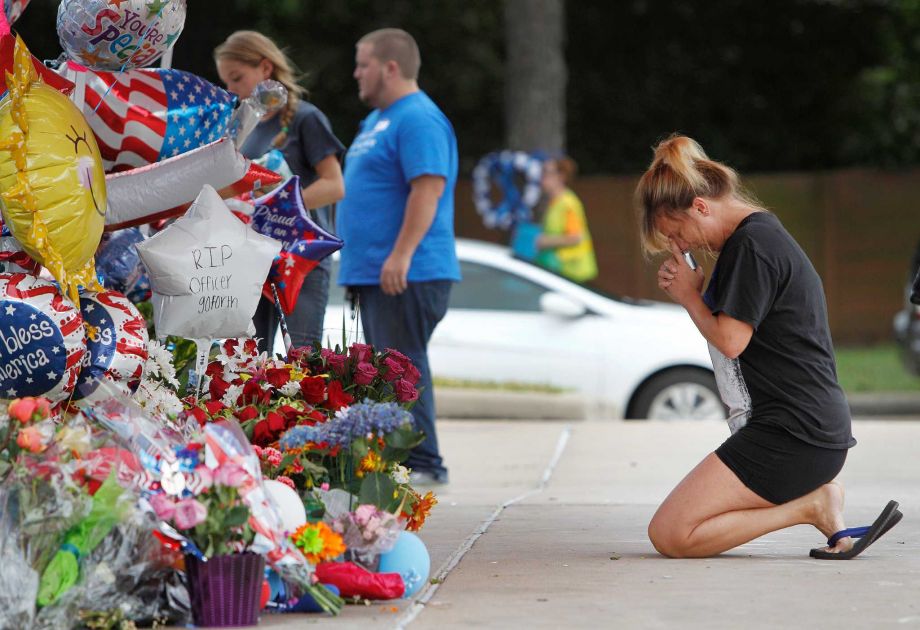 Shannon Miles, 30, is charged with shooting Harris County Sheriff’s Deputy Darren Goforth 15 times after the deputy stopped to fill up his patrol car at a Houston gas station. While Miles’ mental health diagnosis is still unknown, new information reveals that he had been committed to a psychiatric hospital twice in the last five years. Shannon Miles, 30, is charged with shooting Harris County Sheriff’s Deputy Darren Goforth 15 times after the deputy stopped to fill up his patrol car at a Houston gas station. While Miles’ mental health diagnosis is still unknown, new information reveals that he had been committed to a psychiatric hospital twice in the last five years.
Miles was first committed to a Houston psychiatric center in 2010, but it is unclear how long he stayed and what treatment he received.
"He's had various diagnoses," said Anthony Osso, one of Miles’ attorneys. "He's displayed bizarre behavior, according to our preliminary investigation, over an extended period of time.”
Miles was again admitted to a state psychiatric hospital after a 2012 arrest for assaulting a homeless man at a local shelter. Miles was declared competent to stand trial, but the charge was dropped after the victim couldn't be located.
Last month, Texas Senator John Cornyn introduced the Mental Health and Safe Communities Act , legislation aimed at expanding federally proven programs that provide treatment for people with mental illness before they become involved in confrontations with law enforcement.
“Law enforcement is increasingly on the frontlines of mental health, a position that wastes resources and too often leads to tragic outcomes like these,” said Treatment Advocacy Center Executive Director John Snook.
Write your US senators today and tell them to support efforts to ensure treatment before tragedy. Include your story about what the Mental Health and Safe Communities Act would mean for you.
To comment, visit our Facebook page.
Jails and Prisons Not Solutions for Mentally Ill People – guest commentary
(Sept. 1, 2015) Finding the most appropriate setting to treat our mentally ill population is not a new challenge.
 From the asylum-building movement of the 1800s to the failed attempt at deinstitutionalization in the 1950s, society has seen changing perspectives on how to best serve some of our most vulnerable citizens. From the asylum-building movement of the 1800s to the failed attempt at deinstitutionalization in the 1950s, society has seen changing perspectives on how to best serve some of our most vulnerable citizens.
Jails and prisons are clearly not the best solutions, though that is exactly where many of these people have ended up.
How did this happen?
Over the last several years we have seen a steady decline in funding and options for some of our most vulnerable people. In 2009, states cut $4.35 billion in mental health spending, the largest reduction since deinstitutionalization.
The reality is the criminal justice system is now the mental health institution. There are five times more severely mentally ill people in jails and prisons than in hospitals today.
Jails in most cities like here in Nashville are the largest mental health facility in the area. Many inmates with mental health issues are charged with relatively minor infractions. Many are in jail after committing crimes that could have been prevented had they had access to adequate treatment while on the street.
This only masks the real issue for society. It is easy for the general public to see the mentally ill person “off the streets” and believe the situation is being addressed, but our correctional facilities are not the best location to address this serious and complicated matter.
The cost of treating the mentally ill is dramatically higher in a correctional institution than it would be in a mental health facility. It costs over $100 per day just to house a person in jail, not including the cost of his/her mental health treatment.
It is time that we bring this issue out from behind the bars of jails and prisons and deal with it as a mental health crisis, not as a hidden criminal justice component.
Individuals who suffer mental illness need to be treated and addressed in a mental health model of care in facilities designed specifically for that purpose.
Until we all realize that the problem exists, we will continue to underserve those who need our help the most.
SHERIFF DARON HALL
DAVIDSON COUNTY, TENNESSEE
Read the entire column.
To comment, visit our Facebook page.
Visit our blog archive to read all our recent posts.
How Many More Tragedies in New Mexico?
(Aug. 31, 2015) The high-profile cases of John Hyde and James Boyd – two men whose lives took a tragic turn as a result of untreated severe mental illness – motivated lawmakers to introduce an assisted outpatient treatment (AOT) law in New Mexico. The state considered the legislation in 2015, but it passed the House too late for small differences to be reconciled.
 Now, following the latest homicide involving untreated mental illness, the Albuquerque Journal is calling for renewed attention to assisted outpatient treatment laws. Now, following the latest homicide involving untreated mental illness, the Albuquerque Journal is calling for renewed attention to assisted outpatient treatment laws.
James Finch, 24, forced his way into his parents' northeast Albuquerque home last week, according to authorities. Finch attacked both of his parents, killing his father. His parents had tried repeatedly to get their son into treatment.
“[H]ow many more tragedies will it take to force New Mexico lawmakers to finally step up and provide an alternative to a police response for mentally ill individuals in crisis, as well as their families and the public?” ask the editors (“Editorial: Another tragedy shows need for a treatment law,” Albuquerque Journal, Aug. 31).
New Mexico is one of only five states without an assisted outpatient treatment (AOT) law. The state has nearly 3x more people with serious mental illness in jail than receiving treatment in a hospital, and has only 18 percent of the beds necessary to meet the needs of people with a psychiatric disease.
“If there had been such a law in place to detain John Hyde when he came to the hospital begging for help after a medication change, perhaps he could have received the treatment he needed instead of gunning down three civilians and two police officers,” the editors wrote. “If there had been such a law – and possibly a crisis team – in place to detain Boyd...maybe he could have received the treatment he needed instead of the police response that killed him.”
“And if there had been such a law to detain Finch...maybe he could have received treatment and his parents might not have been forced to live in fear for years, waiting for him to finally dig a grave in the backyard and make good on his threats of violence.”
Senator Mary Kay Papen is expected to reintroduce assisted outpatient treatment in 2016.
(Photo: Albuquerque Journal)
To comment, visit our Facebook page.
Visit our blog archive to read all our recent posts.
|
|