Overcrowding and Undertraining Plagues Arkansas Correctional Facilities
(Oct. 15, 2015) An array of lawsuits alleging inmate abuse and medical negligence have been filed against Arkansas jails and prisons in the past few years.
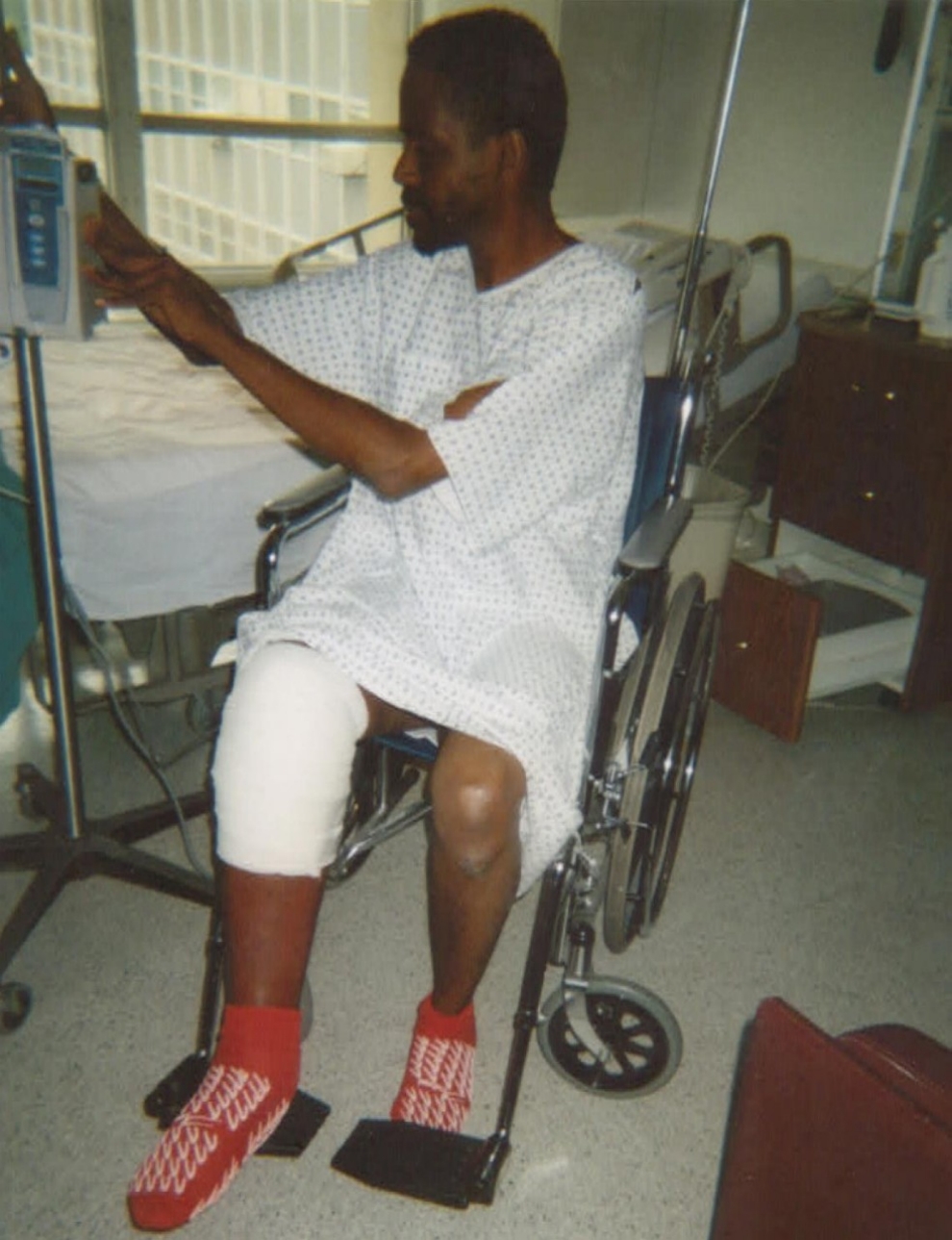 “Overcrowding and the stress of supervising more people leads to more violence and neglect at the hands of officers — and more vindictive neglect,” said Attorney Omavi Shukur of the nonprofit criminal justice reform organization Seeds of Liberation. “Overcrowding and the stress of supervising more people leads to more violence and neglect at the hands of officers — and more vindictive neglect,” said Attorney Omavi Shukur of the nonprofit criminal justice reform organization Seeds of Liberation.
These concerns have been echoed in dozens of conversations with legislators, lawyers, corrections officials, civil rights groups, inmates and their families, and all agree that a lack of space and training exacerbate brutal conditions behind bars, especially for the mentally ill (“What’s the matter with Arkansas? Prison and jail lawsuits signal trouble,” Al Jazeera America, Oct. 14).
Carl Jackson experienced this firsthand when he suffered a psychotic break due to untreated bipolar disorder and broke a car window in front of several police officers.
Jackson was taken to the Pulaski County Jail, where he was put in a solitary cell with the water turned off. He lay there naked for days, covered in urine and without any access to his medication. His leg began to swell, and he eventually became so thirsty, he drank from the toilet. By the time he was released from jail, Jackson had developed sepsis in his leg.
Jackson remembers one incident when a guard escorted him to the shower. Jackson pointed to his swollen leg and told the guard he could barely walk and needed medical attention. The guard, he says, just ignored him.
“I felt like he realized that I was injured, but because of my mental state, he didn’t feel like I should be treated,” says Jackson, who now walks with a limp and has permanent muscle and nerve damage. “Obviously he felt the best course of action was to leave me in my cell.”
According to Jackson’s attorney, Nicholas Lincoln Rogers, prison and jail employees are often “woefully unprepared for [dealing] with problems the mentally ill present” because they have “virtually no training or expertise.” Guards “are expected to be caretakers,” he says, “but they are trained as enforcers.”
Arkansas isn’t doing enough to stem the tide of mentally ill entering jails and prisons across the state. Arkansas received an F grade in our 2013 state survey for its failure to utilize mental health diversion tactics, like mental health courts and crisis intervention training (CIT).
Jails and prisons across Arkansas will continue to see an influx of inmates with mental illness, and additional lawsuits, until the state increases its efforts to divert people with serious mental illness away from the correctional system and into the mental health system where they belong,
Read the Treatment Advocacy Center report “The Treatment of Persons with Mental Illness in Prisons and Jails” to learn more.
To comment, visit our Facebook page.
Visit our blog archive to read all our recent posts.
Congress Should Pass Package for Mental Health Care – guest commentary
(Oct. 14, 2015) Yet another shooting, this time in Roseburg, Ore., where 26-year-old Chris Harper Mercer opened fire at Umpqua Community College, killing nine people and wounding others. Mercer was a student who died by suicide after exchanging gunfire with police officers. Sadly, these tragic shootings happen with such frequency that many in this country seem unaffected.
 Mentally stable people do not commit mass shootings. Once again, people like Mercer keep falling through the cracks of our broken, dysfunctional mental health system. Being mentally unstable does not have to result in mass murders. The recent horrifying violence perpetrated by Mercer is preventable with proper medications and involuntary hospitalization when needed. Mentally stable people do not commit mass shootings. Once again, people like Mercer keep falling through the cracks of our broken, dysfunctional mental health system. Being mentally unstable does not have to result in mass murders. The recent horrifying violence perpetrated by Mercer is preventable with proper medications and involuntary hospitalization when needed.
All these shootings are tragic. They make the national news. What doesn't make the national news is that only a small number of mentally ill people ever become violent, and then, usually when they fail to get treatment. Most become victims of violence, rather than the perpetrator.
As happens with all these shootings, Congress and churches will have their usual moment of silence in memory of the victims and their families, the flag will be lowered to half-staff, the news media will spend a few days discussing mental illness, but nothing gets done to reform and fix our sorry excuse for a mental health care system. When the next mass shooting occurs, we will do the same thing all over again.
There is, in fact, a bill that has been pending in Congress since June, when House Energy and Commerce Oversight and Investigations Subcommittee Chairman Tim Murphy, R-Pa., and Rep. Eddie Bernice Johnson, D-Tex., reintroduced their groundbreaking "Helping Families in Mental Health Crisis Act," H.R. 2646.
This bill will mark a new era for mental health care in this country. It will move mental health care from crisis response to recovery, from tragedy to triumph. The bill has 136 bipartisan co-sponsors and endorsements from newspaper editors, physicians and parents of children with mental illness.
Congress should move this comprehensive mental health legislation forward now. Not next year. Not next month. Don't wait for the next shooting, but now. The time for action is now.
DOTTIE PACHARIS
FORT MYERS BEACH, FLORIDA
Read entire column here.
(Photo: Philip Bump/Flickr)
To comment, visit our Facebook page.
Visit our blog archive to read all our recent posts.
“From Patients to Prisoners” Gives Voice to Mentally Ill in Pennsylvania
(Oct. 13, 2015) A recent series authored by PennLive reporter Daniel Simmons-Ritchie takes an in-depth look at the 2006 closure of Pennsylvania’s Harrisburg State Hospital – the state’s oldest public mental health facility.
 The closure came with a promise from state officials to the 7 counties it served: mentally ill people wouldn’t end up on city streets. The closure came with a promise from state officials to the 7 counties it served: mentally ill people wouldn’t end up on city streets.
But where did the people in need of those services go?
PennLive has been exploring where these patients have gone and other issues with Pennsylvania’s mental health system in the multi-part investigative series From Patients to Prisoners.
“As a reporter, the mass-incarceration of people with mental illnesses was important to me because I have long had a passion for human rights issues,” said Simmons-Ritchie.
“My editors and I felt this topic deserved coverage of this depth because those with serious mental illnesses are some of the most vulnerable and marginalized in American society,” he continued. “We wanted to give a voice to a population that is so frequently ignored or unable to speak for itself.”
The series has been underway for five months and includes numerous stories from families who have loved ones with serious mental illnesses. This month, PennLive told the story of Nina and Alan McDaniel – a Berks County couple that tried desperately to get help for their schizophrenic son but, over and over again, were rebuffed by the system. Those failures almost cost them their lives.
Some of the other key pieces in the series include:
We commend Simmons-Ritchie and PennLive for taking Pennsylvania’s inadequate mental health system to task, exploring how it has transformed patients into prisoners and what solutions might exist for those caught up in it.
The elimination of psychiatric facilities across the country is wreaking devastating impacts on individuals in need of treatment, their families and the communities in which they live. We will continue to see devastating consequences until we recognize the need to overhaul our broken system.
Read the Treatment Advocacy Center report “No Room at the Inn” to learn more about the trends and consequences of closing public psychiatric hospitals.
(Photo courtesy of PennLive)
To comment, visit our Facebook page.
Visit our blog archive to read all our recent posts.
Momentum Builds to Reduce the Criminalization of Mental Illness
(Oct. 12, 2015) In the wake of another mass shooting that left nine dead in Roseburg, Oregon, Representative Martha McSally (R-AZ) last week introduced the Mental Health and Safe Communities Act. The new House bill serves as a companion to the Senate bill introduced by John Cornyn (R-TX) in August.
 McSally represents the 2nd District of Arizona, where in 2011 Jared Loughner killed six people and wounded 14, including former U.S. Representative Gabby Giffords. Loughner, who has been diagnosed with schizophrenia, was sentenced to seven consecutive life sentences in 2012. He is now one of the more than 350,000 individuals with a mental illness in our nation’s jails and prisons. McSally represents the 2nd District of Arizona, where in 2011 Jared Loughner killed six people and wounded 14, including former U.S. Representative Gabby Giffords. Loughner, who has been diagnosed with schizophrenia, was sentenced to seven consecutive life sentences in 2012. He is now one of the more than 350,000 individuals with a mental illness in our nation’s jails and prisons.
The Mental Health and Safe Communities Act would enhance the ability of local communities to provide care for people with mental illness before a tragedy occurs, and drastically improve options to divert people with a psychiatric disease into treatment before they come into contact with the criminal justice system.
Treatment Advocacy Center Executive Director John Snook said about the legislation: “Representative McSally recognizes that our nation’s jails and prisons are the worst places to treat people with severe mental illness. For too long, our nation’s mental health system has failed those in need and law enforcement has been left to pick up the pieces. It is inhumane, not effective and too often the consequences are tragic.”
“We are encouraged that leaders in the U.S. House and the Senate are championing mental health reform and actively working to keep those with a mental illness out of jails and prisons where they don’t belong,” the executive continued. “The status quo is unacceptable.”
Read the entire press release here.
To comment, visit our Facebook page.
Great Strides Made in California
(Oct. 8, 2015) California continues to be a source of great news. With the adoption of Laura’s Law by Contra Costa, San Diego, San Mateo, Kern, and Shasta counties this year, more than half the state’s population – over 19 million people – now have access to Laura’s Law.
 Adding to those positive strides being made in the state, AB 1194 was signed into law by Governor Jerry Brown yesterday. The new law clarifies the criteria under which someone with severe mental illness may be taken into custody for evaluation and treatment under a 72-hour psychiatric hold. Adding to those positive strides being made in the state, AB 1194 was signed into law by Governor Jerry Brown yesterday. The new law clarifies the criteria under which someone with severe mental illness may be taken into custody for evaluation and treatment under a 72-hour psychiatric hold.
When doing an evaluation under "5150" now the law enforcement officer or other responder specifically must not limit his or her consideration of probable cause to situations of imminent harm but must also consider recent and relevant history.
Before, some counties improperly withheld treatment, requiring a person to be imminently dangerous. Too often, this meant that people who needed to receive involuntary treatment were being denied it and senseless tragedies occurred as a result.
“No more should any county in California interpret that it requires danger to be imminent before they intervene to save a person with mental illness or others’ lives,” said Carla Jacobs, a member of the Treatment Advocacy Center Board of Directors. “Californians, celebrate! Then get your noses back to the grindstone because you will have to educate your counties as to the change in the law.”
A special thank you goes out to Randall Hagar, Carla Jacobs and the California Psychiatric Association, whose hard work brought this into fruition.
We’re happy to see county after county adopt necessary mental health reforms, but there is more work that needs to be done.
45 counties are still without access to Laura’s Law, a proven method of supporting recovery from the most severe mental illness.
It is time to seize the momentum and implement Laura's Law in every county so that, finally, every Californian in need has access to this life-saving program.
To comment, visit our Facebook page.
Visit our blog archive to read all our recent posts.
“My Son is Living a Subhuman Existence” – personally speaking
(Oct. 7, 2015) My son, Eric, started exhibiting symptoms of paranoid schizophrenia 15 years ago. To date, he has received no treatment for his severe mental illness.
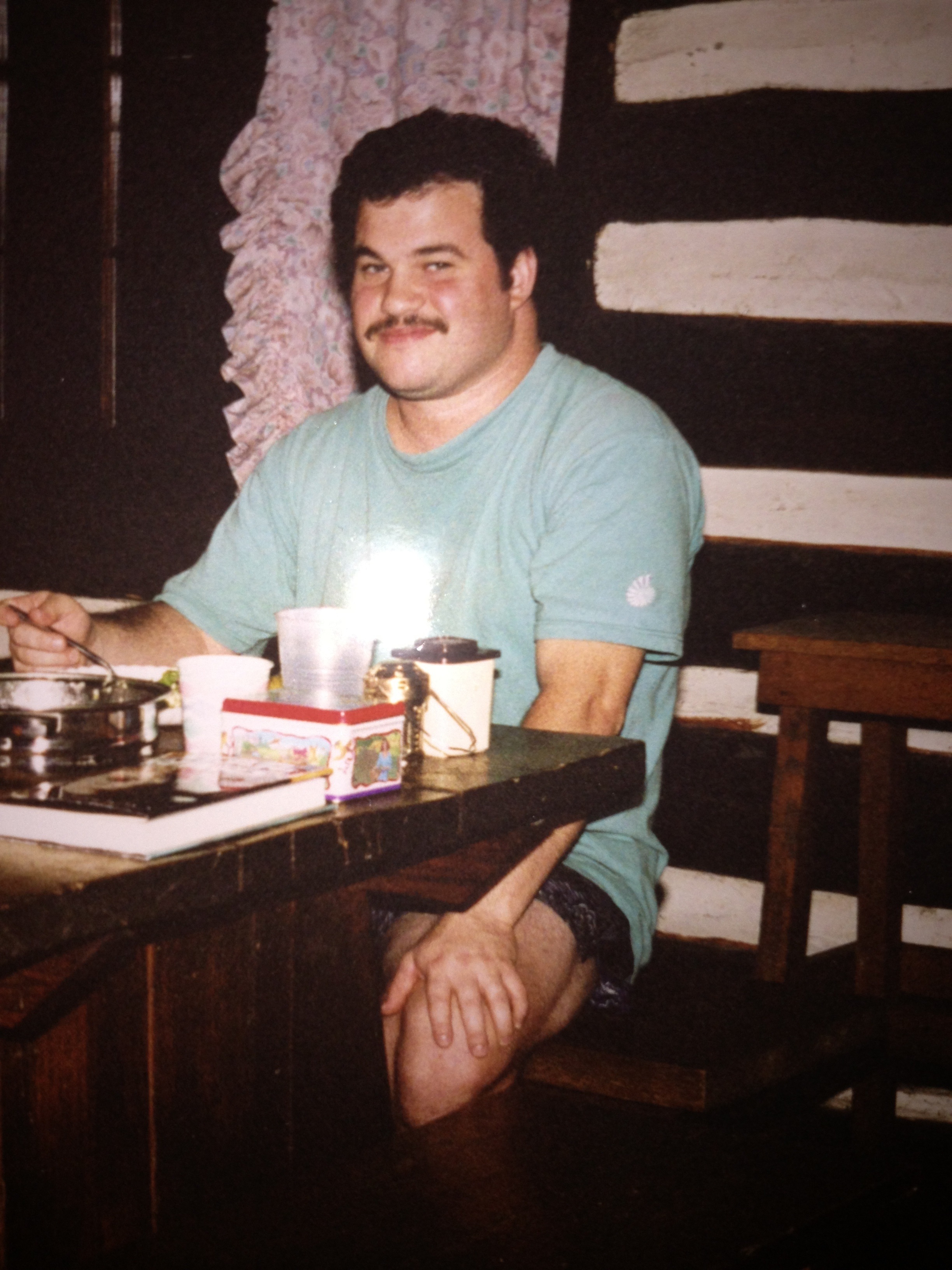 When Eric first became symptomatic, I took him to my home in Albany, NY, and miraculously succeeded in having him hospitalized in a psychiatric center for two weeks. During that time he was offered medication, but every time it was offered he was told that he had the right to refuse medication. He heard the message and refused medication. When Eric first became symptomatic, I took him to my home in Albany, NY, and miraculously succeeded in having him hospitalized in a psychiatric center for two weeks. During that time he was offered medication, but every time it was offered he was told that he had the right to refuse medication. He heard the message and refused medication.
After the time his Medicaid was willing to pay was up, he was discharged with no treatment whatsoever. Since I had waited in the psychiatric emergency room from 6:00 a.m. to 6:00 p.m. until a bed could be found for him, I was devastated that my efforts had resulted in nothing being done for my son.
I had a long commute and was driving back and forth from work on Family Medical Leave just to open the door for social workers because I knew Eric would not open the door. He would run out the back door when they came in. He wandered constantly, and I was terrified he would be killed.
I eventually took Eric back to Pennsylvania, only to be told that I would never obtain treatment for him there. The psychiatric social worker who told me this explained that the Supreme Court in Pennsylvania had upheld a 14-year-old schizophrenic’s right to refuse medication. At that time, I thought she did not know what she was talking about. Surely it could not be impossible to obtain treatment?
Sure enough, I called attorneys in New York and Pennsylvania and was told that I could not obtain guardianship of my son unless he was in imminent danger of starvation. In other words, if you put food in front of a person, and he eats it, he is considered by law to be fully competent. A hurdle an amoeba could easily cross.
After discussing my situation with a psychiatrist and others in the know, I moved to Arizona because they have an option for committal that other states do not: acutely and persistently disabled. But, when I went to Pennsylvania to transport Eric to Arizona, he refused to come and threatened me with his fists. I returned to Arizona alone and broken-hearted.
Eric is now 48 years old, and is living a subhuman existence at his grandmother’s house. We have not been able to get him to go to a dentist or a doctor in 15 years. He is on disability and Medicaid, but that doesn’t guarantee that he will ever obtain treatment of any kind. My son deserves so much better.
RUTH FISHER
PHOENIX, ARIZONA
To comment, visit our Facebook page.
Visit our blog archive to read all our recent posts.
Shasta County Authorizes Laura's Law
(Oct. 6, 2015) The Shasta County Board of Supervisors voted to authorize Laura’s Law today, making court-ordered outpatient treatment possible for those at risk-individuals with serious mental illness who meet the state’s strict criteria (“Board of supervisors to negotiate union contract,” Redding Record Searchlight, Oct. 6).
 “Passing Laura’s Law helps provide better services to everyone in their community. It saves money, it saves lives and it helps people get well,” said Carla Jacobs, a member of the Treatment Advocacy Center Board of Directors. “It’s time every county implement this vital program.” “Passing Laura’s Law helps provide better services to everyone in their community. It saves money, it saves lives and it helps people get well,” said Carla Jacobs, a member of the Treatment Advocacy Center Board of Directors. “It’s time every county implement this vital program.”
First enacted in 2002, Laura’s Law provides for court-ordered outpatient treatment for individuals with a severe mental illness, but only operates in counties where the board of supervisors authorizes its application.
Laura’s Law is a less-restrictive alternative to involuntary hospitalization, also called assisted outpatient treatment (AOT). Left untreated, people with severe mental illness often suffer from delusions, hallucinations and paranoia to the point where they may end up committing suicide, living on the streets or other degrading circumstances.
Both the Department of Justice and the Substance Abuse and Mental Health Services Administration (SAMHSA) have announced their recognition of AOT as an evidence-based program. In addition, the health research arm of the Department of Health and Human Services highlighted AOT in a report on strategies to reduce psychiatric readmissions.
With this vote 13 California counties have fully implemented the law, but families in the state’s other 45 counties are still without access to this proven method of supporting recovery from the most severe mental illness.
More than half of the population of California, representing over 19.5 million people, has access to Laura’s Law.
We offer heartfelt thank-yous to the advocates who work tirelessly to pass Laura’s Law. Your hard work is paying off for families and people suffering from mental illness across the state.
Visit our Laura’s Law page for useful tips and information about the law.
To comment, visit our Facebook page.
Visit our blog archive to read all our recent posts.
“We Treat Our Pets Better than We Treat Our Mentally Ill”
(Oct. 5, 2015) Carrie and Charlie Lucas said their 30-year-old son, who has schizoaffective disorder, had been committed to crisis units over a dozen times before he was sent to the state hospital after stealing a car two years ago (“Families blocked from getting help for sick loved ones,” News-Press, Oct. 2).
 Their story is typical of many in Florida. Families affected by severe mental illness in the sunshine state are troubled by a mental health system that routinely blocks them from getting help for their sick loved ones, often leaving them untreated and in dire straits. Their story is typical of many in Florida. Families affected by severe mental illness in the sunshine state are troubled by a mental health system that routinely blocks them from getting help for their sick loved ones, often leaving them untreated and in dire straits.
“For years, he needed long-term involuntary care and we couldn’t get him there,” said Charlie Lucas, who lives in Fort Myers. “That’s not the way it should be, that you’ve got to become a criminal so we can help you.”
Families like the Lucas’ wait for months or longer for a hospital bed to become available while their loved one deteriorates – sometimes leading them to become dangerous to themselves or others.
The Harrifords were another family trying desperately to get their loved one, Sean Harriford, into long-term treatment.
Harriford – a 29-year old diagnosed with schizophrenia – had been involuntarily committed in a mental health facility 17 times as a result of his illness. But he could only be held 72 hours each time, and little to no follow-up care was provided.
Then, in October 2014, police say Harrison killed his mother in their Jacksonville home – a mother who had been asking for help for years.
Harriford’s brother, Jonathan, says he believes his brother was in the midst of a psychotic break when he killed their mother. Now, after her death, Harriford is finally in a state hospital after being found incompetent for trial.
“We treat our pets better than we treat our mentally ill,” Jonathon said. “It’s disgusting.”
While Florida earned a C+ grade for the quality of its laws in our 2014 survey of mental health commitment laws, the state received an F for its inpatient commitment law and another F for its gross underuse of the laws overall.
Florida must make active use of its civil commitment laws to provide treatment to individuals who are experiencing symptoms of psychiatric crisis before tragedy strikes, and reduce the consequences of non-treatment on them, their families and their communities.
Read the 2014 Treatment Advocacy Center report “Mental Health Commitment Laws: A Survey of the States” to learn more.
(Photo: Sean Harriford, left, and his brother, Jonathon)
To comment, visit our Facebook page.
‘ACT NOW’ ON COMPREHENSIVE MENTAL HEALTH REFORM LEGISLATION
This week twenty-three national organizations in the mental health, medical and substance abuse community sent a letter to Representatives Fred Upton (R-MI) and Frank Pallone (D-NJ) urging them to pass mental health reform legislation that focuses on severe mental illness.“The need for comprehensive reform is urgent, and you have the opportunity to improve the lives of tens of millions of Americans, their families and our communities,” the authors wrote. “We urge you to act now to advance meaningful bipartisan mental health reform legislation.”“More than 13 million Americans have severe schizophrenia, bipolar disorder and major depression," they continued. "The majority of these people are going without treatment and families are struggling to find care for loved ones. Legislation and resources are needed and needed now, to help improve the desperate situation for millions of Americans in need of treatment and their families.”Upton is Chairman of the House of Representatives’ powerful Energy and Commerce Committee, of which Pallone is the top democrat. The opportunity to address America’s failed mental health system currently stands before them.Representatives Tim Murphy (R-PA) and Eddie Bernice Johnson (D-TX) in June introduced the “Helping Families in Mental Health Crisis Act,” which includes provisions to increase the use of court-ordered outpatient treatment for qualifying individuals with untreated mental illness, increase psychiatric hospital beds, clarify HIPAA, and decrease the criminalization for mental illness, among other important provisions. Senators Chris Murphy (D-CT) and Bill Cassidy (R-LA) introduced a companion mental health reform bill in the Senate in August.Use your voice. Write your Representatives. Tell them to encourage Representatives Upton and Pallone to make mental health reform a reality by passing comprehensive mental health legislation that helps people with severe mental illness.
Inmate Dies in Jail after Being Strapped to Restraint Chair for Nine Hours
(Oct. 1, 2015) Veronica Yearby wants justice for her son, David – a 27-year-old diagnosed with bipolar disorder – who died in a New Jersey jail after he was maced, beaten, hooded, and strapped in a restraint chair for nine hours, according to court documents (“County, township sued over Plainfield man's death,” My Central Jersey, Sept. 29).
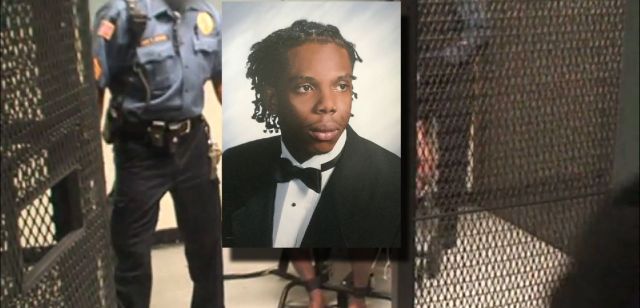 David Yearby was arrested by Piscataway police late last October, after allegedly assaulting a 16-year-old boy outside his home. David Yearby was arrested by Piscataway police late last October, after allegedly assaulting a 16-year-old boy outside his home.
At the time of his arrest, Yearby's sister told police her brother had mental health issues and requested that he be sent to a mental health facility, rather than jail. But, Yearby was transported to the county jail.
Two days later, Veronica learned that her son had died while in jail custody. Worse yet, the medical examiner's office refused to let her see his body until funeral arrangements were made, Veronica said.
"When I got to see him, it was the day before the funeral and I was so in shock, the way he looked, his face, it was so messed up. It was horrible,” she said, adding that she buried her son without knowing how he died.
Veronica announced on Tuesday that a civil wrongful death lawsuit has been filed in connection with her son’s death. The suit claims that David Yearby died from a broken neck while in the county jail, where he was maced and beaten by jail deputies, then hooded and strapped in a restraint chair for nine hours.
“You don’t treat someone like that who has a mental disorder," Veronica said. "I want justice so it doesn’t happen to the next young man. This has got to stop.”
Attorney Gregg Zeff said a video of Yearby's time in the county jail shows a young man in distress, in a jail cell, throwing water out of the toilet and screaming, panicking.
"We’re looking to let the people of New Jersey and the country know this is still going on. That while law enforcement has a very, very difficult job in this country, part of that is identifying mental illness," Zeff said, adding that the lawsuit seeks to effectuate change.
"They need resources, they need to be trained, they need to understand that no matter what the situation, people need to be treated with dignity and respect and their conditions need to be ascertained and they need to be treated in the correct way," Zeff continued.
Unfortunately, the mishandling of mentally ill inmates is becoming increasingly prevalent in jails and prisons across the country, as there are now 10 times more individuals with serious mental illness behind bars than there are in psychiatric hospital beds.
Veronica Yearby is right: this has got to stop.
Read our 2014 report “The Treatment of persons with Mental Illness in Prisons and Jails” to learn more.
To comment, visit our Facebook page.
Visit our blog archive to read all our recent posts.
|
|