A Decade Later, Skid Row Still ‘a Human Catastrophe Unfolding’
(Sept. 30, 2015) A group of former Los Angeles County jail inmates filed legal action earlier this week seeking changes to a recent settlement that they say fails to require adequate services for mentally ill and homeless jail inmates after their release (“Ex-inmates want L.A. County to stop dumping mentally ill inmates on skid row,” Los Angeles Times, Sept. 28).
 The former inmates argue that the settlement between the Sheriff’s Department and federal authorities continues a cycle in which people with untreated mental illness bounce back and forth between jail and Skid Row in Los Angeles County. The former inmates argue that the settlement between the Sheriff’s Department and federal authorities continues a cycle in which people with untreated mental illness bounce back and forth between jail and Skid Row in Los Angeles County.
“The continuous jail-to-Skid Row-to-jail cycle responsible for the perpetuation of our crisis of homelessness is the shame of our community,” said Mark Rosenbaum, one of the attorneys representing the group.
The settlement requires the county to conduct discharge planning for inmates with serious mental illness when they are released from jail, and provide them with prescriptions for medication and referrals to mental health providers.
But, while good in theory, former inmates who have gone through the process say it’s ineffective. In practice, “discharge planning” often means giving inmates a list of providers and releasing them to fend for themselves.
Royal Williams, a 44-year-old homeless man diagnosed with schizoaffective disorder and one of the plaintiffs in the case, said that he has been arrested multiple times for petty offenses, and released with a list of referrals.
“There were maybe 50 places on the list, and I didn’t know which ones would be good for me," Williams said. "Mentally, I wasn’t in a place where I could figure out who to call or where to go. I threw the lists away.”
Officials think they are saving money by dumping patients onto the streets, but they are not. In fact, a 2001 University of Pennsylvania study examining 5,000 homeless people with mental illnesses in New York City found they cost taxpayers an average of $40,500 a year for their use of emergency rooms, psychiatric hospitals, shelters, and prisons.
In 2005, the Los Angeles Times reported on the skid row scene and described it as “a human catastrophe unfolding a few blocks from City Hall, in a city of unfathomable wealth.”
A decade later, and this “human catastrophe” is still unfolding.
To be sure, much progress has been made in California in the past 10 years. 11 California counties have adopted Laura's Law, covering more than 50 percent of the population. Still, much more work needs to be done.
(Photo: Eve Fouché/Flickr)
To comment, visit our Facebook page.
Keep the Light on Mental Health – guest commentary
(Sept. 29, 2015) As a society, we’re gaining understanding of the complexities of mental illness. We have far to go, but more of us are willing to talk openly about how it’s affected our families and criminal justice system.
 Too many of us share in the pain of Stuarts Draft’s Kim Sours or Millboro’s Creigh Deeds. Both struggled to help young adult children with mental illness and are now working through grief after their suicides. Too many of us share in the pain of Stuarts Draft’s Kim Sours or Millboro’s Creigh Deeds. Both struggled to help young adult children with mental illness and are now working through grief after their suicides.
Two years after her daughter Keri Carter’s death, Sours is organizing the Out of the Darkness Walk, an Oct. 10 benefit at Gypsy Hill Park for the American Foundation for Suicide Prevention.
Deeds, a Democratic state senator, has become a Virginia leader in mental health advocacy since his son Gus’ death in 2013. Last week, the subcommittee on state mental health services that Deeds chairs met in Suffolk for two days. State Sen. Emmett Hanger, R-Mount Solon, also sits on the subcommittee.
The subcommittee took the usual tours and heard the sadly repetitious cries from people desperate to help mentally ill relatives who refuse treatment.
That terrifying problem has no single solution, but Virginia should enact legislation that allows for court-ordered treatment for patients who are documented to be a threat to themselves or others.
Other states have had success with such legislation. In New York, Kendra’s Law has reduced hospitalization, homelessness, arrest and incarceration among people with severe psychiatric disorders. California jurisdictions that enacted Laura’s Law (the state gave localities the choice not to) have seen similar outcomes.
Virginia must enact its own version and keep working to improve a mental health system that is overburdened, too often to the tragic point of failure.
We’ve brought mental illness out of the darkness. Now we must keep the light on and fix what we can.
STAUNTON NEWS LEADER EDITORIAL BOARD
STAUNTON, VIRGINIA
(Photo: Rishi Bandopadhay/Flickr)
Read the entire column.
To comment, visit our Facebook page.
Mentally Ill Man Slain by Minnesota Police Wanted Help, Family Says
(Sept. 28, 2015) After a long struggle with schizophrenia that had led to numerous run-ins with the law, Philip Quinn, 30, was suicidal and off his prescribed medication last Thursday when his fiancée called 911. But Quinn’s family says that call for help quickly turned into their worst nightmare when responding officers fatally shot and killed their loved one (“After police kill St. Paul man, brother says they ‘were supposed to help’,” Minneapolis Star Tribune, Sept. 25).
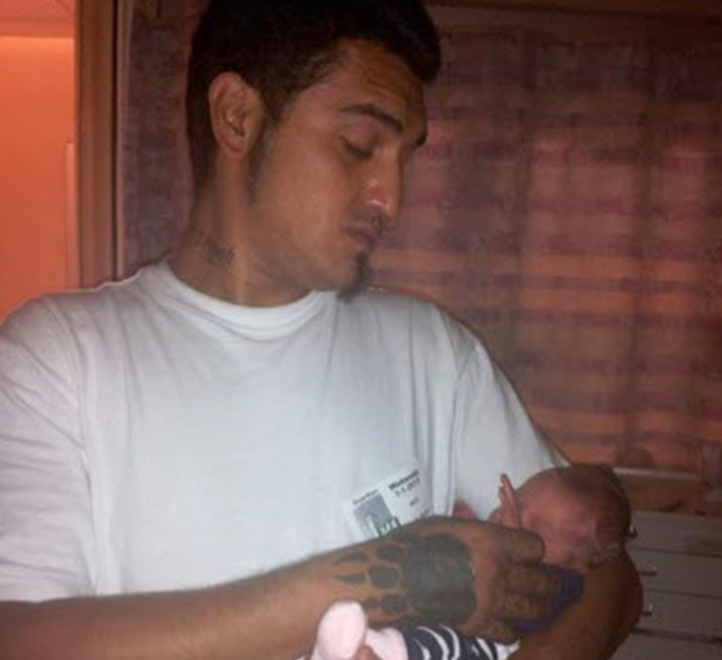 Philip Quinn knew he needed help. During a recent stay in a Minnesota hospital while receiving treatment for his schizophrenia, Quinn told medical staff that he planned to hurt himself, according to his fiancée, Darleen. Philip Quinn knew he needed help. During a recent stay in a Minnesota hospital while receiving treatment for his schizophrenia, Quinn told medical staff that he planned to hurt himself, according to his fiancée, Darleen.
Despite threats of suicide, Quinn was released from the hospital, and placed on a waiting list for a long-term mental health treatment program.
Quinn returned home to his fiancée and their three-month-old daughter, but it wasn't long before he started complaining that “things weren’t making sense” to him again, says Darleen.
On Thursday morning, Darleen came home to find that Quinn had stabbed himself several times with a sharp object. She called the police after he refused to take his medication and locked himself in the garage.
When police arrived, Quinn was standing in the front of the driveway with a screwdriver in his hand. Darleen said police ordered Quinn to drop the screwdriver several times, and when he didn’t comply they opened fire on him. He was rushed to the hospital, but died shortly after arrival.
“I’m just so hurt and so angry,” Darleen said, adding that police should have tried to use a Taser to subdue Quinn. “He hadn’t hurt anybody but himself,” she said.
The St. Paul Police Department declined to discuss details of the case, but said the actions of the officers involved are under investigation. Quinn’s loved ones, however, insist that police did not do enough.
“The cops knew that there was a suicide/mental health call and that they were supposed to help,” said Jestin Quinn, Philip’s older brother. “There’s other ways to handle it instead of shooting to kill.”
As a consequence of the failed mental illness treatment system, an increasing number of individuals with untreated serious mental illness are encountering law enforcement officers, sometimes with tragic results. But the transfer of responsibility for persons with mental illness from mental health professionals to law enforcement officers is both illogical and unfair and harms both the patients and the officers.
Mental health agencies must be re-assigned the ultimate responsibility for the care of persons with mental illness in their communities and held accountable for providing it. Otherwise, tragedies like this will undoubtedly continue.
Read the 2013 Treatment Advocacy Center report “Justifiable Homicides by Law Enforcement Officers: What is the Role of Mental Illness?" to learn more.
To comment, visit our Facebook page.
Visit our blog archive to read all our recent posts.
Why Do We Wait to Act on Mental Illness?
(Sept. 24, 2015) The Michigan House Committee on Health Policy heard testimony this week about proposed changes to the state’s mental health system, which would likely improve treatment for men and women with mental illness (”House considers major changes to state’s mental health code proposed after 7 Action News reports,” WXYZ, Sept. 22).
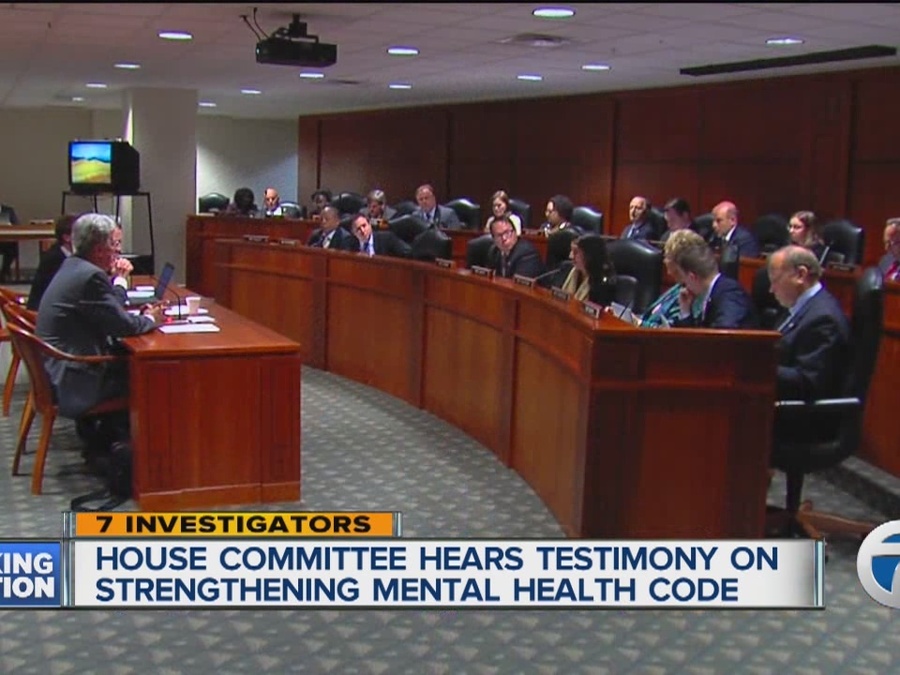 "Why is it we have to wait for somebody to commit a violent offense before we get the help that they need?" asked State Representative Tom Leonard, the bill's sponsor. "Why is it we have to wait for somebody to commit a violent offense before we get the help that they need?" asked State Representative Tom Leonard, the bill's sponsor.
Leonard's legislation calls for changes to "Kevin’s Law"— a law enacted in 2004 authorizing assisted outpatient treatment (AOT) for people with mental illness who are unable to help themselves or are likely to present a risk to others.
But despite its potential usefulness, experts say the law is rarely utilized because it requires a serious incident like an arrest to occur before mental health treatment can be ordered.
The proposed bill seeks to remedy this, by allowing a family member to petition for court-ordered mental health treatment for a loved one before a crisis happens.
"The truth is that families can see the crisis coming, weeks before the crisis arrives," said State Court Administrator Milton Mack. "We do not wait to act for any other illness. Why do we wait when it’s mental illness?"
The hearing comes after 7 Action News launched a year-long series of investigative reports examining Michigan's mental health system.
The reports documented the struggles of men and women like Ron Roude, whose family says the mental health system ignored his cries for help to treat his schizophrenia until the day he stabbed his best friend 14 times.
The committee will vote on the bill next week, and it could move on to the House next month.
Leonard and Mack’s testimonies echo what we have been saying for years: requiring dangerousness to receive treatment is dangerous.
As Dr. E. Fuller Torrey, founder of the Treatment Advocacy Center, has said, "Waiting to treat those affected with severe mental illnesses until they become dangerous to themselves or others ensures that many will become exactly that."
Michigan passed a good law. Now, it must make better use of it.
To comment, visit our Facebook page.
Visit our blog archive to read all our recent posts.
‘Dear Parent, Your Child Has Had a Psychotic Break’ – guest commentary
(Sept. 23, 2015) I sit in my small office at the university counseling center, sighing as I pick up the phone to make the call that I always dread. I have worked as a psychiatrist with college students for 20 years, and this part never gets easier. One, two, three rings, and the mother of a student who had been in my office minutes earlier answers the phone.
 I introduce myself and then deliver the news: “I’ve had to hospitalize your son, Jacob.” I introduce myself and then deliver the news: “I’ve had to hospitalize your son, Jacob.”
“What are you talking about?” she says. “There’s nothing wrong with my son.”
I explain that his roommates brought him in earlier that day. They told me that he hadn’t slept in a week and had barely had anything to eat or drink.
“I know,” she says. “They called me. But he’s just adjusting to school. He arrived a month ago. He’s a freshman, for God’s sake.”
I concede that freshmen can have a tough time adjusting, but emphasize that Jacob is having a psychotic episode. He was afraid to leave my office, I tell her, because he felt he was being followed on campus. He said he had not been able to get any work done because he was confused and distracted by voices in his head. The hospital, I explain, is the safest place for him right now.
I understand her denial. I have college-age children. If one of them became psychotic, I would be in shock. And I would be angry with the messenger.
In an ideal world, there would be somewhere else for Jacob to go until his mother arrived, someplace other than a hospital, where he could get support and be encouraged to eat, sleep and take some medication. But we don’t have anything like that on campus or in our city.
I had spent over two hours with Jacob. I called in another psychiatrist to meet with him and offer her opinion. She agreed that he needed help in a hospital setting right away. If only his mother could have seen him, disheveled, wearing a heavy sweatshirt even though it was 90 degrees out, looking away from us and mumbling at voices only he could hear.
I have seen many scenarios play out when young adults have psychotic episodes. The toughest cases stick with you the most.
I had another patient, a thoughtful young man, a psychology major, who had bipolar disorder. Before I started working with him, he became psychotic and made a serious suicide attempt. After a week in the intensive care unit, two weeks in a psychiatric hospital and a semester at home, he returned to school on a mood stabilizer and an antipsychotic.
We talked about any stressful situation he was experiencing and about ways to cope. I never had to alter his medication. In fact, he felt the medication was so helpful that he never wanted to lower the dose. I was very happy for him when he was accepted into a Ph.D. program in neuroscience.
How will Jacob’s story unfold? I don’t know. But I want Jacob and his mother to know that there is always hope. I see it every day.
MARCIA MORRIS
PSYCHIATRIST, UNIVERSITY OF FLORIDA COUNSELING AND WELLNESS CENTER
Read the entire column.
(Photo: Denise P.S./Flickr)
To comment, visit our Facebook page.
Visit our blog archive to read all our recent posts.
Mental Health Advocates and Patients Alike Support Proposed ‘Receiving Centers’ in Kansas
(Sept. 22, 2015) A number of Kansas mental health advocacy groups have teamed up to propose new legislation that could keep hundreds of people with serious mental illness from ending up in jails, emergency rooms or a state-run hospital (“Proposal would create ‘receiving center’ treatment option for mental health patients,” KHI News, Sept. 17).
 The bill would allow Kansas communities to open secure “receiving centers” where people who appear to be seriously mentally ill and in crisis may be involuntarily held for up to 72 hours, instead of the 24 hours – 48 hours on a weekend – current law allows. The bill would allow Kansas communities to open secure “receiving centers” where people who appear to be seriously mentally ill and in crisis may be involuntarily held for up to 72 hours, instead of the 24 hours – 48 hours on a weekend – current law allows.
“This has the potential to be one of those win-win-win situations that, frankly, in my 38-year career I can honestly say doesn’t come along very often,” said Bill Rein, commissioner of behavioral health services at the Kansas Department for Aging and Disability Services, one of the groups behind the legislation.
“If this is done right, it would be better for the person who’s in crisis, better for law enforcement, better for the courts. Better for everyone,” Rein continued.
The soon-to-be-introduced bill will likely be similar to laws already established in Arizona and Texas.
Liza Jensen, executive director of the National Alliance on Mental Illness office in San Antonio, says she’s seen it work in Texas.
“It promotes patients’ rights and it protects the families who care for them,” said Jensen. “But the most important thing in all this is jail diversion — getting them to a place where they can be evaluated and get treatment instead of being taken to jail.”
But advocates are not the only ones backing the proposal. Former Kansas psychiatric patients have also expressed their support (“Former Kansas state hospital patients express support for ‘receiving center’ bill,” KHI News, Sept. 17).
Dantia MacDonald, 40, was diagnosed with schizoaffective bipolar disorder in 2007, and was twice committed to a Kansas state hospital for psychiatric care in 2013.
MacDonald believes she would have benefited from being taken to a secure facility and forced to take her medication.
“I wouldn’t have wanted to go because I was too sick to be making those kinds of decisions,” MacDonald said. “But now, looking back on it, I’d much rather have gone somewhere like that for three days than having to go to [the hospital].”
With only 24.7 public psychiatric beds per 100,000 people, Kansas currently fails to meet the 50-bed standard considered necessary to provide minimally adequate treatment for individuals with severe mental illness. Adding additional facilities like the proposed receiving centers would supplement some of the missing beds and make treatment available to more people who desperately need it.
While community receiving centers in Kansas might not be a catch-all solution to the state’s inadequate mental health system in the long run, it is certainly a step in the right direction.
(Photo: eyecmore/Flickr)
To comment, visit our Facebook page.
Visit our blog archive to read all our recent posts.
As Mental Health Services Decline, Jail Numbers Rise in Tennessee
(Sept. 21, 2015) An estimated two out of every ten inmates at the Rutherford County Jail in Tennessee are being treated for a mental illness. Due to jail overcrowding, these mentally ill inmates are being packed into crowded cells, sleeping on floors, and spending days with little to nothing to occupy their time (“Mental illness harder to handle as jail crowding rises,” Daily News Journal, Sept. 18).
 “Of our total inmate population, 20 percent have mental health disorders,” said Ken Tucker, director of health services at the Rutherford County Sheriff’s Office. “Those statistics have been fairly consistent for the past 10 years.” “Of our total inmate population, 20 percent have mental health disorders,” said Ken Tucker, director of health services at the Rutherford County Sheriff’s Office. “Those statistics have been fairly consistent for the past 10 years.”
But Deputy Mayor Jeff Davidson, who heads the Jail Population Reduction Committee, believes the numbers are much higher when you count those inmates suffering from mental illness who are not being treated.
“I’m told nationwide and here the percentage is 40 percent of the incarcerated population has mental health issues,” Davidson said. “That’s a significant number.”
Rutherford County Sheriff Robert Arnold says the problem is getting worse, and creating unsafe conditions for inmates.
“We’ve seen fights go up in the past few months,” Sheriff Arnold said. “Wheen you’ve got three to a cell, tempers get short; it’s not a humane condition.”
But these issues are not unique to Rutherford County.
“We have a lot of the same issues in the county jails throughout the state, throughout the nation,” said Sheriff Arnold. “We as a society need to adapt to deal with it.”
As mental health services decline, jail populations rise accordingly.
Indeed, the number of individuals with serious mental illness in jails and prisons across the country now exceeds the number in public psychiatric hospitals tenfold.
We have seen countless examples in which a lack of mental health resources led to tragic results, but warehousing those with the most severe mental illnesses in jails in prisons is not the solution.
Tennessee is one of only five states that do not currently authorize involuntary treatment in the community, often called “assisted outpatient treatment (AOT).”
To be sure, the answer to Tennessee’s overcrowded jails and prisons lies in establishing AOT laws in the state and reducing this and other consequences of untreated serious mental illness.
Read our 2014 report “The Treatment of Persons with Mental Illness in Prisons and Jails: A State Survey” to learn more.
To comment, visit our Facebook page.
Visit our blog archive to read all our recent posts.
Family Breaks Silence about Brother’s Death, Points to Broken System
(Sept. 17, 2015) As it approaches the one-year anniversary of the fatal shooting of Joshua Michael Simpson, 34, by Virginia police, the Simpson family is speaking out about the countless times where the mental health system failed their brother (“’We were trying to get him help’,” Fauquier Times, Sept. 14).
 The incident began on Oct. 6, 2014, when the Fauquier County Sheriff’s Office tried to detain Simpson on an emergency custody order, and the mentally ill man barricaded himself inside his Virginia home. The incident began on Oct. 6, 2014, when the Fauquier County Sheriff’s Office tried to detain Simpson on an emergency custody order, and the mentally ill man barricaded himself inside his Virginia home.
The next morning, police fatally shot Simpson after an overnight standoff that ended when he opened fire on the officers.
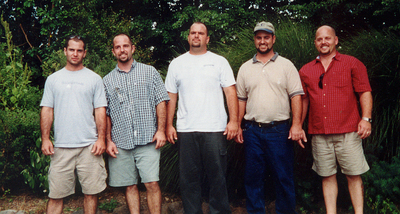
But Simpson, the youngest of five brothers, suffered from paranoid schizophrenia. He often experienced delusions that the FBI was watching him or that police would come take him to the CIA. Having police surround his home on that day must have felt like his nightmares were coming to life right in front of his eyes.
“The biggest thing that the public needs to know is that Josh was a good guy,” said Simpson’s brother, Brent. “He was a normal person at one time and his life was overcome by a mental illness that he couldn’t control.”
The Simpson family said they tried for seven years to get treatment for their brother, but they were unable to.
“We were trying to get him help,” said Greg, the eldest of the Simpson brothers. “But because of the way the laws were structured, it was very hard to intervene and get him help.”
Finally in 2013, Simpson was involuntarily committed. A psychiatrist told the Simpson family that Josh was showing signs of schizophrenia and that he should be hospitalized.
But, after 72-hours of detention and evaluations, he was released.
“To me, that’s the first place where the system broke down,” Greg said.
After the incident, Josh no longer trusted his family and cut off contact.
Flash forward to that October day, when a paranoid and frightened Simpson cracked under the pressure and lost his life.
Josh's family believes there were too many other chances to resolve the situation and get their brother help. Officers could have used crisis intervention training (CIT), for example, to de-escalate the situation. Any other option would have been better than how it eventually ended.
“Josh didn’t ask for this, no more than someone asked to be a diabetic or to have any other debilitating disease,” Greg said. “I don’t think anyone would ask for that.”
Read the Treatment Advocacy Center’s 2013 report on the prevalence of mental health diversion practices across the states to learn more.
(Photo: The Simpson brothers back in 2001, youngest to oldest: Josh, Brent, Keith, Wayne and Greg)
To comment, visit our Facebook page.
Visit our blog archive to read all our recent posts.
“You Promised You Wouldn’t Kill Me”
(Sept. 16, 2015) The Fairfax County Sheriff’s Office released a disturbing video last week showing the violent struggle with officers that preceded the death of Natasha McKenna—a 37-year-old woman suffering with untreated severe mental illness (“Virginia sheriff releases video of effort to subdue inmate who died,” New York Times, Sept. 10).
 Diagnosed with schizophrenia and bipolar disorder, McKenna was arrested early this year on a charge of assaulting a police officer before a 10-day hospitalization. She was taken to the Fairfax jail, and had been there for about a week before the tragic incident occurred. Diagnosed with schizophrenia and bipolar disorder, McKenna was arrested early this year on a charge of assaulting a police officer before a 10-day hospitalization. She was taken to the Fairfax jail, and had been there for about a week before the tragic incident occurred.
“It’s my responsibility as your sheriff to ensure that something like this never happens again,” said Fairfax County Sheriff Stacey Kincaid at the beginning of the video.
The video runs for more than 45 minutes, and depicts a graphic altercation between McKenna and five deputies during which she was shocked four times with a Taser.
Early in the video, an officer explains to McKenna that the Sheriff’s Emergency Response Team was going to remove her from her cell to take her to a different jail, and that the team had been called because she had soiled her cell, exhibited noncompliance and was restrained earlier in her custody.
Next, five officers dressed in white biohazard suits, black gas masks and purple gloves walked down a hallway to McKenna’s cell. McKenna emerged from the cell, nude and disoriented.
“You promised that you wouldn’t kill me,” McKenna said to the officers. “I didn’t do anything.”
They urged McKenna to get on the ground. A long struggle began in which she is heard gasping and moaning as the officers are repeatedly commanding her to “stop resisting.”
But doctors who had been treating McKenna’s schizophrenia had warned law enforcement that she lacked the ability to process or make decisions for herself.
After she ignored repeated warnings to comply or be shocked, the officers used a stun gun on McKenna four times. She lost consciousness following the struggle and died four days later, on Feb. 7.
McKenna’s death was a tragedy, and a preventable one at that.
Had this severely ill woman been diverted away from the corrections system and placed in a psychiatric hospital bed instead of a jail cell, perhaps she would have lived long enough to receive treatment and stabilize.
Unfortunately, this is not uncommon, as there are now 10 times more individuals with serious mental illness in prisons and jails than there are in state mental hospitals.
We must not let Natasha McKenna’s death be in vain, but instead use it as further motivation to overhaul our mental health system.
To comment, visit our Facebook page.
Visit our blog archive to read all our recent posts.
The Death of a Lonely Man – guest commentary
(Sept. 15, 2015) Aug. 19, 2015, the severely emaciated body of Jamycheal Mitchell is found on the floor of his cell in the Hampton Roads regional jail in Portsmouth Virginia.
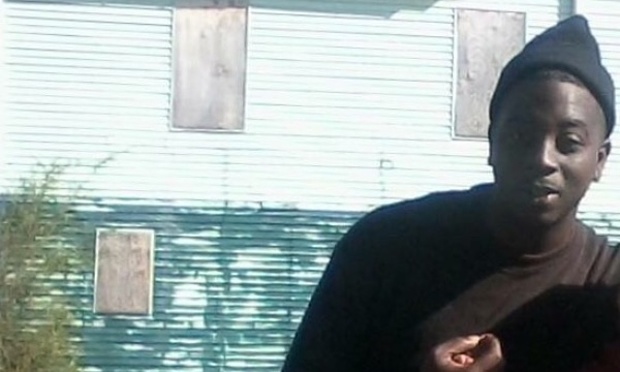 This came after four months of incarceration and the denial of bond. He had been ordered to a state mental hospital by the courts, but there was no room at the inn, so he stagnated, refusing treatment while his mental illness ran wild and crippled rational thoughts. This came after four months of incarceration and the denial of bond. He had been ordered to a state mental hospital by the courts, but there was no room at the inn, so he stagnated, refusing treatment while his mental illness ran wild and crippled rational thoughts.
According to his Aunt, Roxanne Adams, a registered nurse, her nephew had lost sixty-five pounds during his four-month incarceration. At a hearing, she was shocked by the absence of almost all of his muscle mass.
His crime? Stealing $5.00 in food from a Seven Eleven.
Since when did a disability, in this case bipolar disorder and schizophrenia, become a capital offense?
This should not come as a surprise — Since the 1970s, we as a society have turned our backs on those suffering from mental illness.
In the mad drive to cut budgets, mental-health services were always the first to suffer cuts, and they subsequently suffered the deepest.
The powers that be counted on our silence, and our complacency in the face of their moral cowardice to slash services and throw the mentally ill by the hundreds of thousands to the streets…un-housed, unkempt, hungry and alone.
Why did we as a society allow such callous treatment to those whose very illness forbids them to seek or accept help? Again, who protested when we turned our backs to them?
Do our hearts grow cold because of the prejudice we have been taught? Hollywood and the popular media have conditioned us to fear the mentally ill homeless as if their condition is somehow contagious.
We hear politicians tell us that the mentally ill are to blame for the epidemic gun violence in our country. Yet, these are the same folks who forever deny services by their budgets to those who suffer from disorders of the mind.
Fund the treatment of the mentally ill. Demand that the city and country insists that the mentally ill be treated or those who head those departments should be asked to seek employment elsewhere.
No more excuses. No more promises.
A man that starves to death in the custody of those whose duty is to “protect and serve” is a moral blight upon us all. The time is long past due to right this moral wrong.
KEN WILLIAMS
SANTA BARBARA, CALIFORNIA
Read the entire column.
To comment, visit our Facebook page.
Visit our blog archive to read all our recent posts.
|
|