
(Oct. 30, 2013) I have a 33-year-old son suffering from schizophrenia who is currently homeless. He is too paranoid to stay in a rented room and too delusional regarding our intentions as his parents to remain at home. And despite his multiple hospitalizations there have never been any positive outcomes upon his discharge. Despite all our efforts with him (since he was 20) in multiple counties with different doctors, he has been unable to avail himself of current treatment resources. Like many, he suffers from anosognosia, rendering him incapable of knowing that he is ill. This devastating form of denial is the impact of the disease of schizophrenia on the brain.
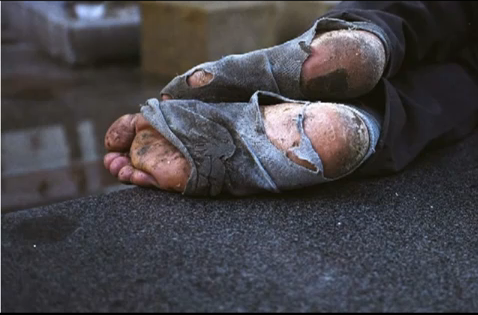 The other day he called and asked if I would bring him his books. I did and brought him home with me. When we got home I discovered what I have heartbreakingly discovered many times before: his legs were full of sores from bug bites caused by sleeping in the grass; his face was seriously sunburned, having no protection from the elements; the bag he was carrying smelled of urine; and his clothes did not come clean even after two washings. I let him shower, fed him, and let him sleep—hoping he would be free of the terror of being accosted while he slept.
And then I sat down and cried. I’m still crying as I write this, for I know the outcome already. He will stay here a few days but no longer. I can say this with certainty because the pattern is a very old one. After just a few days of rest he will begin to pace and then he will begin to accuse us of things that make no sense to the actual behaviors we exhibit. Then he will start to yell frightening comments and he will leave, sometimes voluntarily, but sometimes only with a call to 911.
With over fifteen years of hospitalizations and outcomes leading to homelessness each time, I have learned the horrifying reality that the only role I seem able to play in his life is to give him some respite now and then.
The good news is that my son has a group of supporters that we have never met: men and women who have struggled with their own severe mental illness. They are the heroes I watch with hope in my heart for my son. They are the men and women fighting for those who cannot fight for themselves. These men and women have found recovery, restoring the best of themselves with the help of medications, group and community support, county resources, and the ability to choose their own best approach. Sometimes they fight “for” and sometimes they fight “against” mental health recovery changes, like certain laws or regulations they feel steal a person’s dignity or human rights. Their motto is “nothing about us without us.” I like it.
They are saying to those who change the laws “please consider the human rights of each individual before you finish printing that law, or protocol, or program.” We need their voice! Grounded in their own experience and strengths, they have insights I may not have.
But as a parent of man who has been homeless and suffering for 16 years, I too, like many other parents with similar stories, have insights and experiences that others simply may not have. I have watched this illness rob my son of all personal dignity, of all ability to gauge what is real. On the continuum of illness, he has been robbed of his ability to choose a path that creates the life his supporters now have.
And so I remind each of us: we are all on the same team. Our stories, however different, have informed our advocacy. We are fighting for people like my son—not against his ability to choose, but for the platform created by interventions that will get him to the same playing level that you, his supporters, now stand on. It is our job as fellow human beings to fight for the right to have the right to choose recovery.
Sometimes mandatory compliance and intervention are the only things that will restore a person to sanity so that he or she is no longer wandering city streets with a sleeping bag and “dying with [his] rights on.” (E. Fuller Torrey).
Gloria Davidson, MS, LMFT
California
Davidson hopes that sharing her story might reinforce the desperate need for Laura’s Law, California’s assisted outpatient treatment program, in Alameda County