The Criminalization of Mental Illness at its Worst
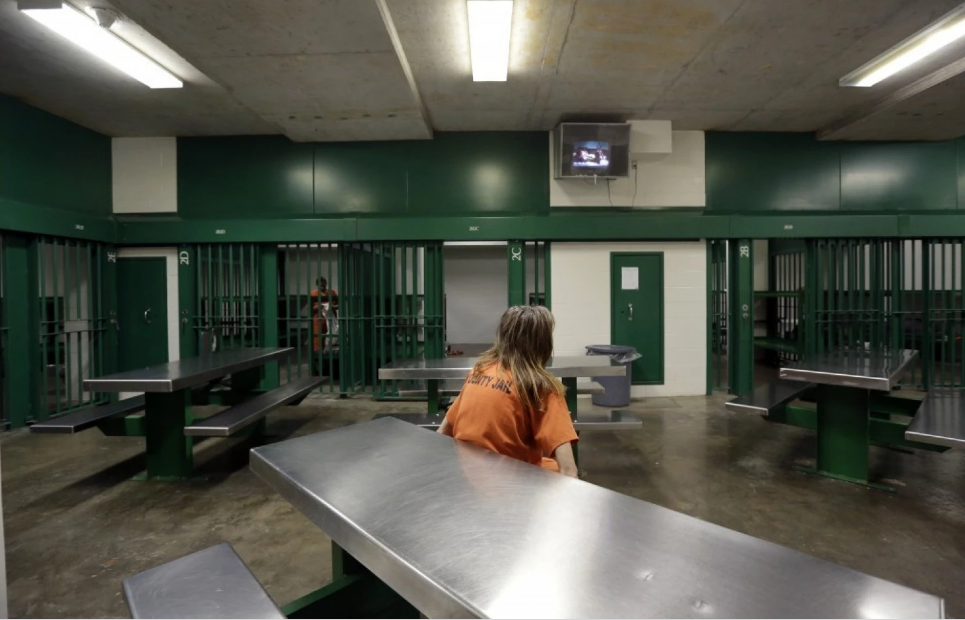
(July 25, 2016) In an outrageous example of the criminalization of mental illness in this country, a 25-year-old, bipolar, rape victim was incarcerated in a Texas jail for nearly a month to ensure she testified against her accused rapist (“Bipolar rape victim jailed after having a mental breakdown while testifying against rapist,” the Washington Post, July 21).
 Halfway through recounting the horrible details of her rape, the woman—known by the alias “Jane Doe” to preserve her anonymity—began crying and rambling incoherently while on the witness stand in a Harris County courtroom last December, according to court documents. Halfway through recounting the horrible details of her rape, the woman—known by the alias “Jane Doe” to preserve her anonymity—began crying and rambling incoherently while on the witness stand in a Harris County courtroom last December, according to court documents.
Disoriented, she stood up and ran screaming out of the courtroom. She was involuntarily committed to a psychiatric hospital to stabilize.
“We all agree she needed to be treated for mental instability,” her lawyer Sean Buckley told The Washington Post in a phone interview last week.
But after Doe was discharged from the hospital, she was thrown in jail for 28 days.
According to a lawsuit filed last week against the Harris County district attorney’s office, Doe was accidently classified as having committed a sexual crime during processing and placed in the general population at the county jail, even though the jail had a mental health unit.
During her 28 days there, Doe was attacked and given a black eye by another inmate, denied medication to treat her mental illness and punched in the face by a guard.
Harris County district attorney Devon Anderson released a statement saying she fully supports the decision to hold Jane Doe in jail.
“If nothing was done to prevent the victim from leaving Harris County in the middle of trial, a serial rapist would have gone free, and her life would have been at risk, while homeless on the street,” Anderson said.
But not everyone agrees.
“It’s astounding to me [this] could have happened,” said KPRC legal analyst Brian Wice. “At the end of the day she received less due process, less protection than the rapist did.”
The way Jane Doe was treated in this case is unconscionable. Jails and prisons are the worst environments for those suffering with serious mental illnesses.
The most ideal, logical alternative would have been for Jane Doe to remain in the psychiatric hospital long enough for her to fully stabilize and agree to complete her testimony.
The fact that a bipolar, rape victim who had not committed a crime was incarcerated for nearly month goes to show how far we still have to go in the battle against the criminalization of mental illness in the United States.
Visit #aBedInstead to learn more about the Treatment Advocacy Center's psychiatric bed campaign.
To comment, visit our Facebook page.
Visit our blog archive to read all our recent posts.
Mental Illness: The New Cancer – guest commentary
(July 22, 2016) My brother was a music student, outdoor leader, and president of his school’s student union. Creative and ambitious, he dreamed of continuing our father’s legacy by becoming a professional musician. Now he lives in a homeless shelter, and struggles to separate what’s real from what isn’t.
 My friend’s brother was another aspiring musician. He came from a healthy, loving family like mine. In university, he started having manic episodes, but refused treatment. He fled the country and moved to Ukraine, where he died last month, leaving behind a wife and unborn child. My friend’s brother was another aspiring musician. He came from a healthy, loving family like mine. In university, he started having manic episodes, but refused treatment. He fled the country and moved to Ukraine, where he died last month, leaving behind a wife and unborn child.
I could go on.
Mental illness is the new cancer. It is the cancer of Generation Y, a cancer that affects more young people than any other major illness. It takes the people you love and care about, at the peak of their lives, and reduces them to ghosts. Or worse.
Illnesses like schizophrenia, bipolar disorder, and major depression often begin invisibly and fester undetected for months or years. By the time you realize there’s a problem it’s often too late to do anything about it. You try anyway, then discover that mental illness can be treated (if the person is willing, if the medication is right, if they heed their wellness plans) but rarely “cured.”
Since I began writing about my brother, and talking to experts, I’ve come to realize that cancer is not a better understood disease than schizophrenia. The actual phenomenon of cancer—the random, uncontrolled division of abnormal cells—remains largely mysterious, so why does it get more attention than most, if not all, other diseases?
The answer is complicated. Physical illnesses are easier to identify, and receive more sympathy and resources. This needs to change. The same way that we recognize toxic physical environments—cities closed to radiation, houses filled with carcinogenic smoke—as causing cancer, we need to recognize toxic internal environments as having a similar effect on the mind.
Before he started showing psychotic symptoms, my brother was anxious, depressed, and uncertain about his future. Before my friend’s brother became delusional, he was devastated by the death of his grandfather.
We must continue to educate people about problems of the mind—and ultimately of consciousness—including the malignant forces that lead to brain disorders.
If we don’t, more people will suffer and perish, and the heartbreak will continue.
ZANDER SHERMAN
Author and family member affected by serious mental illness
Read the entire column here.
To comment, visit our Facebook page.
Visit our blog archive to read all our recent posts.
Florida Gunman’s Family Tried to Get Help Eight Times Before Tragedy
(July 21, 2016) A mentally ill man accused of killing two women in a Florida hospital last week was reportedly awaiting a court-ordered mental evaluation at the time of the incident—the fifth such order to get help that he had received in the last 10 years. (“Gunman accused of killing 2 at Titusville hospital was waiting for mental health evaluation,” WFTV, July 18).
 David Owens, 29, entered a Florida hospital last Sunday morning and fatally shot an 88-year-old patient and a hospital employee, in what police are calling a “random” act of violence. David Owens, 29, entered a Florida hospital last Sunday morning and fatally shot an 88-year-old patient and a hospital employee, in what police are calling a “random” act of violence.
In the days following the shooting, information has come out revealing Owens’ long history of mental illness and his family’s many failed attempts to get him help – eight to be exact.
Florida’s mental health system is clearly broken. Unsurprisingly, the state received an F for its inpatient commitment law and another F for its gross underuse of the laws overall in our 2014 survey of state mental health commitment laws.
Moreover, the state currently maintains just 13.1 beds per 100,000 people — far below the 50-bed standard considered necessary in order to provide minimally adequate treatment to people suffering with severe mental illness.
We can see the consequences of the broken system in Owens’ case.
A staff member at a treatment facility recommended in 2013 that Owens be involuntarily committed into an inpatient psychiatric hospital.
In 2016, three years after Owens himself requested to be admitted to a crisis unit, a judge ordered another mental health evaluation for him. That exam was still pending at the time of last Sunday’s shooting.
“For the people that lost their life, I hurt for them and their family,” said Owens' mother.
Owens’ mother said she tried for years to get long-term care for her mentally ill son. She believed her son was “out of control” and that he was off his medications.
She said Owens often spoke of killing, and she felt he was a danger to himself and others. She begged for her son to be sent to a mental hospital but, somehow, he continued to fall through the cracks.
“If the laws are not there, then no judge can say, ‘Let's force him to take his meds,’” said former chief judge and current WFTV legal analyst Belvin Perry. “We really need to evaluate the laws to make sure we protect the patients’ rights, get them help and protect society.”
Until something is done to address this abysmal situation, tragedies like this will surely continue.
To comment, visit our Facebook page.
Visit our blog archive to read all our recent posts.
RESEARCH WEEKLY: Mental Illness Behind Bars – We Know, What We Don't
(July 19, 2016) Innumerable studies worldwide have found that being mentally ill increases the risk of arrest and incarceration and for death, victimization, violence and other suffering once behind bars. Now, four unrelated reports published within just three days of July shed additional light on the condition and impacts of inmates with serious psychiatric disease.
 Each report illuminates a different aspect of mental illness behind bars. Each also illustrates the need for more systematic study of the issue. Following are summaries of what these disparate sources tell us and comments on additional research that is needed. Each report illuminates a different aspect of mental illness behind bars. Each also illustrates the need for more systematic study of the issue. Following are summaries of what these disparate sources tell us and comments on additional research that is needed.
Individuals with serious mental illnesses in county jails: A survey of jail staff's perspectives
Treatment Advocacy Center and Public Citizen's Health Research Group (July 14, 2016)
This survey of personnel at 230 county jails in 39 states found serious mental illness to be almost universal in the surveyed facilities.
Among the findings:
- More than 95% reported having some inmates with serious mental illness during the year-long survey period.
- Three-quarters reported seeing "more or far more" seriously mentally ill inmates during the 2010-2011 survey period than 5 to 10 years earlier.
- Most jails reported "major problems" with its mentally ill inmate population, including the need to monitor mentally ill inmates more closely for suicide, victimization and violence. Only 1.7% of the responding jails reported encountering no special problems associated with serious psychiatric disease among their inmates.
- Inmates with mental illness were more likely to be segregated than treated. Nearly 70% of the jails reported isolating inmates with serious mental illness; 45.2% reported offering "some sort of mental health treatment"; only 41.7% reported offering pharmacy services.
- Fewer than 25% of the jails offered a support system for mentally ill inmates after release.
Comment: An estimated 1.8 million US jail bookings annually involve people with serious mental illness. Illuminating as they may be, surveys are no substitute for official collection of comprehensive data about the diagnoses, treatment and impacts of these inmates.
Mental health of prisoners: Prevalence, adverse outcomes, and interventions
The Lancet Psychiatry (July 14, 2016)
This systematic review of international studies on prisoner mental health between 2003 and 2015 found inmates with serious mental illness consistently overrepresented within correctional settings and on multiple measures of inmate vulnerability.
Among the findings:
- 1 in 7 prisoners had major depression or psychosis, and many had comorbid substance abuse conditions. Women were more likely than men to have comorbid disorders.
- Women prisoners with serious mental illness were 6 times more likely to die of suicide than women in the general community. Male prisoners were 3-6 times more at risk than unincarcerated men.
- Self-harm short of suicide was reported in 20-24% of female prisoners and 5-6% of male prisoners.
- Mentally ill prisoners were disproportionately involved in prison rule-breaking and violence, more likely to be charged with violating rules than other prisoners and twice as likely to be injured in a prison fight.
Comment: Without systematic data collection on mentally ill inmates, the United States relies on more limited local or regional studies, media and anecdotal reports (see below) As a result, comparable, comprehensive information is not available to the US public and policymakers.
Sandra Bland died one year ago: And since then, at least 810 people have lost their lives in jail
The Huffington Post, July 13, 2016
The jail suicide rate in 1986 was 107 per 100,000 inmates. By 2006, it had dropped more than 60%, a reduction attributed to improvements in medical and psychiatric screening of new inmates. Even so, the suicide rate in jail was more than three times that of the general population, Dana Liebelson and Ryan J. Reilly report in this analysis of jail deaths. Sandra Bland, a 28-year-old Texas woman jailed following a traffic stop, was among those who killed themselves in jail in 2015.
"Deaths inside American jails frequently go unnoticed, sometimes even unrecorded," the authors write. "Unlike prisons, jails hold people for only short periods-about 21 days on average-and many of their inmates have not been convicted of a crime. Additionally, jails typically aren't required to release public information about people who die within their walls. The federal government publishes only generalized data years after deaths occur, making it nearly impossible to identify the most dangerous facilities. So we attempted to fill the gap."
Among the findings:
- 811 jail fatalities occurred in the year following Bland's July 13, 2015, death - an average of more than two per day and more than four times the number of unarmed people killed by police during the same period.
- Suicide accounted for 31% of the deaths, and 26% of the suicides occurred in the first three days of incarceration, even when the arrest resulted from minor charges unlikely to result in prison time. Suicide has been the leading cause of jail death every year since 2000.
- African-Americans were overrepresented in jail deaths, a reflection of their overrepresentation in jails and prisons overall.
Comment: The Department of Justice collects and reports detailed information on mortality in local jails and state prisons. Despite the growing suicide rate behind bars, the prevalence and role of mental illness in these and other deaths in correctional facilities is not included in its annual report.
Driving mentally ill to treatment elsewhere costly
Victoria Advocate (July 16, 2016)
After a Texas county closed its last psychiatric bed, area law enforcement was conscripted to provide transportation of people in psychiatric crisis to other counties, this analysis by the local newspaper found.
"Since the Crossroads' last inpatient mental health treatment center closed in 2010, area law enforcement have driven mentally ill people almost 228,000 miles for treatment elsewhere, enough to circle the earth nine times," Jessica Priest reports.
"And they've spent about $321,150 for their efforts, records show."
In Calhoun County, which has 16 deputy sheriffs, "One deputy does most of the transports, sometimes travelling up to 16 hours round trip," according to the report. In Jackson County, where the department has only six deputies, officers stood by more than 100 hours at the local hospital in the month of June waiting for mentally ill patients they transported to be assessed or admitted to a bed.
Comment: Priest said the distance and cost of transporting mentally ill individuals is understated because several counties don't keep track of how many mental health transports they perform and thus cannot assess the staffing and cost impacts of such transportation.
In Conclusion
The United States incarcerates more mentally ill prisoners than any other democracy. Study and reporting on their plight and their impact on the criminal justice system and communities are admirable and growing. If evidence-based public policy and to remedy the conditions being reported are to be implemented, relevant, systematic collection of data by state and federal agencies must begin

Doris A. Fuller
Chief of Research and Public Affairs
References:
- AbuDagga, Azza et al. (14 July, 2016). Individuals with serious mental illnesses in county jails: A survey of jail staff's perspectives. Public Citizen's Health Research and Treatment Advocacy Center.
- Fazel, Seena et al. (14 July, 2016). "Mental health of prisoners: Prevalence, adverse out comes, and interventions." The Lancet Psychiatry.
- Liebelson, Dana and Reilly, Ryan. (13 July, 2016). "Sandra Bland died one year ago: And since then, at least 810 people have lost their lives in jail." The Huffington Post.
- Priest, Jessica. (16 July, 2016). "Driving mentally ill to treatment elsewhere costly." Victoria Advocate (Texas).
- Torrey, E. Fuller et al. (2014). The treatment of persons with mental illness in prisons and jails. Treatment Advocacy Center.
Next Week: Psychological interventions for adults with bipolar disorder: A literature review
Research Weekly is a summary published as a public service of the Treatment Advocacy Center and does not necessarily reflect the findings or positions of the organization or its staff. Full access to research summarized may require a fee or paid subscription to the publications.
To comment, visit our Facebook page.
Visit our blog archive to read all our recent posts.
San Francisco Civil Grand Jury Report Underscores Need for #aBedInstead
(July 18, 2016) Jails and prisons have become “default mental institutions” in San Francisco, according to a Civil Grand Jury report released last Thursday. (“Grand jury: San Francisco jail a ‘default mental institution',” CBS SF, July 15).
 “This increase of mentally ill and homeless inmates in need of health, psychiatric, and reentry services further depletes the resources of the department,” the report noted. “This increase of mentally ill and homeless inmates in need of health, psychiatric, and reentry services further depletes the resources of the department,” the report noted.
The report's findings echo those of a comprehensive national survey of county sheriffs and detention officers released last week by the Treatment Advocacy Center and Public Citizen that found jails across the country are overwhelmed and unequipped to handle inmates with mental illness.
“The crises in public health and social services has made the jail an unintended provider of psychiatric and social services for the mentally ill and the homeless services the jail has neither the capacity nor the mandate to provide,” the Grand Jury report states. “This increase of mentally ill and homeless inmates in need of health, psychiatric, and reentry services further depletes the resources of the department.”
Among the grand jury’s recommendations are calls for Jail Behavioral Health Services to be staffed 24 hours a day, crisis intervention and suicide prevention training, and the establishment of a method for family members of inmates to communicate concerns about mental and physical health to staff.
Sheriff’s department officials said last week they were reviewing the grand jury report and working on plans to address the problem.
“The whole issue of behavioral health in custody is one that is being studied by re-envisioning the jail replacement project, and it’s an extremely important issue,” department spokeswoman Eileen Hirst said. “We’re glad that the grand jury decided to focus on that part of the jail system.”
The Grand Jury’s findings reiterate concerns raised by advocates across the country: the criminalization of mental illness has reached unprecedented levels and shows no sign of slowing down any time soon.
The problem is so big that this September the Treatment Advocacy Center will be launching an expansion of our psychiatric bed campaign, #aBedInstead, to end this injustice and ensure access to inpatient treatment for people with severe mental illness.
Visit #aBedInstead to learn more about our campaign.
To comment, visit our Facebook page.
Visit our blog archive to read all our recent posts.
Faith Community Joins Fight for HR 2646
(July 15, 2016) Representatives from the Catholic Church this week endorsed the Helping Families in Mental Health Crisis Act and assisted outpatient treatment (AOT).
 Speaking on behalf of the Catholic Church, Archbishop Thomas Gerard Wenski of the Archdiocese of Miami wrote a letter to the U.S. House of Representatives commending Congress for passing HR 2646 and taking a major step toward national mental health reform. Speaking on behalf of the Catholic Church, Archbishop Thomas Gerard Wenski of the Archdiocese of Miami wrote a letter to the U.S. House of Representatives commending Congress for passing HR 2646 and taking a major step toward national mental health reform.
“Those experiencing mental illness are among the most marginalized and underserved in our society,” writes Archbishop Wenski. “I applaud Congress’ recent efforts to mobilize legislation addressing the mental health crisis in the United States.”
The Archbishop goes on to laud specific components of the bill:
We applaud the provision of additional funds to assisted outpatient treatment, which has been shown to drastically reduce violence, arrest, hospitalization and incarceration of persons with serious mental illness. Such measures help to ensure that those who have been pushed to the peripheries of our society in the wake of deinstitutionalization receive the services they need to function with dignity and freedom. We encourage continued legislative prioritization of mental health care that embraces every human person as valued and filled with inherent dignity.
The Catholic Church’s endorsement of HR 2646 lends further credence to a bill that transcends both political and religious party lines.
We must not take this momentum for granted.
If the Senate fails to bring mental health reform to a vote, reform will fail this year. Families and their loved ones will continue to suffer.
Contact you Senators and tell them to make mental health reform a reality, now.
To comment, visit our Facebook page.
Visit our blog archive to read all our recent posts.
JAILS UNEQUIPPED, OVERWHELMED WITH INMATES WHO SUFFER FROM MENTAL ILLNESSES
(July 14, 2016) A new comprehensive national survey of staff in county jails released today by Public Citizen and the Treatment Advocacy Center shows challenges faced by county jails, almost all of which reported housing inmates with serious mental illnesses.
The survey, sought to understand the point of view of front line workers at county jails, including sheriffs, deputies and other staff who have to care for seriously mentally ill inmates during their incarceration. The report describes the numerous challenges faced by county jail staff, as well as the limited training they are given, to address the needs of inmates with serious mental illnesses.
The incarceration rate for Americans with serious mental illnesses has reached a critical stage because many of these individuals are predisposed by their illnesses to committing minor crimes (such as trespassing or shoplifting), landing in jails and racking up prolonged incarceration time awaiting a state psychiatric bed. Many of them receive no or inadequate mental health treatment during their incarceration, which worsens their conditions.
The survey obtained responses from 230 sheriffs’ departments in 39 states that operate jail facilities or detention centers. These survey data constitute the most thorough national feedback on the perspective of county jail staff in more than two decades.
John Snook, executive director of the Treatment Advocacy Center said, “The horror stories from family members and law enforcement alike should galvanize the country to make substantial reforms to our mental health system that would allow necessary and appropriate treatment before people become entangled in the criminal justice system.”
Read the full survey and results.
Sacramento Bee Editorial Board to U.S. Senate: “Approve HR 2646”
(July 13, 2016) The U.S. House of Representatives last week took a major step forward in providing better treatment for individuals with severe mental illness by passing the Helping Families in Mental Health Crisis Act (HR 2646) by a vote of 422-2.
 The finish line is just in sight. But the U.S. Senate still must approve the legislation — action that media outlets across the country are calling for (“Congress steps toward helping mentally ill people, Sacramento Bee, July 11). The finish line is just in sight. But the U.S. Senate still must approve the legislation — action that media outlets across the country are calling for (“Congress steps toward helping mentally ill people, Sacramento Bee, July 11).
The Sacramento Bee editorial board recently spoke out to commend the House for “show[ing] a commitment to an issue that too often is ignored” and urge the Senate to “take a cue from the House and approve HR 2646.”
The praise is well-deserved. The landmark, bipartisan bill is the light at the end of the tunnel that individuals and families affected by severe mental illness have been waiting for.
HR 2646 would take important steps to begin the reformation of HIPAA, including requiring HHS to pass new regulations detailing when and how mental health information can be shared with families and caregivers. The bill would also provide more money to states to increase the number of inpatient psychiatric beds, authorize funding for assisted outpatient treatment (AOT) to catalyze communities to implement the lifesaving, evidence-based treatment program, among other important provisions.
“In this election year, Democrats and Republicans will seek every advantage as they try to win or maintain control of Congress,” write the SacBee editors. “But they also must understand that mental illness knows no party, and that they all will come away with victory if they provide some measure of care for people who cannot care for themselves.”
We couldn’t have said it better ourselves.
The landslide House vote sends a clear message to the Senate: our treatment system is broken and unacceptable. But, to change the status quo, they too must take action.
WE’RE ALMOST THERE!Contact your Senators and tell them to bring mental health to a vote, NOW.
To comment, visit our Facebook page.
Visit our blog archive to read all our recent posts.
RESEARCH WEEKLY: Beyond Raising Cain: The Role of Serious Mental Illness in Family Homicide
(July 12, 2016) The toll of being principle caregiver for a mentally ill loved one, already well-documented, has expanded with the Treatment Advocacy Center's release of Raising Cain: The Role of Serious Mental Illness in Family Homicide. The first study to examine the relationship between psychiatric disease and family violence found that a serious mental illness is present in nearly 30% of all family homicides.
 Based on a review of the relevant literature from 1960 to 2015, the role of diseases such as schizophrenia and bipolar disorder was estimated to be a factor in 50% of cases when parents kill children and nearly 70% when children kill parents. An emerging pattern of mental illness in homicides against grandparents also was found. Based on a review of the relevant literature from 1960 to 2015, the role of diseases such as schizophrenia and bipolar disorder was estimated to be a factor in 50% of cases when parents kill children and nearly 70% when children kill parents. An emerging pattern of mental illness in homicides against grandparents also was found.
More from E. Fuller Torrey
E. Fuller Torrey, MD, conducted the research as lead author, a role he has repeatedly assumed since founding the Treatment Advocacy Center in 1998. Dr. Torrey's record of exposing important issues that have been overlooked is well-established. When asked about the impact of this body of work, he demurs, explaining that he, "focuses on what interests him." Thankfully, his interests include an unrelenting focus on the plight of individuals and families living with untreated severe mental illness.
Previous Treatment Advocacy Center studies Dr. Torrey conducted include:
- Clozapine for treating schizophrenia: A comparison of the states (2015), documenting how dramatically the use of "gold-standard" medication for psychotic disorders varies among the states
- The treatment of persons with mental illness in prisons and jails: A state survey (2014), reporting that individuals with serious mental illness are 10 times more likely to be in prisons or jails than in state psychiatric hospitals
- No room at the Inn: Trends and consequences of closing public psychiatric hospitals (2012), finding that state hospital bed populations declined 14% nationally from 2005-2010
Other Contributions
For decades, Dr. Torrey's unique vision and iconoclastic research has reshaped our understanding of mental illness and its treatment. In 1983, one of his first books, Surviving Schizophrenia: A Family Manual, radically departed from psychiatry orthodoxy by declaring that disease, not bad mothers, caused schizophrenia. The proposal electrified - or infuriated - psychiatrist colleagues who, for decades, had embraced the Freudian conviction that "schizophrenogenic mothers" were to blame. With this single book, now in its sixth edition, generations of mothers (and fathers) had authoritative proof that their children's suffering was not their fault.
Dr. Torrey continues to challenge the status quo in his research, focusing on the role of infection in schizophrenia. Previously considered heretical by many researchers, Torrey's work is now widely recognized as opening important research avenues for medicine all across the world.
His analysis of our nation's policies around mental illness feature that same willingness to question convention. His book, American Psychosis: How the Federal Government Destroyed the Mental Illness Treatment System, and his personal advocacy for changes to the mental health system have been widely credited for catalyzing the reform efforts being seen in the halls of Congress today. The Helping Families in Mental Health Crisis Act, which was passed by the House of Representatives on a vote of 422-2 on July 6, includes a host of reforms championed by Dr. Torrey in hearings and in his book.
Raising Cain adds critical new evidence to the case for mental health policy reform that delivers timely and effective treatment for serious mental illness. What's not new is that it came from Dr. E. Fuller Torrey.
John Snook
Executive Director
Treatment Advocacy Center
References:
Research Weekly is a summary published as a public service of the Treatment Advocacy Center and does not necessarily reflect the findings or positions of the organization or its staff. Full access to research summarized may require a fee or paid subscription to the publications.
To comment, visit our Facebook page.
Visit our blog archive to read all our recent posts.
When Mental Illness Hits Home – guest commentary
(July 11, 2016) I have three sisters, all of whom I love dearly. We live in four different states, but I talk to them all the time.
 But for one of my sisters, the phone calls have become like a lifeline to mental stability. But for one of my sisters, the phone calls have become like a lifeline to mental stability.
You see, my sister suffers from schizophrenia, a chronic, debilitating mental disorder. Diagnosed in her late 20s, she became part of a population that’s rapidly growing in the United States, where one in four adults now suffers from a mental illness and about one in 17 live with schizophrenia, major depression or bipolar disorder.
`As a young adult, she began experiencing fits of uncontrollable rage, a stark contrast to her usual quiet demeanor. Then she began to have fixations that defied reality, along with paranoia and erratic behavior.
At first, it was heart-wrenching as our family watched manifestations of the illness at church and other public venues. We felt helpless, frustrated and maybe even a little embarrassed. But as we learned more about mental illness, we discovered that it is nothing to be ashamed of. My sister has a disease, just like people have cancer or diabetes. And what she needed was professional help.
Why am I sharing this story? Because July is National Minority Mental Health Month, and I bet there are many families like ours struggling with such a scenario. Some can’t get the help that they need because of insane laws that require a person to be a threat to someone or themselves before accessing treatment. No wonder our jails are filled to capacity.
It breaks my heart every time a story appears in the news about a mentally ill person becoming violent or losing his or her life unnecessarily. And I empathize with families whose tragedies may have been avoided if their loved ones had gotten the help they needed.
For my family, it has been an emotional roller coaster ride. My sister, now in her mid-50s, has never been a real threat to anyone else. But she has refused to take her medication on several occasions, and we had to jump through hoops to have her hospitalized. One mental health professional told us, “She has a right to be mentally ill if she wants to.”
These days, she has come to grips with her illness and continues to take her medication. Her contagious laugh has returned, along with all the beautiful qualities that have always made her such a special part of our lives.
But living with a mental illness is a struggle that never truly goes away. So, we take it one day at a time.
ALVA JAMES-JOHNSON
COLUMBUS, GEORGIA
Read the entire column here.
To comment, visit our Facebook page.
Visit our blog archive to read all our recent posts.
|
|