RESEARCH WEEKLY: Antipsychotic Medication May Save Lives
(June 21, 2016) Often overlooked in debates over the merits and drawbacks of antipsychotic medication is its role in reducing suicide by individuals with schizophrenia, who die approximately 20 years younger than their unaffected peers in the United States.
 "One way anti-psychiatry groups trivialize psychosis and marginalize psychiatry is by emphasizing the adverse effects of antipsychotic medications while denying or minimizing their benefits," writes Ronald Pies, MD, in the June issue of Psychiatric Times. "To be sure, the well-recognized metabolic, neurological and cardiovascular risks associated with many antipsychotic medications must be taken very seriously. Moreover, antipsychotics (APs) are often used when they are not needed.... "One way anti-psychiatry groups trivialize psychosis and marginalize psychiatry is by emphasizing the adverse effects of antipsychotic medications while denying or minimizing their benefits," writes Ronald Pies, MD, in the June issue of Psychiatric Times. "To be sure, the well-recognized metabolic, neurological and cardiovascular risks associated with many antipsychotic medications must be taken very seriously. Moreover, antipsychotics (APs) are often used when they are not needed....
"On the other hand, there is convincing evidence that in patients with chronic schizophrenia, APs play a crucial role in maintaining remission, averting relapse, improving quality of life and - importantly - reducing overall mortality" (author's emphasis).
In other words, despite their medical side effects, antipsychotic drugs appear to save lives.
Antipsychotics and Suicide Prevention
Pies writes that "even many psychiatrists" may be unaware of the role antipsychotic medications play in reducing suicide among individuals with schizophrenia, whose lifetime risk of killing themselves is at least 10 times that of the general public. He cites research that "the only consistent protective factor for suicide" is delivery of and adherence to effective medication, particularly clozapine, the only medication approved by the FDA for the prevention of suicide.
While clozapine is well-documented for its effectiveness in reducing suicidal behavior (e.g., suicide attempts, hospitalizations and rescue interventions), Pies reports "there is accumulating evidence that antipsychotic medication in general is associated with decreased risk of suicide" in schizophrenia. He cites studies with findings of:
- Excess mortality mostly in schizophrenia patients not taking antipsychotic medications (26 suicides in patients not taking APs vs 1 in patients taking them out of a population of 2,230 patients)
- 400% increase in risk of attempted suicide among patients who stopped taking prescribed olanazapine or risperidone for at least 30 days
- Maximum anti-suicide benefits at higher dosages of antipsychotics
"It would be incorrect to infer from this brief review that the optimal treatment of schizophrenia is simply a matter of giving patients antipsychotic medication," writes Pies, a professor of psychiatry at SUNY Upstate Medical University and Tufts University School of Medicine. Psychosocial services such as assertive community treatment, supported employment and family-based services also confer important benefits, he said
"But there is little question that, for patients suffering the chronic, debilitating symptoms of schizophrenia, antipsychotic medication is a critical component of treatment - and may literally be lifesaving."

Doris A. Fuller
Chief of Research and Public Affairs
References:
Research Weekly is a summary published as a public service of the Treatment Advocacy Center and does not necessarily reflect the findings or positions of the organization or its staff. Full access to research summarized may require a fee or paid subscription to the publications.
“There Are No Clear Pathways Out of Mental Illness, But There is Hope” – personally speaking
(June 16, 2016) My worldview has been shaped by mental illness. I personally escaped “the beast” of severe mental illness until my adulthood. Not all of my relatives could say the same thing.
 I breezed along nicely from 0-41, but when my child was diagnosed with a life-threatening illness the resulting stress led me into a downward spiral. After almost five years of getting little sleep and numerous emergencies with my child, I had a psychotic break in 1996. I was diagnosed with bipolar disorder while on vacation out of town. I breezed along nicely from 0-41, but when my child was diagnosed with a life-threatening illness the resulting stress led me into a downward spiral. After almost five years of getting little sleep and numerous emergencies with my child, I had a psychotic break in 1996. I was diagnosed with bipolar disorder while on vacation out of town.
I’ve been dealing with this illness for 20 years now, and the barriers have been different at different times. The hard and harsh truth is, after all this time, I still face barriers to treatment. Even though I thoroughly understand myself, getting the rest of the world to understand the fact that mental illnesses are just that – illnesses – is difficult.
Among the barriers I’ve personally experienced are lack of insurance, lack of coverage for counseling, waiting times for appointments of over two months, lack of appropriately trained hospital personnel, abusive medical people, abusive cops, inappropriate placement in an isolation cell at the county jail, lack of wrap-around help after the crisis has passed, and exorbitant prices for the "good meds.’ Luckily, I have been able to stabilize, but others may not be so lucky. There are no clear pathways out of “being disabled with a mental illness” for many reasons – lack of funding for facilities, personnel, treatments that work, and research into curing these debilitating illnesses.
But, in my opinion, the biggest hurdle yet for helping people get treatment, or staying in treatment, is the way society reacts to people with these illnesses. That is why everyone must help to eliminate the stigma against us. When you see or hear something, say something – whether online or in person. Call the media out when they sensationalize, demonize or otherwise dehumanize us. Embrace those within your reach who may have a mental illness. It could mean the literal difference between life and death for that one person you know.
I presently work with the Dane County Health Department on a team helping people get their lives back together after a mental health and/or substance abuse crisis. I now work to ensure others don't encounter the same barriers to treatment that I did. You’d be surprised at what a difference one person can make.
DOROTHY HAWKINS
DANE COUNTY, WISCONSIN
(Photo: Vanessa/Flickr)
To comment, visit our Facebook page.
Visit our blog archive to read all our recent posts.
WE DID IT! With Unanimous Support, HR 2646 Passes Out of Committee
(June 15, 2016) In a historic moment for people with severe mental illness and their families, the Helping Families in Mental Health Crisis Act (HR 2646) passed out of the Energy and Commerce Committee markup this morning with all provisions intact to help people with a severe psychiatric disease; now the bill advances to the House floor.
 TODAY’s unanimous, bipartisan vote by the Energy and Commerce Committee is a tremendous victory for the Helping Families in Mental Health Crisis Act and for people with severe mental illness and their families. TODAY’s unanimous, bipartisan vote by the Energy and Commerce Committee is a tremendous victory for the Helping Families in Mental Health Crisis Act and for people with severe mental illness and their families.
“This vote advances landmark mental health reform for the nearly 9 million Americans with schizophrenia and bipolar disorder,” said Treatment Advocacy Center Executive Director, John Snook. “The country has spent the last half-century dismantling the mental illness treatment system. This bill is a major step towards reversing that. Now Congress must harness this momentum and bring the bill to the floor.”
WE NEED YOU MORE THAN EVER.
Tell your Representatives we have waited long enough. ACT NOW to bring real mental health reform to a vote before August recess.
WHAT’S NEXT?
Today’s vote is a major win and could not have happened without you, our brave supporters. But we’re not done yet! The House must vote on HR 2646 before legislators leave for recess in August.
To comment, visit our Facebook page.
Visit our blog archive to read all our recent posts.
JAILS UNEQUIPPED, OVERWHELMED WITH INMATES WHO SUFFER FROM MENTAL ILLNESSES
(June 14, 2016) A new comprehensive national survey of staff in county jails released today by Public Citizen and the Treatment Advocacy Center shows challenges faced by county jails, almost all of which reported housing inmates with serious mental illnesses.
 The survey, sought to understand the point of view of front line workers at county jails, including sheriffs, deputies and other staff who have to care for seriously mentally ill inmates during their incarceration. The report describes the numerous challenges faced by county jail staff, as well as the limited training they are given, to address the needs of inmates with serious mental illnesses. The survey, sought to understand the point of view of front line workers at county jails, including sheriffs, deputies and other staff who have to care for seriously mentally ill inmates during their incarceration. The report describes the numerous challenges faced by county jail staff, as well as the limited training they are given, to address the needs of inmates with serious mental illnesses.
The incarceration rate for Americans with serious mental illnesses has reached a critical stage because many of these individuals are predisposed by their illnesses to committing minor crimes (such as trespassing or shoplifting), landing in jails and racking up prolonged incarceration time awaiting a state psychiatric bed. Many of them receive no or inadequate mental health treatment during their incarceration, which worsens their conditions.
The survey obtained responses from 230 sheriffs’ departments in 39 states that operate jail facilities or detention centers. These survey data constitute the most thorough national feedback on the perspective of county jail staff in more than two decades.
John Snook, executive director of the Treatment Advocacy Center said, “The horror stories from family members and law enforcement alike should galvanize the country to make substantial reforms to our mental health system that would allow necessary and appropriate treatment before people become entangled in the criminal justice system.”
Read the full survey and results.
RESEARCH WEEKLY: City Living and Psychosis
(June 14, 2016) Multiple studies have found that growing up in a city doubles the risk of developing schizophrenia or other psychotic disorders in adulthood. Research also has found that children who experience psychosis are at significantly higher risk for developing schizophrenia and other mental health disorders as adults.
 Given the personal and economic toll of psychiatric diseases and the fact that two-thirds of the world's population is projected to be living in cities by 2015, the question of "Why?" urbanicity is associated with psychosis is an urgent one. Given the personal and economic toll of psychiatric diseases and the fact that two-thirds of the world's population is projected to be living in cities by 2015, the question of "Why?" urbanicity is associated with psychosis is an urgent one.
Childhood Psychosis "Surprisingly Prevalent"
In search of answers, a team of researchers from King's College in London and Duke University in North Carolina analyzed the neighborhood characteristics of more than 2,200 12-year-olds participating in a longitudinal twin study in Great Britain. An advance report on the team's findings was published May 6 in Schizophrenia Bulletin online ("Why are children in urban neighborhoods at increased risk for psychotic symptoms? Findings from a UK longitudinal cohort study").
Joanne Newbury and colleagues note that psychotic symptoms are "surprisingly prevalent" among children in the general population. Although such symptoms typically are short-lived, children who experience them are at "significantly elevated risk" for schizophrenia and other psychotic and mental health conditions as adults, including substance abuse, depression, post-traumatic stress and suicidal behavior. The authors said the trajectory is "consistent with the neurodevelopmental model of schizophrenia," which holds that serious psychiatric disease begins developing at the neurological level during childhood or early adolescence, long before symptoms are manifest.
The participant twins were equally likely to be living in urban or suburban/small town/rural settings. At the age of 12, 5.9% of the 2,232 children reported experiencing at least one psychotic symptom (e.g., hallucinations, paranoid delusions). However, city children were 80% more likely to have experienced symptoms: 7.4% of the urban-dwelling children compared 4.4% of the non-urban children.
The pattern held true independent of family socioeconomic status, psychiatric history, maternal psychosis and/or whether the neighborhood was affluent or economically deprived. The same association was not found between urbanicity and depression or anxiety.
Risk and Mitigation Factors
The study analyzed four neighborhood social characteristics for their potential role in the association: social cohesiveness and supportiveness among neighbors; social control, including the likelihood of neighbors intervening in neighborhood problems; neighborhood disorder, whether physical or social; and direct experiences of being victimized (e.g., mugged).
Children who lived in neighborhoods with higher social cohesion and social control at the age of 5 were "significantly less likely to experience psychotic symptoms" at the age of 12, the analysis found, while children living in neighborhoods with higher levels of disorder and crime victimization at 5 years old were "significantly more likely" to experience psychotic symptoms by the age of 12. Low social cohesion combined with crime victimization explained nearly 25% of the association between urbanicity and psychosis in childhood.
"From a child's perspective, growing up in a crowded neighborhood characterized by insecure/ nonexistent social support networks, unfriendly/unpredictable interactions between neighbors, and fear of/ exposure to crime could promote psychotic symptoms in various mutually compatible ways," according to the authors.
The researchers speculated that prolonged exposure to neighborhood-level social stressors "could dysregulate the hypothalamic-pituitary-adrenal axis, dopaminergic system and/or neurodevelopment" to increase risk of psychotic symptoms, particularly among children with a genetic predisposition, but these possible mechanisms were beyond the scope of the study.
"The present findings therefore underscore the emerging need to identify the social, psychological and biological pathways leading from neighborhood-level exposures to childhood psychotic symptoms," the authors concluded - and, by extension, into adult schizophrenia and other serious mental illness.
"Urbanicity," they said, "is a key area for psychosis research."
Doris A. Fuller
Chief of Research and Public Affairs
References:
Next Week: Beyond Raising Cain
Research Weekly is a summary published as a public service of the Treatment Advocacy Center and does not necessarily reflect the findings or positions of the organization or its staff. Full access to research summarized may require a fee or paid subscription to the publications.
To comment, visit our Facebook page.
Visit our blog archive to read all our recent posts.
A Major Announcement Regarding Mental Health Reform
(June 13, 2016) Tomorrow, the Treatment Advocacy Center's own Doris Fuller will deliver the keynote address at a bipartisan Congressional event on the steps of the Capitol to mark the next step in the fight for real mental health reform. Doris will speak to her own experiences in seeking help for a loved one with mental illness and why mental health reform cannot afford to wait.
 She'll be joined by Chairman Fred Upton, Representatives Tim Murphy and Eddie Bernice Johnson and Sarah Chamberlain, President of Main Street Partnership. The following day, H.R. 2646 will receive a full committee markup, with expected bipartisan support. She'll be joined by Chairman Fred Upton, Representatives Tim Murphy and Eddie Bernice Johnson and Sarah Chamberlain, President of Main Street Partnership. The following day, H.R. 2646 will receive a full committee markup, with expected bipartisan support.
All of our hard work and effort is finally paying dividends - mental health reform is moving in the halls of Congress. The time has finally come for real mental health reform.
Event Details:
When: Tuesday, June 14, 2016, 11 AM EST
Where: House Triangle (Southeast side of US Capitol)
RSVP to:
This e-mail address is being protected from spambots. You need JavaScript enabled to view it
Read the event flyer here.
To comment, visit our Facebook page.
Visit our blog archive to read all our recent posts.
The Des Moines Register Calls for #aBedInstead
(June 13, 2016) Governor Terry Branstad closed two Iowa state psychiatric hospitals last year and left open the possibility of closing one or both of the two left.
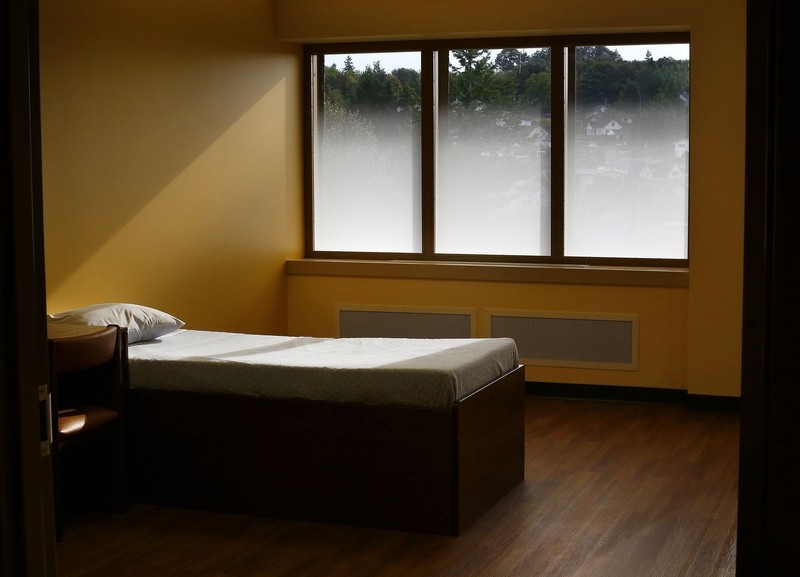 But there remains an immense need for inpatient psychiatric care in Iowa, and Gov. Branstad’s actions are leading the state into a downward spiral that will ensure its most severely ill residents continue to fall through the cracks of a broken system. But there remains an immense need for inpatient psychiatric care in Iowa, and Gov. Branstad’s actions are leading the state into a downward spiral that will ensure its most severely ill residents continue to fall through the cracks of a broken system.
As a recent editorial by the Des Moines Register aptly points out, “if the governor is trying to ensure Iowa does a worse job of providing [mental health treatment] than any other state, he's met his objective” (“Editorial: Iowa ranks last for state psychiatric beds,” Des Moines Register, June 13).
In fact, Iowa ranks dead last in the country for state psychiatric beds per capita, according to a new 2016 Treatment Advocacy Center report.
Between 2010 and 2016, Iowa eliminated 85 of its public psychiatric beds – a 57% percent decrease. The state currently maintains just 2 beds per 100,000 people ¬ – well below the 50-bed standard considered necessary in order to provide minimally adequate treatment to people suffering with severe mental illness.
Further, in Iowa, more than half the beds are occupied by people involved in the criminal justice system.
So, what does all of this mean for Iowans?
“It means family members, law enforcement officers, judges and social workers seeking help for a violent or suicidal person can’t find it. Or they may need to drive across the state for an open bed,” the Des Moines Register editors explain. “It means that people suffering from mental illness end up in government facilities designed for incarceration. They may hang themselves in a jail cell. They may be on the receiving end of an officer’s Taser. “
Iowa’s most severely ill deserve better than this. They need access to adequate, inpatient psychiatric care; they need #aBedInstead.
Public officials in Iowa should halt any plans of shuttering the state’s two remaining psychiatric hospitals. On the contrary, they must add additional beds and increase access to treatment for the state’s most vulnerable citizens.
Read our 2016 report “Going, Going, Gone: Trends and Consequences of Eliminating State Psychiatric Beds," and visit #aBedInstead to learn more about the national psychiatric bed shortage.
To comment, visit our Facebook page.
Visit our blog archive to read all our recent posts.
The Helping Families in Mental Health Crisis Act Takes a Major Step Forward
(June 9, 2016) For families exhausted from battling a broken mental health system, finally there is light at the end of the tunnel.
 The House Energy and Commerce Committee, chaired by Representative Fred Upton (R-MI), has scheduled a full committee markup next Wednesday, June 15, to consider HR 2646, the landmark mental health reform legislation introduced last year by Representatives Tim Murphy (R-PA) and Eddie Bernice Johnson (D-TX). The House Energy and Commerce Committee, chaired by Representative Fred Upton (R-MI), has scheduled a full committee markup next Wednesday, June 15, to consider HR 2646, the landmark mental health reform legislation introduced last year by Representatives Tim Murphy (R-PA) and Eddie Bernice Johnson (D-TX).
The Teatment Advocacy Center has been closely monitoring the negotiation process and we are pleased that despite the many competing interests, the bill hasn't lost its focus on severe mental illness.
Among the most important reforms we expect to see:
- Reforming SAMHSA: Creates an Assistant Secretary of Mental Health and Substance Use Disorders - who must be a medical doctor - to coordinate efforts and elevate the importance of mental health and severe mental illness in the federal government;
- Funding AOT: Authorizes an additional two years of funding for the Assisted Outpatient Treatment (AOT) federal grant program to catalyze communities to implement this lifesaving, evidence-based treatment program;
- Addressing P&A: Provides important oversight and reporting requirements for federal Protection & Advocacy organizations to ensure that these vital programs are properly focused on their mission;
- Other major fixes:
o Codifies the recently released IMD rule allowing for up to 15 days per month of inpatient psychiatric care for many Medicaid beneficiaries and requires the extension of 1115 waivers to provide other avenues to address IMD;
o Takes important steps to begin the reformation of HIPAA, including requiring HHS to pass new regulations detailing when and how mental health information can be shared with families and caregivers;
o Strengthens community crisis response, including grants for the creation of community bed databases;
o Authorizes grant funding to create new assertive community treatment (ACT) teams.
Details on the time and location will be posted here, as they become available.
VOICE YOUR SUPPORT. Tell members of the Energy and Commerce Committee that we MUST keep the focus on people with severe mental illness.
To comment, visit our Facebook page.
Visit our blog archive to read all our recent posts.
Psychiatric Bed Shortage an “Unimaginable Crisis” in Sonoma County
(June 8, 2016) Inmates suffering with severe mental illness in California’s Sonoma County Jail are especially affected by the national psychiatric bed shortage, jail officials said last week (“Decline in psychiatric hospital beds concerns Sonoma County Jail officials,” the Press Democrat, June 5).
 In the past five years, 20 percent of the nation’s state hospital beds for the country’s most severely ill psychiatric patients have disappeared, and local jails are increasingly picking up the slack. In the past five years, 20 percent of the nation’s state hospital beds for the country’s most severely ill psychiatric patients have disappeared, and local jails are increasingly picking up the slack.
“We’re seeing that the situation regarding state hospital beds has reached an unimaginable crisis,” said Treatment Advocacy Center Executive Director John Snook. “We’re now seeing far fewer beds than would even be considered the bare minimum.”
Specifically, California maintains just 15 public psychiatric beds per 100,000 people – not nearly enough to provide minimally adequate treatment for the most severely ill.
The psychiatric bed crisis has resulted in Sonoma County jail inmates with severe mental illness being forced to wait many months to be transferred to a state hospital for appropriate mental health treatment.
“It takes anywhere from six to eight months to get them into a state hospital bed,” said Michael Kennedy, director of Sonoma County’s mental health department. “That has a huge impact on folks that need to get out of jails to get into a state hospital.”
Interestingly, Sonoma County Jail was granted $40 million last year for the construction of a new mental health unit.
While it is certainly understandable that those working in corrections want to find solutions for the human suffering they see in their jails, creating mental health units in a jail is a poor substitute for a state committing the necessary resources to see treatment delivered where it should be delivered: in hospitals, staffed by medical professionals.
Rather than changing how they deal with people in jail whose mental illness has been criminalized, states have a responsibility to get treatment to their citizens before they go to jail – or at least to get them out of jail and into the hospital in a reasonable amount of time.
That means better treatment systems and more beds.
Read our 2016 report, “Going, Going Gone,” to learn more about the trends and consequences of eliminating state psychiatric beds.
To comment, visit our Facebook page.
Visit our blog archive to read all our recent posts.
RESEARCH WEEKLY: Beyond Going, Going, Gone: Beds Behind Bars
(June 7, 2016) Going, Going Gone - the Treatment Advocacy Center's newest survey of psychiatric beds in the 50 states and District of Columbia - does not report numbers for one category: beds in psychiatric units on state prison grounds.
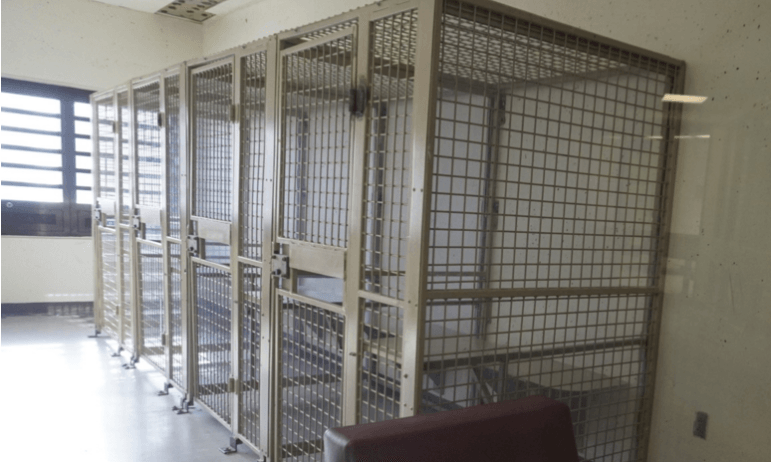 "Some states have built high- or medium-security forensic hospitals on prison grounds for mentally ill inmates . . . ," said the report subtitled Trends and Consequences of Eliminating State Psychiatric Beds, 2016. "Beds behind bars are not counted in this survey because we regard this practice as an inhumane and unacceptable public policy for the treatment of disease." "Some states have built high- or medium-security forensic hospitals on prison grounds for mentally ill inmates . . . ," said the report subtitled Trends and Consequences of Eliminating State Psychiatric Beds, 2016. "Beds behind bars are not counted in this survey because we regard this practice as an inhumane and unacceptable public policy for the treatment of disease."
Psychiatric beds are increasingly being opened behind bars to "solve" or reduce state bed shortages by diverting mentally disordered offenders from state hospitals to prisons. While this may reduce demand for state hospitalization, it frames serious mental illness as a crime and subjects acutely ill individuals to settings like the ones illustrated in the accompanying photographs by Nancy West of the New Hampshire Center for Public Interest Journalism - hardly the picture of therapeutic care.
Growing, Growing Beds
We did not survey for psychiatric beds on prison grounds because they may not be certified and are not therapeutic. Therefore, they are not comparable to state hospital beds. Nonetheless, a number of states reported their beds behind bars to the survey conducted by our Office of Research & Public Affairs or publish their numbers online. These anecdotes illustrate a range of approaches.
- California reported 5,905 total state hospital beds in the first quarter of 2016. Of those, the vast majority - all but about 1,500 beds - were occupied by forensic patients. However, the state reports an additional 1,077 beds on the grounds of medium- or high-securityprisons. This means nearly 80% of all state-operated beds left in California are occupied by people admitted to a bed through the criminal justice system.
- Massachusetts reported 608 state psychiatric beds, of which only 11.5% were occupied by forensic patients - among the lowest forensic occupancy rate in the nation. However, the state houses an unreported number of additional forensic patients at Bridgewater State, a "hospital" run by the Department of Corrections.
- Kentucky, Minnesota, New Hampshire and South Dakota reported no forensic beds in their state hospitals because all criminal offenders who require psychiatric services are hospitalized on state prison grounds. This applies whether the patient - typically in acute psychiatric crisis - has been convicted of a crime or not. In New Hampshire, even selected civil (non-criminal) patients also are confined to in the state's Secure Psychiatric Unit (SPU) within the prison compound (see photographs).
Registered nurse Beatrice Coulter worked for four days in New Hampshire's SPU (or "spew," as state officials refer to the unit) before quitting in disgust. Writing in the Concord Monitor, Coulter summed up several of the issues with beds behind bars succinctly.
- Purpose: "Detention in a prison is not treatment. It is custodial management."
- Milieu: A prison is not a "therapeutic environment."
- Oversight: In states like New Hampshire and Massachusetts, where beds behind bars are under control of the state's corrections system, they are run by people who "are not subject matter experts on the treatment of the mentally ill."
As the authors of Going, Going, Gone wrote, "Beds behind bars effectively bring the criminalization of mental illness full circle-back to colonial times and the early 19th century, when the mentally ill were routinely jailed or kept in poor houses.We would not call it just to incarcerate a man who crashed his car because he had a heart attack behind the wheel. Why would a just society incarcerate those with serious mental illness for the equivalent?"
Doris A. Fuller
Chief of Research and Public Affairs
References:
Next week: Conflicting Messages on Violence and Serious Mental Illness
Research Weekly is a summary published as a public service of the Treatment Advocacy Center and does not necessarily reflect the findings or positions of the organization or its staff. Full access to research summarized may require a fee or paid subscription to the publications.
To comment, visit our Facebook page.
Visit our blog archive to read all our recent posts.
|
|