Inmates with Mental Illness in California Jail Suffer Rights Violations, Report Says
(May 18, 2016) Inmates with mental illness at Sonoma County Jail endure serious rights violations, according to a new report released Monday by Disability Rights California (“Disability agency blasts Sonoma County Jail's treatment of mentally ill,” KQED, May 16).
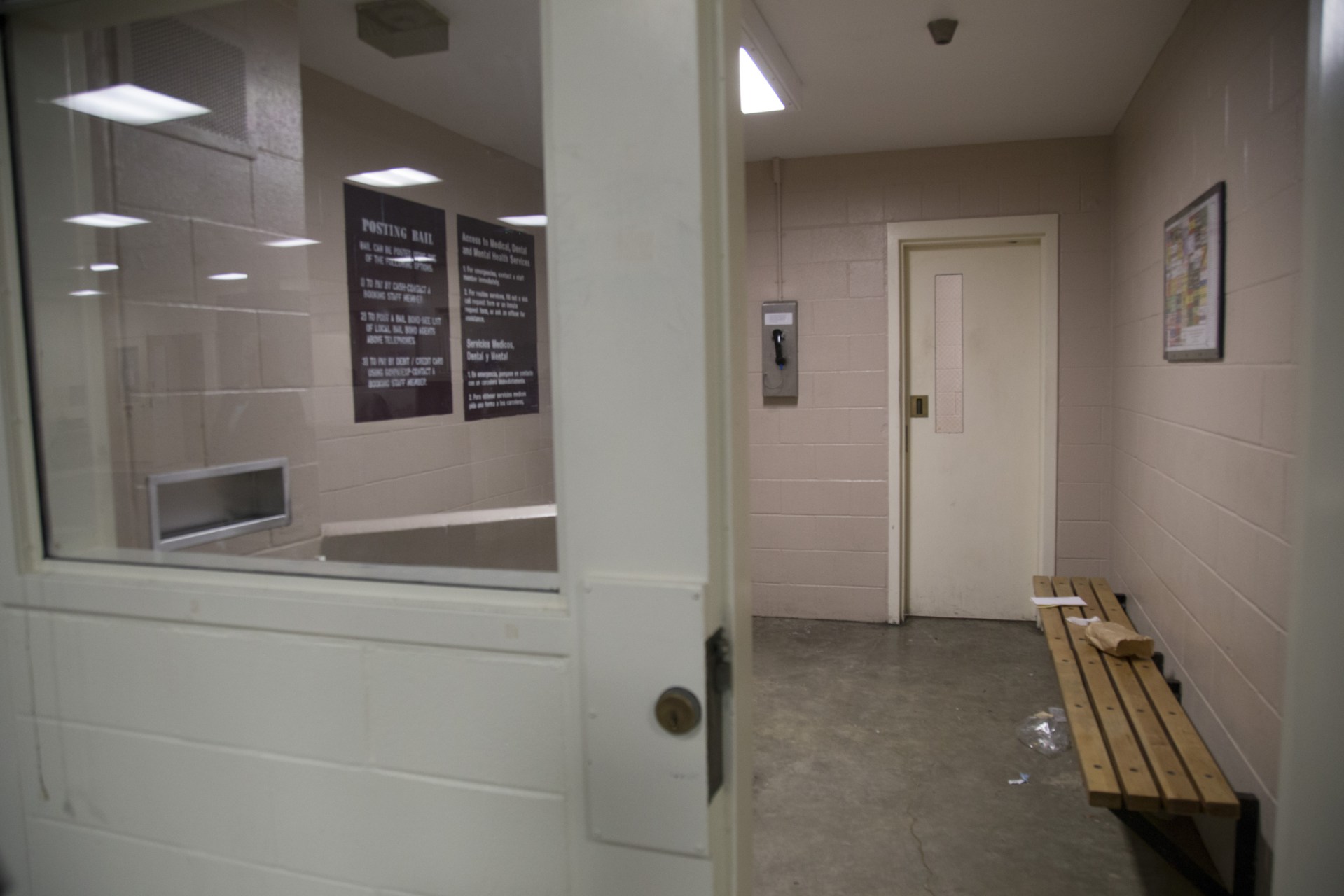 In their report, Disability Rights California, a nonprofit advocacy organization that reviews and investigates government services and agencies affecting the disabled, alleges violations ranging from improper medication procedures and inadequate mental health care to excessive isolation and solitary confinement in Sonoma County’s main jail — a facility where nearly 40 percent of inmates locked up last year suffered from mental illness. In their report, Disability Rights California, a nonprofit advocacy organization that reviews and investigates government services and agencies affecting the disabled, alleges violations ranging from improper medication procedures and inadequate mental health care to excessive isolation and solitary confinement in Sonoma County’s main jail — a facility where nearly 40 percent of inmates locked up last year suffered from mental illness.
In response to the report, Mike Kennedy, head of the county mental health department which provides mental health services in the jail, said the county is doing the best it can with the limited resources allotted to it.
“What we’re stuck with is having to do the most humane treatment that we can in settings that aren’t set up to do it,” Kennedy said.
But Anne Hadreas, an attorney for DRC, said when she and her colleagues toured Sonoma County Jail last August, it was clear that the jail’s mental health unit did not have adequate mental health services to treat inmates with such severe mental illness.
“We were really struck by the fact that people were incredibly acute in their need,” Hadreas recalled. “Higher than we’ve seen in units that are licensed designated hospital units. Something was wrong here.”
Kennedy points out that the problems cited in the report are not unique to Sonoma County. He said the real problem stems from the lack of inpatient psychiatric beds for the general population as well as for jail inmates with mental illness.
“It’s a huge problem that needs to be dealt with on a state and federal level,” Kennedy said.
Indeed, the conditions found in Sonoma County Jail are a reflection of what is a disturbing reality nationwide: Decades of cuts and neglect have left our system facing a critical shortage of needed psychiatric beds. This scarcity often leaves the most severely ill with nowhere to go, abandoning hundreds of thousands to jails and prisons, the streets, or worse.
People with severe mental illness deserve #aBedInstead of jail.
The Treatment Advocacy Center has launched a campaign to end this injustice – called #aBedInstead.
For more information on our psychiatric bed campaign, visit #aBedInstead.
To comment, visit our Facebook page.
Visit our blog archive to read all our recent posts.
RESEARCH WEEKLY: Prevalence of Treated and Untreated Severe Mental Illness by State
(May 17, 2016) The number of people with schizophrenia or severe bipolar disorder now tops 8 million adults in the United States, according to a new population analysis by the Office of Research & Public Affairs. Close to half are untreated at any given time.
Applying National Institute of Health (NIMH) prevalence statistics to the U.S. Census Bureau population estimates for 2015 produces the following findings:
- 8.1 million U.S. adults had schizophrenia or severe bipolar at the combined NIMH prevalence rate of 3.3%.
- 3.8 million people were estimated to be untreated at any given time.
- Schizophrenia affected 2.7 million persons, based on a prevalence rate of 1.1%. Of them, slightly fewer than 1.1 million people were untreated.
- Bipolar disorder (formerly called manic-depressive disorder) affected 5.4 million individuals, based on a prevalence rate of 2.2%. Of them, slightly fewer than 1.8 million were untreated.*
- As the state with the most adults, California’s combined population with the two diseases was 979,168, of whom 464,779 were estimated to be untreated.
- As the state with the fewest adults, Wyoming’s combined population with schizophrenia or severe bipolar was 14,738, of whom an estimated 6,996 were untreated.
A chart with every state’s numbers can be found on the Treatment Advocacy Center website.
No Academic Matter
 To put this in context, the 8.1 million combined population of people living with the two diseases is more than the entire adult populations of 44 states and more than twice the population of 26 of them. It is roughly the same number of persons in the US with attention deficit disorder, 1.5 times the population with Alzheimer’s disease and nearly 8 times the number of individuals with HIV. The prevalence of these serious mental illnesses is almost double the rate of autism (1.4%) and Down syndrome (0.9%) combined. To put this in context, the 8.1 million combined population of people living with the two diseases is more than the entire adult populations of 44 states and more than twice the population of 26 of them. It is roughly the same number of persons in the US with attention deficit disorder, 1.5 times the population with Alzheimer’s disease and nearly 8 times the number of individuals with HIV. The prevalence of these serious mental illnesses is almost double the rate of autism (1.4%) and Down syndrome (0.9%) combined.
The numbers help illustrate how overrepresented mental illness is in some of the most pressing social and economic issues the nation faces.
For example, with an estimated 356,000 inmates with serious mental illness in America’s jails and prisons and 3.8 million adults untreated for one of the two most serious mental illnesses, the risk of being incarcerated is nearly 10% for those whose schizophrenia or severe bipolar is not treated.
In emergency rooms, there were an estimated 640,000 visits for symptoms of schizophrenia or other psychosis in 2013, the most recent year for which there is federal data. That’s more than 1 ER visit for every 2 people with untreated schizophrenia. While the actual risk factor for an ER visit is lower because some individuals are seen in the ER more than once, the ratio is still far in excess of the likelihood of an ER trip in the general population.
Meanwhile, an estimated 4.2 million Americans are caring for an adult family member with bipolar disorder or schizophrenia, according to a recent report from the National Alliance for Caregiving. That means half the people with one of the diseases is cared for by a family member, whose employment, health and finances are impacted by the role and contribute to the indirect costs of serious mental illness.
Numbers are not adequate to describe the personal challenges, risks and suffering that schizophrenia and bipolar disorder introduce into the lives of the millions who live with them, particularly those who are untreated. However, data are essential ingredients to an informed national conversation about the impact and costs of these diseases and the need for public health policies that better address them.

Doris A. Fuller
Chief of Research and Public Affairs
*The NIMH estimates an additional 0.4% of the adult population has mild- to moderate-bipolar disorder.
References:
NEXT WEEK: The Anatomical Basis of Anosognosia
Research Weekly is a summary published as a public service of the Treatment Advocacy Center and does not necessarily reflect the findings or positions of the organization or its staff. Full access to research summarized may require a fee or paid subscription to the publications.
To comment, visit our Facebook page.
Visit our blog archive to read all our recent posts.
Watch Now: "Capitol Ill"
(May 16, 2016) A new video captures perfectly the horrors faced by families of people with severe mental illness when the mental health system fails. "Capitol Ill" is a comprehensive, easy-to-understand documentary that delves into our dysfunctional mental health system, and finds out what changes need to happen.
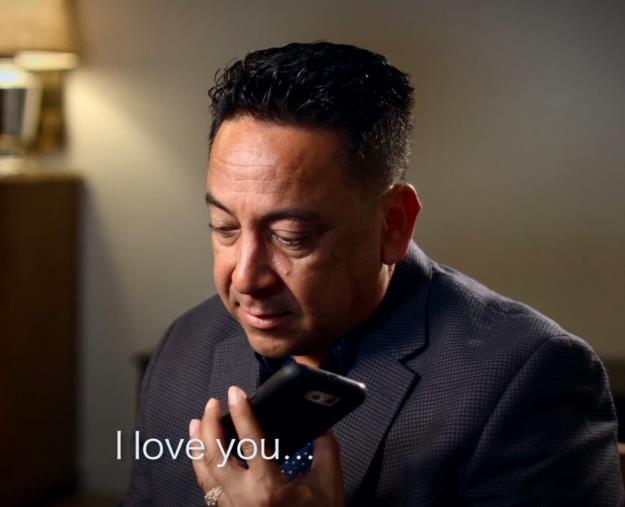 "As journalists who have covered this topic for years, we believe that if more people are educated about the issues surrounding serious mental illness, they would see a need for change," said the film's producers. "We've interviewed too many families, and covered too many unnecessary tragedies, to sit back and do nothing." "As journalists who have covered this topic for years, we believe that if more people are educated about the issues surrounding serious mental illness, they would see a need for change," said the film's producers. "We've interviewed too many families, and covered too many unnecessary tragedies, to sit back and do nothing."
The trailer for the film highlights the stories of family members affected by severe mental illness. California father Anthony Hernandez's story is particularly heartbreaking.
Diagnosed with paranoid schizophrenia, Hernandez's son, Aaron, had been in and out of psychiatric hospitals for years. But each time he was hospitalized the treatment was short-lived - lasting a few days or several weeks at the most. Then, in 2014, Aaron's behavior began to spiral out of control and he violently attacked both of his parents.
Watch the trailer for "Capitol Ill" and donate to this incredible project now.
People with severe mental illness and their families deserve better than this -- they need #aBedInstead.
The Treatment Advocacy Center has launched a campaign to ensure access to inpatient treatment for people with severe mental illness - called #aBedInstead.
To comment, visit our Facebook page.
Visit our blog archive to read all our recent posts.
WIN: Zero to Fifteen
(May 11, 2016) In a huge win for people with severe mental illness and their families, the Centers for Medicare and Medicaid Services (CMS) unveiled a monumental partial repeal of the discriminatory IMD exclusion earlier this month.
 The Medicaid managed care final rule will finally allow certain state Medicaid programs to provide up to 15 days a month of inpatient services to people with serious mental illness and up to 30 days of inpatient care if those 15 days span two months. The Medicaid managed care final rule will finally allow certain state Medicaid programs to provide up to 15 days a month of inpatient services to people with serious mental illness and up to 30 days of inpatient care if those 15 days span two months.
The IMD exclusion has long prevented Medicaid from paying for the inpatient care of adults over 21 and under 65 in mental health treatment facilities with more than 16 beds. In addition to preventing those in need from receiving medically necessary care, the discriminatory restriction helped usher in our national psychiatric bed shortage by facilitating the closure of existing psychiatric inpatient facilities and discouraging the building of new ones.
Partial repeal of the IMD exclusion is a major step. But it is just the beginning – the Treatment Advocacy Center has long called for full repeal of this discriminatory policy. And we won’t stop until that is a reality. More than 8 million people in the United States suffer with severe mental illness, they deserve #aBedInstead.
Share this blog with your friends on social media, use the hashtag #aBedInstead and the Treatment Advocacy Center will like or retweet your post!
For more information on our psychiatric bed campaign, visit #aBedInstead.
To comment, visit our Facebook page.
Visit our blog archive to read all our recent posts.
RESEARCH WEEKLY: Why Clozapine Use Varies by State
(May 10, 2016) "In November of last year, Olfson and colleagues reported that clozapine use for individuals with schizophrenia continues to be very low in the United States, compared to other western countries. Equally concerning, however, was their finding that there is a 7-fold variation in clozapine use by state, from South Dakota, where 15.6% of Medicaid recipients with schizophrenia receive clozapine, to Louisiana, where only 2% receive clozapine. This report was subsequently enlarged using pharmacy data by the Treatment Advocacy Center.
"Many reasons have been put forth for the overall low rate of clozapine use, including the administrative complexity of the monitoring program, the low Medicaid reimbursement system and the role of pharmaceutical companies who promote their patented antipsychotic. However, I am not aware of any study that has attempted to ascertain the reasons for the 7-fold difference in clozapine use among the states.
Not Related to Availability of Psychiatrists
"In my quest to understand the reasons for the differences, I found several factors that affect the numbers of prescriptions for clozapine. Because of its mandatory blood monitoring requirements, clozapine is usually prescribed by psychiatrists rather than by other medical practitioners. There is a more than 5-fold difference in the number of psychiatrists among states, which is reflected in the number of prescriptions for clozapine. For example, there are 3,545 people per psychiatrist in Massachusetts and 18,997 people per psychiatrist in Idaho.
"I compared the rank order of the states by clozapine use with the rank order by people per psychiatrists and found that the association was only slightly positive (Spearman's nonparametric; rho = 0.26) and not statistically significant. Thus, the distribution of psychiatrists in the United States explained very little of the differences in clozapine use among states.
"Next I looked at the urban-rural differences. It is easier to monitor clozapine use in urban areas, where patients can get to clinics relatively easily, than in rural areas where patients may have to travel great distances. As seen in the Table, however, many of the states with the highest use of clozapine, such as South Dakota, Vermont, North Dakota, Wyoming and Montana, are among the most rural of all the states. Urbanicity clearly is not the answer.
Use by Type of Provider
"The next question that I examined was what organization has clinical responsibility for providing psychiatric care to each state's Medicaid population. According to data from the Kaiser Family Foundation, 34 states and the District of Columbia use for-profit managed care companies to manage medical care, including behavioral health, for at least some of the state's Medicaid population. The other 16 states do not.
"As seen in the Table, the states not using for-profit are disproportionately represented at the top of the list of clozapine use. In fact, 8 of the 16 states that do not use for-profit managed care are included among the 13 states with the highest clozapine use. When the average clozapine use rate for the 34 states using for-profit managed care (4.7%) is compared with the 16 states not using for-profit managed care (6.9%), there is a strong association between lower clozapine use and for-profit managed care, although the association does not achieve statistical significance (Wilcoxon rank sum test; p = 0.08). To examine this association in greater detail would require a detailed analysis on the use of managed care for each state for 2006 to 2009, the same years as the clozapine use data....
"Since clozapine is administratively more expensive to use initially but has been proven to save money in the long run by decreasing re-hospitalization rates, are the for-profit managed care companies only interested in short-term profits? And are for-profit managed care companies associated with other indicators of inferior psychiatric care? Since for-profit managed care is spreading rapidly, these questions need answers."
E. FULLER TORREY, MD
Associate Director of Research, Stanley Medical Research Institute
Founder and member of the board, Treatment Advocacy Center
Co-chair, Psychiatric Advisory Board to the Treatment Advocacy Center
Excerpted from Psychiatric Times
References:
Next week: Prevalence of Treated and Untreated Severe Mental Illness by State
Research Weekly is a summary published as a public service of the Treatment Advocacy Center and does not necessarily reflect the findings or positions of the organization or its staff. Full access to research summarized may require a fee or paid subscription to the publications.
To comment, visit our Facebook page.
Visit our blog archive to read all our recent posts.
“My Mom Deserves a Chance” – guest commentary
(May 9, 2016) Living with my mom this past month has me rethinking about the legal barriers involved in involuntary hospitalizations, the legal/medical notion of “gravely disabled” and the larger politics in the mental health system.
 I say rethink because for the last 6 to 7 years, my mom’s unwillingness and inability to seek treatment for her serious mental illness have on numerous occasions forced me and my sister to try and get her involuntarily hospitalized. As my family has learned, however, getting my mom 51/50ed AND treated and stabilized is virtually impossible. I say rethink because for the last 6 to 7 years, my mom’s unwillingness and inability to seek treatment for her serious mental illness have on numerous occasions forced me and my sister to try and get her involuntarily hospitalized. As my family has learned, however, getting my mom 51/50ed AND treated and stabilized is virtually impossible.
Starting in 2012, my mom became effectively homeless, living in a car. She would at times show up at my home in San Francisco or my sister’s home in Fresno unannounced, weak, tired and distressed. We would let her stay to rest and often use the opportunity to call authorities to conduct a “welfare check” on my mom. The police and ambulance would show up and, while my mom would be assessed by the medics, we would request that the police initiate a 51/50. However, they all would say almost verbatim that to be considered “gravely disabled”, a person has to be lying down on the railroad tracks, in their own defecation, naked!
We have sought court-ordered treatment for my mother through a 51/50 at least four times in the last 6-7 years. Two of those times, she was found confused and incoherent on the side of a road in her car by police officers. The two other times, she was failing to treat her diabetes adequately. Her glucose, consequently, rose above 400, which is considered life threatening.
Each time, however, and despite my pleas for them to treat her, she was released by the hospital in under 24 hours for no longer meeting the 51/50 criteria and without taking any psychiatric medication. It became obvious that hospital personnel were taking much of what my mom was saying during their questioning at face value. My mom can “hold it together” decently when she has to and she learned very quickly how to answer their questions.
I don’t doubt that the interpretation of “gravely disabled” has become more restrictive as funding and resources and beds for treatment centers have been increasingly cut. People with serious mental illness are being unjustly neglected and ignored, unless they do something criminally and/or ghastly wrong.
At this point, my mom suffers on a daily basis with delusions and hallucinations. She spends a good portion of the day and night rebuking and even swearing at the “evil voices” that torment her and that she blames for causing her pain in different parts of her body.
My mom should be in a hospital or treatment center, until stabilized, so she has a better chance at piecing her life back together.
MIKE GAETA
SAN FRANCISCO, CALIFORNIA
Read the entire column here.
To comment, visit our Facebook page.
Visit our blog archive to read all our recent posts.
Florida Family Denied Treatment Twice “Shaken to Core” by Tragedy
(May 5, 2016) The family of Arenthius “Dante” Jenkins twice attempted to get him admitted to a psych hospital days before he brutally attacked two construction workers with a hammer last month (“Deadly hammer attack suspect 'victim' of mental illness, family says,” WFTV, Apr. 28).
 Jenkins, a 33-year-old, mentally ill Florida resident was turned away twice, his family says. Now, it’s too late. Jenkins, a 33-year-old, mentally ill Florida resident was turned away twice, his family says. Now, it’s too late.
“My mother and I tried desperately to avoid letting a situation such as this occur and sought necessary medical help for Dante,” said Jenkins’ brother, Diwon Barron, in a statement. “Unfortunately, we were denied this assistance on two separate occasions and this tragedy has occurred and shaken our family to the core.”
“My brother is not a bad person, nor a violent person,” Barron continued “He was suffering and seeking help.”
It is unclear why Jenkins was denied treatment, but Halifax Hospital released a statement regarding the incident:
“Pursuant to federal and state privacy laws, Halifax Health cannot disclose a patient’s information to the media without consent from that patient. Halifax Health follows the procedures set forth in the Florida Mental Health Act, also known as the 'Baker Act,' to screen mental health patients for certain criteria to determine whether voluntary or involuntary admission to a psychiatric unit is required."
The two victims, Billy Ford and Terry Gross, were hospitalized following the attack. Gross is expected to recover, while Ford died shortly after the attack.
Barron said the family expresses their deepest sympathy to the victims, including his brother, “who is an unfortunate victim in this matter due to his mental health issues and the care he needed being denied.”
Jenkins, suffering from an undisclosed severe mental illness, was kept from the treatment his family had sought; treatment that likely would have prevented this tragedy.
Jenkins had been arrested 16 times since 2000 on charges involving grand theft, drugs and domestic violence, court records show.
There were many opportunities for this man to receive the help he needed. Instead, he continued to fall through the cracks as a result of a mental health system in shambles.
To comment, visit our Facebook page.
Visit our blog archive to read all our recent posts.
Colorado Debates Holding People in a Psychiatric Crisis in Jail
(May 4, 2016) In another outrageous and devastating example of our national psychiatric bed shortage, Colorado state lawmakers are debating legislation that would place people in the middle of a psychotic episode in jail – even though they haven’t committed a crime. The bill has already passed in the Senate and is now in the House (“Debate rages over holding mentally ill patients,” 9 News, May 3).
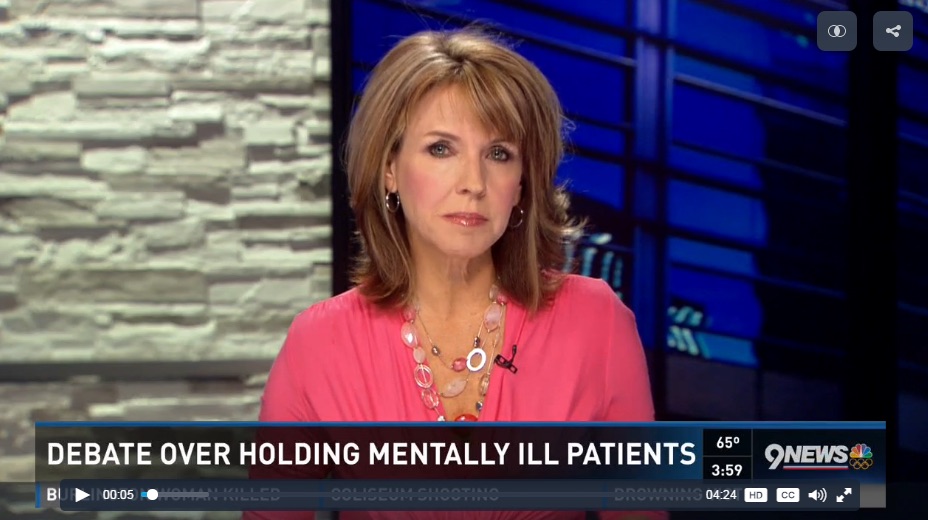 The implicit logic is that if a person is a danger to themselves or others it’s better to hold them in the controlled environment of a jail than to release them. The implicit logic is that if a person is a danger to themselves or others it’s better to hold them in the controlled environment of a jail than to release them.
But jails are NOT an appropriate place for people suffering from untreated mental illness.
“It’s not a therapeutic environment,” 9NEWS psychologist Dr. Max Wachtel said. “They’re isolated. They’re being watched all the time, wearing something weird, and knowing that they’re in jail when they haven’t done anything wrong.”
Advocates for people with mental illness are outraged, arguing that the legislation is unconstitutional, criminalizes mental illness and punishes people who have done nothing wrong.
This goes against everything the justice system stands for – Colorado is “treating” mental illness through incarceration.
In an event earlier this month, Gov. John Hickenlooper recognized the achievements of Colorado Crisis Services – a program started in 2014 to address mental health issues in the community through round-the-clock stabilization centers, a mobile unit, a crisis hotline and respite services. While these services are certainly a step in the right direction, they are not the end-all solution.
What is the real solution? We need to restore public psychiatric beds.
People with severe mental illness deserve #aBedInstead of jail.
VOICE the need for more beds with your followers and federal, state and local policymakers.
Share this blog on Facebook and Twitter to help us raise awareness about the devastating consequences our psych bed shortage and broken system has on people in need. Use the hashtag #aBedInstead.
For more information on our psychiatric bed campaign, visit #aBedInstead.
To comment, visit our Facebook page.
Visit our blog archive to read all our recent posts.
RESEARCH WEEKLY: The Disturbing New Suicide Statistics
(May 3, 2016) The latest suicide statistics from the Centers for Disease Control (CDC) are disturbing.
Disturbing enough is that, at a time of generally declining mortality, suicide rates have risen significantly over the last 15 years, and the growth rate has accelerated. In 2014, 42,773 people in the United States died by suicide, making it the 10th leading cause of death in the nation and the 2nd leading cause of death for 15-24 year olds. More than 100 Americans die by suicide every day.
Trends
Among the trends the CDC reported:
- The age-adjusted suicide rate in 2014 was13.0 per 100,000 population - 24% higher than the rate of 10.5 per 100,000 in 1999.
- The suicide rate is increasing at a faster pace. From 1999 to 2006, the average annual increase in the age-adjusted suicide rate was about 1% per year. From 2006 through 2014, it rose 2% per year.
- Though men continued to complete suicide more often than women, the suicide rate among women increased at nearly three times the pace as the rate among men – a 45% increase over the last 15 years compared with a 16% increase for men. This is consistent with our recent survey of negative outcomes women with serious mental illness are more likely to experience than men.
- Suicide rates are sharply rising among middle-aged Americans of both genders.
“After a period of nearly consistent decline in suicide rates in the United States from 1986 through 1999, suicide rates have increased almost steadily from 1999 through 2014,” the report said.
Beyond the Trends
Disturbing as these are, also disturbing is how little alarm suicide trends provoke.
Suicide killed more people in 2014 than car accidents. It killed about three times as many people as prescription opioids overdose, which makes almost daily headlines. It killed seven times as many people as acquired immune deficiency syndrome (AIDS), which has its own budget line item and receives more than 10% of the National Institute of Mental Health (NIMH) budget every year.
Suicide is an outcome of mental illness. The suicide risk for individuals with bipolar disorder is 15 times higher than in the general population; half of people diagnosed with the disease attempt suicide at some point in their lives. Nearly as many people with schizophrenia attempt to kill themselves and they complete more often than those with bipolar. A World Health Organization study found suicide to be the most common cause of death in schizophrenia.
Bipolar, schizophrenia and depression, also highly associated with suicide, are diseases that are treatable that consistently are untreated in half of all patients. “The reasons for suicide are often complex, and officials and researchers acknowledge that no one can explain with certainty what is behind the rise,” the New York Times reported in its coverage of the new CDC data.
Perhaps not, but suicide is epidemic and preventable. We can start with what we do know: As a cause of death, it is virtually always rooted in mental health conditions that respond to treatment. More treatment, fewer suicides.
Doris A. Fuller
Chief of Research and Public Affairs
References:
Next week: Why Clozapine Use Varies by State
To comment, visit our Facebook page.
Visit our blog archive to read all our recent posts.
Hey! It's Mental Health Awareness Month
(May 2, 2016) It's mental health awareness month. You may already be aware of the devastating impact our broken mental health system has on the hundreds of thousands of families who have loved ones with severe mental illness spiraling in an out of psychosis without access to treatment. But here are a few startling statistics you might not be aware of:
Are you aware that we have a mental health system starved for needed psychiatric beds? There are now 10x more people with severe mental illness behind bars than receiving treatment in a hospital. The country has only 14.1 beds per 100,000 people.
Are you aware that those with untreated serious brain disorders are at an increased risk of suicide? The rate of suicide among people with bipolar disorder is 10-15 percent; schizophrenia is 5 percent. The rate of attempted suicide is even higher, with some studies reporting 50 percent.
Are you aware that people with untreated psychiatric illnesses are especially vulnerable to homelessness and victimization? People with SMI comprise one-third of the homeless population and are at an increased risk of being assaulted, raped or even victims of homicide.
Are you aware that individuals with severe mental illness are more likely to be killed by police? They are 16 times more likely to be killed during a police encounter than other civilians approached or stopped by law enforcement.
Instead of another mental health awareness month, we need legislators to take action. We need them to repeal the discriminatory IMD exclusion and reform the devastating causes and consequences of our national psychiatric bed shortage.
VOICE the need for more beds with your followers and federal, state and local policymakers. Share this link on Facebook and Twitter to help us raise awareness about the devastating consequences our psych bed shortage and broken system has on people in need. Use the hashtag #aBedInstead.
For more information on our psychiatric bed campaign, visit #aBedInstead.
To comment, visit our Facebook page.
Visit our blog archive to read all our recent posts.
|
|