RESEARCH WEEKLY: Research Validates NAMI's Family–to–Family Program
(July 5, 2016) As the National Alliance on Mental Illness (NAMI) is convening its annual national conference in Denver, a new study validating the effectiveness of the organization's signature family education program has been published in Psychiatric Services, a journal of the American Psychiatric Association.
 The study, "Generalizability of the NAMI Family-to-Family education program: Evidence from an efficacy study," was conducted by researchers from the New York University school of social work at the behest of NAMI-New York City. The researchers recruited 121 individuals who enrolled in a Family-to-Family (FTF) course in the US between September 2013 and July 2014 and agreed to participate in an assessment of the program when they finished. The study, "Generalizability of the NAMI Family-to-Family education program: Evidence from an efficacy study," was conducted by researchers from the New York University school of social work at the behest of NAMI-New York City. The researchers recruited 121 individuals who enrolled in a Family-to-Family (FTF) course in the US between September 2013 and July 2014 and agreed to participate in an assessment of the program when they finished.
The Findings
"After completing FTF, individuals had improved family empowerment, family functioning, engagement in self-care activities, self-perception of mental health knowledge and emotional acceptance as a form of coping," according to Micaela Mercado and colleagues. "Scores on the coping subscales and for emotional support and positive reframing also improved significantly. Displeasure in caring for the family member, a measure of subjective burden, significantly declined."
The study sample was small - 38 of the enrollees in the study did not complete follow-up assessments, leaving 83 participants - and did not have a control group for comparison. Nonetheless, the findings were consistent with three previous studies of Family-to-Family effectiveness, adding to the program's evidence base.
"Improvements in empowerment, coping, family functioning, self-care and knowledge, as well as reductions in subjective burden, are consistent with previous FTF studies," the authors wrote. "This study demonstrated gains in additional aspects of coping, including positive reframing and emotional support. Scores on a validated measure of self-care also improved, extending the findings of previous studies."
Family-to-Family is a free, 12-week program developed by Joyce Burland, PhD, in the early 1990s to educate families and friends of people living with mental illness. Taught by trained family-member volunteers, classes meet in person in communities nationwide. The program was intended to fill a gap that existed between the extensive evidence base showing the value of family psychoeducation and limited access to programs providing such training, according to Mercado and her colleagues. It is listed in the National Registry of Evidence-based Programs and Practices published by the Substance Abuse and Mental Health Services Administration.
Despite widely available mental health services in New York City, the authors said "family members of adults living with serious mental illness experience substantial unmet need for education and support. In our experience, FTF has helped to address that unmet need."
Caregiver stress is a significant issue for family members living with serious mental illness. A February 2016 study published by the National Alliance for Caregiving reported that three-quarters of surveyed caretakers experienced "high emotional stress" from performing their responsibilities. About 4 in 10 said they found it difficult to take care of their own health, and 6 in 10 said caregiving had made their own health worse.
The Boston Globe on June 26 published a not-to-be-missed report on family violence associated with serious mental illness in Massachusetts. The Treatment Advocacy Center will release a new national study on the same subject during the NAMI convention.

Doris A. Fuller
Chief of Research and Public Affairs
References:
Next week: Beyond Raising Cain: The role of serious mental illness in family homicides
Research Weekly is a summary published as a public service of the Treatment Advocacy Center and does not necessarily reflect the findings or positions of the organization or its staff. Full access to research summarized may require a fee or paid subscription to the publications.
To comment, visit our Facebook page.
Visit our blog archive to read all our recent posts.
Preventable Tragedies Occur Within Families, Too
(June 30, 2016) A severely mentally ill Alabama woman was taken by Tennessee police to a psychiatric hospital for treatment after she was arrested in the state earlier this month. But, after a too-short stay, she was released from the hospital without follow-up care. Now, a few weeks later, she faces charges in the fatal shooting of her husband (“Tennessee sheriff: Decatur slaying suspect taken for psychiatric treatment earlier this month,” Decatur Daily, June 29).
 Michelle Owens, 44, was involuntarily committed to a psychiatric unit after a Tennessee police officer attempted to pull her over for speeding and she fled the scene. Michelle Owens, 44, was involuntarily committed to a psychiatric unit after a Tennessee police officer attempted to pull her over for speeding and she fled the scene.
“She just took off, and they ended up using a spike strip to stop her,” Trousdale County Sheriff Ray Russell said. “We knew something was going on with her and she needed help.”
Owens was charged with misdemeanor evading arrest by motor vehicle and issued a speeding citation, but the charges were dropped after she was released from the hospital just a couple days later.
“The judge and the district attorney agreed to that because it was obvious something was going on with her,” Sheriff Russell said. “We just wanted to know she was getting help, and her husband was there to make sure she was OK.”
Family members reveal Owens had been diagnosed with schizophrenia. Her 17-year-old son became concerned and called 911 after discovering she had recently purchased a pistol and had been actting erratically.
Police responded Sunday afternoon to Owens’ home and found her husband, Lawrence “Eddie” Owens, 44, dead with a gunshot wound to the head.
To recap, Michelle Owens—a severely ill women in the midst of an acute psychiatric crisis—was released from a psychiatric hospital after a couple of days because police and medical staff believed that “she was getting help and her husband was there to make sure she was OK.”
But who was there to make sure Owens’ husband was OK?
Psychiatric diseases such as schizophrenia and bipolar disorder are vastly overrepresented among family homicides, according to a new Treatment Advocacy Center study on the topic.
In nearly 30 percent of all family homicides the offender was reported to have a severe psychiatric disease, and failure to take medication prescribed for serious mental illness was a major risk factor for committing a family homicide, the study reported.
"It's insanity to close down psychiatric facilities and make treatment in the community almost impossible to access, leaving family members with the impossible task of picking up the pieces," said E. Fuller Torrey, lead author of the study and founder of the Treatment Advocacy Center. "These sorts of tragedies are the logical result."
Read “Raising Cain: The Role of Serious Mental Illness in Family Homicides” to learn more.
To comment, visit our Facebook page.
Visit our blog archive to read all our recent posts.
Mental Health and Civil Liberties: Unwell and Untouchable – guest commentary
(June 29, 2016) Last November, in a powerful commentary in the New York Times, Washington political scientist Norman Ornstein reminded us of the flip side of mental illness: those who still suffer silently and either refuse or are unable to acknowledge their illness. Ornstein recounted the death last year of his 34-year-old son, Matthew, from accidental carbon monoxide poisoning. That was the immediate cause, but as Ornstein wrote, “his death was shaped by a lack of judgment driven by a 10-year struggle with mental illness.”
 Matthew Ornstein had been a champion high school debater, studied at Princeton, headed for Hollywood and quickly created a TV show with his debate partners called “Master Debaters.” But at 24, he suffered a psychotic break that his father says “brought his vibrant life to a grinding halt.” The illness was never officially diagnosed, but was thought to be bipolar disorder made worse by a companion illness, anosognosia — the inability to recognize you are ill. Because Matt didn’t believe there was anything wrong with him, he refused all medicine. And since he was over 18, neither his parents nor mental health professionals had the authority to force him to get any treatment. Matthew Ornstein had been a champion high school debater, studied at Princeton, headed for Hollywood and quickly created a TV show with his debate partners called “Master Debaters.” But at 24, he suffered a psychotic break that his father says “brought his vibrant life to a grinding halt.” The illness was never officially diagnosed, but was thought to be bipolar disorder made worse by a companion illness, anosognosia — the inability to recognize you are ill. Because Matt didn’t believe there was anything wrong with him, he refused all medicine. And since he was over 18, neither his parents nor mental health professionals had the authority to force him to get any treatment.
Bad enough that Norman Ornstein and his wife, Judith Harris, faced the nightmare that a serious mental illness had overwhelmed and redefined their older son at the start of a promising career. But now they faced a second torment: a legal barrier to get Matt the help he so desperately needed.
“It’s a delicate balance and perfectly understandable that for a large share of the mentally ill, they want to be autonomous,” Ornstein says. “But it’s taken to an extreme where it simply bypasses the collection of people like my son who were incapable of making their own decisions, either because they’re so deeply caught up in their own delusions or because they have an anosognosia and don’t recognize they have an illness.”
Because the standards for involuntary treatment of an adult in most states require the individual to literally be an imminent danger to himself or others, there are few options available to the loved ones of the adult mentally ill who refuse treatment. “We were in a situation where my wife said at times, ‘My only hope is if Matthew gets arrested, the judge can give him the offer of getting treated or going to jail,’ ” Ornstein says.
Following Matthew’s death, Norman Ornstein, grief-stricken and shattered, could have curled up in the fetal position. Instead, the congressional expert opted to do what he has done for more than four decades in Washington: research, analyze and diagnose a problem and help develop a legislative remedy.
There’s some hope that during this election year, Congress will pass [The Helping Families in Mental Health Crisis Act (HR 2646)], a bipartisan bill sponsored by Rep. Tim Murphy, R-Pa., a former child psychologist, and Rep. Eddie Bernice Johnson, D-Texas, a former psychiatric nurse. The key provision Ornstein pushed for would fund expanded assisted outpatient treatment (AOT).
Ornstein hopes action by Congress to allow court-ordered treatment of mentally ill adults will keep other parents and siblings from suffering the way his family has.
“To me, you have a mental health system that basically says, ‘That’s fine, that’s what he wants [an adult with mental illness who doesn’t know he’s ill but refuses treatment]. That’s a system that’s out of control,” Ornstein says with a sense of exasperation. “And if you have a system that doesn’t allow the resources to take care of people, which means you’re going to spend more money by putting them in jails or prisons while adding to the heartache, that’s a good definition of insanity.”
RICHARD HARRIS
BETHESDA, MARYLAND
Read the entire column here.
To comment, visit our Facebook page.
Visit our blog archive to read all our recent posts.
RESEARCH WEEKLY: A Call for New Priorities at the NIMH
(June 28, 2016) The search for a successor to Dr. Tom Insel as director of the National Institute of Mental Health (NIMH) - the nation's central agency for mental illness research - is nearing its conclusion.
With an announcement of the new director expected shortly, the British Journal of Psychiatry has published an editorial from 20 eminent psychiatrists and psychiatric researchers calling for the NIMH to put more emphasis on funding research into prevention and treatments that will bring immediate relief to individuals living with mental illness.
"Rethinking Funding Priorities"
 The transition to new NIMH leadership, the authors write, "presents a critical opportunity to examine US mental health research funding priorities." The transition to new NIMH leadership, the authors write, "presents a critical opportunity to examine US mental health research funding priorities."
"Despite spending more than any other country on healthcare ($4,271 annually/person), the USA ranks 37th in global health outcomes and fails to serve even half of its residents needing mental health services."
The authors laud the search for neurobiological mechanisms of mental illness that someday may result in discovering the causes of diseases such as schizophrenia and lead to new treatments for them. But they maintain that high-income countries, including the US, "must balance longer-term investment in identifying neurobiological mechanisms of disease with shorter-term funding of novel prevention and treatment strategies to alleviate the current burden of mental illness."
Calling mental health research funding a "form of social investment," they call upon the NIMH under its new leadership to "diversify" its investment to avoid over-investing in long-term scientific discovery at the expense of "less risky investments that yield immediate albeit potentially more modest benefits." Among the research they say merits higher priority:
- developing sustainable interventions to overcome disparities in access to effective treatment and outcomes;
- crafting technologies and implementation strategies to disseminate scalable, cost-efficient interventions;
- devising approaches to empower people to overcome barriers to engagement and retention in treatment; and
- deploying preventive interventions to reduce the burden of mental illness, including clarifying how to implement best practices in suicide prevention.
"In sum, too often our mental health research funding neglects immediate public health needs to focus on future discoveries, reflecting the drive for technological solutions for disorders that are unequally distributed and partly socially determined," they say.
"Alleviating the Terrible Burden"
In conclusion, the joint statement calls for "an increase in public discussion of how to apportion funding resources across mental health research domains" that is global in scope.
"Paramount in these discussions must be alleviating the terrible burden that individuals and families living with mental illness face every day," they say in closing. "As Harry Hopkins, co-architect of the 1940s New Deal, replied to members of Congress who opposed allocating federal funds to lift the economy out of the Great Depression, claiming that the economy would sort itself out 'in the long run': 'People don't eat in the long run, they eat every day.'"
All the authors are current or former members of the NIMH National Advisory Health Council. They include past presidents of the World Psychiatric Association and the American Psychiatric Association.
Doris A. Fuller
Chief of Research and Public Affairs
References:
Next week: New study reports on the effectiveness of NAMI Family-to-Family education
Research Weekly is a summary published as a public service of the Treatment Advocacy Center and does not necessarily reflect the findings or positions of the organization or its staff. Full access to research summarized may require a fee or paid subscription to the publications.
To comment, visit our Facebook page.
Visit our blog archive to read all our recent posts.
Washington Post Latest to Urge Passage of HR 2646
(June 27, 2016) The Washington Post editorial board is the latest in a string of major media outlets voicing support for monumental mental health reform legislation slated for full House vote next month (“A glimmer of hope for reforming mental health care in America,” the Washington Post, June 25).
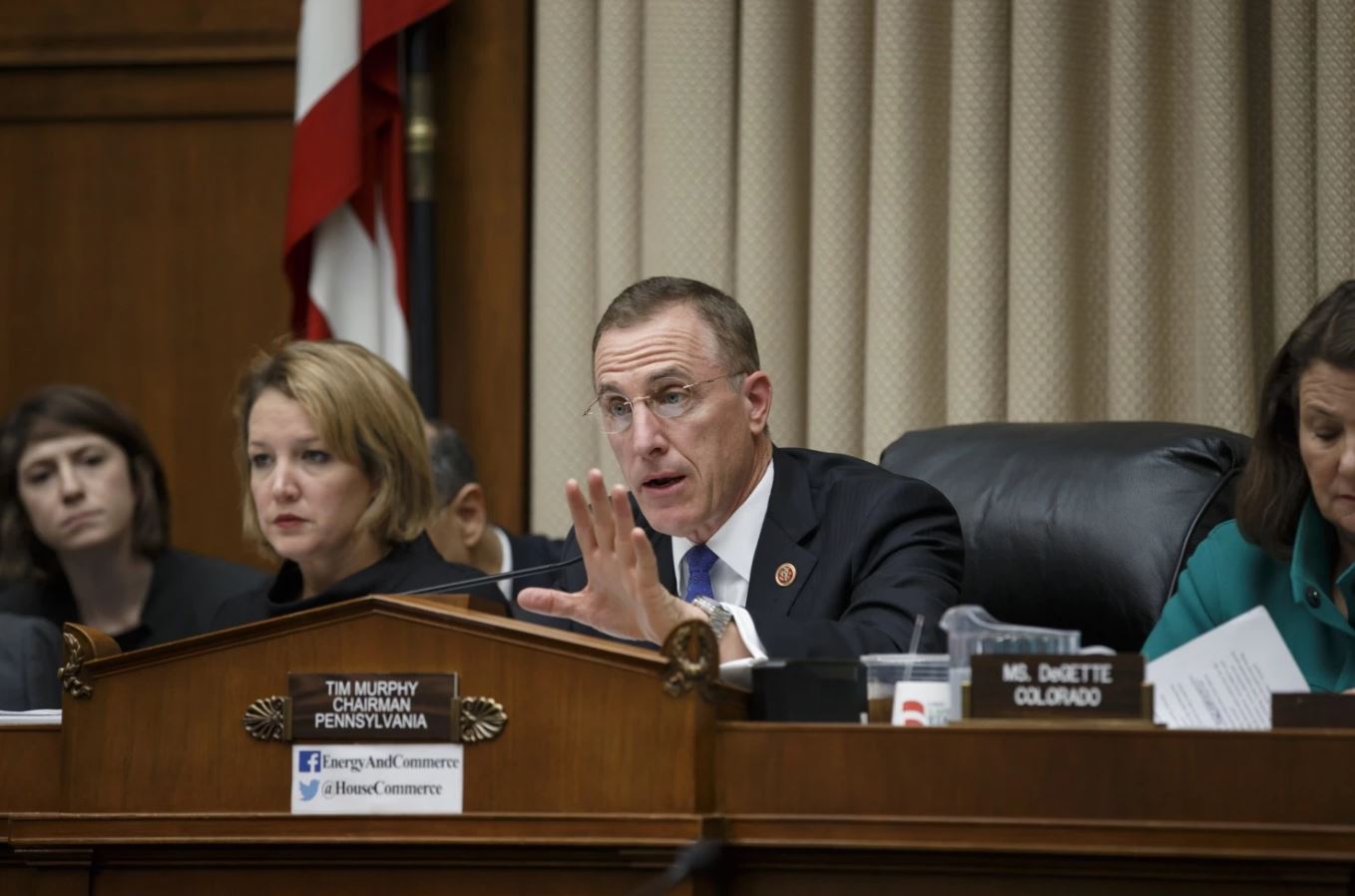 The Post offers high praise for Representatives Tim Murphy (R-PA) and Eddie Bernice Johnson’s (D-TX) Helping Families in Mental Health Crisis Act (HR 2646), calling it “a remarkable achievement” and “one bright spot of progress” in an otherwise tragic month. The Post offers high praise for Representatives Tim Murphy (R-PA) and Eddie Bernice Johnson’s (D-TX) Helping Families in Mental Health Crisis Act (HR 2646), calling it “a remarkable achievement” and “one bright spot of progress” in an otherwise tragic month.
The bill passed out of the Energy and Commerce Committee last week with unanimous support and moves on to the House next. Meanwhile, in the Senate, the Mental Health Reform Act of 2016 (S.2680) also awaits a vote on the floor.
Both bills would support mental health grant programs and elevate the importance of mental health and severe mental illness within the federal government, but there are key differences between the two.
For example, HR 2646 would reform the discriminatory IMD exclusion barriers to increase the availability of psychiatric inpatient beds – “a change that could encourage the building of bigger treatment centers and help solve the national shortage of nearly 100,000 psychiatric beds,” writes the Post.
Another key provision in the bill would authorize an additional two years of funding for a federal grant program to incentivize communities to implement assisted outpatient treatment (AOT) – court-ordered treatment for individuals with severe mental illness who are unwilling or unable to seek treatment themselves.
In a show of support for AOT, the Post editors assert, “Prevention is important, but [prevention] programs can and should walk hand-in-hand with aid for those who reach a point where they will not or cannot admit that they need help — before they can harm themselves or others, and before they end up committed or incarcerated.”
We couldn’t agree more. HR 2646 represents a watershed moment for bipartisan action on a critical issue.
But the battle hasn’t been won yet. We still need to put pressure on Congress to PASS HR 2646.
To keep the momentum going, advocates and supporters must continue to convey their support.
Tell your Representatives the time is now for real mental health reform, and visit #aBedInstead to learn more about the Treatment Advocacy Center’s campaign to address the national psychiatric bed shortage.
To comment, visit our Facebook page.
Visit our blog archive to read all our recent posts.
FAILURES OF MENTAL HEALTH SYSTEM HIT FAMILIES THE HARDEST
(June 24, 2016) Psychiatric diseases such as schizophrenia and bipolar disorder are vastly overrepresented among family homicides, according to a new study released this week from the Treatment Advocacy Center entitled "Raising Cain: The Role of Serious Mental Illness in Family Homicides.”
"It's insanity to close down psychiatric facilities and make treatment in the community almost impossible to access, leaving family members with the impossible task of picking up the pieces," said E. Fuller Torrey, lead author of the study and founder of the Treatment Advocacy Center. "These sorts of tragedies are the logical result."
The study reported that in nearly 30% of all family homicides the offender was reported to have a serious psychiatric disease and abuse of alcohol or drugs and failure to take medication prescribed for serious mental illness were major risk factors for committing a family homicide.
"Family homicides are merely the most visible of the problems associated with being unable to obtain treatment for a seriously mentally ill family member," said Executive Director John Snook. "But long before such an incident takes place, you will invariably find a family stymied by the very mental health system that should have been their loved one's refuge."
Families Abandoned
(June 24, 2016) “The Desperate and the Dead,” a new, multi-part investigative series by the Boston Globe, examines the devastating consequences of the psychiatric bed shortage in Massachusetts and across the nation.
 The first installment of the series focuses on families affected by untreated mental illness in the state (“Families in fear,” the Boston Globe, June 24). The first installment of the series focuses on families affected by untreated mental illness in the state (“Families in fear,” the Boston Globe, June 24).
“Few have paid a higher price for the nation’s mental health crisis than the loved ones of severely mentally ill people,” the Globe writes.
Families like Nancy Chiero and her 35-year-old son, Lee.
Lee’s life had been punctuated by severe mental illness, and a cycle had developed. A psychotic episode would send him to the emergency room. Once released, he would refuse to take his prescribed medications, the delusions would return and the cycle would repeat.
In January 2007, Nancy could see the cycle beginning again.
Lee had started to suspect that Nancy was involved in a plot against him and had been videotaping their conversations. He had disconnected computers and the electric power in the house to prevent his imagined enemies from spying. He believed he’d been abducted by aliens and abused by animals, and was terrified that he would be again.
Nancy had Lee rushed by ambulance to a Boston hospital. But at the hospital, Lee insisted he was fine and a psychiatrist released him after only four days because he “did not seem to present a danger to himself and others.”
Then, one morning shortly after he was discharged from the hospital, Lee lunged at Nancy in the kitchen of their Massachusetts home. He knocked her down the basement stairs, pulled out a knife and stabbed his mother to death.
“In the instant of her death at the hands of her son — a deeply troubled man discharged without restrictions from hospital care — Nancy Chiero wasn’t merely failed by the state mental health care system. She was her son’s mental health care system — or at least the only one he could rely on,” writes the Globe.
But Nancy and her son are not alone. The Globe reports that at least 17 parents with signs of mental illness allegedly killed their children from 2005 through 2015, and at least 18 sons and daughters with signs of mental illness were accused of killing their parents.
And the toll reaches far beyond family. In the past decade, 116 people in Massachusetts were accused of killing 139 victims.
Undoubtedly, these tragedies correlate with the insufficient number of public psychiatric beds available to the most severely mentally ill in the state.
Massachusetts currently maintains just 8.9 beds per 100,000 people, according to the 2016 Treatment Advocacy Center report, “Going, Going Gone: Trends and Consequences of Eliminating States Psychiatric Beds, 2016.” This number is far below the 50-bed standard considered necessary in order to provide minimally adequate treatment to people suffering with severe mental illness.
How many more tragedies must occur before preventative steps are taken in order to save lives?
The Treatment Advocacy Center thanks the Boston Globe Spotlight Team for illuminating the tragic consequences families face when they and their loved ones are locked out of treatment with no place to go.
Read “The Desperate and the Dead” and Donate today to help us advocate for the laws needed to help these families.
To comment, visit our Facebook page.
Fixing a Broken System – guest commentary
(June 23, 2016) Community health centers that say even if they could afford to hire 200 new mental health professionals, their caseloads would be full within the week. Insurance companies that refuse to approve mental health coverage on weekends, leaving patients in emergency rooms for several days. Emergency room directors, who can find an in-patient bed for someone facing a physical ailment in just three hours but who spend nearly a full day finding a place for a patient with a mental health crisis. Parents forced to work as full-time caseworkers for their own children. Children refused the care they need because outdated government regulations put limits on their treatment.
 This is the heartbreaking reality I heard echoed in a series of discussions I held in our communities for Mental Health Awareness Month. The physicians, families, community health centers, hospital CEOs and advocates who met with me gave a stark picture of the state of mental health care in our commonwealth and country. This is the heartbreaking reality I heard echoed in a series of discussions I held in our communities for Mental Health Awareness Month. The physicians, families, community health centers, hospital CEOs and advocates who met with me gave a stark picture of the state of mental health care in our commonwealth and country.
They detailed a vastly underfunded mental and behavioral health system that lacks the infrastructure required to deliver proper care to the one in four Americans struggling with mental illness.
It was a timely discussion. Down in Washington, Congress is considering how to respond to our country’s growing mental health crisis. Led by the Energy & Commerce Committee on which I serve, we are trying to craft bipartisan solutions for a system plagued by lack of access, funding and stability.
Any comprehensive reform effort must move beyond the margins and attack the systemic inadequacies deeply entrenched across the entire continuum of mental healthcare. First, we have to put teeth behind the federal laws that require insurance companies treat mental health the same way they treat physical health. Referred to as “parity,” these laws were intended to ensure that depression, schizophrenia and addiction are covered to the same extent as cancer, diabetes, or a broken leg. Despite having these laws on the books, however, mental health claims are denied today at nearly twice the rate of physical health claims, often with no explanation.
Our health care system doesn’t wait until someone has stage four cancer to offer treatment; those struggling with mental illness deserve the same.
We need to fix outdated federal regulations that currently say a person in Medicaid who requires in-patient care can receive treatment for either physical or mental health – but not both. We need to end Medicare’s 190-day lifetime limit on inpatient psychiatric hospitals stays. And we need to finally and fully invest in the entire continuum of mental health care – not just the crisis-stage interventions we resort to in emergency rooms, courtrooms, and jail cells at tremendous cost.
The pain that our broken mental health system has inflicted on countless American families and communities is immeasurable. Government at every level must work day and night to address the shortcomings that continue to allow tragedy and suffering to occur.
U.S. REP. JOE KENNEDY III
MASSACHUSETTS
Read the entire column here.
To comment, visit our Facebook page.
Visit our blog archive to read all our recent posts.
Bloomberg Editorial Board Supports HR 2646 and #aBedInstead
(June 22, 2016) The Bloomberg editorial board has come out in support of the Helping Families in Mental Health Crisis Act (HR 2646) – landmark mental health legislation which recently passed out of the Energy and Commerce Committee markup and will now move on to the House floor (“Better mental health care is worth the expense,” Bloomberg, June 21).
 “When more than half of people who need mental health care can’t or don’t get it – as is true in the U.S. – other problems arise,” write the editors. For those suffering with severe mental illness, these problems may include incarceration, homelessness, suicide and fatal police encounters, among others. “When more than half of people who need mental health care can’t or don’t get it – as is true in the U.S. – other problems arise,” write the editors. For those suffering with severe mental illness, these problems may include incarceration, homelessness, suicide and fatal police encounters, among others.
For these reasons, and many more, we need HR 2646 now.
“The bill, which could soon get a vote, would give mental health issues more weight within the Department of Health and Human Services and improve tracking of wait times for psychiatric beds,” the editors explain.
And it would remove numerous restraints on mental health care. For example, HR 2646 would reform the discriminatory IMD exclusion barriers to increase the availability of psychiatric inpatient beds.
Mental health reform is long overdue. In the past five years alone, nearly 20% of the inpatient psychiatric beds for the nation's most severely ill were eliminated, at the same time demand for them skyrocketed, according to a 2016 Treatment Advocacy Center report.
As Bloomberg points out, “To expand psychiatric care as much as is needed would necessarily increase spending…But adequate spending on mental health would save other social and government costs down the road.“
HR 2646 is the strongest mental health reform bill to help people with serious mental illness and their families and ensure people with SMI have access to the treatment and care they need. The time is now.
Tell your Representatives the time is now for real mental health reform, and visit #aBedInstead to learn more about the national psychiatric bed shortage.
To comment, visit our Facebook page.
Visit our blog archive to read all our recent posts.
TO THE FLOOR! HR 2646 Gets Vote on House Floor in July
(June 22, 2016) TO THE FLOOR!
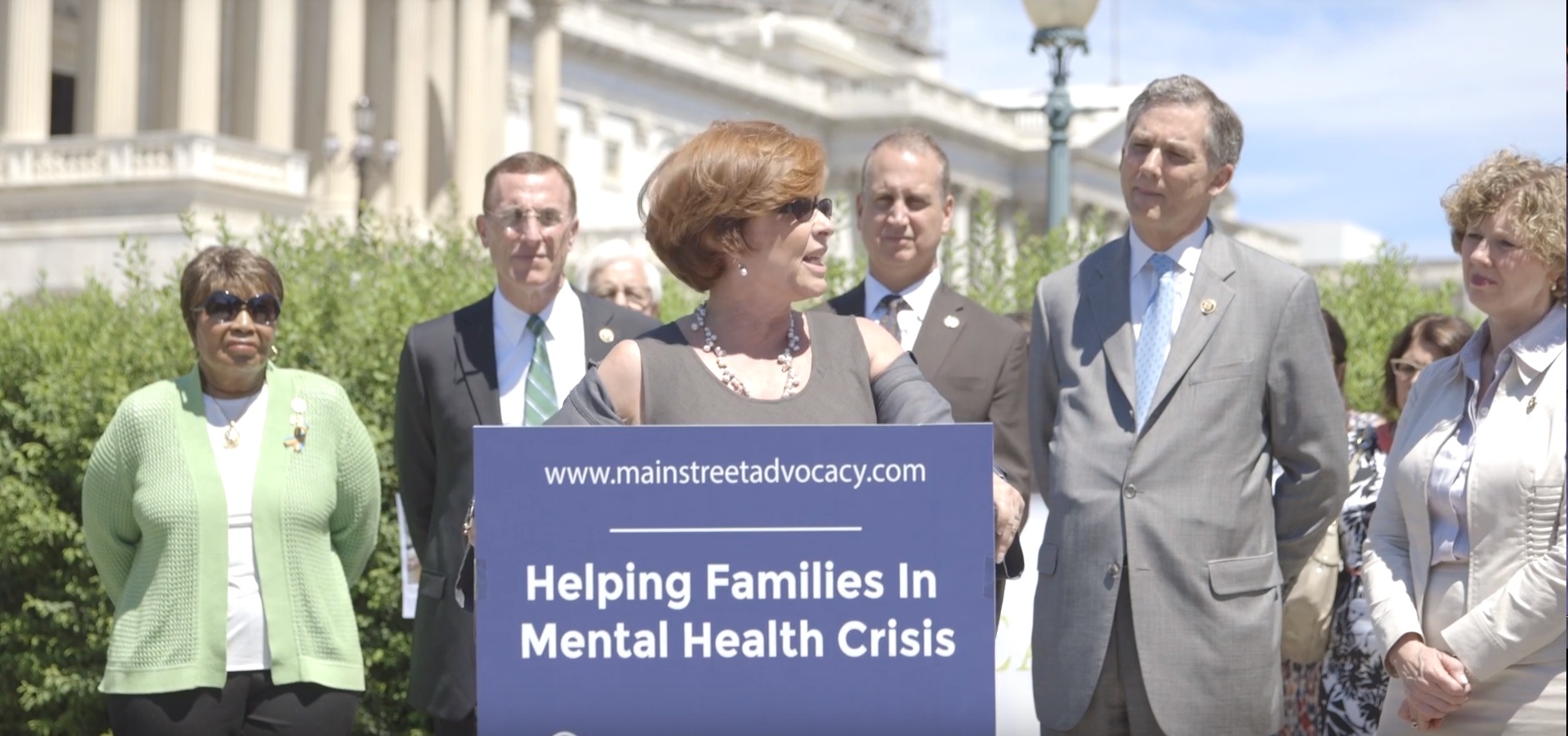 The Helping Families in Mental Health Crisis Act (HR 2646) will get A FULL HOUSE VOTE after the July Fourth recess. Last week the bill passed out of the Energy and Commerce Committee markup with the provisions intact to help people with severe mental illness. The Helping Families in Mental Health Crisis Act (HR 2646) will get A FULL HOUSE VOTE after the July Fourth recess. Last week the bill passed out of the Energy and Commerce Committee markup with the provisions intact to help people with severe mental illness.
The vote was UNANIMOUS AND BIPARTISAN. This is the strongest mental health reform bill in the last 50 years and has the support of families, advocates, the media and legislators spanning both parties.
WE NEED YOU MORE THAN EVER.
Tell your Representatives we have waited long enough for real mental health reform. ACT NOW to tell them to support HR 2646 when it comes to the House floor in July.
To comment, visit our Facebook page.
Visit our blog archive to read all our recent posts.
|
|