"A Manic Episode Led Me to Strip Naked in Times Square" – guest commentary
 It was a bright morning on June 30 when I stepped off the F train near Times Square. I had blisters all over my feet from walking barefoot and was overwhelmed with fear. It was a bright morning on June 30 when I stepped off the F train near Times Square. I had blisters all over my feet from walking barefoot and was overwhelmed with fear.
Read more »
Maryland Mental Health Advocates Rally for #aBedInstead
(Aug. 11, 2016) Union representatives and about two dozen state psychologists, social workers and direct-care personnel this week urged Maryland officials to reopen state psychiatric facilities and hire more hospital staff, arguing that these steps could relieve pressure on jails and eliminate wait lists as a backlog of people await court-ordered psychological evaluations (“Mental-health advocates say Maryland desperately needs more hospital staff,” the Washington Post, Aug. 8).
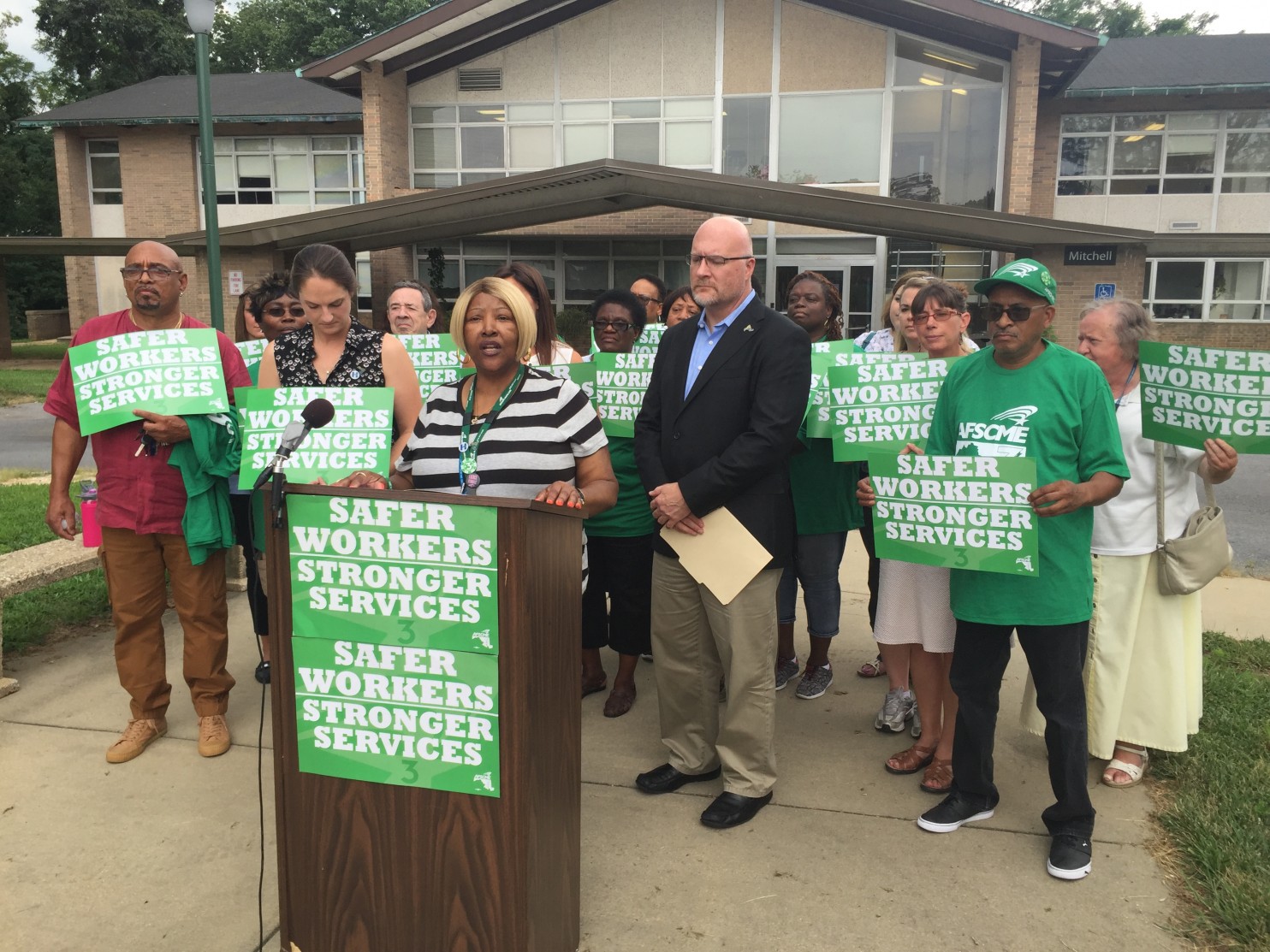 “The state already has the buildings,” said Laura Butler, a Maryland social worker. “It just needs to hire the staff, and the problem is solved.” “The state already has the buildings,” said Laura Butler, a Maryland social worker. “It just needs to hire the staff, and the problem is solved.”
In fact, the Department of Health and Mental Hygiene has more than 500 staff vacancies, according to figures released by the AFSCME Maryland Council 3, the largest union representing Maryland public employees.
Advocates say the department must fill many of those vacancies in order to begin to address the problem.
In May, the health department reported that 84 inmates were on wait lists to undergo psychological evaluations. The state detains those people in jails, which are not designed to provide the treatment they need, often for weeks at a time.
Since 2010, Maryland has eliminated 108 of its already severely limited number of state psychiatric beds. The state currently maintains just 15.8 beds per 100,000 population – far below the 50-bed minimum standard considered necessary in order to provide adequate treatment for residents suffering with mental illness.
Consultants for the state estimated in 2012 that the hospitals needed more than 200 additional beds, but the health secretary at the time rejected that conclusion.
Warehousing people suffering from psychiatric illnesses in jails rather than sending them to hospitals that are equipped to provide treatment is cruel and unusual punishment.
People with severe mental illness in Maryland deserve #aBedInstead of incarceration.
Read the 2016 Treatment Advocacy Center report “Going, Going, Gone: Trends and Consequences of Eliminating State Psychiatric Beds” to learn more about the psychiatric bed shortage in Maryland and across the country. And visit #aBedInstead for information about our national psychiatric bed campaign.
To comment, visit our Facebook page.
Visit our blog archive to read all our recent posts.
Treatment Advocacy Center Discusses Diversion at Criminal Justice Conference
(Aug. 10, 2016) Treatment Advocacy Center executive director John Snook spoke Monday at the 2016 National Forum on Criminal Justice. This year’s conference theme was “Integrating Policy, Research and Technology to Improve Public Safety,” and mental health was among the topics discussed (“The worst way to address mental illness,” the Crime Report, Aug. 9).
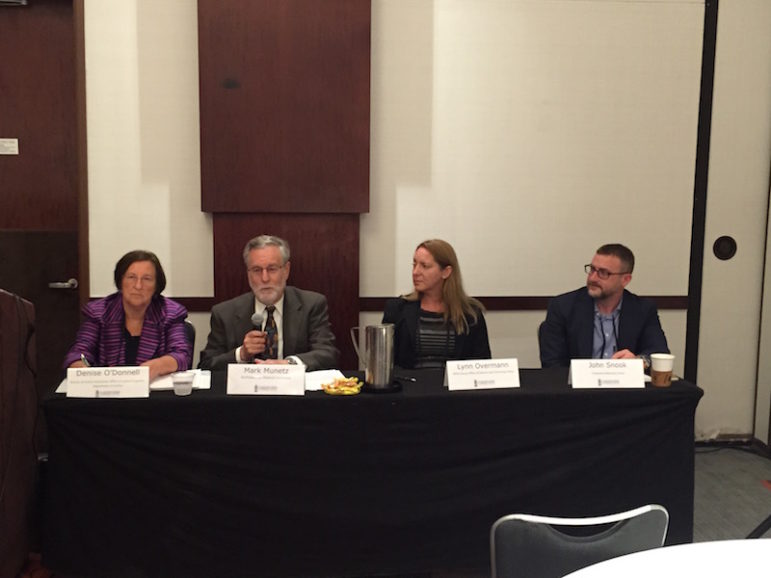 “If you set out to design the absolute most expensive and worst way to address mental illness you would do it in a jail setting,” said Snook. “This a problem that is rapidly increasing and we are only just getting a handle on it, and if we don't solve it we are going to look back in 20 years and wonder how things got so bad.” “If you set out to design the absolute most expensive and worst way to address mental illness you would do it in a jail setting,” said Snook. “This a problem that is rapidly increasing and we are only just getting a handle on it, and if we don't solve it we are going to look back in 20 years and wonder how things got so bad.”
Snook spoke on a panel focusing on emerging strategies for diverting people with mental illness away from jail, alongside Dr. Mark Munetz, Professor and Chair of Psychiatry at Northeast Ohio Medical University and Lynn Overmann, Senior Policy Advisor for the White House Office of Science and Technology Policy.
With the number of inmates suffering from mental illness continuing to grow at an alarming pace, intervention is imperative.
“You get the biggest bang for your buck if you intervene early,” said Dr. Mark Munetz, a pioneer of crisis intervention team research. “Ideally the primary intercept is the mental health system, which unfortunately in most communities isn't adequate.”
Instead, law enforcement is frequently being called upon to pick up where the mental health system fails. Police officers estimate that from five-ten percent of the calls they respond to involve mental illness.
Diversion tactics like mental health courts and crisis intervention team (CIT) policing have consistently been found to reduce the arrest and incarceration of individuals with severe mental illness.
But less than half of the U.S. population lives in communities where the most basic methods of diverting people with severe mental illness from the criminal justice system are being used.
Utilizing proven practices such as these is one part of the solution. The other involves collecting enough information to give an accurate representation of the full scope of the problem.
“How many people with serious mental illness are in jail or prison right now? Most jails and prisons can't tell us,” said Lynn Overmann – a member of the Obama administration who advises on the role of technology in criminal justice. “If we are really going to be effective linking people with services, we need to get better at documenting and we need metrics.”
Researchers and policymakers are beginning to identify early intervention strategies that can identify at-risk individuals before they are arrested.
Diversion is a necessary and humane step towards providing treatment instead of punishment for people suffering from psychiatric illnesses and decriminalizing mental illness in the United States.
To comment, visit our Facebook page.
Visit our blog archive to read all our recent posts.
RESEARCH WEEKLY: The High Cost of Schizophrenia
(Aug. 9, 2016) New research estimates the direct and indirect cost of schizophrenia to US society in 2013 was $155 billion - $44,773 per individual with the disease. By comparison, major depression affects 6 times as many people but was estimated in 2015 to cost $210.5 billion, only 35% more.
 The majority of the economic impact was from the lost work productivity of individuals with the disease and their caregivers: $117 billion. Unemployment was the single biggest contributor to cost impact at $59 billion (37.9% of total). The majority of the economic impact was from the lost work productivity of individuals with the disease and their caregivers: $117 billion. Unemployment was the single biggest contributor to cost impact at $59 billion (37.9% of total).
The second most significant cost impact resulted from the lost productivity of those who took care of individuals with schizophrenia. Martin Cloutier and colleagues reported that time devoted to caregiving by family members increased from 484 hours per year in 2002 to 1,040 in 2013. Total caregiver cost: $52.5 billion or 34% of the total economic impact of schizophrenia.
Closing psychiatric hospital beds - a practice known as "deinstitutionalization"- may have contributed to the cost impact on caregivers, the authors said. "A push for increased family intervention for schizophrenia patients can be beneficial and is recommended by many international clinical guidelines, but this intervention comes at a high emotional and economic price to caregivers."
The non-health care costs of law enforcement and incarceration were also "significant contributors" to overall cost, according to the study.
Crucial Data for Important Conversations
"The economic burden of schizophrenia in the United States in 2013," published in the Journal of Clinical Psychiatry, updates or supplies information crucial to the national discussion of mental illness treatment policy, where direct costs and/or cost offsets - cost increases in one category that are offset by cost reductions in another - heavily influence public policy and practice. Among these:
- Criminal justice - $14.3 billion/9.2% of total
The cost of schizophrenia to law enforcement was estimated at $7 billion in 2013, nearly 5% of the total cost impact of the disease. Incarceration costs were estimated at $3.6 billion, or 2.3% of total cost impact. Judicial, legal and police protection costs totaled $3.5 billion, for an additional 2.3%.
- Suicide - $3.3 billion/2.1% of total
Only the cost impact of early death by suicide was reported. Similar costs associated with early mortality from co-occurring medical conditions (e.g., heart disease) were not assessed, which means the cost impact of early death is underestimated.
- Emergency room care - $2.6 billion/1.7% of total
The authors said direct health care costs reflected an emphasis on acute care of patients with schizophrenia, including the use of ERs for individuals in crisis.
- Shelters for the homeless - $1.9 billion/1.2% of total
The cost of schizophrenia had not been reported since 2002, when the economic burden was estimated at $62.7 billion. Calculations in 2013 were made based on the schizophrenia prevalence rate of 1.1% used by the National Mental Health Institute and assumed in all Treatment Advocacy Center studies and analysis. A prevalence rate of 0.5% was assumed by researchers in 2002.
Adjusted for the current prevalence assumptions, population growth, inflation and changed federal policies, the 2013 costs are "consistent" with the earlier ones, the researchers said. The study reflected only the cost differences between an individual with schizophrenia and one without.
The cost of severe bipolar disorder, which affects more than twice as many people as schizophrenia, was not within the study's scope.

Doris A. Fuller
Chief of Research and Public Affairs
References:
Next Week: Antibiotics and Mania in Bipolar Disorder
Research Weekly is a summary published as a public service of the Treatment Advocacy Center and does not necessarily reflect the findings or positions of the organization or its staff. Full access to research summarized may require a fee or paid subscription to the publications.
To comment, visit our Facebook page.
Visit our blog archive to read all our recent posts.
Taking Steps to Help Those with Mental Illness – guest commentary
(Aug. 3, 2016) Like most of America, my heart breaks for the families who have endured the rash of mass shootings in this country. Columbine, Aurora, Sandy Hook and Blacksburg have all witnessed what we hope never comes into our communities. Each situation plays out exactly the same; tragedy at the hands of a madman. That’s the one common denominator — mental health.
 Each of the gunmen in these instances has suffered from some form of mental illness. Such illnesses afflict 11 million people who live in our communities, who are our friends and neighbors. They struggle with schizophrenia, bipolar disorder or depression. Unfortunately, many of them go without the help they desperately need. Each of the gunmen in these instances has suffered from some form of mental illness. Such illnesses afflict 11 million people who live in our communities, who are our friends and neighbors. They struggle with schizophrenia, bipolar disorder or depression. Unfortunately, many of them go without the help they desperately need.
One of the reasons these folks can’t get help is because families don’t know how to manage the care of loved ones suffering from mental illness. In addition, society has often viewed the mentally ill with a stigma and lacked the resources to treat these patients. Sadly, they end up circulating through our criminal justice system where we treat them as criminals rather than patients.
Recently, the U.S. House passed the Helping Families with Mental Health Crisis Act, written by Rep. Tim Murphy of Pennsylvania, who is the only practicing clinical psychologist in Congress.
Part of the bill includes authorization of additional beds for patients who need short-term inpatient care. But it also includes options for rural communities to use telemedicine so pediatricians and primary care physicians in our rural communities that have a severe shortage of mental health professionals can communicate and partner with mental health professionals in other areas.
But it’s not enough to just treat people with mental illness. People with mental illness require follow up. And their caregivers, which often are family members, need to be included. But patient privacy regulations have prevented doctors from communicating with caregivers. This is particularly complicated for adult children living at home and receiving treatment under their parents’ health insurance.
The legislation requires a look into these practices to allow for communication between doctors and caregivers so that, together, they can manage therapies and treatments.
This bill Congress passed has been hailed by the likes of CNN, The Washington Post and the Wall Street Journal as the most comprehensive update to how we treat the mentally ill in decades. As a co-sponsor, I was pleased to see it passed with 422 bipartisan votes in Congress — which is a phenomenal accomplishment in today’s partisan Washington.
We’re long past the days where we ignore those with mental illness and hope we can simply manage their problems. We must focus on treatment rather than how we respond to the next tragedy. My hope is that we can get this passed through the Senate and to the president’s desk so that he can sign it into law.
CRESENT HARDY
U.S. Representative (R-NV 4th District)
Read the entire column here.
To comment, visit our Facebook page.
Visit our blog archive to read all our recent posts.
Mental Illness Reform and #aBedInstead Take Center Stage at Conventions
(Aug. 2, 2016) The need for national mental illness reform was prominently featured at both the Democratic and Republican National Conventions.
Demi Lovato spoke directly to the need for reform during a speech at the Democratic National Convention, noting that like millions of Americans, “I am living with mental illness.” Lovato said she was lucky to have received treatment, but that too many Americans continue to suffer without care. spoke directly to the need for reform during a speech at the Democratic National Convention, noting that like millions of Americans, “I am living with mental illness.” Lovato said she was lucky to have received treatment, but that too many Americans continue to suffer without care.
“Untreated mental illness can lead to devastating consequences including suicide, substance abuse and long-term medical issues,” Lovato said.
Former House Speaker Newt Gingrich, speaking at a NAMI Ohio Republican National Convention event, explained, “[W]e need to rethink our whole model of mental illness and substance abuse care].” He also criticized policies which lead to the criminalization of mental illness.
“The theory in the '60s and '70s was to close state hospitals and take care of everyone” Gingrich said. “We did. We put them in prison.”
The need to decriminalize mental illness was also emphasized by Koch Industries General Counsel, Mark Holden. Holden noted that the Koch Brothers have long been champions of criminal justice reform and said the criminal code's goal should be "enhancing public safety" rather than "putting mentally ill people in prison as a way station or just kind of dealing with vagrants or people with drug problems."
Democratic presidential nominee Hillary Clinton also took time to focus on mental illness and the loss of vital psychiatric hospital beds in her speech closing out the final night of the 2016 Democratic Convention. Clinton noted the lack of mental health facilities in Iowa, an issue first highlighted by the Treatment Advocacy Center in our June 2016 report, Going, Going, Gone.
Iowa now has the fewest beds per 100,000 population in the nation, which has led to people being stranded in jails and hospitals awaiting care.
As we move towards the presidential election, mental health – particularly our national psychiatric bed shortage – is a pressing issue that deserves bipartisan attention. Fortunately, both political parties are talking about mental illness; now they just need to do something about it.
Visit #aBedInstead to learn more about the Treatment Advocacy Center’s campaign to address the national psychiatric bed crisis.
To comment, visit our Facebook page.
Visit our blog archive to read all our recent posts.
RESEARCH WEEKLY: Money and Mental Health
(Aug. 2, 2016) Poor mental health can worsen financial health, and people with bipolar disorder are among those at the highest risk for negative impacts.
"It has long been accepted that financial problems can worsen mental health, but our evidence shows that mental health problems can also have a detrimental effect on personal finances," the Money and Mental Health Policy Institute said in releasing Money on Your Mind.
"Financial issues and mental health problems become a vicious cycle; each feeds off the other, creating a trap that can be exceptionally hard to break out of out."
"Money on Your Mind"
The study of money and mental health reports on a survey of nearly 5,500 respondents in Britain diagnosed with a range of mental health conditions, including bipolar disorder, schizophrenia, depression and 12 other diagnoses.
 The occurrence of financial decisions that worsened financial health (e.g., overspending, putting off bills, taking out ill-advised loans) was high across all the diagnoses, according to the study, but consistently highest in those with bipolar, alcohol or drug dependence, borderline personality disorder or ADHD/ADD. The occurrence of financial decisions that worsened financial health (e.g., overspending, putting off bills, taking out ill-advised loans) was high across all the diagnoses, according to the study, but consistently highest in those with bipolar, alcohol or drug dependence, borderline personality disorder or ADHD/ADD.
More people with bipolar disorder than any other condition reported that their mental illness made their financial situation worse - 88%, compared with 85% for personality disorder and 84% for schizophrenia or other psychotic condition. Experiencing a manic episode was identified as one of seven major drivers that resulted in higher spending.
Individuals with bipolar disorder also were more likely than individuals with other disorders to report that their financial situation worsened their mental health - 91%, compared with 85% of those with schizophrenia or psychosis.
The most commonly identified financial impact of poor mental health was to the ability to make "sensible, rational or balanced decisions" about money. "Most of these respondents detailed financially damaging actions they took while unwell, which they described with words such as 'reckless,' 'incomprehensible, 'stupid' or 'idiotic,'" the report said.
Financial Impacts
Impacts of bad financial decisions included going without "essentials" such as food or heating and being dependent on others to survive. The respondents reported that these impacts had impacts of their own, including feelings of worthlessness or feeling guilty about their children going without as a result, the study said.
Earlier this year, a report from the National Alliance for Caregiving detailed the financial impact mental health conditions have on caregivers in On Pins & Needles: Caregivers of Adults with Mental Illness. Nearly 65% of the 1,601 respondents caring for adults with mental illness reported that their care recipients depended completely or significantly on them for financial support. This compared with 49% of all caregivers.
One in four caregivers of adults with mental illness reported feeling "high financial strain" as a result of caregiving, compared with 16% of adults without mental health issues.
Doris A. Fuller
Chief of Research and Public Affairs
References:
Next Week: Mental Illness and Prisoners: Prevalence, Outcomes and Interventions
Research Weekly is a summary published as a public service of the Treatment Advocacy Center and does not necessarily reflect the findings or positions of the organization or its staff. Full access to research summarized may require a fee or paid subscription to the publications.
To comment, visit our Facebook page.
Visit our blog archive to read all our recent posts.
“My Son is Going to Jail for Being Mentally Ill,” Maine Mother Laments
(August 1, 2016) Shannon Gilliam has spent years fighting to get her 26-year-old, mentally ill son, Brandan, stabilized before he hurt himself or someone else. But the mental health system in Maine has repeatedly failed Brandan and made it difficult for the Gilliam family to get him help until it was too late (“How the system failed a Maine family, landing a mentally ill son in jail,” Bangor Daily News, July 28).
 Last April, after months taking his prescribed medication, Brandan Gilliam felt better and decided he didn’t really need his meds – a common occurrence amongst people with serious mental illness resulting from a condition known as anosognosia. He quickly began deteriorating. Last April, after months taking his prescribed medication, Brandan Gilliam felt better and decided he didn’t really need his meds – a common occurrence amongst people with serious mental illness resulting from a condition known as anosognosia. He quickly began deteriorating.
Brandan was hospitalized twice early last month after suffering psychotic breaks. But both times ER physicians released him after only brief holds.
“They never should have released him,” Shannon said. “He was [involuntarily committed] and only stayed in the ER for three days.”
Shortly after his release from the hospital, Brandan stole his brother’s pickup truck and totaled it about a mile from their house, according to the family. Shannon called the hospital, begging that her son be re-admitted, but was denied.
Then, on July 13, Brandan was arrested and charged with domestic violence assault and criminal restraint after getting in a physical altercation with his girlfriend.
“They’re talking about locking him up for a while,” Shannon said. “The mental health system hasn’t helped us yet. And now he’s going to go to jail for being mentally ill.”
But getting help for Brandan is complicated by Maine’s inadequate mental health system.
Tom Kivler, director of Behavioral Health at Mid Coast Hospital, agrees that the state’s mental health system “absolutely” has to be fixed, including an overall lack of mental health hospital beds.
“We need to do better for people with behavioral health issues,” Kivler said. “There’s no other diagnosis where if you need inpatient treatment, you have to call around and, ‘Well, that patient doesn’t really fit, he’s not acute enough.’ With any other condition, you’re diagnosed in the ER, and if you have a heart condition, you go to Maine Medical Center and you get that surgery.”
During a jailhouse interview with Bangor Daily News last week, Brandan said he’d like to be moved to a psychiatric hospital. “They’d put me on the [medication] I need, and I could talk about what’s happening and how my meds are working…but there’s no beds anywhere," he said.
Maine’s mental health system is indeed in crisis. The state has just 10.8 public psychiatric beds available per 100,000 people – far below the 50-bed minimum standard necessary to provide adequate treatment for people suffering with severe mental illness.
This September, the Treatment Advocacy Center will expand its campaign – called #aBedInstead – to address the national psychiatric bed shortage. We will be launching a new campaign website dedicated to highlighting the severity of the U.S. bed crisis and offering common sense recommendations to begin laying the groundwork for a solution.
In the meantime, visit #aBedInstead to learn more, and share this blog with your followers on social media. Use the hashtag #aBedInstead.
To comment, visit our Facebook page.
Visit our blog archive to read all our recent posts.
Mental Illness, Violence, and Family Homicides – guest commentary
(July 28, 2016) The vast majority of the mentally ill are not violent and the vast majority of violent acts are not committed by the mentally ill.
 But we should not be naively politically correct in the other direction- and act as if untreated mental illness isn’t a risk factor for violence. It is, and family members are often the victims. But we should not be naively politically correct in the other direction- and act as if untreated mental illness isn’t a risk factor for violence. It is, and family members are often the victims.
Fuller Torrey has [released a report] to put this issue into perspective. Dr. Torrey is founder of the Treatment Advocacy Center, a national nonprofit dedicated to eliminating barriers to timely and effective treatment of serious mental illness.
Dr. Torrey writes:
“There are approximately 4,000 family homicides in the United States each year. Individuals with serious mental illness are responsible for 29% of these, or approximately 1,150 homicides. This is 7% of all homicides in the U.S. The adequate treatment of individuals with serious mental illness would prevent the majority of family homicides associated with serious mental illness.”
There is nothing more terrifying than living with the constant worry that your family member will harm you- particularly if there is no treatment available for him/her or if he/she refuses whatever treatment is available.
Family violence is the canary in the coal mine of our neglect of the severely ill- just the most extreme manifestation of the many forms of suffering we inflict on them and their families by failing to provide adequate housing, treatment, and social services.
I have observed firsthand the mental health systems for, and the housing of, the mentally ill in most of the developed countries in the world and have concluded that the US today is perhaps the worst place and worst time to be mentally ill.
The defunding and privatization of services has led to 350,000 mentally ill inappropriately imprisoned, 250,000 homeless, and to the tragedies of family violence reported here.
There are two necessary solutions. First, and uncontroversial, is better housing and access to treatment. Our country has badly neglected the severely ill- and we, they, and their families are paying the price. Legislation now before Congress may finally help to reform our mental health nonsystem.
Second, and more controversial, is the need for involuntary treatment for those most obviously in need of treatment and most unwilling to participate in it.
We mustn’t blame our uniquely US…violence problem on the mentally ill. Most are decent, well behaved people who do no harm.
But we also must not neglect the need to treat mental illness when it is a clear risk factor for violence.
ALLEN FRANCES
PROFESSOR EMERITUS, DUKE UNIVERSITY
Read the entire column here.
To comment, visit our Facebook page.
Visit our blog archive to read all our recent posts.
RESEARCH WEEKLY: Psychological Interventions for Adults with Bipolar Disorder: A Review
(July 26, 2016) Bipolar disorder is a serious mental illness associated with risk for relapse, hospitalization, unemployment and suicide, among other poor outcomes. Mood-stabilizing medication is the standard of care for the condition, but the possible role of supplementary psychotherapy is of interest to many patients and clinicians.
 Matthijs Oud and a team of international researchers conducted the first comprehensive systematic review and analysis of psychological therapies that have been tested for their effectiveness in treating bipolar disorder. They found the evidence for psychotherapies to be "much stronger" than was available "only a few years ago" but also found that the preponderance of studies on the subject were of low or mediocre quality. Matthijs Oud and a team of international researchers conducted the first comprehensive systematic review and analysis of psychological therapies that have been tested for their effectiveness in treating bipolar disorder. They found the evidence for psychotherapies to be "much stronger" than was available "only a few years ago" but also found that the preponderance of studies on the subject were of low or mediocre quality.
Despite the quality issue, "Overall, on the basis of this review, we would recommend the use of psychological interventions in the treatment of people with bipolar disorder to reduce relapse rates and to reduce depressive symptoms," the authors concluded. "Although there is insufficient evidence to recommend one specific treatment over the others, the best evidence is for individual structured psychological interventions, and there is weaker - but still promising - evidence for group and family interventions and for collaborative care."
"Almost all" the psychological interventions were supplementary to medication therapy. The studies reviewed involved more than 6,000 participants, primarily in North America and Europe.t three days of July shed additional light on the condition and impacts of inmates with serious psychiatric disease.
Psychotherapies Reviewed
The psychotherapies reviewed included
- Individual therapy, either face-to-face or online, including cognitive behavioral therapy and medication adherence therapy;
- Group therapy;
- Family psychoeducation;
- Collaborative care;
- Integrated therapy (combining cognitive and interpersonal therapies);
- Family-focused therapy; and
- Interpersonal and Social Rhythm Therapy (known as IPSRT).
The authors found:
- Moderate-quality evidence that individual psychological therapy reduced the risk of relapse by one-third;
- Moderate-quality evidence that collaborative care reduced hospital admissions by one-third;
- Low-quality evidence showing a substantial reduction in relapse rates for people who received family psychoeducation;
- Evidence that group therapy reduced risk of relapse and possibly improved some symptoms; and
- "No evidence" of benefit for other types of psychological interventions such as IPSRT.
The authors said their findings are consistent with previous reports that psychotherapy may reduce the transition to psychosis, that family interventions reduce relapse in both early and established cases of schizophrenia, and that psychotherapy is the most effective treatment for major depression.
Encouraging to Families
In their discussion of "implications for practice," the authors made special note of the value of family-based therapies for treating bipolar and schizophrenia.
"It is also worth considering family psychological interventions, not just because the trials show some promise, but also because the benefits of family interventions for psychosis (including schizophrenia and bipolar disorder) suggest that relapse rates can be reduced in both early and later psychosis," they said. "It seems likely, on the basis of this broader evidence as well as the evidence in this review, that family interventions could be beneficial for people with bipolar disorder and should be made available routinely to help reduce relapse rates....
"It is important to keep in mind that people with bipolar disorder are often only partially adherent to pharmacotherapy, which may contribute to the recurrence of symptoms and to relapse. Group or family psychoeducational interventions and collaborative care could help these people develop skills related to medication use, stress management, recognizing early symptoms and coping with symptoms. Such skills could reduce risk of relapse and improve response."
The research team suggested further study to establish the long-term effectiveness of psychological intervention and the comparative strengths among different psychotherapies. Studying treatment results separately for people in different phases of the disease (e.g., manic, depressive, non-symptomatic) would also be useful, according to the authors.
Doris A. Fuller
Chief of Research and Public Affairs
References:
Next Week: Money and Mental Health
Research Weekly is a summary published as a public service of the Treatment Advocacy Center and does not necessarily reflect the findings or positions of the organization or its staff. Full access to research summarized may require a fee or paid subscription to the publications.
To comment, visit our Facebook page.
Visit our blog archive to read all our recent posts.
|
|