A Mother's Constant Vigil
(May 29, 2013) Naomi Haskell begins to cry as she watches her son lift weights and run on the treadmill. He was in a psychiatric hospital only several hours earlier. Now she wonders if his behavior is the beginning of another manic episode.
 Every parent of an adult child with a serious mental illness will see themselves in Haskell’s story, described in the Washington Post (“A mother helps son in his struggle with schizophrenia,” May 28). Every parent of an adult child with a serious mental illness will see themselves in Haskell’s story, described in the Washington Post (“A mother helps son in his struggle with schizophrenia,” May 28).
For this mother, it is “an hour-to-hour, minute-to-minute vigil.” Even her son’s body movements can alert her to a looming psychiatric crisis. She notices changes in behavior like “how he walks, whether he is quick or slow or heavy or aimless” and “[h]ow he talks — crisp or sluggish, or perhaps angrily to no one.”
Haskell’s son says he understands why, after his first psychotic episode, his mother “went to a court and convinced a judge that her son was a danger to himself or others, then tricked him into getting on a bus back to Houston, where he was handcuffed and taken to the psychiatric hospital, where he began to accept that he would have to manage delusions and paranoia and mania and depression for the rest of his life.”
Other parents are not so lucky. Unlike Haskell’s son, many people with severe mental illness suffer from anosognosia, a lack of awareness about their illness.
If you love someone with severe mental illness, don’t miss this compassionate story, eloquently told.
To comment, visit our Facebook page.
Visit our blog archive to read all our recent posts.
I Changed My Mind on Involuntary Commitment – personally speaking
(May 24, 2013) The enclosed check is a small token of my appreciation of Dr. Torrey and Fred Frese. I got to know them when I was the first president of the NAMI Consumer Council.
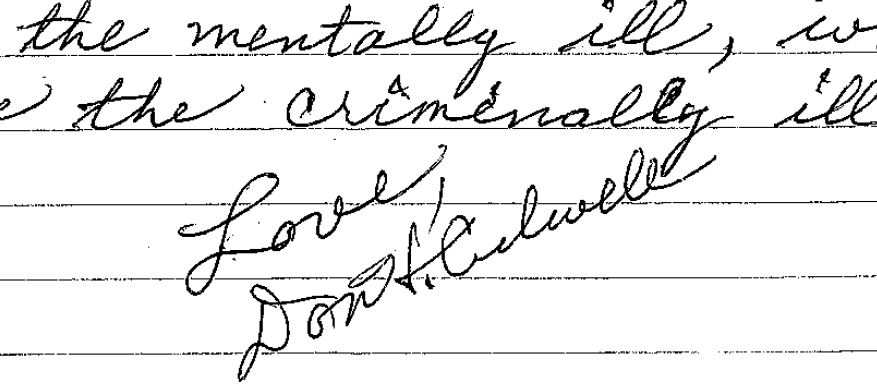 I was involuntarily committed to two state hospitals, one in 1951 and the other in 1961. Later I was involuntarily committed to the county jail eight times, mainly for trespassing. In the hospital I was placed on the criminal ward and in the jail I was placed on the mental health ward. All commitments were apparently due to my irrational thoughts or behavioral health disorder. I was involuntarily committed to two state hospitals, one in 1951 and the other in 1961. Later I was involuntarily committed to the county jail eight times, mainly for trespassing. In the hospital I was placed on the criminal ward and in the jail I was placed on the mental health ward. All commitments were apparently due to my irrational thoughts or behavioral health disorder.
I don’t know if they put me in the state hospital for my chemical imbalance and in the jail for my character flaws. My unpleasant experiences in the state hospitals caused me to oppose involuntary commitment.
But now, at the age of 82, I have changed my mind. I believe that each individual should have the right and the responsibility to control their own lives as long as they are able and do not infringe on the rights of others by disturbing their peace of mind. Why not have a verdict of guilty but insane rather than innocent due to insanity? Since a hospital can be a prison and a prison can be a hospital, how about combining them into a real correction or rehabilitation facility?
Even though I’m now taking my psych meds, my thinking may still be questionable. For example, in order to counter the idea of criminalizing the mentally ill, why not mentalize the criminally ill?
DON CULWELL
Consumer
Past President of the NAMI Consumer Council
To comment, visit our Facebook page.
Visit our blog archive to read all our recent posts.
SAMHSA Funds Groups That Contribute to Tragedy
(May 23, 2013) The Substance Abuse and Mental Health Administration (SAMHSA) funds advocacy groups that oppose effective treatment laws and denies the existence of severe mental illness, which ultimately leads to tragedy. This was the message from parent and advocate Joe Bruce at a House subcommittee hearing this week examining the agency’s role in delivering services to people with severe mental illness.
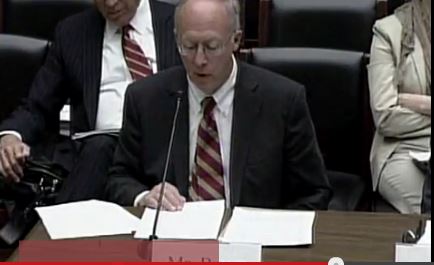 Members of the panel were obviously moved and distressed as Bruce described how the Disability Rights Center of Maine (DCRM) – a SAMHSA funded group - successfully lobbied to have his severely ill son discharged from Riverview Psychiatric Center in Maine prematurely and without medication. Bruce’s wife, Amy, was killed by their son shortly after. Members of the panel were obviously moved and distressed as Bruce described how the Disability Rights Center of Maine (DCRM) – a SAMHSA funded group - successfully lobbied to have his severely ill son discharged from Riverview Psychiatric Center in Maine prematurely and without medication. Bruce’s wife, Amy, was killed by their son shortly after.
At every attempt to get Will into treatment, Bruce said patient advocates with the DCRM blocked his way. “The DCRM willfully neglected Will’s need for treatment and their pressure on the doctor to release Will led directly to Amy’s death,” he told the subcommittee.
Additionally, the DCRM “mounted a well-orchestrated lobbying attack on the proposed (assisted outpatient treatment) AOT law,” Bruce said would have made treatment possible for his son before the family tragedy. The bill promoted by the Treatment Advocacy Center eventually passed, and Maine became the 44th state in the nation with an AOT law. Bruce subsequently was honored with our Torrey Advocacy Commendation for his efforts on behalf of improving treatment laws in Maine.
Will ultimately was found not guilty by reason of insanity and still resides in the Riverview Psychiatric Center. Bruce, other witnesses including our founder, Dr. E. Fuller Torrey, and subcommittee members decried the use of taxpayer dollars to prevent people like Will from getting the treatment they need.
Watch the video of the testimony.
To comment, visit our Facebook page.
Visit our blog archive to read all our recent posts.
Does SAMHSA Deny the Existence of Severe Mental Illness?
(May 22, 2013) The Substance Abuse and Mental Health Administration (SAMSHA) ignores people with the most severe mental illnesses and instead funds advocacy programs that encourage severely ill people to stop taking physician-prescribed medications, Treatment Advocacy Center Founder Dr. E. Fuller Torrey told a House subcommittee hearing examining SAMHSA’s role in delivering services to the severely mentally ill.
 In hard-hitting testimony addressing the failures of the federal agency, Dr. Torrey said, “SAMHSA should be promoting treatment programs which have been proven to decrease violent behavior in individuals with severe mental illnesses” like assisted outpatient treatment. AOT has been shown to be highly effective in reducing hospitalizations, incarcerations and episodes of violence. In hard-hitting testimony addressing the failures of the federal agency, Dr. Torrey said, “SAMHSA should be promoting treatment programs which have been proven to decrease violent behavior in individuals with severe mental illnesses” like assisted outpatient treatment. AOT has been shown to be highly effective in reducing hospitalizations, incarcerations and episodes of violence.
Instead, “SAMSHA’s three-year plan includes no mention whatsoever of these effective treatment programs. Ignoring such programs is bad enough, but it gets worse. SAMHSA actually funds many programs which lobby to block the implementation of these effective programs in the states.”
The House subcommittee on Oversight and Investigations took sworn testimony as part of an ongoing examination of mental health programs and resources “with the aim of ensuring that Federal dollars devoted to mental health are reaching those individuals with serious mental illness (SMI) and helping them to obtain the most effective care.”
Among other topics, witnesses and subcommittee members examined SAMHSA’s use of taxpayer dollars to fund protection & advocacy (P&A) lawyers who lobby against treatment law reforms and conferences that promote anti-psychiatry viewpoints. Under questioning, SAMHSA Administrator Pamela S. Hyde testified that the agency charged with reducing the impact of substance abuse and mental illness on America’s communities counts only one psychiatrist in its workforce of 600 people.
Read Dr. Torrey's full testimony.
Tomorrow: Parent Joe Bruce’s devastating testimony.
To comment, visit our Facebook page.
Visit our blog archive to read all our recent posts
"Clinicians Ignore This Reality at Their Own Risk"
(May 21, 2013) For a community mental illness treatment strategy to meet the needs the full spectrum of individuals with mental health challenges, it needs to address the needs both of those who are well enough to seek help and those who are not. Clinicians ignore this reality at their own risk.
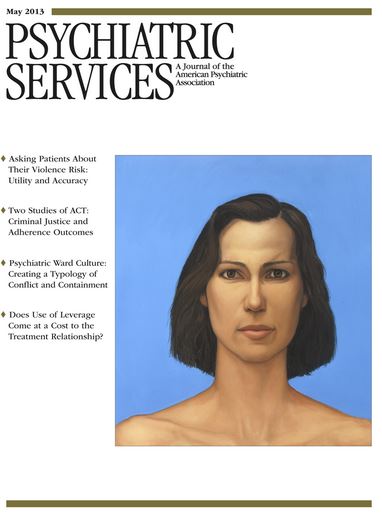 That’s the message Treatment Advocacy Center board member, Jeffrey Geller, MD, delivered in a recent letter to the editor, "The Need for Appropriate Use of Involuntary Commitment" published in Psychiatric Services, a publication of the American Psychiatric Association (May 2013). That’s the message Treatment Advocacy Center board member, Jeffrey Geller, MD, delivered in a recent letter to the editor, "The Need for Appropriate Use of Involuntary Commitment" published in Psychiatric Services, a publication of the American Psychiatric Association (May 2013).
“(I)if psychiatrists don’t figure out how to appropriately use involuntary services, others will tell us what we must do,” wrote Geller. “We need to be at the table both to design effective involuntary interventions—those that we can actually use—in the hospital and in the community and to expand intensive community services. These can be complementary. They must be.”
We agree. In a comprehensive approach to community mental health, involuntary treatment is the last-resort intervention reserved for those so ill they cannot begin recovery without assistance. Neither civil commitment nor intensive community services alone will meet the needs of the entire population struggling with mental illness.
Geller wrote in response to a report about emergency psychiatric intervention in Virginia, which was published in the February issue of the magazine.
To comment, visit our Facebook page.
Visit our blog archive to read all our recent posts
What Happens When the Mental Health System Fails?
(May 20, 2013) Whenever Charlene McNally Fears went off her lithium, the caring mother and grandmother turned into a different – and dangerous – person. And, when she did, it was up to the police to respond.
 The event that occurred the last time Fears and law enforcement collided sets the theme for reporter Matthew Spina’s gripping exploration of how “police have become the front line in dealing with the mentally ill,” (“Mental health system has failed the severely ill,” The Buffalo News, May 18). The event that occurred the last time Fears and law enforcement collided sets the theme for reporter Matthew Spina’s gripping exploration of how “police have become the front line in dealing with the mentally ill,” (“Mental health system has failed the severely ill,” The Buffalo News, May 18).
Treatment Advocacy Center board member and head of the New York State Association of Police Chiefs Michael Biasotti sums up the situation in the story: “What used to be dealt with by the medical community years ago is now dumped on criminal justice. And it’s just caused a nightmare.”
The criminal justice system is not an adequate replacement for comprehensive psychiatric care. We need to ensure people get treatment before an emergency occurs.
New York already strengthened its assisted outpatient treatment (AOT) law this year. A bill is still pending to improve its inpatient commitment law. S. 4377 would make it easier to provide mandatory hospital treatment for people who are unable to meet their basic survival needs. It would also make clear that a person cannot be released from a psychiatric hospital until he or she is deemed capable of complying with treatment in the community.
If law enforcement is going to be retired from the front lines of mental health in New York or anywhere, good treatment laws – and the legislation like S. 4377 that creates them – are essential.
To comment, visit our Facebook page.
Visit our blog archive to read all our recent posts
Happily Ever After, Almost – personally speaking
(May 17, 2013) I have two boys, both are adults and both suffer from severe mental illness. But one has accepted treatment and turned his life around while my other son has refused treatment and continues to live on the streets.
 My youngest son is in his forties and finally accepts treatment. He is now on highly effective medication, receives therapy and is no longer homeless. I worked for 10 years to get him the help he needed. My youngest son is in his forties and finally accepts treatment. He is now on highly effective medication, receives therapy and is no longer homeless. I worked for 10 years to get him the help he needed.
Those ten years were the most difficult of my life. I wasn't able to sleep through the night and each time I woke all I could think of was my son and what I needed to do to get him the treatment he needed. He was in his own world. He was incoherent, paranoid and unable to sleep through the night and walked aimlessly through his childhood neighborhood. He lived on the streets.
Finally, after years of phone calls and attempts to get my son into treatment, he was taken to the psychiatric hospital where he was diagnosed and given medication. At this time my son was in denial about his illness and didn't want treatment nor did he want anything to do with me. I was the enemy who wanted him locked up, as far as he was concerned. He spent three years in a facility, following which we worked with social services to find him a place to live.
He has been living there over three years now and we have rebuilt our relationship, thanks to the medication and treatment he is receiving. He regularly visits me and we speak by phone frequently - he is no longer suffering. He is happy again and I have my son back. Thanks to treatment, he's a helpful and compassionate human being with a positive outlook on life.
But we are not a complete family yet. My oldest son is nearly fifty years old and also suffers from severe mental illness. Like his younger brother, he also does not believe he is sick. But unlike his younger brother, he has never been treated or diagnosed and is now homeless after living on the fringes of society for most of his adult life.
While I've contacted crisis and mental health agencies in the town he is in, they cannot provide me with information. It's so difficult, when you feel your hands are tied due laws preventing family members from obtaining information about adult children. I pray for him and hope he will someday get treatment and we will once again be a complete family.
My children have suffered immensely because of the way our system abandons people with severe mental illness. I want to live country where that treats everyone with dignity and laws don’t prevent people from getting the help they need.
We all suffer, when just one person is suffering.
Barbara Williams is the mother of two men with severe mental illness.
To comment, visit our Facebook page.
Visit our blog archive to read all our recent posts
California Misses Opportunity to Provide Treatment for Seriously Ill
(May 16, 2013) A storm is brewing over the most effective way to implement California’s Laura’s Law so that services reach those who need them most. We recently celebrated legislative efforts to amend the life-saving mental illness treatment law, but these legislative strides were halted by California Senate President Pro Tem Darrell Steinberg.
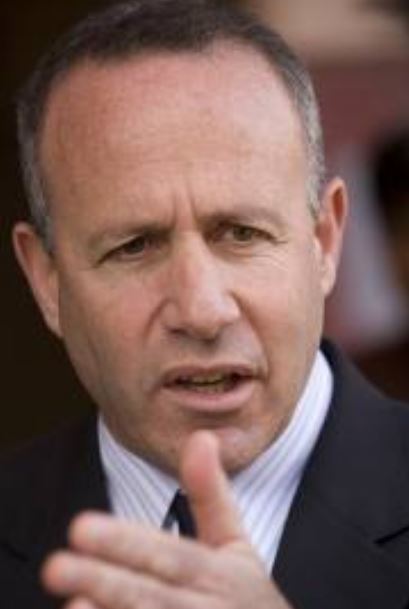
While we consider it progress that the Senate Pro Tem eliminated funding hurdles by clarifying that money from the Mental Health Services Act can be used to implement the law, this does not mean services will reach people with the most severe mental illnesses who need them the most.
The Sacramento Bee published today three letters that demonstrate how passionately people feel that Steinberg’s amendments gut the core of the law, which makes treatment possible for people who are too sick to realize they are ill.
“Steinberg's plan will eliminate the funding hurdle but misses the opportunity to make treatment more accessible to the sickest and most vulnerable Californians by removing other barriers to implementing Laura's Law” (“Steinberg’s mental health care plan doesn’t go far enough”).
“His new proposals are for voluntary services and do not help the seriously ill who are too psychotic to know they are ill. To help people living under lice-infected clothing, who are eating out of dumpsters, screaming they are the Messiah requires implementing Laura’s Law” (“Steinberg would make caring harder for seriously mentally ill”).
“[I]deological arguments keep getting in his way. That is the is the battle between those who believe acceptance of mental health treatment must always be through a person's free will decision and those who recognize psychosis robs some people with mental illness of the ability to realize they are ill and need treatment” (“Steinberg should let counties pick mental health priorities”).
We commend Steinberg on his plan to make it easier to fund assisted outpatient treatment (AOT), but he is missing an opportunity remove other barriers that would make treatment more accessible for the sickest and most vulnerable Californians.
To comment, visit our Facebook page.
Visit our blog archive to read all our recent posts
"I Did Not Believe I Was Delusional, Let Alone Psychotic" – guest blog
(May 15, 2013) The CIA was not spying on me. Nor were FBI agents looking to bring me down. On the other hand, I did not belong to either of these groups and was neither the President, Jesus Christ, nor Cleopatra. These, I had heard, are the content of delusions that characterize schizophrenia; its delusions are grandiose, and based (albeit flimsily) on the culture we see in the media. For example, having a radio transistor in your tooth is a common delusion of people suffering from schizophrenia -- but I would assume this is just since the ubiquity of such technology. Naïve, I thought that if you were not pulled into these "standard" delusions, you could not have schizophrenia.
 Given that logic, I did not consider myself to have schizophrenia. When mental health professionals labelled some of my beliefs as delusions, I was not convinced. I was worried, though: microscopic rats were eating my brain. "That's the schizophrenia talking," the hospital staff would say to me. "It is not real; it is a delusion." But I was terrified of these brain-eating rodents, especially as they flooded my system via the countess forced injections I endured while certified -- over 10 hospitalizations in five years. Given that logic, I did not consider myself to have schizophrenia. When mental health professionals labelled some of my beliefs as delusions, I was not convinced. I was worried, though: microscopic rats were eating my brain. "That's the schizophrenia talking," the hospital staff would say to me. "It is not real; it is a delusion." But I was terrified of these brain-eating rodents, especially as they flooded my system via the countess forced injections I endured while certified -- over 10 hospitalizations in five years.
"Erin, rats cannot even fit inside your head," they'd all say. Furthermore, they'd expect me to use my understanding of neuroscience (I have a Master's degree in the field) that felt like as a slap in the face. Did they not understand that the rats' existence and constant consummation of my brain transcended science? It was of the Deep Meaning.
This "Deep Meaning" was to me the ultimate reality, while again doctors and nurses spoke of delusion. How could I expect them to understand, anyway? I reasoned. After all, this Deep Meaning was revealed only to me, the Chosen One. I had great responsibility: I was chosen to have my brain regenerate after being eaten by the rats, in order for there to be scientific study of this phenomenon. Regeneration in the brain is limited and its widespread occurrence in my brain would be an amazing breakthrough for neuroscience. Since this was, in my mind, based in science, it was obviously not a delusion.
(Read the entire blog from which this was excerpted on Huffington Post.)
Erin Hawkes
Hawkes is a neuroscientist and author who, in her final undergraduate year, had a psychotic break and attempted suicide. Her struggles to overcome schizophrenia and earn her PhD are described in When Quietness Came.
To comment, visit our Facebook page.
Visit our blog archive to read all our recent posts
"Let's Learn from the Failures of US Mental Health Policies" – guest blog
(May 13, 2013) This is Prevention Week, part of Mental Health Awareness Month in the U.S. Too bad that the policies promoted by Prevention Week's creators, the US Substance Abuse and Mental Health Services Administration (SAMHSA), make it more likely that people with the most severe psychotic disorders -- schizophrenia and bipolar disorder -- will remain ill.
 To see the problem, just imagine that you are the parent of someone you think may be developing or already has schizophrenia. You go to the SAMHSA website because this is the well-funded U.S. agency in charge of supporting treatment for mental illnesses. To see the problem, just imagine that you are the parent of someone you think may be developing or already has schizophrenia. You go to the SAMHSA website because this is the well-funded U.S. agency in charge of supporting treatment for mental illnesses.
You urgently need some kind of overview about schizophrenia. Let me know if you find it.
In looking for basic information about schizophrenia, you might not think to click on "What a Difference a Friend Makes." This is because your son or daughter's friends fled when the delusional behaviour started. Click on this anyway and you can see the one meager paragraph that I could find on the entire SAMHSA website that discusses schizophrenia. The random comments mention the use of medication.
You may have heard somewhere else that anti-psychotic medications have a good success rate in helping people recover from psychosis and maintain their sanity. I can't find any of this research on SAMHSA's site. However, there are numerous links, amidst the vast resources on recovery, to psychiatric survivor groups ready to explain why medications should be avoided. In the information on recovery, I couldn't find any links to the informative list of strategies for managing schizophrenia that are easily found on the science based US National Institute of Mental Health website.
Perhaps you hope to find information on a psycho-education program that will help your family member learn what is known about their brain disorder and how best to manage it. You'll easily find your way to information about the Wellness Recovery Action Plan (WRAP) program created by Mad in America blogger Mary Ellen Copeland. This program is widely used to educate psychiatric clients in Canada as well as the US. Actually, in Canada, SAMHSA is increasingly touted as the cutting edge leader in recovery.
(Click here to read the full blog in Huffington Post.)
Susan Inman
Inman is the author of After Her Brain Broke: Helping My Daughter Recover Her Sanity and an ardent advocate for mental illness treatment reform in Canada and the US.
To comment, visit our Facebook page.
Visit our blog archive to read all our recent posts.
|
|