Resisting the Voices – personally speaking
(Aug 2, 2013) My brother received no medical intervention for his mental illness during his time in prison or as the result of any encounter with the legal system in California or Washington State.
 He is a high functioning paranoid-schizophrenic and as such, doesn’t fit the stereotype laid out by society. He has owned his own plumbing business, dressed well and driven expensive cars, yet hears voices, has paranoid thoughts and has had at least three major life interruptions from psychotic episodes. He is a high functioning paranoid-schizophrenic and as such, doesn’t fit the stereotype laid out by society. He has owned his own plumbing business, dressed well and driven expensive cars, yet hears voices, has paranoid thoughts and has had at least three major life interruptions from psychotic episodes.
The first sign of his illness appeared when he began calling me from California years ago saying that the voices of police were being transmitted through his car radio and directing him to commit harmful actions on the roadway that could injure him or someone else. He said that he was trying to resist, but the government and police were trying to kill him.
One day while driving, voices on his radio told him to drive his car between another car and the guardrail on the side of the freeway. The police chased him from Los Angeles to Ventura County. For the incident he received a two-year sentence and served 18 months.
After being released, he moved to Seattle and started over with his business, but he was not well.
He had several more incidents involving the police. Each time something happened, I tried to have him evaluated. I was told that he was suffering from paranoia, but nothing could be done because my brother had not directly threatened anyone. The nature of his illness is that he is impulsive and erratic, he doesn’t make deliberate threats.
The run-ins with police continued. He was charged with trying to run over someone in a mall parking lot – why wasn’t that considered a threat to someone’s life? One of the police officers involved said that people with mental illness don’t receive help for the smaller incidents, but they get attention after they commit a crime that locks them up for a very long time.
About two years ago, my brother stopped talking to me. Because my brother believed the persecution of the government and police to be true, he was always frustrated with me for not helping him fight them.
Unfortunately, other than the satisfaction that I tried my best to help my brother, our broken system has brought me nothing but heartache.
For my brother’s sake and for others like him, there needs to be more education regarding these brain diseases. I’ve been told so many times that it’s his own fault if he chooses not to help himself. I can’t count the number of times I’ve tried to explain that he doesn’t believe he needs help, part of his illness.
Second, the acceptance as a society of the substandard condition of many of our mental health treatment facilities is a reflection of the undervalued view of mental health disease verses other diseases.
Most importantly, why doesn’t our legal system protect an ill person, their family and others from physical harm? As a society, until a balance is found, we will have to accept deadly shootings and other crimes as part of the consequence of our current system. We will have to watch the suffering and torment of our loved ones.
Cathy
Washington
To comment, visit our Facebook page.
Visit our blog archive to read all our recent posts.
A Mother’s Tireless Pursuit for Care
(Aug. 1, 2013) A multimedia series in the Milwaukee Journal-Sentinel takes a close look at one mother’s quest to get treatment for her young adult son, Rob, who suffers with schizoaffective disorder.
 Reporter Meg Kissinger, a Pulitzer Prize finalist for investigative journalism in 2009, has again brilliantly highlighted problems many families face when they seek help from the mental health system. This time she gets to know Debbie Sweeney and witnesses firsthand this mother’s experience trying to get Rob the care he desperately needs. He has yet to receive consistent and appropriate treatment in the community. Reporter Meg Kissinger, a Pulitzer Prize finalist for investigative journalism in 2009, has again brilliantly highlighted problems many families face when they seek help from the mental health system. This time she gets to know Debbie Sweeney and witnesses firsthand this mother’s experience trying to get Rob the care he desperately needs. He has yet to receive consistent and appropriate treatment in the community.
"If Rob kills himself, which he's talked about a lot lately…I have to know that I did all I could for him," says Debbie.
You can read what Kissinger discovered in the intimate portrait of a tireless mother desperate for treatment for her son in “Chronic crisis: A quest for care.”
Among the stories:
A quest for care: “The system won’t help her figure it out. Instead, she is told Rob has the right to be mentally ill.”
The run-around: “He tells me I am taking away Rob’s freedom….What freedom? The freedom to die on the street?”
Waiting for an angel: “Sometimes people need medication even if they don’t like to take it….You know how people with diabetes need to take insulin so they don’t end up in the hospital? It’s the same with some kinds of mental illness.”
No place left to turn: “Rob was in a psychiatric hospital, but at least he was safe.”
To comment, visit our Facebook page.
Visit our blog archive to read all our recent posts.
Reclassify All Organic Brain Diseases Under Medicine – guest blog
(July 31, 2013) Please remove all organic, biologically based disorders and diseases of the brain (such as schizophrenia, schizoaffective, and bipolar disorder) out of behavioral health care/psychiatry back into medicine, within specialties such as neurology, neurobiology and/or neurophysiology, where they belong. Health care delivery has left the management and care for those suffering these disorders to “behavioral health care departments” where policies, philosophies and agendas diminish the very severity and complexity of the patient’s underlying medical condition. It’s an absolute failure of Medicine to allow this substandard care any longer. Medicine needs to step up, and take immediate action to rectify this disastrous situation for patients who suffer these complex diseases. Patients need care based on sound neuroscience within medicine that considers anatomy, biochemistry, cytology, endocrinology, genetics, histology, immunology, microbiology, neuroscience, pathology, and radiology.
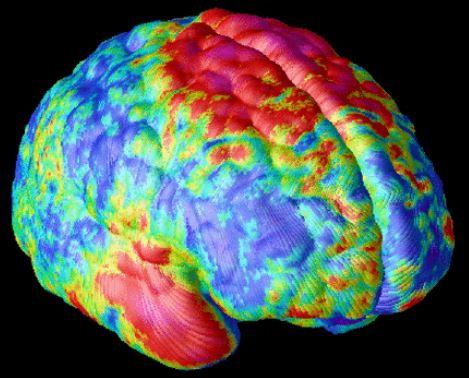 Behavioral health care departments can continue to manage “consumers” and their “behavioral” health care needs and their general “mental wellness.” That’s all well within their scope of practice. When patients need counseling, behavioral modifications, and therapies for addictions, then they serve a necessary purpose. But anything, absolutely anything, to do with brain diseases, its medical management, treatments necessary for brain healing, need to originate from medicine. As in cardiology, patients are medically managed and then sent to cardiac rehab, recovery, therapies, diets, spiritual programs, gardening, etc. Recovery and wellness should be an adjunct to an underlying illness. Behavioral health care departments can continue to manage “consumers” and their “behavioral” health care needs and their general “mental wellness.” That’s all well within their scope of practice. When patients need counseling, behavioral modifications, and therapies for addictions, then they serve a necessary purpose. But anything, absolutely anything, to do with brain diseases, its medical management, treatments necessary for brain healing, need to originate from medicine. As in cardiology, patients are medically managed and then sent to cardiac rehab, recovery, therapies, diets, spiritual programs, gardening, etc. Recovery and wellness should be an adjunct to an underlying illness.
Society does not understand what “mental illness” is anymore. It has become a catch-all term covering stress to schizophrenia. The new movement is to switch mental illness to even a more elusive term of “mental health and wellness.” Society needs more education on the disease process of the brain that has caused the lack of mental wellness. People seek “mental wellness” as a general state of well being. They may NOT have an underlying brain disease/disorder, which is completely different for those that do. They are as different as a post coronary bypass patient seeking “physical wellness” in cardiac rehab vs. a jogger who has no underlying cardiac condition and runs for their physical health. I fear we have completely blurred the lines with society understanding this difference. No wonder people are confused, angry and unsympathetic towards suffers of mental illness. It has been used as an excuse and deemed in many cases not real. People also think it’s mainly self-inflicted due to the misinformation coming from substance abuse programs.
From the first day of trying to treat my son, I knew we had entered a substandard system of behavioral care. Never was a physical exam done, or my sons’ cognitive ability evaluated to understand the pros and cons of medical treatment and the risks of refusing that treatment (as in regular medicine). He was expected to save himself or be left behind. Countless lives have been lost. Even staff members say the “system is broken.” What does that say about the state of things? How can you develop confidence in a broken system?
Out of compassion for all those who suffer these disorders, I’m asking you to consider making this your highest priority. Please move these brain diseases under medicine, so patients can have the respect and dignity of knowing they are real and based on sound neuroscience.
Mary Palafox
The original version of this essay was submitted for IMHRO's Brain Essay Contest.
To comment, visit our Facebook page.
Visit our blog archive to read all our recent posts.
What’s Going on with Amanda Bynes?
(July 30, 2013) Building a fire in a residential neighborhood and setting her pants leg on fire was the last straw for Amanda Bynes' parents, who sought a conservatorship for their 27-year-old daughter (“Amanda Bynes: Odd dog-washing and a possible conservatorship,” Los Angeles Times, July 24).
 Early reports suggest the child star, who rose to fame on Nickelodeon in the late 1990s, “is suffering from severe mental illness with ‘schizophrenic tendencies’” (“Tragic Details Emerge About Amanda Bynes’ Mental Illness – Exhibiting Signs of Schizophrenia and Extreme Paranoia,” July 26). Early reports suggest the child star, who rose to fame on Nickelodeon in the late 1990s, “is suffering from severe mental illness with ‘schizophrenic tendencies’” (“Tragic Details Emerge About Amanda Bynes’ Mental Illness – Exhibiting Signs of Schizophrenia and Extreme Paranoia,” July 26).
Police in California determined that Bynes was a danger to herself or others, or gravely disabled and placed her on an emergency hold for a mental health evaluation (often called a “5150” in California). Because of the mental illness link, Bynes reportedly will not be charged in connection with the fire but still faces a driving under the influence charge in Los Angeles and drug-related charges in New York.
These events are very similar to Britney Spears involuntary hospitalization in 2008 and serves as a reminder that severe mental illness can affect anyone, and even families of celebrities may be unable to get help for an adult loved one overcome by mental illness until a crisis.
We hope Amanda Bynes’ receives help and that her story will lead to a better understanding of the hurdles families face in getting treatment for loved ones.
To comment, visit our Facebook page.
Visit our blog archive to read all our recent posts.
New Study Finds AOT Saves Money. Why Aren't More States Using It?
(July 26, 2013) It just got a lot harder for opponents of court-ordered outpatient treatment for mental illness to argue that it costs too much to use.
A study of mandatory outpatient treatment costs published today in the American Journal of Psychiatry found that use of assisted outpatient treatment (AOT) can vastly reduce overall costs of mental health services for persons with serious mental illness.
“Common sense has always argued that treating people with severe mental illness is a lot cheaper than hospitalizing people or leaving them to suffer other consequences of being untreated – not to mention more humane,” said Doris A. Fuller, executive director. “Now Duke University and its research partners have produced the numbers to validate it.”
“The cost of assisted outpatient treatment: Can it save states money?” by Dr. Jeffrey W. Swanson of Duke and six other researchers reports that service costs for 520 frequently hospitalized patients with severe mental illness declined 50% in New York City in the first year they received AOT after psychiatric hospitalization and dropped an additional 13% the second year.
Even larger cost savings were reported in five other populous New York counties also analyzed in the study.
Swanson and fellow researchers analyzed the costs of providing program, selected legal and court services and mental health and other medical treatment to people who met the strict criteria for New York’s involuntary outpatient treatment program (“Kendra’s Law”). Dramatic savings were realized even though the cost of providing outpatient services to people under Kendra’s Law AOT orders was higher.
The researchers said that by saving money with greater use of AOT, mental health agencies could actually find themselves with more resources to meet other mental health needs.
“Unfortunately, compassion for those suffering these consequences as a result of untreated symptoms of severe mental illness has not been enough to motivate most communities to put their AOT laws to work,” Fuller said. “We hope the prospect of saving their taxpayers money will.”
Read our complete statement on the study.
Read "The Cost of Assisted Outpatient Treatment: Can It Save States Money?".
Read coverage in the New York Times, "Program Compelling Outpatient Treatment for Mental Illness Is Working, Study Says."
If My Brother Had Treatment, My Father Would be Alive Today– personally speaking
(July 26, 2013) If there was a court ordered outpatient treatment program in my area, my brother, Dan, would still be living in his cabin entertaining children, and my parents would be on their farm where relatives often gathered. Now the farm belongs to someone else, my father’s ashes are spread on its hayfield along with the cremains of my brothers Mark and Steve, my mother lives alone in an apartment, and Dan is in a mental facility. Untreated mental illness has destroyed my family.
 Dan suffered from mental illness that went denied, ignored and undiagnosed until he was sent to a mental hospital after murdering Dad with a cap and ball rifle on August 6, 2007. Anosognosia may have contributed to my brother’s denial of his illness but the mental health care and justice systems denied our family the resources to help Dan long before he committed patricide. Dan suffered from mental illness that went denied, ignored and undiagnosed until he was sent to a mental hospital after murdering Dad with a cap and ball rifle on August 6, 2007. Anosognosia may have contributed to my brother’s denial of his illness but the mental health care and justice systems denied our family the resources to help Dan long before he committed patricide.
Dan was released from prison nearly two years before this fateful day. After shooting a dog, threatening to shoot its owner, and assaulting a police officer, he was sent for a psychiatric evaluation but found competent to stand trial. Once on the stand, Dan presented a cardboard star wrapped in aluminum foil and claimed to be a Federal Marshall. He also said he owned the strip of land along every major highway in the country. Perhaps if he were sent to an institution rather than prison, my father would still be alive. Dan is now destined to spend the rest of his life in a psychiatric facility.
But this was not my family’s first exposure to mental illness. Because of archaic laws, my mother nearly died of self-inflicted starvation before she was properly treated. If not for my devoted father, my mother would have joined the ranks of homeless people on the Philadelphia streets. Many winter nights Dad woke to find Mom gone. He searched the cold neighborhoods to locate her wandering aimlessly in her nightgown. He began screwing the doors shut at night to prevent her from escaping. Dad and my brother, Mark, repeatedly took Mom to the hospital but were turned away because she was “not a danger to herself or others.” Not until my husband and I visited to find the smell of death emanating from her frail, bony body did a doctor agree to commit her. Now medications help her to live a relatively normal life.
Mark also suffered with undiagnosed mental illness. He made many attempts to find treatment to stop the voices in his head. Mark tried everything from medicines prescribed by a charlatan to drugs he bought off the streets. In 1999, he walked out in front of a car speeding along an interstate. The family will never know for sure if his death was accidental.
I was so used to living with mental illness that I once married a man who was later diagnosed with borderline personality disorder. I thought his dark moods were normal.
I am grateful for Dr. E. Fuller Torrey and The Treatment Advocacy Center, Congressman Tim Murphy for his efforts toward mental health care reform, the agencies that created the Framework for Reducing Recidivism and Promoting Recovery and anyone else willing to explore avenues to prevent minds from spiraling out of control.
Many times throughout my life I have asked, “Why can’t someone do something to help the mentally ill? Why can’t someone figure out a way to prevent tragedies from happening? Why, after all the years of studies and research, does the mental health system still fail? Why are families’ hearts constantly being torn apart when they are turned away from much needed help for a loved one?”
Finally after too much blood was shed; frustrated families began shouting; and members of law enforcement, the court systems and social workers began questioning the senselessness of placing those suffering with mental illness in prison instead of hospitals, the world is listening. Finally!
Theresa Flerx
The original version of this essay appeared in IMHRO's Brain Essay Contest.
To comment, visit our Facebook page.
Visit our blog archive to read all our recent posts.
Desperate Patients Languish in Emergency Departments
(July 25, 2013) When a patient in the midst of a psychotic episode sought treatment at AnMed Health earlier this year in Anderson, South Carolina, the staff “scurried to find a hospital with enough room for an admission (“South Carolina Psychiatric Patient Stuck 38 Days in ER,” Bloomberg, July 18).”
But all psychiatric beds were full, and “the patient spent 13 days languishing in the ER.”
That wasn’t even the worst case of “boarding” reported by Stephanie Armour. Another patient in need of psychiatric hospitalization waited 38 days.
“Budget cuts for outpatient and inpatient psychiatric care have made the ER the safety net. It’s unreal,” said David Cothran, who directs emergency services at AnMed Health.
Unfortunately, this is not a new phenomenon. This issue has been growing as states continue to slash the number of psychiatric beds.
South Carolina only has 20% of the beds available to meet the psychiatric needs of its population, according to the Treatment Advocacy Center’s 2012 study, “No Room at the Inn,” and an individual in South Carolina with mental illness is five times more likely to end up in jail than in a psychiatric hospital.
This is just one more example of the devastating impact eliminating public psychiatric beds has on those with the most acute disabling mental illness. We need a moratorium on further public hospital psychiatric bed closures until a sufficient number of beds becomes available so that people with the most profound illnesses are not left “languishing” in emergency departments.
Read our study on the severe shortage of psychiatric beds.
To comment, visit our Facebook page.
Visit our blog archive to read all our recent posts.
A Mother Condemns NAMI and Whitaker
(July 24, 2013) NAMI’s decision to include a workshop featuring anti-psychiatry hero Robert Whitaker at its national convention this year was controversial. A letter from a distraught mother posted on author Pete Earley’s latest blog illustrates why.
 In the letter to Earley, the mother describes how her son with schizophrenia and a history of anosognosia attended Whitaker’s workshop on “the case for selective use of antipsychotics.” Although the adult son had been medication-adherent for several years, he decided to go off his meds after hearing Whitaker – with dangerous results. In the letter to Earley, the mother describes how her son with schizophrenia and a history of anosognosia attended Whitaker’s workshop on “the case for selective use of antipsychotics.” Although the adult son had been medication-adherent for several years, he decided to go off his meds after hearing Whitaker – with dangerous results.
“From the moment Mr. Whitaker’s speech was over, my son became fixated on the idea medication was harmful…,” she wrote. “I didn’t think it was possible, but in the short time since the NAMI convention (June 27-30), my son has crashed. We could tell his thoughts were disorganized but he wouldn’t listen.
“Today when we came down to check on him — his room is in our walk out basement — he was gone. He left us a long handwritten note filled with nonsense about how a voice was telling him we were devils, our house was haunted by evil spirits and we were trying to poison him. He said God was commanding him to not live with us anymore.”
At the time she wrote, the woman and her husband had spent the day looking for their son, who has a history of homelessness when non-adherent. “The police have been no help because our son is an adult and has not violated any laws.”
Regardless of how anyone feels about the anti-psychiatry movement and Robert Whitaker, this mother’s story is devastating.
Read the entire letter and comments letter here.
A consumer living with schizoaffective disorder shares her thoughts on the Whitaker workshop.
Here is Pete Earley's update on the family and the aftermath of posting the letter.
To comment, visit our Facebook page.
Visit our blog archive to read all our recent posts.
RESEARCH: Violence and Schizophrenia
(July 23, 2013) A new study from Australia reports that individuals with schizophrenia – even those who do not have substance abuse problems – are significantly more violent than the general population. The violent behavior of these individuals is directed disproportionately against family members.
 The study compares violent behavior in 8,809 individuals with and without schizophrenia in the state of Victoria, Australia, a state of 5.5 million people that includes Melbourne.* The study compares violent behavior in 8,809 individuals with and without schizophrenia in the state of Victoria, Australia, a state of 5.5 million people that includes Melbourne.*
Overall, 25% of individuals with schizophrenia were charged with a criminal offense during their lifetime, compared with 10% of the community control (general population) sample. Specifically for violent offenses, 2.4% of the community control sample was found guilty of a violent offense whereas 6.4% of those with only schizophrenia were found guilty of a violent offense, and 22.8% of those with schizophrenia plus substance abuse were found guilty of a violent offense.
Thus, schizophrenia alone increased the chances of violent behavior by 2.7 times, but schizophrenia plus substance abuse increased the chances of violent behavior by 9.5 times.
The research refutes the often-cited but now largely discredited MacArthur Violence Risk Assessment Study that reported individuals with schizophrenia but no substance abuse were no more violent than the general population.
The “general population” used in the MacArthur study was one with a high incidence of violent behavior. As a result, the excess violent behavior among individuals with schizophrenia is found only among individuals with schizophrenia who also have substance abuse problems. The MacArthur conclusion is at odds with several other studies, including this one from Australia, which affirms that individuals with schizophrenia, if they are not being treated, are as a group more violent than the general population.
Other studies have shown that treatment is the key issue: Individuals with schizophrenia who are being treated are not more violent than the general population.
Two other findings are noteworthy from this study.
First, the increase in violent behavior was much more marked among women than among men. Men are known to have a propensity to violent behavior with or without schizophrenia. Women are less prone to violent behavior unless they have schizophrenia. Second, a disproportionate amount of the violent behavior by individuals with schizophrenia was directed at family members in this study.
Both of these findings are consistent with the findings from several other studies.
* The study included 4,168 individuals with schizophrenia and 4,641 control individuals who did not have schizophrenia. Read the full study here .
To comment, visit our Facebook page.
Visit our blog archive to read all our recent posts.
Pot and Schizophrenia
(July 22, 2013) Marijuana “may push everyone a few feet closer” to the “cliff of sanity,” a resident physician from Yale University writes in a soul-searching essay for the Wall Street Journal.
 “As research accumulates, the emerging picture is that marijuana precipitates schizophrenia or related psychotic disorders in people whose brains are inherently vulnerable to psychosis,” according to Dr. Samuel T. Wilkinson (whose opinions “do not necessarily reflect those of The Yale School of Medicine or its Department of Psychiatry,” a disclaimer with the essay says). “As research accumulates, the emerging picture is that marijuana precipitates schizophrenia or related psychotic disorders in people whose brains are inherently vulnerable to psychosis,” according to Dr. Samuel T. Wilkinson (whose opinions “do not necessarily reflect those of The Yale School of Medicine or its Department of Psychiatry,” a disclaimer with the essay says).
“All of us who do not regularly experience hallucinations or delusions reside on what may be called a ‘cliff of sanity.’ Some of us, for reasons still unclear (thought possibly to be genetic), are closer to the edge of the cliff than others.”
Wilkinson notes that schizophrenia affects more than six times the number of people with multiple sclerosis, 2.5 times the number with Parkinson’s disease and more than twice as many people diagnosed with HIV/AIDS. Because of what he calls a “significant and consistent relationship between marijuana use and the development of schizophrenia and related disorders,” the role of marijuana in precipitating schizophrenia needs to be considered in the debate about legalizing marijuana use.
“This association between marijuana and serious and devastating psychotic disorders has been absent or under-recognized in the public debate,” he said. “Despite (or perhaps because of) the unwarranted stigma that surrounds their illness, individuals with schizophrenia are vulnerable and in need of advocacy. We owe it to them, and to society in general, to consider all the facts, risks and potential benefits before we embark on this drastic social experiment.”
To read the entire essay, click here or Google “Pot-Smoking And the Schizophrenia Connection.”
To comment, visit our Facebook page.
Visit our blog archive to read all our recent posts.
|
|