Medication Could Have Saved Her Son, Mother Says
(Apr. 2, 2015) Jeffrey Taylor, a 53-year-old diagnosed with bipolar disorder and schizophrenia, was shot and injured by police after he struck two pedestrians and a responding officer during a car chase in Ohio last week (“ Suspect shot by police had mental issues, mother says,” Toledo Blade, Apr. 1).  Taylor’s mother, Nettie Taylor, said the incident would never have happened if her son regularly took medications to treat his serious mental illness. Nevertheless, Ms. Taylor said that Toledo police knew about her son’s condition and could have found an alternative to shooting him. “I know he was wrong to drive like that, but to get shot like that — he hadn’t robbed anybody, he hadn’t killed anybody,” said Ms. Taylor. Taylor’s mother explained that she had fallen and hit her head the morning of the incident and her son became upset when she would not go to the hospital. This event, combined with the recent passing of his father and the fact that he was off his medication, likely precipitated a psychotic break for Taylor, his mother said. “Now that he’s in trouble…if he lives, I want him to be treated right,” said Taylor’s mother. As of Tuesday, Taylor remains in critical condition and the three victims are expected to recover. Taylor is lucky to be alive. “[At] least half of the people shot and killed by police each year in this country have mental health problems,” according to a joint report by the Treatment Advocacy Center and National Sheriffs’ Association. The transfer of responsibility for individuals with serious mental illness from mental health professionals to law enforcement officers is incompatible with good psychiatric care. The current situation is victimizing both the patients and the law enforcement officers. But the situation could be improved by making more widespread use of assisted outpatient treatment (AOT) in the 45 states where it is authorized and enacting AOT laws in the five states without them. To comment, visit our Facebook page. Visit our blog archive to read all our recent posts.
“Jails Are Not Hospitals”
(April 1, 2015) Shane Watkins, a 39-year-old who suffered with schizophrenia, was shot and killed last month when Lawrence County, Alabama sheriff’s deputies responded to a domestic disturbance at the home he shared with his mother (“ Ala sheriff: Training not enough for mental health care crisis,“ Decatur Daily, Mar. 30).  Following the incident, Lawrence County Sheriff Gene Mitchell said that providing officers with more training on how to appropriately interact with people with mental illness is not necessarily the solution. “Our weakness is not in our training,” Sheriff Mitchell said. “Our weakness is the lack of treatment that’s available.” Watkins' mother said her son had been off his medications for schizophrenia for three weeks at the time of the shooting. She had tried to get him treatment at several psychiatric facilities, but was denied because there were not enough beds. “It made me sick because it was so preventable,” said Watkins’ mother. “It’s not his mental illness that killed him. It’s negligence.” Still, many would argue that it is unfair to expect law enforcement officers to double as mental health workers and jails to serve as de facto mental health facilities. “It’s a cumbersome system,” Sheriff Mitchell said. “Jails are not hospitals. Jails are for incarcerating people that are under criminal charges.” Alabama received an F grade in the Treatment Advocacy Center’s study on the prevalence of mental health diversion practices. The state has virtually no jail diversion programs and is among the states spending the least on public psychiatric treatment programs. The national disgrace of criminalization will not end until we stop regarding this failure as acceptable and make universal use of the diversion tools known to keep individuals with severe mental illness out of jails and prisons. Read the Treatment Advocacy Center’s report on mental health diversion practices to learn more. To comment, visit our Facebook page. Visit our blog archive to read all our recent posts.
“The Fatal Consequences of Neglecting Mental Health Issues”
(March 30, 2015) Diagnosed with paranoid schizophrenia, Jason Rios, 24, had been involuntarily committed to a psychiatric hospital in Florida three times before beating his disabled mother and 9-year-old niece to death with a crowbar last month (“Editorial: The fatal consequences of neglecting mental health issues,” The Tampa Bay Times, Mar. 24).
 Following each of his psychiatric crises, Rios returned home from the hospital and “resumed his role as a dedicated, helpful family member,” his family said. Following each of his psychiatric crises, Rios returned home from the hospital and “resumed his role as a dedicated, helpful family member,” his family said.
But on the morning of February 5th, Rios killed his wheelchair bound mother and young niece. Rios had no prior history of violence and his family had no reason to suspect that he was dangerous.
“That violent slide by Rios illustrates the unpredictable nature of mental illness and the dangers of an underfunded state mental health system that fails to provide adequate follow-up care,” the Times reports.
"We see so often that a lot of people that do commit some pretty violent crimes have a long history of mental illness," said Judge Thomas McGrady, the chief judge for Pinellas and Pasco counties. "The state has to be committed to having treatment facilities for them."
When people with severe mental illness receive appropriate and effective treatment, their risk of committing violent acts is no greater than that of the general population.
But when they do not receive treatment, multiple studies on serious mental illness and dangerousness have found their risk of violent behavior, including homicides, to be significantly elevated.
So, how do we treat people who, because of their illness, are too sick to recognize their illness? We improve the laws that are roadblocks to treatment. Policies that prevent people with severe mental illnesses from receiving treatment contribute to tragic acts of violence like this.
Rios’ case is further evidence of the need for mental health reform, both in Florida and across the nation.
To comment, visit our Facebook page.
Visit our blog archive to read our recent posts.
Caught In the Middle of a Broken System – personally speaking
(March 27, 2015) One morning as the dark of the night turned into the morning light, while I lay in bed working on my laptop, my son, Aaron, walked into my room in an abrupt way. He had a bat in one hand and a kitchen knife in the other hand and he walked quickly toward me.
 “Aaron, what are you doing?” I yelled. “Aaron, what are you doing?” I yelled.
He began swinging the bat at my head, but I shielded myself from a destructive blow.
“I'm sorry dad I have to do this, I'm sorry dad, don't worry you’re going to go to heaven, just die,” my son said.
He continued with determination to follow what his mind was instructing him to do. We struggled and I focused on getting the knife out of his hand. I was in a fight for my life with my child. My son, the boy I raised with all my love, all my heart. I knew it wasn't my son that was trying to kill me. It was his illness.
I never wanted to hurt Aaron; I just wanted to keep him from hurting me so he wouldn't end up in jail. I knew I had to fight to survive so he wouldn't suffer the legal ramifications.
I was confused and scared. I couldn't stop thinking about what my son was experiencing, how out of his mind he was, that look of disconnect and determination I saw in his face.
Aaron ran outside and was stopped by the police. “Please cooperate with the police so they don’t shoot you,” I thought desperately.
Right then the neighborhood transformed from a quiet suburb to a chaotic crime scene. More police arrived and took Aaron into custody.
Aaron called me from jail. He didn’t understand why he was there, but I was helpless. I couldn’t help my baby boy.
This was our new life, caught in the middle of an old broken system.
As time went by my family’s tragedy began to settle in my mind. My son was in the hands of the criminal justice system, sitting in a cell in a psychotic state and out of his mind.
The days turned into weeks, then into months. Finally, Aaron was given medication to treat his illness.
We wanted to know why it had taken so long.
But all that mattered to us was that help had finally arrived. He took the medication without resistance. I couldn’t help but wonder why he wouldn’t take the medication before he crossed paths with the criminal justice system. Why did it have to come to this?
Why wasn't I given the authority over my sick son, to get him the treatment he never realized he desperately needed.
Anthony Hernandez
California
To comment, visit our Facebook page.
Visit our blog archive to read all our recent posts.
Sheehan v. San Francisco
(March 26, 2015) In August 2008, Theresa Sheehan, a mentally ill 56-year-old woman, was shot multiple times by San Francisco police officers in an encounter that occurred after she stopped taking her medication. Jason Harrison, a man with schizophrenia and bipolar was shot and killed in Texas last year. James Boyd, 38, a homeless man who had a history of mental illness was also shot and killed by police in New Mexico last year. Each of these cases grabbed national headlines.
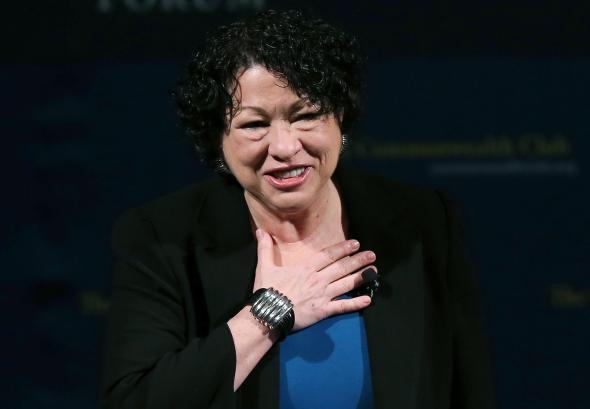 But the Sheehan case has made it all the way to the Supreme Court. This Monday, justices heard oral arguments in Sheehan v. San Francisco about regulations that apply to police policies and procedures during arrests (“Reasonable accommodations,” Slate Magazine, March 26). But the Sheehan case has made it all the way to the Supreme Court. This Monday, justices heard oral arguments in Sheehan v. San Francisco about regulations that apply to police policies and procedures during arrests (“Reasonable accommodations,” Slate Magazine, March 26).
“Unless we want a society in which the mentally ill are automatically killed,” Justice Sotomayor said in the oral arguments, “isn’t the ADA ... intended to ensure that police officers try mitigation in these situations before they jump to violence?”
Yes, the ADA is intended to give “reasonable accommodations” to people with disabilities, including people with serious mental illness. But we need to go much further than that to stem the tide of killings associated with untreated severe mental illness.
Whatever the verdict, it is clear that people with untreated severe mental illness are increasingly coming into contact with law enforcement, often with deadly consequences. Our study, “Justifiable Homicides: What is the Role of Mental Illness?,” estimates that just about half of all people shot and killed by US police have mental illness.
These preventable tragedies will not stop occurring until we return the responsibility for mental health from law enforcement and the criminal justice system to the mental illness treatment system, collect more complete and reliable data to improve the study of justifiable homicide trends and use assisted outpatient treatment (AOT) to reduce officer-involved tragedies and enact AOT laws in the five states where the treatment option remains unavailable.
To comment, visit our Facebook page.
Visit our blog archive to read all our recent posts.
Seeking Better Solutions for Inmates with Mental Illness
(March 25, 2015) The Douglas County, Kansas Commission and Sherriff’s Department announced on Monday plans to conduct research on the number of jail inmates with mental illness in an effort to determine how to better serve them (“ County updates public on efforts to improve jail, mental health care,” Lawrence Journal-World, Mar. 23).  “…this issue goes well beyond the county jail,” said Douglas County Commissioner Jim Flory. “We’re looking at this as a community issue.” Sheriff Ken McGovern said the county is going to look at several models that have worked to reduce inmate populations in other communities, including diversion practices like crisis intervention teams (CIT) and mental health courts and greater collaboration between law enforcement, mental health providers and the judicial system. “There is not one community or agency in the country that is doing everything completely right,” McGovern said. “But there are a lot of communities out there doing a lot of good things, and it is our job to find those ideas and bring them back here.” The meeting Monday was the first of six public forums the county plans to hold on issues involving the jail and mental health care. While Douglas County’s efforts to investigate ways to better serve or deter offenders with mental illness are certainly commendable, the buck shouldn’t stop there. Mentally ill individuals in Kansas are much more likely to end up in jail or prison than in a public psychiatric hospital because almost no hospital beds are available. Even if an individual is fortunate enough to get admitted, the average length of stay is only five days, far less time than is needed to stabilize someone in psychiatric crisis. As a result, jails and prisons have become de facto mental health facilities for these individuals. Read the Treatment Advocacy Center’s report “ The Treatment of Persons with Mental Illness in Prisons and Jails” for more information. To comment, visit our Facebook page. Visit our blog archive to read all our recent posts.
The Way We Fail to Treat People with Mental Illness is Unacceptable
(March 23, 2015) A video released last week captured the moments leading up to the death of Jason Harrison, 38, who was shot and killed by Dallas police last year while suffering a psychotic break caused by untreated schizophrenia and bipolar disorder (“Shocking video of police shooting shows why we need to talk about how cops deal with the mentally ill,” Fusion, Mar. 17).
 Harrison’s mother Shirley called the police last June to have her son admitted to a psychiatric hospital. But when officers arrived, an unstable Harrison pulled out a screwdriver and was fatally shot when he did not comply with instructions to drop the weapon. Harrison’s mother Shirley called the police last June to have her son admitted to a psychiatric hospital. But when officers arrived, an unstable Harrison pulled out a screwdriver and was fatally shot when he did not comply with instructions to drop the weapon.
“I just don’t want to believe it’s acceptable . . . that [this is] how we treat mentally ill people in this town,” said Harrison’s brother, David, at a press conference following the video’s release.
We agree. The way we treat – or fail to treat – people with serious mental illness is unacceptable.
Incidents like this are far too common. As a consequence of the failed mental illness treatment system, an increasing number of individuals with untreated serious mental illness are encountering law enforcement officers, sometimes with tragic results.
“At least half of the people shot and killed by police each year in this country have mental health problems,” according to a recent joint report from the Treatment Advocacy Center and National Sheriffs’ Association.
More widespread use must be made of mental health diversion practices (i.e., crisis-intervention teams (CIT) and mental health courts) and assisted outpatient treatment (AOT) in order to prevent devastating situations like Harrison’s from happening.
Read the Treatment Advocacy Center’s joint report on justifiable homicides to learn more.
To comment, visit our Facebook page.
Visit our blog archive to read all our recent posts.
"There Are Good Days and Bad Days" – personally speaking
(March 20, 2015) Eric Smith is the young man who describes his own experience with mental illness in our “Stopping the Revolving Door” video. He has given us permission to reprint his condolence message to Executive Director Doris A. Fuller, who lost her daughter to suicide. She thought it might encourage all the family members who struggle so mightily to support and save their loved ones. 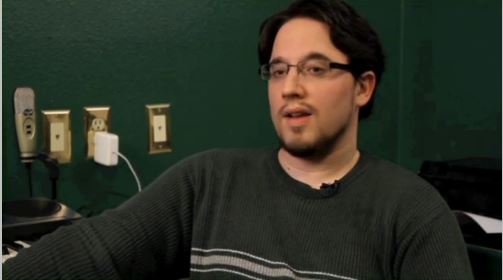 I am terribly sorry for the loss of your daughter Natalie. There is nothing that can be said, written, or done to make Natalie's passing easy to cope with, though perhaps you will be able to find some level of solace in knowing that you did everything you could to help Natalie.There is no blame or guilt to be felt, because you did absolutely everything right that could have been done right. If at any point you feel the urge to place blame upon yourself, please take a moment to remind yourself that you put forth a flawlessly superhuman effort to be there for Natalie in every way possible, making her extremely lucky to have someone like you in her life.While I never personally met Natalie, I feel a connection to how she may have perceived life as a result of our similar diagnoses. That said, and as you know, there are good days and bad days for those who live with mental illness, and sometimes the bad days are unavoidable, no matter what efforts have been taken to avoid the bad days. The Natalie you know and love so much is all days, both the good and bad ... and I believe that Natalie's spirit still speaks loud and clear that she would want you to continue fighting the good fight, even though she was ultimately unable to do so, herself. I know this because of how you and she spent your time on the good days, inclusive of writing a meaningful book together and spreading messages of dealing with one another, and healing with one another.My sincerest condolences and prayers are with you and your family.Eric Smith I am terribly sorry for the loss of your daughter Natalie. There is nothing that can be said, written, or done to make Natalie's passing easy to cope with, though perhaps you will be able to find some level of solace in knowing that you did everything you could to help Natalie.There is no blame or guilt to be felt, because you did absolutely everything right that could have been done right. If at any point you feel the urge to place blame upon yourself, please take a moment to remind yourself that you put forth a flawlessly superhuman effort to be there for Natalie in every way possible, making her extremely lucky to have someone like you in her life.While I never personally met Natalie, I feel a connection to how she may have perceived life as a result of our similar diagnoses. That said, and as you know, there are good days and bad days for those who live with mental illness, and sometimes the bad days are unavoidable, no matter what efforts have been taken to avoid the bad days. The Natalie you know and love so much is all days, both the good and bad ... and I believe that Natalie's spirit still speaks loud and clear that she would want you to continue fighting the good fight, even though she was ultimately unable to do so, herself. I know this because of how you and she spent your time on the good days, inclusive of writing a meaningful book together and spreading messages of dealing with one another, and healing with one another.My sincerest condolences and prayers are with you and your family.Eric SmithWatch the trailer for “Stopping the Revolving Door.”See Eric tell his own story in “Stopping the Revolving Door” now. To comment, visit our Facebook page. Visit our blog archive to read all our recent posts.
“On Losing My Darling Natalie” – Doris Fuller, personally speaking
(March 19, 2015) I lost my darling daughter Natalie to terminal mental illness last weekend. She killed herself one month short of her 29th birthday by stepping in front of a train in Baltimore.  Natalie and I wrote a book together when she was 16: Promise You Won’t Freak Out: A Teenager Tells Her Mother the Truth About: Boys, Booze, Body Piercing, and Other Touchy Topics (and Mom Responds). The idea of a teenager telling the truth about her secrets was such a startling concept that we were feature-page headliners in about two dozen newspapers nationwide, went on TV coast to coast including one of the morning shows, got paid to give speeches. The Oprah Show called. In the book, we used a device to signal whenever a wild turn was about to take place in the teen/parenting life: And then…. In the introduction, I defined an And then …. moment as “one of those critical junctures when my cheerful sense that all was right in the world collided with inescapable proof that it wasn’t.” The book was published the week before Natalie finished high school to great reviews. Amazon named it the best parenting book of 2004. It was nominated for a national prize. It was translated into Lithuanian and Chinese. And then….At 22, starting the second half of her senior year of college, Natalie had a psychotic break nobody saw coming. She went in the span of weeks from being a dazzling young adult with the world at her feet to a psych ward patient with an arrest record. She rebounded quickly from that first episode and moved back home for the summer. She taught me how to like grilled tofu and make egg scrambles. She made the best salads of my life. She filled my house with her original art, her friends, her irrepressible spirit. Mental illness was not a theme. She returned to college in the fall. I saw her off with an emptier stomach but oh so much optimism. And then….Her second break was worse, the psychosis and hospitalization longer, the recovery harder to achieve, the medications more complicated, the resulting future not as bright. She rebounded again, even if more slowly, and eventually finished her bachelor of fine arts degree. Her state hospital psychiatrist and several hospital staff members drove 75 miles to come to her senior art show. It was a triumph for us all. But, like far too many individuals and families and professionals who live with or around untreated severe mental illness, the And then’s continued. Although Natalie always responded to meds, she went off them repeatedly, each time falling into a longer free fall, hitting the ground harder, recovering slower. Eventually, she came to believe she was treatment-resistant. Last November, she announced that if she was going to have psychotic symptoms whether she took meds or not, why take them? She stopped, and her mind began its final, fatal unwinding.  Natalie believed in treatment and recovery. She talks about it in our latest video – debuting at a New York City film festival March 19, where she was traveling to answer audience questions – which we produced to educate judges. She dreamed of being a peer counselor. She wanted to help others as she had been helped – until she became convinced she was beyond help. In the days since Natalie’s death, I have been overwhelmed by the compassion and comfort of friends and strangers alike. Emails from the police officer in San Marcos, California, the former wife of a TV celebrity, public officials I’ve never met, parents I talk to regularly and parents whose names I’ve never seen, people from every corner of the mental health world, including the ones where the Treatment Advocacy Center is not popular. Their words make me so keenly aware that the pain I am feeling is but a drop in the ocean of pain that severe mental illness can produce. Natalie was the bravest person I ever knew, and her suicide doesn’t change that. The work to save other lives goes on. She wouldn’t have wanted it to be any other way. To comment, visit our Facebook page. Visit our blog archive to read all our recent posts.
Phoenix Police Attempt to Stem Tide of Police Shootings
(March 18, 2015) Phoenix police announced last week plans to form a mental-health squad to serve the city’s population with mental illness and divert mental health calls away from untrained first responders (“Phoenix police assemble dedicated mental-health squad,” AZ Central, Mar. 16).
 "We recognized that law enforcement is oftentimes ill-equipped to handle such a crisis unless we're given the tools in the training to try and mitigate the situation," said Phoenix police Commander Michael Kurtenbach. "The last thing we want to do is criminalize mental health." "We recognized that law enforcement is oftentimes ill-equipped to handle such a crisis unless we're given the tools in the training to try and mitigate the situation," said Phoenix police Commander Michael Kurtenbach. "The last thing we want to do is criminalize mental health."
The seven-member crisis intervention team (CIT) is expected to be operational within the next couple of months and aims to decrease the likelihood of violence between law enforcement and individuals with mental illness in the community.
"In law enforcement, to be effective, we have to evolve. And we evolve by meeting the needs of a very diverse community," Kurtenbach said. "There have been certain incidents, locally and nationally, that have highlighted the need for us as a department to more effectively engage those that are in a crisis."
Phoenix Mayor Greg Stanton praised the effort in a statement. "The best police forces embrace working with a broad range of communities, and this new team will help our mentally ill residents when they and their families are counting on us the most," said Stanton.
This is a step in the right direction. A natural outgrowth of a mental health system that withholds needed treatment until a person with a mental illness becomes dangerous is that police officers are forced to become front line mental health workers. The safety of both law enforcement officers and citizens is compromised when untrained law enforcement responds to crises involving people with severe mental illnesses who are not being treated.
While a police department’s embrace of CIT serves a number of vital purposes – for example, having officers with knowledge of mental illness respond to sensitive incidents sharply reduces the risks of injury and death –a better option is to provide treatment before someone with mental illness encounters the criminal justice system.
Read the Treatment Advocacy Center’s report on mental health diversion practices to learn more.
To comment, visit our Facebook page.
Visit our blog archive to read all our recent posts.
|
|