“Doing As Well as Expected” – Doris Fuller, personally speaking
(April 17, 2015) Today would have been Natalie's birthday. Had her mental illness not killed her last month, she would have turned 29.
 People ask me daily, “How are you doing?” I often say, “As well as expected,” even though I’m not sure what is expected. I just find it encouraging to tell myself – an atta-girl of sorts. People ask me daily, “How are you doing?” I often say, “As well as expected,” even though I’m not sure what is expected. I just find it encouraging to tell myself – an atta-girl of sorts.
The comfort and peace I have found in this sad month, I owe to generous family and friends, including members of the extended Treatment Advocacy Center family, many of whom knew Natalie or me only through this website, our Facebook page or our videos.
Mental illness takes countless lives before their natural time. The Treatment Advocacy Center exists to save and improve as many lives as possible by expanding access to treatment, but the most dedicated efforts on earth will never save every life. Sometimes disease is fatal despite our best efforts. Loss and grief are inevitable. The road to consolation is very crowded
On this, Natalie’s birthday and with thanks to every single person who has reached out, I wanted to share a few of the many genuinely consoling messages that have been sent my way in hopes they will be of comfort to others.
"There is only so much we can do...," Marlene Shaffer, Arizona
"Whatever you do, don't go to the what'ifs." - Douglas McSwane, Texas
"I think that Natalie knew you would understand her overwhelming need for release." - Hattie Segal, New Jersey
"Natalie’s memory lives on here at State Hospital North and many other places in the world...." - the staff of State Hospital North in Orofino, Idaho, where Natalie was hospitalized three times
"Natalie's death has changed my life, given me direction, a sense of meaning, and a desire to build a life that may save someone's young life like Natalie's in the future." – a young man who met Natalie one time – California
"With every happy and sad occasion I remind myself how much I am learning to live without my brother Eugene even though it has been 38 years. It does not nor ever will go away. And I don't want it to go away because it is how I still hold him in my heart." - Hildie Newman, Colorado
"It does get better with time. My mother committed suicide, and it was the hardest thing my dad and I ever went through. It may take a long time, but it will get better." - Stephanie Mayes, Georgia
"Know that the time of good memories will come." - Lisa Overton, Washington, D.C.
" 'Death is not extinguishing the light; it is putting out the lamp because dawn has come.' Natalie's life lives on." - Dr. Dipak Talapatra - Virginia – quoting from Rabindranath Tagore, Nobel Prize for literature, 1913
“What the heart has once owned and had, it shall never lose.” – Henry Ward Beecher
Natalie’s family and friends also have found solace, laughter and reunion in a permanent online memorial I established for her at Forever Missed, an advertising-free and user-friendly site dedicated to honoring lives of those we love and have lost.
Doris A. Fuller
executive director
Virginia Tech Eight Years Later
(Apr. 16, 2015) Today marks the eight-year anniversary of the Virginia Tech shooting massacre that left thirty-two students and faculty members dead at the hands of a gunman with untreated severe mental illness (“ Lessons learned at Virginia Tech: Why risks remain," WVTF, Apr. 16).  A number of events are planned to take place on the Virginia Tech campus and surrounding Blacksburg today to honor the victims of what remains the deadliest shooting rampage in US history. Tim Davis, director of UVA’s counseling & psychological services, points out that while only a small number of individuals with mental illness commit acts of violence, the number of students battling serious psychiatric problems at college is growing. "They do come onto grounds, sometimes with established mental health diagnoses, serious diagnoses, whether it’s bi-polar or history of suicide attempts or disabling anxiety, and when they come they seek mental health support in large quantities," Davis said. The Treatment Advocacy Center continues to mourn these and all of the preventable tragedies that untreated severe mental illness produces. We can report that some change has come – not just in Virginia but in other states where families and individuals struggle daily with the disabling effects of untreated mental illnesses. California has reached a tipping point for assisted outpatient treatment (AOT) and Governor Martin O’Malley has signed two bills that would increase access to treatment in Maryland – just to name a few. On an anniversary such as this one, we all pause to remember the lives that were lost unnecessarily on April 16, 2007. The fight goes on to eliminate barriers to treatment for severe mental illness. To find out how you can help, click on Get Involved. To comment, visit our Facebook page.
Suicides Highlight Need for “Community–Wide Conversation Regarding Mental Health”
(Apr. 15, 2015) In the past three years alone, 40 people in Longmont, Colorado have committed suicide and police have received 2,100 calls involving suicide threats, announced the city’s public safety chief this week (“Public safety chief: 40 people in Longmont have committed suicide in the last three years,” Longmont Times Call, Apr. 13).
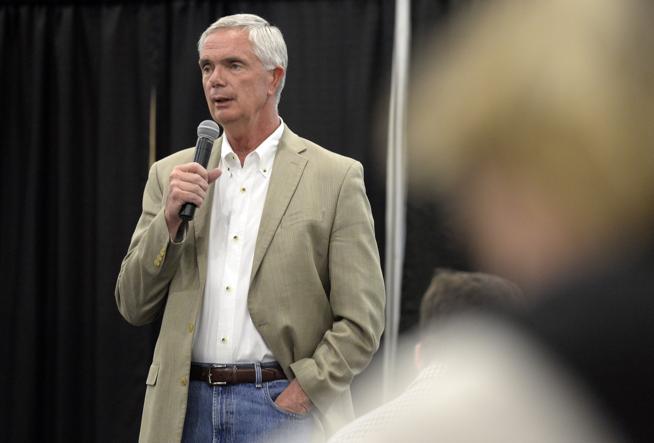 "If we had a virus in our community that killed 40 people in three years and affected or impacted thousands of others…the level of conversation, the fury in the media and the community and the number of people asking for conversations would be unbelievable," said Mike Butler, public safety chief with the Longmont Police Department. "If we had a virus in our community that killed 40 people in three years and affected or impacted thousands of others…the level of conversation, the fury in the media and the community and the number of people asking for conversations would be unbelievable," said Mike Butler, public safety chief with the Longmont Police Department.
Butler has called for “a community-wide conversation regarding mental health” following two violent incidents involving individuals with mental illness that occurred in the city last month.
Jennifer Leosz, clinical officer with non-profit Mental Health Partners, blames the stigma attached to mental illness and that many people are not very well-informed about mental health.
But being “well-informed” about suicide and the stigma surrounding this common tragedy will not decrease the likelihood of it happening among people with severe mental illness. Treatment will.
The lifetime risk of suicide among people with schizophrenia is around 5 percent and the risk for people with bipolar disorder is around 10 to 15 percent. Multiple studies have reported that the failure to adequately treat individuals with serious mental illness increases the risk for suicide.
Too often overlooked in “conversations” of mental illness is the fact that the most likely victim of a violent act associated with psychiatric disease is the individual him/herself.
Treatment Advocacy Center backgrounders are useful tools for raising awareness about mental illness and treatment issues. For a complete list of backgrounders, visit the “Reports, Studies, Backgrounders” page of our website. To see the Treatment Advocacy Center’s original research, visit our TACReports.org site.
To comment, visit our Facebook page.
Visit our blog archive to read all our recent posts.
A Piecemeal System
(Apr. 14, 2015) Cynthia and Anthony Hernandez are left picking up the pieces of their family life while their 19-year-old son, Aaron, suffers in jail (“ The nightmare outcome of a son’s mental illness,” the Los Angeles Times, April 13).  Diagnosed with paranoid schizophrenia, Aaron had been in and out of psychiatric hospitals for years. But each time he was hospitalized the treatment was only temporary - lasting a few days or several weeks at the most. “I felt that one day I would come home and find him dead in the house or that he would hurt somebody in the family," Cynthia said. "We always felt that. We lived with that every day." Cynthia sought help from doctors, law enforcement and legal institutions but became frustrated by “the piecemeal and often impenetrable nature of the state's mental health system.” Last September, Aaron’s behavior began to spiral out of control again and he violently attacked both of his parents. Like many others with a psychiatric disease who end up in jail, Aaron’s mental illness remained untreated during his first few weeks behind bars. He sent “sent rambling letters with drawings of heroes and monsters” to his parents who visited him several times a week. Aaron has been in jail for several months now and is finally on medication. With treatment, his communication has become more coherent, his parents told the Los Angeles Times. “He began to write about feeling remorse.” Lawmakers are highlighting this tragedy as another reason why California needs widespread implementation of Laura’s Law. “People whose mental illness goes untreated often end up incarcerated,” said state Assemblywoman Susan Eggman, who wants to expand Laura’s Law into every county. "We see [Laura’s Law] as a way of potentially increasing people's freedoms."
Supreme Court Ruling May Force Widespread Implementation of Crisis Intervention Training
(Apr. 13, 2015) The Sheehan v. San Francisco Supreme Court case ruling could bring about much-needed changes in the way law enforcement officers across the country are trained to interact with people with mental illness. (“ U.S. Supreme Court case could change law enforcement training,” WISC-TV, Apr. 9).  In 2008, Teresa Sheehan, a 56-year-old woman diagnosed with schizophrenia, was shot multiple times by San Francisco police officers responding to an incident that occurred after she had stopped taking her medication. Sheehan survived the encounter, and her case has now made it all the way to the U.S. Supreme Court. An affirmative ruling would likely force law enforcement agencies across the country to implement crisis intervention team (CIT) training. “CIT training is critical in having police know what to do in those situations, and in communities where they have CIT, they have shown by the number of arrests and the number of people going to jail that it works,” said Sue Petkovsek, president of the National Alliance on Mental Illness (NAMI) Dane County. Research has established the effectiveness of CIT in reducing the criminalization of mental illness. This is especially important, considering a joint report by the Treatment Advocacy Center and the National Sheriffs’ Association found that “at least half of the people shot and killed by police each year in this country have mental health problems.” While a police department’s embrace of CIT serves a number of vital purposes – for example, having officers with knowledge of mental illness respond to sensitive incidents sharply reduces the risks of injury and death – a primary goal is diversion away from the criminal justice system altogether. Read the Treatment Advocacy Center’s diversion study to learn more about crisis intervention training and other mental health diversion practices. To comment, visit our Facebook page. Visit our blog archive to read all our recent posts.
The New York Times Shines Spotlight on the 'Revolving Door' of Mental Illness
(Apr. 10, 2015) After being arrested for stealing a cellphone, Michael Megginson, 25, has spent the last 18 months at Rikers Island, reveals the New York Times in an in-depth profile of just one of the victims of our torn mental illness treatment system (“For mentally ill inmates at Rikers Island, a cycle of jail and hospitals,” the New York Times, April 10).
 A casualty of the revolving door, Megginson, like many of his peers, has cycled through a public mental health system that has proven ill-equipped and unable to manage his care, ultimately placing him within the harsh confines of a prison. A casualty of the revolving door, Megginson, like many of his peers, has cycled through a public mental health system that has proven ill-equipped and unable to manage his care, ultimately placing him within the harsh confines of a prison.
And like many other inmates with mental illness, Megginson was not able to handle the prison environment. He was “constantly involved in some kind of disturbance . . . his volatile behavior kept him behind bars.”
He fought with other inmates, was severely beaten, attempted suicide on several occasions and had over 70 confrontations with corrections officers, reports the Times. “I’m trying to save everybody from the devil with holy water,” Megginson said during one of his psychotic episodes.
Megginson’s family believes that he needs long-term hospitalization, but New York only has 52 percent of the beds necessary to meet the needs of people with severe mental illness – leaving the few beds it does have for the most severely ill patients. Even then, those patients often can’t get the long-term inpatient treatment they need.
But if the inhumanity of incarcerating people with mental illness - who are often unaware of how they ended up in jail in the first place - doesn’t sway policymakers to restore the treatment system, then perhaps the egregious cost to taxpayers, will.
People like Megginson “burn through resources, requiring services that jails had never been expected to provide,” acknowledges the New York Times. “His treatment has cost millions of dollars in public funds.” (Read the latest report on how assisted outpatient treatment can reduce these costs).
The Times echoes the Treatment Advocacy Center and a growing national outcry against incarcerating people with severe mental illness when they should be receiving treatment instead.
To comment, visit our Facebook page.
Visit our blog archive to read all our recent posts.
RESEARCH: Half of People with SMI Unable to Get Treatment in Some States
(Apr. 9, 2015) More than half of people with serious mental illness who sought help in the last year were unable to get it because they lacked Medicaid coverage, according to a new study released this week by the American Mental Health Counselors Association (“Wanting mental health treatment and not getting it,” the Pew Charitable Trusts, April 8).
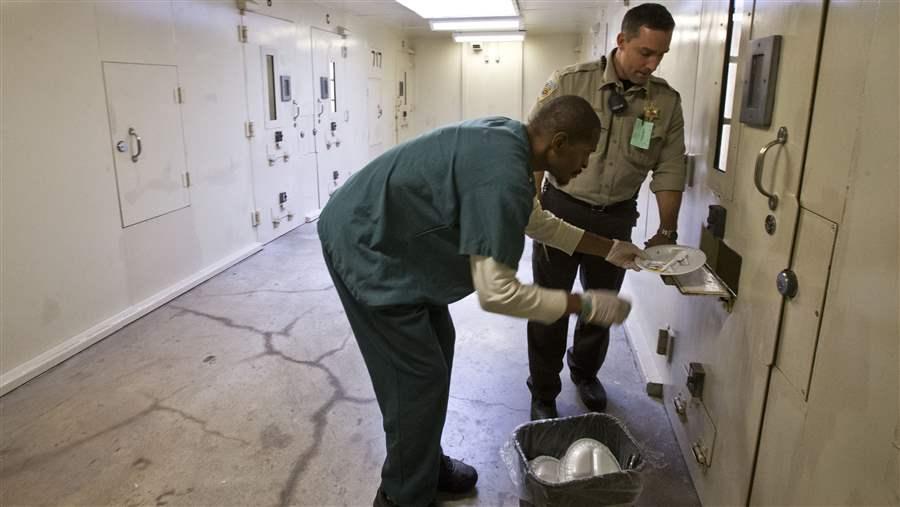 The study of more than 700,000 people diagnosed with severe mental illness, serious psychological stress or substance use disorder found that 570,000 people were denied access to treatment because their states refused to participate in the Medicaid expansion program. The study of more than 700,000 people diagnosed with severe mental illness, serious psychological stress or substance use disorder found that 570,000 people were denied access to treatment because their states refused to participate in the Medicaid expansion program.
“The health of hundreds of thousands of people would be improved if all states provided Medicaid coverage . . . under the Affordable Care Act,” said Joel Miller, executive director of the AMHCA.
But for some people with severe mental illness, the issue is not just a lack of insurance or Medicaid coverage.
It is important to note that this study was based on people with SMI who recognized their illness, desired treatment and had sought help. But the population of people with serious psychiatric illness who aren’t getting help is actually much larger than that.
For people with anosognosia, who are too sick to recognize their own illness, self-directed treatment is often not an option. For this group of seriously ill people the consequences of nontreatment are particularly devastating – jail, homelessness, victimization or worse, just to name a few.
For the most seriously ill, states must do more than expand Medicaid. They must restore psychiatric beds to meet the needs of their severely ill population and have effective laws and policies in place that facilitate much-needed medical care. They must demand training for police officers on how to respond to people in a psychiatric crisis and finally, states must stop ignoring those who are the hardest to treat.
To comment, visit our Facebook page.
Visit our blog archive to read all our recent posts.
Senator Demands More Resources for Serious Mental Illness
(Apr. 8, 2015) Louisiana Senator Bill Cassidy is hoping to persuade the federal government to focus more on serious mental illness by sponsoring a senate budget amendment that he affirms “sets the stage for comprehensive reform of the nation’s mental health system” (“ Sen. Bill Cassidy wants more resources for serious mental health victims,” Fox 8 News, Apr. 6). 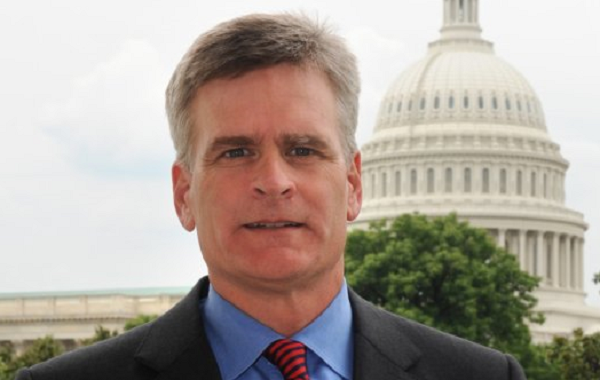 “The largest mental health provider in almost every community is the parish jail. Not that people with mental illness are all criminals, but many end [up] being picked up for minor charges behaving inappropriately,” said Sen. Cassidy. Sen. Cassidy co-sponsored the Cassidy-Murphy budget amendment along with Connecticut Senator Chris Murphy. The bipartisan legislation unanimously passed the senate last month. Now, Sen. Cassidy wants the Substance Abuse and Mental Health Services Administration (SAMHSA) to direct more resources to those battling major mental illnesses, such as schizophrenia and bipolar disorder. "Relative to their whole budget they spend almost nothing on major mental illness,” said Sen. Cassidy. "They spend far more…on other conditions, yet these are the ones that cause a young man to pick up a gun and go shoot folks, so that's the one where families are destroyed because of that one loved one…,” he said. Sen. Cassidy’s outrage echoes that of Treatment Advocacy Center founder Dr. E. Fuller Torrey and executive director Doris Fuller, which they expressed in a guest column for the Wall Street Journal earlier this year. The column was written in response to the Government Accountability Office’s scathing report on the lack of leadership in the Department of Health and Human Services for coordinating federal efforts related to serious mental illness. The main target of the report was the Substance Abuse and Mental Health Services Administration (SAMHSA), an HHS agency that is required by its enabling legislation "to promote coordination of programs relating to mental illness throughout the federal government." The current absence of such leadership is shocking. We need more lawmakers to lead the way out of our broken mental health system. To comment, visit our Facebook page.
Outpatient Commitment Forces State to Provide Treatment
(April 7, 2015) Diagnosed with schizoaffective disorder, Marla Pope’s daughter has been through the commitment process three times in the last eight months (“Can outpatient commitment help the mentally ill? One county thinks so,” the Associated Press, April 5).
 “I’d like you to know I’m a kabbalistic rabbi and I’ve been committed three times because of a misdiagnosis,” Pope’s daughter told the behavioral health unit at her most recent commitment hearing in Huntsville, Alabama. “I’d like you to know I’m a kabbalistic rabbi and I’ve been committed three times because of a misdiagnosis,” Pope’s daughter told the behavioral health unit at her most recent commitment hearing in Huntsville, Alabama.
But this time, Pope wants the state to consider assisted outpatient treatment (AOT) as a way to keep her daughter stable.
Without someone monitoring her treatment, Pope says her daughter stops taking her medication and inevitably begins to break down.
Outpatient commitment works because it forces the state to provide treatment for patients, Kathryn Cohen, legislative and policy counsel for the Treatment Advocacy Center told the Associated Press.
In fact, AOT is working effectively in some counties in Alabama, like Mobile County, which sent 57 percent of its patients with severe mental illness to outpatient commitment last year. But in other parts of the state it AOT is not used frequently enough – sending too many people with serious mental illness through the revolving door.
The law should be better implemented across all of Alabama, Cohen said. It needs to be used more regularly so that people like Pope’s daughter can have the cushion of an outpatient plan when they leave the hospital.
Read about Alabama in our report, "Mental Health Commitment Laws: A Survey of the States," which analyzes the quality and use of laws each state has enacted to meet the needs of people with severe mental illness who cannot recognize their own need for treatment, trapping them in a vicious cycle of homelessness, incarceration, repeated hospitalization and other ills.
Find out why counties in Alabama have no more excuses for denying court-ordered outpatient treatment to the most severely ill in the study “Considerations for Demonstrating the Cost Effectiveness of AOT Services.”
To comment, visit our Facebook page.
Visit our blog archive to read all our recent posts.
My Danny Matters – personally speaking
(Apr. 6, 2015) My first-born son, Danny, was the most beautiful and healthy baby. My husband and I and our whole family were beyond in love with him. Who would have ever believed that this perfect and pure baby would spend so much of his adult life shunned by society and locked away from his family because of a brain illness?
 Danny's first psychiatric hospitalization occurred at the age of 15. He was diagnosed at 16 with a serious mental illness through the collaborative efforts of an amazing pediatrician and therapist. Early treatment began and education supports were secured. A job and high school diploma were achieved. Treatment worked until the age of 18 and then the system allowed it to stop working. Danny's first psychiatric hospitalization occurred at the age of 15. He was diagnosed at 16 with a serious mental illness through the collaborative efforts of an amazing pediatrician and therapist. Early treatment began and education supports were secured. A job and high school diploma were achieved. Treatment worked until the age of 18 and then the system allowed it to stop working.
My son was hospitalized on his 18th birthday and overnight I learned that my rights as a parent were over. Because my county did not have Laura’s Law, California’s AOT, the only way to ensure his safety and treatment was to urge a public LPS Conservatorship.
Over the next 15 years I would fight to annually renew his Conservatorship in order to ensure treatment before tragedy. We were successful and Danny’s multiple revolving hospitalitizatons began. When he returned to our home or a community placement, the medically necessary continuity of care and supports quickly failed.
Today, I am the proud mom of a 32 year old adult child with schizzo affective disorder and what I know for sure is that there is NO right to treatment for those who are the most disabled by severe mental illness.
Danny now spends 23 hours a day in a jail cell in the beautiful Napa Valley awaiting a competency ruling by the court. He has been in and out of two state hospitals for almost 3 years. It is a torturous process. I yearn to hug him, help him, and heal him.
My Danny is slowly dying from hopelessness and fear. I worry that I may never see him walk back through the door that I carried him through as a baby. The same door he walked out of in handcuffs over 50 times during a psychiatric crisis. I did my job to keep him safe and others safe. It is the health system that failed us both.
I have a dream today. I hope we all dream for my Danny and all of the Dannys with serious mental illness. We have to dream big. We have to act big. The "Helping Families in Mental Health Crisis Act" is a big dream for families like mine. We must all act collectively to make it a reality.
TERESA PASQUINI
CALIFORNIA
To comment, visit our Facebook page.
Visit our blog archive to read all our recent posts.
|
|