More Evidence That Treatment Saves Taxpayers Money
(June 23, 2015) A study released earlier this week has confirmed what the Treatment Advocacy Center and common sense have been saying for years: It costs more to incarcerate someone with serious mental illness than it does to provide treatment and counseling.
 Nearly twenty times more, the authors concluded. Nearly twenty times more, the authors concluded.
They study was commissioned by the Arkansas Public Policy Panel to analyze the costs associated with incarcerating people mental illness in Arkansas as compared to providing them with needed treatment in the community.
The authors found that treatment ultimately will “deliver the people back to their families and communities more quickly than a lengthy process of adjudication and confinement.”
The study, drew from a number of sources - including “State and Community Considerations for Demonstrating the Cost Effectiveness of AOT Services” developed by the Treatment Advocacy Center.
Treatment Advocacy Center studies such as the one cited by the Arkansas Public Policy Panel are published on a dedicated research website: TACReports.org. In addition to this report, five other major studies have been released since 2012:
• The Treatment of Persons with Mental Illness in Jails and Prisons: A State Survey
• Mental Health Commitment Laws: A Survey of the States
• Justifiable Homicides by Law Enforcement Officers: What is the Role of Mental Illness
• Prevalence of Mental Health Diversion Practices: A Survey of the States
• No Room at the Inn: Trends and Consequences of Closing Public Psychiatric Hospitals
RESEARCH: We Are Now Where Cancer Was 45 Years Ago
(June 22, 2015) In 1970, cancer was impacting every aspect of society – so much so that people would not even use the word "cancer," according to Andrew von Eschenback, MD, president of Samaritan Health Initiatives and former director of the National Cancer Institute.
 What happened then, he told the One Mind Summit 2015 audience of scientists, philanthropists and health-care leaders in Alexandria on May 29 “was a galvanized public will.” What happened then, he told the One Mind Summit 2015 audience of scientists, philanthropists and health-care leaders in Alexandria on May 29 “was a galvanized public will.”
“Congress woke up. It began in the Senate, particularly under the leadership of Senator Ted Kennedy, but then the House decided it couldn't be left standing so Rep. Paul Rogers got involved…. Then someone convinced President Nixon this could be his man on the moon.”
The result of two branches of Congress and the Administration coalescing to break cancer’s lethal and unmentionable hold was the National Cancer Act of 1971 – “the act that literally changed the world” by making cancer’s cure a national priority.
Now it is neuroscience, Eschenbach said, that has the opportunity to leverage its position and effect change that would have been impossible even five or 10 years ago.
“You are at that watershed moment,” he told a riveted crowd. “Then” – 1970 in cancer – “has to lead to now.”
Von Eschenback said all the conditions that made 1970 the pivotal year for cancer are present in neurological disorders today.
Cancer in 1970 was taking an enormous toll in human suffering and death. The disease was an escalating economic burden of considerable societal and political concern. There were emerging technologies (biomedicine) and evolving therapeutic options (combination therapies). Most critically, scientific research was exploding.
“The oncology revolution embodied in the National Cancer Act led to 30 years of focused research to reach a strategic inflection in our nation’s effort to conquer cancer,” he said.
“Make the conquest of brain disorders a national crusade. Insufficient intervention in disease leads to a waste of resources. This was true of cancer and remains true of brain diseases. We think things take a long time but, with technology, you can achieve goals at breathtaking speed – things that seem unimaginable. Remember, it was 7.42 years between President Kennedy announcing his vision of landing a man on the moon and the first man walking the moon.
“And you have to do it. The future for people at risk will be catastrophic if you do not.”
The Treatment Advocacy Center exists to change that future. You can help.
One Mind is a national nonprofit founded by former Congressman Patrick J. Kennedy and the Staglin family co-founders of IMHRO, which raises funding and awareness for brain research.
To comment, visit our Facebook page.
Visit our blog archive to read all our recent posts.
San Mateo County Authorizes Laura’s Law
(June 18, 2015) The San Mateo County Board of Supervisors voted unanimously to authorize Laura’s Law this week, making court-ordered outpatient treatment possible for those at risk individuals with serious mental illness who meet the state’s strict criteria.
 San Mateo has some of the most robust mental health resources in California, providing a spectrum of care to mentally ill residents, but the lack of Laura’s Law has reduced access to treatment for its citizens with the most severe psychiatric diseases. San Mateo has some of the most robust mental health resources in California, providing a spectrum of care to mentally ill residents, but the lack of Laura’s Law has reduced access to treatment for its citizens with the most severe psychiatric diseases.
This will fill the gap between placing an individual under a conservatorship and those who are not receiving treatment at all, Supervisor Adrienne Tissier said.
First enacted in 2002, Laura’s Law provides for court-ordered outpatient treatment for individuals with a severe mental illness, but only operates in counties where the board of supervisors authorizes its application.
Now over half of the population of California, representing over 19.5 million people, has access to Laura’s Law.
Laura’s Law is a less-restrictive alternative to involuntary hospitalization. Left untreated, people with severe mental illness often suffer from delusions, hallucinations and paranoia to the point where they may end up committing suicide, living on the streets or other degrading circumstances.
We offer heartfelt thank-yous to the advocates who work tirelessly to pass Laura’s Law. Your hard work is paying off for families and people suffering from mental illness across the state.
Visit our Laura’s Law page for useful tips and information about the law.
To comment, visit our Facebook page.
Visit our blog archive to read all our recent posts.
Mental Illness Behind Bars: “Society’s Dirty Little Secret”
(June 17, 2015) U.S. Senator Al Franken and Hennepin County Sheriff Richard Stanek assembled among others at a meeting last week to discuss ways to keep those with mental illness out of Minnesota jails (“Franken, Stanek: Inmates with mental illness are ‘society’s dirty little secret,” Star Tribune, June 12).
 Senator Franken recently sponsored legislation aimed at increasing funding and collaboration among state criminal justice and mental health programs in order to divert non-violent offenders with mental illness away from the penal system and into treatment. Senator Franken recently sponsored legislation aimed at increasing funding and collaboration among state criminal justice and mental health programs in order to divert non-violent offenders with mental illness away from the penal system and into treatment.
“This is about saving people’s lives,” said Franken. “This is about giving police the training to recognize when they’re entering a situation that involves a mental health situation.”
The bill, known as “The Comprehensive Justice and Mental Health Act of 2015,” would award grants to correctional facilities to identify inmates with mental illness and provide psychiatric treatment, fund training of law enforcement to identify and respond to incidents involving such inmates, and support the development of post-release transition plans.
A big supporter of the bill, Sheriff Stanek has estimated that one-third of the near 40,000 inmates who enter the Hennepin County jail each year need psychiatric treatment.
“I think quite honestly it’s society’s dirty little secret,” Stanek said. “We’ve criminalized those who suffer from mental illness. They end up in jail, stay in jail and recycle through the jail.”
At least 36 prisoners have committed suicide in Minnesota’s county jails since 2000, according to a Star Tribune investigation. Inmates with mental illness are sometimes held for months without adequate psychiatric treatment as they await competency evaluations and sentencing.
These troubling statistics echo those found in a recent Treatment Advocacy Center report on the treatment of persons with mental illness behind bars, which estimates that “there are now 10 times more individuals with serious mental illness in prisons and jails than there are in state mental hospitals.”
We must shed light on this “dirty little secret” and do more to help those with the most severe mental illnesses access the care they need. Legislation like Sen. Franken’s is a good step to this end.
(Photo: Sarah/Flickr)
To comment, visit our Facebook page.
Visit our blog archive to read all our recent posts.
Senator Creigh Deeds Pleads for HIPAA Reform in Congressional Address
(June 16, 2015) For the first time since his son’s death, Creigh Deeds, the Virginia state senator and former gubernatorial candidate whose son stabbed him multiple times before committing suicide, testified Tuesday morning before members of Congress considering the Helping Families in Mental Health Crisis Act ("Va. senator attacked by son argues for easing patient privacy laws," Washington Examiner, June 16).
 His primary message? The country needs to ease patient privacy laws to help people with severe mental illness and their families. His primary message? The country needs to ease patient privacy laws to help people with severe mental illness and their families.
“HIPAA prevented me from accessing the information I needed to keep my son safe and help him towards recovery,” said Deeds. “Even though I was the one who cared for him, housed him, fed him . . . I was not privy to any information that could clarify for me his behaviors. I did not know his diagnosis, prescription changes and necessary follow-up care.”
Among many important provisions, the reintroduced “Helping Families in Mental Health Crisis Act” would include adjustments to the HIPAA Privacy Rule so caretakers of the severely mentally ill can access information in times of crisis.
“I was in the dark as I tried to advocate for him in the best way I could with the best information I had,” Deeds continued. “We have to do better. Not for me. Not for the countless other families who have already buried their loved ones. But for those who still struggle with mental illness and the families that struggle to help them.”
“This bill makes important changes to HIPAA that would allow adult children to be cared for by the parents or family members that already care for them,” Deeds said. Read his entire testimony.
Representative Matsui (D-CA) has also introduced legislation “Including Families in Mental Health Recovery Act” that would provide guidance and educate providers, patients and families about sharing information under HIPAA. Members of the bipartisan panel expressed support for both pieces of legislation.
To comment, visit our Facebook page.
Visit our blog archive to read all our recent posts.
A Preventable Suicide – guest commentary
(June 15, 2015) At age 27, my son's life and the lives of his family changed forever. He was literally transformed into a different person. His behavior became weird, psychotic and delusional. He was obsessed with neurotic religious beliefs; he thought that God had anointed him a prophet and commissioned him to write another book for the Bible.
 He believed he was in the witness protection program and federal agents were trying to assassinate him because he was in possession of top secret information that would take down important people in the government if he went public. He developed an unhealthy fixation on the president and made many attempts to get into the White House. He thought he had a White House security clearance and that the FBI had issued him a special gun permit. There were days he actually believed he was the president, living in the White House. He was in complete denial that anything was wrong with him. It took an aggressive encounter with a police officer to get him committed to a hospital. His diagnosis brought two new words into our lives: bipolar disorder. He believed he was in the witness protection program and federal agents were trying to assassinate him because he was in possession of top secret information that would take down important people in the government if he went public. He developed an unhealthy fixation on the president and made many attempts to get into the White House. He thought he had a White House security clearance and that the FBI had issued him a special gun permit. There were days he actually believed he was the president, living in the White House. He was in complete denial that anything was wrong with him. It took an aggressive encounter with a police officer to get him committed to a hospital. His diagnosis brought two new words into our lives: bipolar disorder.
My son was so ill my family feared he would never recover. But recover he did after 32 days of treatment with forced medications. He suffered four additional, prolonged bipolar manic episodes — each episode preceded by his decision to stop taking his medication, each episode more severe than the previous and of a longer duration.
The longer duration was because of judges at commitment hearings who ruled time and time again that my son was not a danger to himself or others — often against the recommendation of the treating psychiatrist. These judges were complying with state laws that set strict controls regarding hospitalization with forced treatment, restricting it to circumstances when a person is suicidal or homicidal. These laws force families to watch their loved ones deteriorate mentally until they actually reach the crisis stage and meet the commitment criteria of being a danger to themselves or others. By then, it is sometimes too late.
Each time my son was allowed to go untreated for long periods of time, he sustained further brain damage. His downward course was aided by a completely ineffective legal system that continually protected his civil right to refuse treatment until he became suicidal or homicidal. This illness left him trapped in a body ravaged by irreversible damage from untreated bipolar disorder. Sadly, he was allowed to reach the crisis stage one time too many. His third attempt at suicide was successful...
Had H.R. 2646 been law during my son's 13-year struggle with severe bipolar disorder, his family would have been able to help him get treatment. He might very well be alive today.
DOTTIE PACHARIS
FLORIDA
Read the entire column.
To comment, visit our Facebook page.
Visit our blog archive to read all our recent posts.
Criminalization of Mental Illness Ought to be a Crime
(June 11, 2015) “The absence of treatment in the community puts the court at the place of do nothing, because there are very little treatment options,” said John Larivee president of the Boston-based research and advocacy group Community Resources for Justice (“Matters of the mind: Mental health and crime,” CBS Boston, Jun. 10).
 “But in terms of ending that behavior or treating that behavior, it just continues in prison or jail,” Larivee said. “But in terms of ending that behavior or treating that behavior, it just continues in prison or jail,” Larivee said.
A lack of mental health treatment options is a major contributing factor in the mass incarceration of people with mental illness in Massachusetts and across the country. The Treatment Advocacy Center in 2014 found data that “there are now 10 times more individuals with serious mental illness in prisons and jails than there are in state mental hospitals.”
Massachusetts is among the states that make the least effort to divert mentally ill individuals away from the corrections system and into treatment. It also is one of only five states without an assisted outpatient treatment (AOT) program, which would provide treatment for people before they encounter the criminal justice system.
Without mandatory community treatment options, people with severe mental illness are being set up for failure.
But the real failure is the country’s inability to provide treatment for the most severely ill. Making matters worse, Massachusetts is continuing to eliminate public psychiatric hospital beds when there are already far too few.
Read the Treatment Advocacy Center report “The Treatment of Persons with Mental Illness in Prisons and Jails” to learn more.
(Photo: [AndreasS]/Flickr)
To comment, visit our Facebook page.
Visit our blog archive to read all our recent posts.
Do We Glamorize Mental Illness?
(June 10, 2015) A study published this week suggests people in creative professions, like musicians and writers, are more likely to have a mental illness.
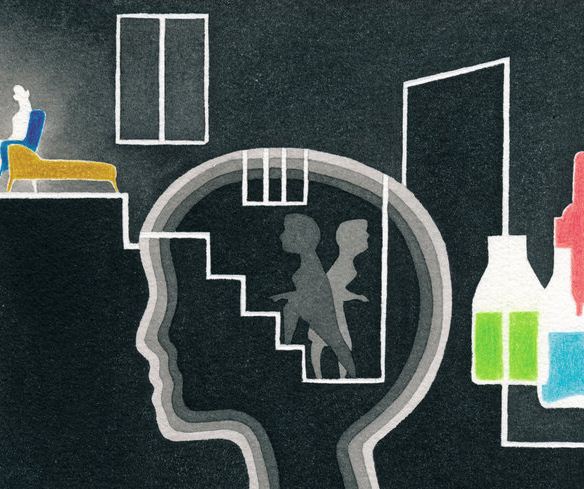 Not so fast, writes Hannah Jane Parkinson in the Guardian (“Having a mental illness doesn’t make you a genius,” Jun. 10). Not so fast, writes Hannah Jane Parkinson in the Guardian (“Having a mental illness doesn’t make you a genius,” Jun. 10).
Popular narratives like these glamorize mental illness, she says. While a lot of people with mental illness might actually be more creative, the downside of these types of messages is that they glamorize mental illness.
“It’s not that I would want to dismiss any notion that mental illness is linked with creativity… it’s the danger inherent in the tortured-genius trope that I object to,” writes Parkinson.
She points out that there is an overriding “mental illness is cool!” narrative, just as long as it’s the acceptable kind of mental illness or what Parkinson calls “the arty kind of mental illness.”
“Neither do I subscribe to the school of thought that medicine stifles the creative spirit,” Parkinson said. “Medicine that doesn’t suit can cause muddled thoughts, but the right kind of medicine means a clearer mind, a more productive mind.”
Parkinson, who suffers with mental illness herself, dropped out of school to cope with depression, often sleeping 20 hours a day and skipping showers; hardly glamorous.
“I wish as much money was spent on mental health services and treatment as is spent on the economy of mental illness as entertainment and intrigue,” she writes.
She points to a Van Gogh quote: “If I could have worked without this accursed disease, what things I might have done.”
To comment, visit our Facebook page.
Visit our blog archive to read all our recent posts.
Psyberguide: Your Go–To Guide to Mental Health Apps
(June 9, 2015) A new resource for people with mental illness will identify and review useful mental health apps.
 Called “Psyberguide,” the website is dedicated to providing information to consumers, not clinicians, by using nonclinical jargon to orient consumers to available apps that could help manage mental health conditions, according to the website. Called “Psyberguide,” the website is dedicated to providing information to consumers, not clinicians, by using nonclinical jargon to orient consumers to available apps that could help manage mental health conditions, according to the website.
“Right now there are 5000 apps on the market for mental health conditions,” said Dr. Mike Knable, speaking about Psyberguide at the 2015 Kennedy Forum on mental health. “This resource attempts to provide an unbiased centralized source of information about them.”
Given the expertise necessary to understand some mental health apps, this resource will be an invaluable tool for people without professional or academic experience in the mental health world.
Psyberguide also publishes evidence and ranks apps on the basis of their clinical efficacy, which could be helpful in certifying that some mobile apps are not harmful and have no security or privacy issues.
“We hope that this guide will create a rich body of data to guide people with mental illness and professionals through the maze of other mental health resources,” Knable said.
To comment, visit our Facebook page.
Visit our blog archive to read all our recent posts.
A ‘Horrible Calculation’
(June 8, 2015) Last week marked one year since the shooting death of David Latham, a 35-year-old diagnosed with schizophrenia and bipolar disorder. Latham’s mother, Audrey, recalls the events leading up to her son’s death vividly (“ One year ago: In Norfolk, a call for help, then a hail of bullets,” Virginian-Pilot, Jun. 5).  Last June, Latham got into an argument with his brother over a bag of potato chips and grabbed a knife. Audrey called the police, something she had done many times before. "We kind of trusted them," Audrey said. "A lot of times they would come out and talk with David." Audrey considered calling the police as part and parcel with her son's illness. Many of the officers were familiar with David and aware of his longstanding mental illness. But this time, one of the responding officers was unfamiliar with Latham, Audrey says. Latham was still holding the knife when he answered the door for police. Within minutes, the officer shot Latham nine times. "It was a senseless murder," Audrey said. "How can you shoot someone all those times when no crime was committed?” What happened to Latham illustrates the often violent collision between mental illness and law enforcement. It is estimated that “ at least half of the people shot and killed by police each year in this country have mental health problems.” Laura Usher, crisis intervention training manager for the National Alliance on Mental Illness, encounters numerous families like the Lathams. “Families have a horrible calculation to make,” said Usher. Do they let their loved ones get worse and worry about their own safety or do they call the police and worry about how they are going to respond, she asked. Research has established the effectiveness of Crisis-Intervention Training (CIT) in reducing the criminalization of mental illness. A police department’s embrace of CIT serves a number of vital purposes – for example, having officers with knowledge of mental illness respond to sensitive incidents sharply reduces the risks of injury and death. Perhaps, if the officer who responded to Audrey’s call for help had received crisis intervention training, her son would still be alive today. (Photo: Brianna Soukup/The Virginian-Pilot) To comment, visit our Facebook page. Visit our blog archive to read all our recent posts.
|
|