VOICES: A DOCUMENTARY ABOUT THE ‘UNTOLD STORIES OF PSYCHOSIS’ TO PREMIERE ON PBS
This May, Voices, an award-winning documentary about serious mental illness, will make its national debut on PBS for Mental Health Awareness Month. The film seeks to put a human face on serious mental illness, which is too often consigned to the margins by fear and dread, said filmmaker Gary Tsai, a member of the Treatment Advocacy Center Psychiatric Advisory Board. “As the son of a mother with schizophrenia, I’ve long felt that if everyone could view people living with mental illness the way that I viewed my mother, stigma would not possess the power that it does,” said Tsai. “But I also realized that like most people, she was also sometimes very angry and even frightening, particularly during the height of her paranoia and untreated psychosis.” The documentary features “intimate portraits” of three very different individuals and their struggle with severe mental illness in America’s broken mental health system, according to the documentary’s website. The stories of Sharon, Thomas and Aaron highlight the challenges, realities and difficult choices that surround people with psychotic mental illness and those who love them. “The film, at its core, is about people with serious mental illness, courageously told by people with the illnesses and their families themselves,” Tsai said. Watch the trailer here. Find out when Voices will air on your local PBS station.
It Took My Son Almost Dying to Get Him into the Hospital – personally speaking
(May 1, 2015) My son, Ian, was 11-years old the first time I took him to a therapist out of concern over his anger, odd behaviors and sinking depression. The therapist was the first of many to tell me there was nothing unusual about Ian...just average teenage hormones. At the age of 14, he was diagnosed with depression and prescribed an antidepressant. 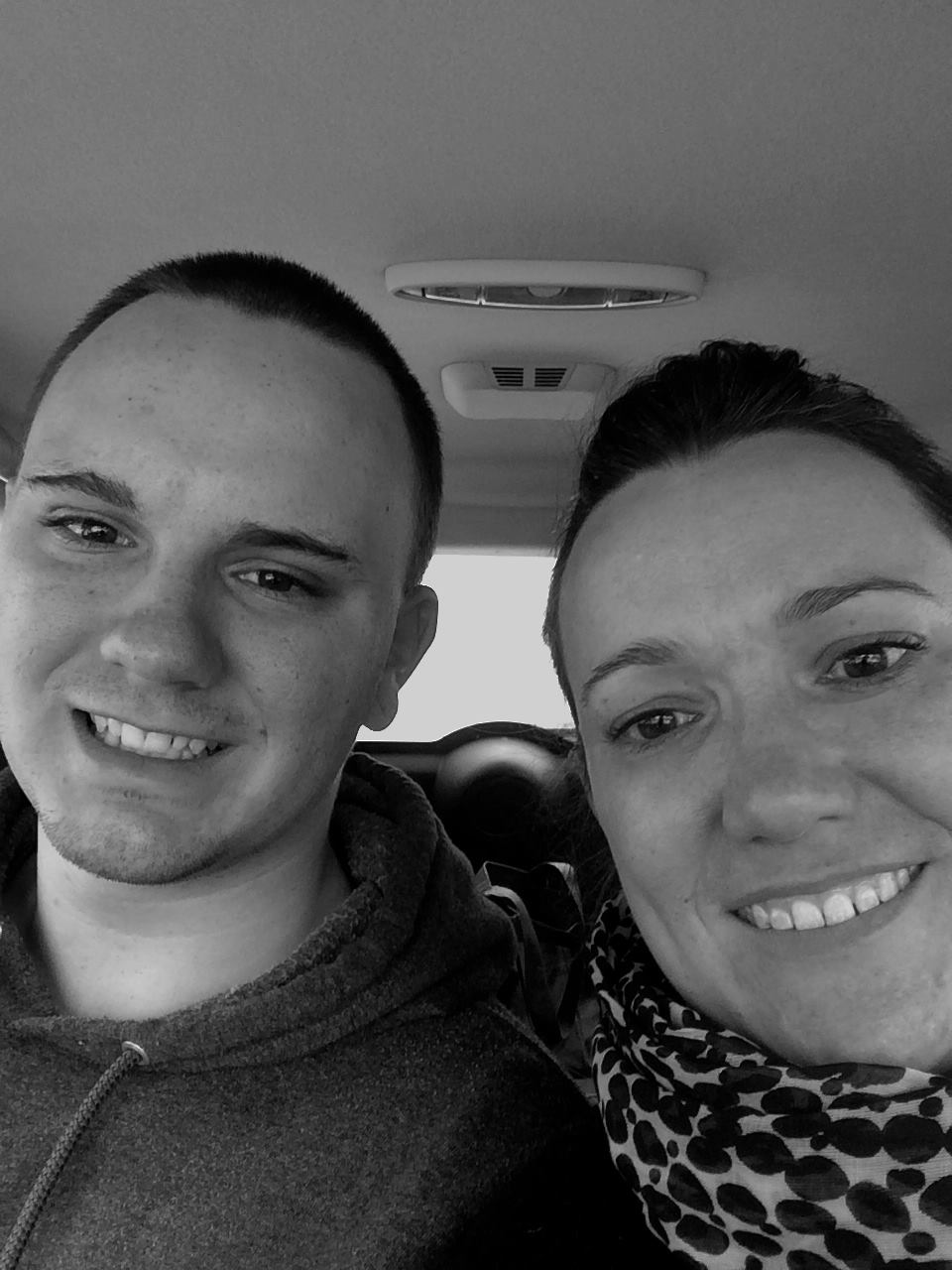 Six weeks later, Ian made his first attempt at suicide. He left school, placed a plastic bag over his head and tied it around his neck. This was five years ago, but I remember it like it was yesterday. Not just the pain and anguish, but this marked the beginning of my journey to find services and treatment while not having authority to act on my son’s behalf. In Colorado, minors at the age of 14 have the right to make their own medical and mental health decisions. The only way for a parent to obtain information is if the child signs a release of information. This law, combined with HIPAA, created an endless battle for me trying to help my son. I couldn’t schedule appointments for him unless he expressly stated I had the authority to do so. Ian is one of the many who experience anosognosia, or a lack of awareness that he has a mental illness. At 16 Ian experienced his first psychotic episode. He began communicating in word salad, was thought blocking and became very disorganized. I tried to make him an appointment, but he had not authorized me to do so. I tried to convince him to make his own appointment, but he didn’t feel there was anything wrong with him. I tried to get the school involved, but they didn’t have the resources. I watched my son decompensate right in front of me. Ten days later, I found my son unconscious in the backyard. The ambulance rushed him to the emergency room where he stopped breathing. They registered his blood alcohol level at .426. The lethal limit is .50. He was on a ventilator in ICU for three days before being transferred to an inpatient psychiatric hospital. It took my son almost dying to get him into the hospital. At the age of 18, Ian was hospitalized for the 5th time after threatening to kill someone with a butcher knife to make the voices stop. After his discharge the insurance company outsourced his treatment because they could not provide the level of support he needed. After talking with Ian for less than 30 minutes, his new psychiatrist tried to discontinue his medications because he denied having hallucinations or other symptoms of schizophrenia. After two suicide attempts, six hospitalizations, a dozen other ER visits, three arrests, homicidal threats, many medication trials, and four diagnoses Ian is now relatively stable. He is 19 years old living independently despite the schizophrenia. I watch for little clues every time I see him to assess how he’s doing: the self-talk, disorganization, collection of random objects, cleanliness of his clothes, how much soap and shampoo he’s using, how many pieces of paper are covering places from where he’s being watched, and how many holes have been punched or kicked in his walls. For years we dealt with the onset of schizophrenia without any help, without any understanding, without any hope. I’m thankful my story doesn’t end in tragedy. I know there will be many more challenges in our future. I want to make sure when things aren’t going well that I can help my son get the interventions and treatments he needs to keep him and others safe. CANDIE DALTON
COLORADO
To comment, visit our Facebook page. Visit our blog archive to read all our recent posts.
An Ounce of Prevention
(Apr. 30, 2015) A legislative committee met earlier this week in Utah to discuss the use of force in several recent encounters between law enforcement and people with mental illness (“Lawmakers focus on police use of force, encounters with mentally ill,” KSL, Apr. 28).
 So far this year, police in Utah have shot and killed four people and wounded others. These events have given rise to some serious questions about the amount of training law enforcement receives on how to appropriately interact with mentally-ill suspects. So far this year, police in Utah have shot and killed four people and wounded others. These events have given rise to some serious questions about the amount of training law enforcement receives on how to appropriately interact with mentally-ill suspects.
"Our police have not been trained often to deal with those folks in any way other than in a criminal justice approach and now we're expecting them to be social workers," said Ken Wallentine, former Utah Attorney General's Office chief of law enforcement.
Most police departments do not require officers to complete crisis intervention team (CIT) training.
But some police officers in Utah have gone through a CIT program run by several agencies and many have found it helpful. Some believe the training should be mandatory for all officers.
"You learn what it's like to be [mentally-ill]. You see what it's like to have voices in your head," said Rep. Lee Perry, a Utah Highway Patrol lieutenant who completed the course two years ago.
Training aimed at preparing law enforcement officers to be more mindful in situations involving suspects with mental illness is expanding rapidly, both in Utah and across the country, and with good reason.
A joint report by the Treatment Advocacy Center and National Sheriffs’ Association on justifiable homicides found that “at least half of the people shot and killed by police each year in this country have mental health problems.”
The old adage “an ounce of prevention is worth a pound of cure” seems particularly appropriate here.
Read the Treatment Advocacy Center’s report on mental health diversion practices to learn more.
To comment, visit our Facebook page.
Visit our blog archive to read all our recent posts.
“I Don’t Do Pills”
(Apr. 28, 2015) We are definitely at the frontlines of this mental health crisis, police officer Charles Owen told filmmaker Michael Price in the documentary Lost Minds: KC's Mental Health Crisis.
 The film explores the country’s broken mental health system through the eyes of law enforcement, health care professionals and people living with mental illness. The film explores the country’s broken mental health system through the eyes of law enforcement, health care professionals and people living with mental illness.
“I don’t do pills,” a homeless man, diagnosed with bipolar disorder told two police officers on camera. Later the same police officers encounter him passed out on a sidewalk.
In a country where half a million people with untreated serious psychiatric disease live on the streets or behind bars, members of law enforcement are often the first people to encounter someone in a psychiatric crisis, Price narrates.
“If they don’t take their medication, then all this is for nothing,” said Officer Owens. “We can take them to the hospital, they will meet the doctors, but if they don’t do the things they need to do on their end, then it’s not going to help.”
“Mental illness, if treated needn’t be a bar to a successful life,” Price says.
But at any given time, nearly 40% of the individuals with schizophrenia and 51% of those with bipolar disorder are untreated.
“A lot of the time, people with chronic and persistent mental illness don’t realize they need help,” social worker Sheryl Reed said.
“It would make my day if I could have every single member of my police department CIT trained,” said Captain Darren Ivey, Commander CIT Program, Kansas City. “CIT training helps officers reduce the likelihood that someone will get hurt.”
“But the goal needs to be to reach someone before they get to the point of a crisis,” he continued.
We couldn’t agree more.
Watch “Lost Minds: KC’s Mental Health Crisis.”
Read our study, “Prevalence of Mental Health Diversion Practices: A Survey of the States,” which found that fewer than half the US population lives in communities where the most basic methods of diverting people with severe mental illness from the criminal justice system are being used.
To comment, visit our Facebook page.
Visit our blog archive to read all our recent posts.
ASSISTED OUTPATIENT TREATMENT DEEMED AN EVIDENCED–BASED PRACTICE BY FEDERAL AGENCY
Acknowledging a substantial body of research, the federal agency that oversees mental health services and substance abuse treatment has recognized court-ordered outpatient treatment as an evidence-based intervention for people with severe mental illness who struggle with voluntary treatment adherence.
The Substance Abuse and Mental Health Services Administration (SAMHSA) last week added the practice commonly known as assisted outpatient treatment (AOT) to the National Registry of Evidence-Based Programs and Practices (NREPP).
“The federal agency charged with coordinating programs for adults with mental illness reviewed the evidence and found that AOT is an evidence-based intervention for reducing the dire consequences of nontreatment like repeat hospitalization, violence and suicide,” said Doris A. Fuller, executive director.
“Policymakers have another clear signal that passing and implementing AOT is a reasonable means of improving outcomes for people with severe mental illness,” the executive said.
AOT provides court-ordered treatment in the community to people with serious mental illness and a history of treatment non-adherence and commits service providers to delivering appropriate care to the most high-risk, high-need individuals. The federal agency added outpatient commitment to NREPP after an independent assessment concluded the program met its requirements for demonstrating positive outcomes in multiple, rigorous peer-reviewed studies.
The value of the intervention for qualifying individuals is also recognized by the American Psychiatric Association, the National Sheriffs’ Association and the International Association of Chiefs of Police.
SAMHSA’s designation follows recognition of AOT by the US Department of Justice, whose Office of Justice Programs deemed it to be an effective and evidence-based practice for reducing crime and violence in 2012. Forty-five states and the District of Columbia currently authorize the use of some form of court-ordered outpatient treatment for individuals with the most severe psychiatric diseases.
“This impartial assessment adds further weight to the voices of advocates across the country seeking to implement AOT laws to save lives,” said Fuller. “Far too many communities face tragic outcomes because of a failure to effectively use this common-sense solution to serve those who are most severely mentally ill.”
The National Registry of Evidence-based Programs and Practices is a publicly available online database of mental health and substance abuse interventions. To be recognized as evidence-based, interventions must meet NREPP’s requirements for review and be independently assessed and rated for quality of research and readiness for dissemination, according to the agency’s website.
Another Example of When Rights Go Wrong
(Apr. 27, 2015) Homeless and suffering with severe mental illness, Jason West, 42, was arrested for threatening to kill firefighters as they struggled to extinguish a large brush fire in Massachusetts last week (“ Dianne Williamson: Siblings say man who allegedly threatened Oxford firefighters needs help,” Worcester Telegram, Apr. 23).  West’s siblings said they were not surprised when they heard news of the incident involving their brother, who has battled bipolar disorder and schizophrenia for over a decade. "It's happened before," said Jason’s brother, Dennis. "Unless he gets the proper help, it's going to keep on happening. He has a disease. He needs help and he's too sick to get it. But all we hear is, he's an adult and he has rights." West went off of his psychiatric medications in 2012 because he disliked their side effects. In 2013, he was charged with attempted murder for trying to strangle a relative and served three months in jail. Stephanie Daher, West’s sister, said West has checked himself into the hospital numerous times in the past during psychiatric crisis. But he never stayed long enough to get the treatment he needs and hospital staff cannot force him to stay, she said. "They just tell us that their hands are tied and he has rights," Daher said. "We tell them that eventually he's going to hurt someone. But they say that unless he's [an] immediate harm to himself or others, there's nothing they can do…It's insane to me that this is the system we have.” “He needs to be forced to take his meds, but no one can do that,” she continued. “In this case, someone having too many rights is a bad thing." The outcome of West’s case could have been different if he lived in New York, a state that may have been able to provide him with medication under Kendra’s Law until he was well enough to maintain his treatment voluntarily. But West lives in Massachusetts, one of only five states that does not currently have assisted outpatient treatment (AOT) laws in place. AOT, or outpatient commitment, authorizes court-ordered treatment (including medication) for individuals who have a history of medication noncompliance, as a condition of their remaining in the community. Unfortunately, West serves as yet another example of when rights go wrong. To comment, visit our Facebook page. Visit our blog archive to read all our recent posts.
Mental Illness an “Unwanted Child” in the American Health System
(Apr. 23, 2015) Alex, a 26-year-old suffering with schizophrenia whose last name remains anonymous, was transferred to the emergency room of a hospital in Vermont last month after an outburst at an outpatient psychiatric facility. But public records show that after a disturbance with hospital staff, he was transferred to the police rather than being treated for the symptoms of his psychotic episode (“ Vermont hospital treated mental patients as criminals, public records show,” Aljazeera America, Apr. 22).  Upon hearing Alex’s case, a Windsor County judge refused to incarcerate him and instead ordered that he return to the hospital for evaluation. After being screened, it was determined that Alex required hospitalization to treat his schizophrenia. Hospitals are required by federal law to treat patients in need of emergency care, including psychiatric care. However, there have consistently been reports across the country of “patient dumping,” a practice where hospitals turn away or discharge patients who cannot afford services. “The treatment of mental illness is and has been an unwanted child in the American health system,” said attorney Susan Preston in testimony before a Civil Rights panel on patient dumping cases last year. Unfortunately, this practice of passing off the mentally ill from the mental health system to the criminal justice system and back again is nothing new. Jails are increasingly becoming dumping grounds for people with severe psychiatric illnesses. In fact, 10 times more people with serious mental illness are in jails and prisons than in hospitals. The Treatment Advocacy Center has long said that jailing violent suspects with severe mental illness instead of sending them to a hospital for stabilization is cruel and inhumane. Read our report on the treatment of persons with mental illness in prisons and jails to learn more. To comment, visit our Facebook page. Visit our blog archive to read all our recent posts.
RESEARCH: Childhood Cat Ownership May Be a Risk Factor for Schizophrenia in Later Life
(Apr. 21, 2015) Childhood cat ownership is a possible risk factor for later developing schizophrenia or other serious psychiatric illnesses by way of the parasite Toxoplasma gondii, according to a new study by Dr. E. Fuller Torrey et al published in Schizophrenia Research.
 The researchers looked at two previous studies on cat ownership during childhood and the development of a serious mental illness later on. The researchers looked at two previous studies on cat ownership during childhood and the development of a serious mental illness later on.
They concluded “cat ownership in childhood to be significantly more common in families with a child who is later diagnosed with schizophrenia or another serious mental illness, compared to families in which the child is not so diagnosed.”
"There are many known risk factors for developing schizophrenia," said Torrey. "Having a cat in childhood now seems to be a smaller risk factor."
The implications of this research should give people pause, considering the number of families who own cats and other pets. But children could also potentially become infected by playing in any infected public play area even if their family does not own a cat.
The good news?
"It is a risk factor over which we have some control," Torrey continued. "That is why I suggest that parents do not keep cats, especially kittens, if they have small children or if they do keep a cat it should be an indoor cat."
The authors of the study urge further research and data collection on cat and other pet ownership and serious mental illness.
Additional Background:
The initial 1995 study on cats and schizophrenia used survey data from by 165 individuals who reported having a family member with a severe mental illness. Participants were asked whether at any time between the family member’s birth and age 10 there was a cat living in the home. Results were compared to controls whose family member did not have a mental illness. This question produced statistically significant results.
A 1997 follow-up survey was undertaken, during which a telephone interview was conducted with randomly selected participants (Torrey, et al,. 2000). In this second study, two controls were used, the time frame was extended from age 10 to age 13, and other pets, such as dogs, were also included. Again, a significant correlation was found.
The present research examined cat ownership from a large unpublished survey. Nearly 50 percent of respondents owned a cat when the affected person was between birth and 13. These results are nearly identical to the 1992 and 1997 studies’ results.
Read the abstract for the study here.
To comment, visit our Facebook page.
Visit our blog archive to read all our recent posts.
NOW IN THE WASHINGTON POST: “PSYCHOSIS, ‘DEMONS’ AND MY BEAUTIFUL DAUGHTER”
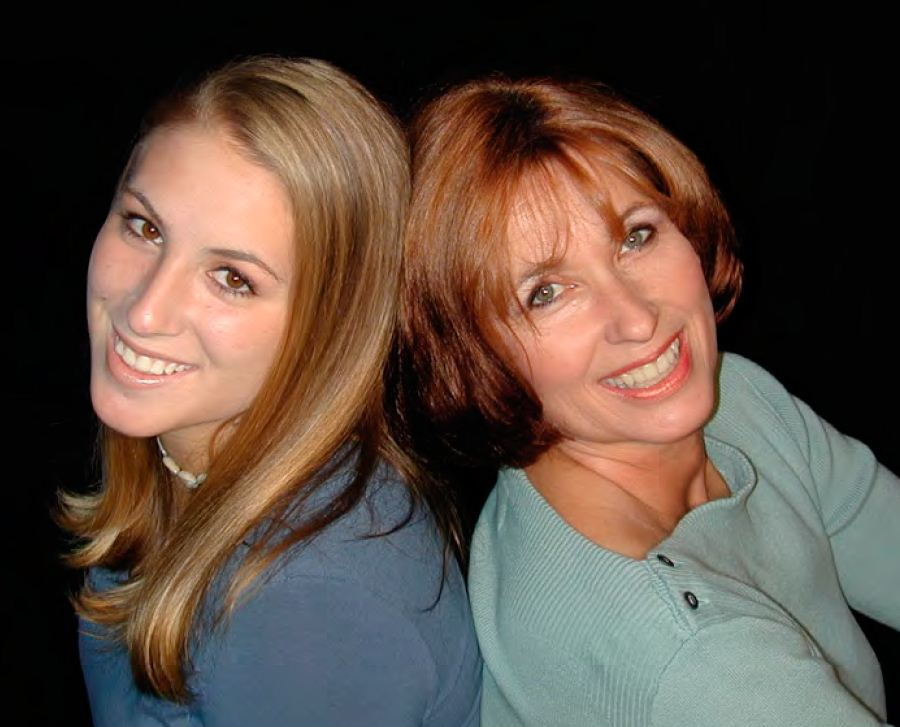 (Apr. 20, 2015) The suicide of Treatment Advocacy Center executive director Doris A. Fuller’s daughter is a lead story in the April 21 Health & Science section of the Washington Post, including information about the science behind serious mental illness in young adults. Natalie died March 14 in Baltimore at the age of 28. (Apr. 20, 2015) The suicide of Treatment Advocacy Center executive director Doris A. Fuller’s daughter is a lead story in the April 21 Health & Science section of the Washington Post, including information about the science behind serious mental illness in young adults. Natalie died March 14 in Baltimore at the age of 28.
At the Post’s request, Doris expanded her blog “On Losing My Darling Natalie” to tell more about her daughter’s personal battle with psychosis and to describe what researchers are learning about why the onset of psychotic disorders clusters around adolescence and young adulthood. The article also links to the Treatment Advocacy Center’s latest documentary video, “Mental Illness on Trial,” in which Natalie is featured.
“Some consensus has emerged around the concept that psychotic breaks like Natalie's are not, as they may seem, abrupt but rather are the climax of a long buildup,” Fuller writes. “This idea suggests the possibility, both tantalizing and controversial, that children might someday be screened for psychosis indicators the way they are screened for other health risks, with the hope of reducing the onset of psychosis much as we have reduced the prevalence of heart attacks.”
One of Natalie’s poignant poems is also being published by the Post. Natalie embraced a practice of writing only in ink and without revising. Here is another she wrote about her struggles and longing for a different life.
On and off
that’s how I am
like a light switch.
One day I make perfect sense
the next day I’m nonsense
the next day I’m insane
and then I’m an angel
I wish I could be myself
100%.
Read the entire Washington Post story.
“Our Son, Ryan” – personally speaking
(Apr. 20, 2015) Our son, Ryan Muller, led a life marked by great passion and commitment to friends and family. An artist, writer, and athlete; he was a natural comedian. Those lucky enough to be in his circle of family and friends knew Ryan as a life-long ally.
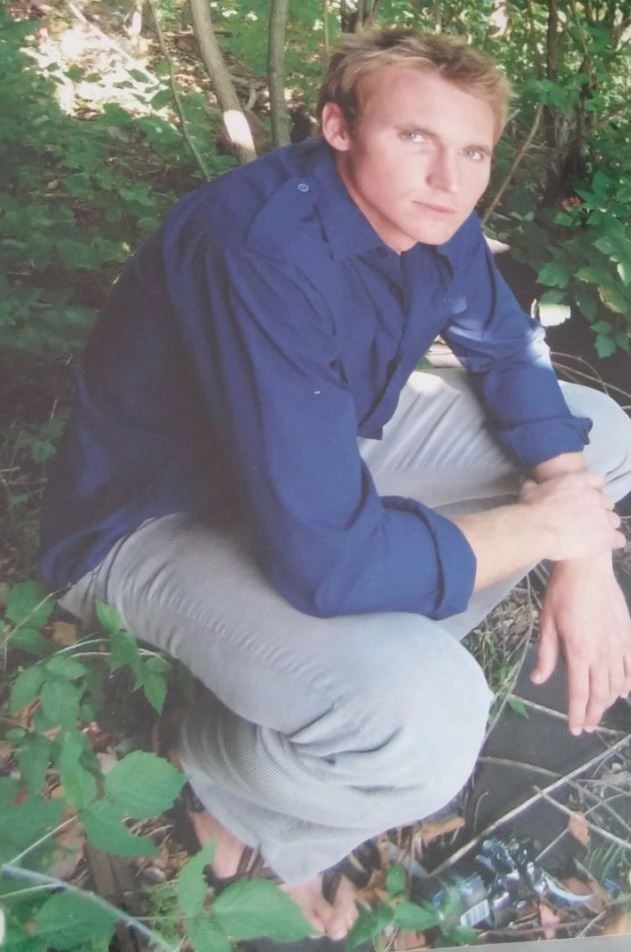 For the last ten of his 32 short years, however, Ryan struggled with severe mental illness. For the last ten of his 32 short years, however, Ryan struggled with severe mental illness.
His first psychotic episodes began in college, where he sought refuge in drugs and alcohol. His disease led him to believe that he was evil and he would walk as many as 20 miles daily to try and rid his body of the anxiety and tension.
Within several years he was having run-ins with the law, experiencing delusions and suffering from severe depression and profound drug and alcohol addiction. Ryan was diagnosed with schizophrenia and bipolar disorder.
As his decision-making abilities decreased and his willingness to proceed with treatment waffled, the rounds of hospitalizations increased. But none of the hospitalizations led to regular treatment.
We called 911 so many times in the last 10 years that I lost count of the actual number of calls we made in crisis. On other occasions we would gather the family and stage an intervention. When he was able to get treatment he was the most loving person ever.
Ryan took his life on Christmas Eve of 2014.
We are supporting the Treatment Advocacy Center to help make treatment possible for other families who have loved ones dealing with severe mental illness.
We learned from Ryan that the system can fail those who are so sick they don’t realize they need treatment. The Treatment Advocacy Center works to reform the outmoded laws that prohibit treatment and to strengthen the support systems and resources for people like Ryan who face serious mental illness.
Join us in making treatment possible and donate today.
STEVE AND NANCY MULLER
To comment, visit our Facebook page.
Visit our blog archive to read all our recent posts.
|
|