"Congress, Schizophrenia and Obama's Proposals"
(Mar. 25, 2013) Congress and the Obama administration have expressed great interest in the problems caused by individuals with untreated severe mental illnesses following the mass killings in Tucson, Aurora and Newtown. The fact that Jared Loughner, who had untreated schizophrenia, was specifically targeting Gabby Giffords as a member of Congress is a reminder that public figures are disproportionately targeted by untreated mentally ill individuals responding to their delusions and hallucinations.
 This problem is not new. Richard Lawrence, suffering from schizophrenia, was the first person to try and assassinate an American president when he shot at President Andrew Jackson in 1835. Charles Guiteru had syphilis of the brain when he assassinated President James Garfield in 1881. There have always been occasional homicides and other tragedies, many involving public figures, associated with untreated severe mental illness.
What is new is that such tragedies are happening much more often. Beginning in the 1950s, we began emptying state mental hospitals without providing for treatment of the mentally ill individuals who once benefited from them. The consequences were illustrated in 2000 by the New York Times analysis of 100 “rampage killings” that took place between 1949 and 1999. In the 30 years between 1949 and 1979, there were only 10 such mass killings, but in the 20 years between 1980 and 1999, there were 90 of them. Among the killers, “more than half had histories of severe mental health problems.” The New York Times list included Russell Weston’s 1998 attack on the Capitol Building in which he killed two Capitol policemen; he had untreated schizophrenia and was seeking a “ruby satellite” with which to reverse time. However, the list did not include other tragedies such as the 1980 killing of former Congressman Allard Lowenstein by Dennis Sweeney, suffering from untreated schizophrenia, or the 1981 attempted assassination of President Ronald Reagan by John Hinckley, also afflicted with untreated schizophrenia. In addition to the New York Times analysis, two other studies have reported that such mental illness-related homicides are increasing.
Given this situation, the response of the Obama administration to the mental illness aspects of these tragedies has been disappointing. The Biden Task Force, convened to make recommendations, logically called upon the Substance Abuse and Mental Health Services Administration (SAMHSA), the lead federal agency whose responsibility is to reduce “the impact of substance abuse and mental illness on America’s communities.” However, SAMHSA has no expertise in, or even interest in, the consequences of untreated severe mental illnesses. Among SAMHSA’s 574 employees, there is only one psychiatrist, and his expertise is in the treatment of drug addiction. SAMHSA’s 41,804-word planning document, “Leading Change: A Plan for SAMHSA’s Roles and Actions 2011-2014,” does not even mention schizophrenia, bipolar disorder or major depression. When SAMHSA was asked to provide testimony for the Biden Task Force, they brought in one of their grantees, Dr. Daniel Fisher, who has stated that schizophrenia is not a disease of the brain but merely “severe emotional distress” and “a life changing experience which is very enriching.” Such views are far outside of scientific psychiatric thinking.
Click here to continue reading this poignant commentary by -
E. Fuller Torrey, MD
Stanley Medical Research Institute
Jamie Mondics
Treatment Advocacy Center
To comment, visit our Facebook page.
Visit our blog archive to read all our recent posts.
RESEARCH: Mass Violence Fuels Stigma
(Mar. 22, 2013) A new study from Johns Hopkins University confirms that media coverage of mass shootings increases negative attitudes toward individuals with severe mental illness.
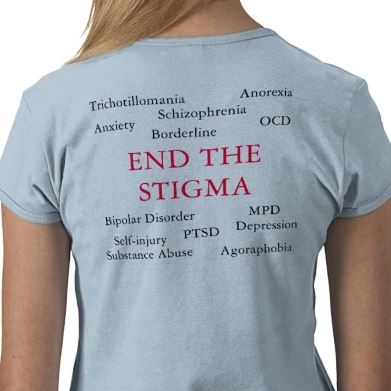 Slightly more than half the 1,797 study participants who read a news story about a mass shooting thought people with serious mental illness are more likely to be dangerous than others, compared to 40% of the participants who didn’t read such stories, according to “Effects of News Media Messages About Mass Shootings on Attitudes Towards Persons with Serious Mental Illness and Public Support for Gun Control Policies” (American Journal of Psychiatry, April 2013). Slightly more than half the 1,797 study participants who read a news story about a mass shooting thought people with serious mental illness are more likely to be dangerous than others, compared to 40% of the participants who didn’t read such stories, according to “Effects of News Media Messages About Mass Shootings on Attitudes Towards Persons with Serious Mental Illness and Public Support for Gun Control Policies” (American Journal of Psychiatry, April 2013).
It would have been more newsworthy if the report had found no connection between the coverage and negative attitudes. Our 2011 backgrounder, “Stigma: Violence by seriously mentally ill persons is its main cause,” cited six studies or polls linking the mental illness-related violence and stigma. Since most people learn about such violence from the media, the Hopkins findings are no surprise.
The Hopkins study, like others before it, is likely to provoke cries for the media (or us) to stop reporting a link between violence and severe mental illness instead of where the focus rightfully belongs: on getting treatment for the very small subset of individuals, typically untreated, with who are at risk to commit the acts that lead to this stereotyping.
As our backgrounder says, “Recent studies have demonstrated that stigma against people with mental illnesses has increased over the past half century and is still increasing. Multiple studies have also shown that the major cause of this stigma is the perception that some individuals with mental illnesses are dangerous. Given this fact, it seems self-evident that stigma will not be decreased until we decrease violent behavior committed by mentally ill persons, and this can only be done by ensuring that they receive treatment.”
The Hopkins study also found that news about mass killings also increase support for gun restrictions for individuals with severe mental illness and for a ban on large-capacity ammunition magazines.
Read the Johns Hopkins announcement about the study here.
To comment, visit our Facebook page.
Visit our blog archive to read all our recent posts.
Why the Stakes Are So High
(March 21, 2013) Among the critical contributions we make to mental illness policy reform is testifying in support of pending legislation that would make treatment possible for more individuals in psychiatric crisis.
 The following excerpt from testimony delivered this week by Policy Director Brian Stettin relates to a bill pending in Maryland that would improve the inpatient commitment standard. The case he makes, however, is relevant to public policies that affect individuals and families living with untreated severe mental illness from coast to coast. The following excerpt from testimony delivered this week by Policy Director Brian Stettin relates to a bill pending in Maryland that would improve the inpatient commitment standard. The case he makes, however, is relevant to public policies that affect individuals and families living with untreated severe mental illness from coast to coast.
First and foremost, I would like to point out why the stakes are so high for the families here today and the thousands of Marylanders they represent.
These families are keenly aware of the enormous strides that medical science has made in recent decades to offer real hope of recovery to people with severe mental illness. The key, of course, is to get those individuals under medical treatment.
We know, for example, that people who are receiving treatment for a severe mental illness are no more likely to engage in violence than anyone else and that treatment is the key to maintaining strong bonds with friends and family, as well as to avoiding hospitals and jail.
But securing that treatment for a family member in psychiatric crisis can be harrowingly difficult. A primary reason for that is anosognosia, a symptom of brain dysfunction which afflicts many – though by no means all – people with schizophrenia and severe bipolar disorder. A person with anosognosia is simply unable to recognize his own illness – no matter how painfully obvious it may be to everyone around him. The person is convinced to the core that he is perfectly fine. And so, quite naturally, he rejects all efforts to get him into treatment.
That is what the families here today are grappling with – watching the people they love fall apart, truly unable to seek voluntary help or accept it when offered, because their diseases prevent them from seeing that anything is amiss. Which, I hasten to add, is not to say that they are perfectly happy in their current condition. On the contrary, many lead lives of daily torment, with no way to escape terrifying delusions.
And so at some point, we as a society must decide what we’re going to do: either leave the person to face the consequences of that “choice” to refuse treatment or to override that “choice,” as we might hope others would do for us if we were to come untethered from reality.
And this is where Maryland’s civil commitment law comes into the picture.
This is where every state’s civil commitment laws come into the picture. Advocates anywhere are encouraged to adapt the message for their own use in promoting treatment law reform and implementation.
To comment, visit our Facebook page.
Visit our blog archive to read all our recent posts.
Parents Beg, ‘Maryland Laws Need to Change’
(Mar. 18, 2013) Paul Smith is mentally ill and in a maximum security prison in Maryland. Because of his inability to conform to prison rules, he’s been in solitary confinement for the last four years. In other words, behavior driven by mental illness is keeping him in solitary confinement, and solitary confinement is only exacerbating his mental illness.
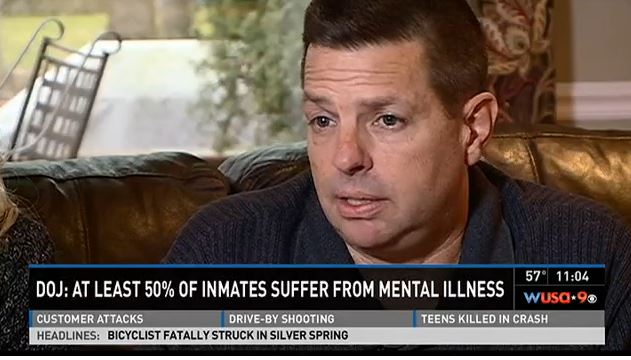 Smith’s parents described this cruel Catch 22 in a WUSA-9 interview March 12. “As far as we know, he is not receiving any treatment,” Paul’s father, Mike Smith, said. Smith’s parents described this cruel Catch 22 in a WUSA-9 interview March 12. “As far as we know, he is not receiving any treatment,” Paul’s father, Mike Smith, said.
Take this as further evidence - as if we needed it - that correctional settings are utterly unsuitable for people with significant mental health needs. And yet after decades of deinstitutionalization and rigid interpretation of state commitment laws, there are today more than three times as many people with severe mental illness in America’s jails and prisons than in mental hospitals.
Paul Smith’s parents believe their son - serving 20 years for a series of unarmed home burglaries - would not be in prison at all if Maryland law had not made it so difficult for them to commit him to treatment when he turned 18 and stopped taking his medication.
As we have said before, Maryland is one of the worst places to be mentally ill and unable to recognize it.
But there is reason to hope that other Marylanders will avoid Paul Smith’s fate. A bill currently pending in the Maryland legislature would broaden civil commitment criteria to cover individuals with untreated severe mental illness who cannot meet their basic survival needs without assistance, regardless of whether they are demonstrably violent or suicidal.
The Treatment Advocacy Center is hard at work for its passage.
To comment, visit our Facebook page.
Visit our blog archive to read all our recent posts.
Families of the Mentally Ill Become Accustomed to Suffering in Silence – personally speaking
(Mar. 15, 2013) We are all familiar with the moments in our lives that stop us in our tracks and forever change our reality. On Jan. 3, 1999, Kendra Webdale was pushed to her death in front of a subway train by a complete stranger who was unable to avoid the compulsions of his schizophrenia that made Kendra the victim of his violent psychosis.
 I still cringe when I remind myself that he had been recently released from a psychiatric center. Many of my friends who took the subway to and from work astonished, “it could have been me.” I still cringe when I remind myself that he had been recently released from a psychiatric center. Many of my friends who took the subway to and from work astonished, “it could have been me.”
Meanwhile, I silently suffered the devastating reality that this could have been my mom. The only thing I could do was reaffirm my commitment to protecting mom and everyone else from the dangers of her bipolar schizophrenia. Because of her mental illness, she had already inflicted harm to herself and others, and had come dangerously close to crossing the line that Kendra’s attacker crossed.
Families of the dangerously mentally ill become accustomed to isolation and suffering in silence. Life becomes a challenge of constantly waiting for the other shoe to drop and wondering when the next episode will happen.
I could not figure out why my mother’s irrational behavior was not enough for the police to put her in the ambulance and take her to the hospital. The police saw that we were scared. They knew my mother put us in danger when my father was not in town. I could tell the police officers were afraid for us. When they came, I made them promise they wouldn’t leave. Nevertheless, they acted like their hands were tied.
Finally, during one particularly bad episode, I distinctly remember a police officer asking, “Has your mommy hurt or threatened to hurt you or your brothers? “No,” I said honestly. The trooper was relentless. For what seemed like hours, she repeated the same question and I continued to answer honestly.
Finally, exhausted, I realized what the police officer was prompting me to say. “My mommy threatened to hurt me,” I said. I’ll never forget the look of betrayal on my mother’s face and the profound sense of guilt I felt the first time I said it. As a young girl, I tried to make myself feel better about destroying our relationship by convincing myself that lying to the police got mom help and kept the family safe. Even at a young age I was aware that this was the only way to get my mother treatment.
Almost 10 years after Kendra’s death, I contacted an attorney in New York who informed me about Kendra’s Law.
Kendra’s Law, the assisted outpatient treatment process in New York, was invaluable to my mother’s treatment and our family’s peace of mind. No longer would mom be released from a psychiatric center to live on her own and hope for the best. The AOT process required a supervised residential setting for her. Instead of waiting for her to break a law before she could receive treatment, when mom refused to take her medication she was readmitted into the psychiatric center.
Mom passed away in her sleep, at 60 years old. Along with the despair of losing my mother is the relief that I no longer have to battle her mental illness to keep everyone safe from the consequences of her psychotic breaks. It is a sad reality that many families still suffer through in silence.
Now that my mother has passed, many people ask me why I continue to share her story. I explain that the little girl who had to betray her mother in such a profound and permanent way to navigate a broken mental health system is still here. No family member should be put in such a position. Laws need to support the relationships between people with mental illness and their families, not sabotage them.
Michele Kinzel
Kinzel is the daughter of a woman who suffered from bipolar schizophrenia and a beneficiary of Kendra's Law. She lives in New York.
To comment, visit our Facebook page.
Visit our blog archive to read all our recent posts.
AOT instead of Jail in Tennessee
(Mar. 14, 2013) In a state where nearly a quarter of a million people live with mental illness, a pilot program was created to test assisted outpatient treatment in Tennessee, which is currently one of six states that does not allow mandatory commitment for people with serious mental illness.
 The hope is to keep mentally ill patients out of the hospital, out of jail and out of trouble. But “[f]or some, the program has come too late,” wrote Joan Garret in the Times Free Press (“Mentally ill offered new path for care,” Mar. 5). The hope is to keep mentally ill patients out of the hospital, out of jail and out of trouble. But “[f]or some, the program has come too late,” wrote Joan Garret in the Times Free Press (“Mentally ill offered new path for care,” Mar. 5).
Because of state funding cuts for mental health services, which are under reconsideration by some states, “most states are suffering from a glut of mentally ill inmates in jails and prisons and shrinking hospital systems.” For example, the “Hamilton County Jail spends more than $6,000 a month on mentally ill inmates, who comprise 45 percent of its population.”
"Assisted outpatient treatment doesn't wait for a person to commit a crime," said Brian Stettin, policy director for the Treatment Advocacy Center, who spoke to the Times Free Press about why outpatient commitment is a valuable tool to help those who are too sick to help themselves.
At the Treatment Advocacy Center, we say that if we can get someone into treatment before they go to jail; it will be a lot less expensive in the long run. And, in fact, there are reports and studies that demonstrate that long-term AOT actually saves money. For the sake of those who are suffering needlessly in jail, and because of straining state budgets, we hope this program is expanded to cover more counties across the state.
To comment, visit our Facebook page.
Visit our blog archive to read all our recent posts.
For People with SMI, 'Medication Means Survival' – guest blog
(Mar. 13, 2013) Once a year I get to feel very hopeful about the future of care for people like my daughter who live with severe psychotic disorders. The University of British Columbia Faculty of Medicine sponsors an annual neuroscience conference focusing on psychotic disorders to update psychiatrists and physicians about new research and promising practices.
 Though not intended for family caregivers like me, I've discovered through the years that it's actually pretty easy to register for this kind of conference as long as you're willing to pay the steep fees. Since this popular conference is usually full, I justify to myself taking up a seat because I distribute the latest news to a community of family caregivers with whom I regularly communicate. Since many of the family caregivers I know are actually providing the bulk of mental health care for their family member, they appreciate updates. Though not intended for family caregivers like me, I've discovered through the years that it's actually pretty easy to register for this kind of conference as long as you're willing to pay the steep fees. Since this popular conference is usually full, I justify to myself taking up a seat because I distribute the latest news to a community of family caregivers with whom I regularly communicate. Since many of the family caregivers I know are actually providing the bulk of mental health care for their family member, they appreciate updates.
This year's conference mostly focused on programs addressing people trapped in treatment resistant psychosis. One clear message was that when these people receive intensive treatment in programs specifically designed for them, most of them do much better. Anti-psychotic medications are understood to provide the foundation upon which any other treatments can be added.
These messages were in direct conflict with the message that a packed audience at Vancouver's Unitarian Church recently received from journalist Robert Whitaker the author of the best-selling books Mad in America and Anatomy of an Epidemic. People leaving this event could easily believe that research demonstrates that people given the diagnosis of ADHD, depression, bipolar disorder or psychosis should stay away from medications that are suggested to them because these will often do irreparable harm to their brains. Robert Whitaker does excellent work describing the egregious practices of the pharmaceutical industries and psychiatry's often unhealthy relationship with them. However, his extreme stance against the value of psychotropic medications is scary.
(Click here to read the full blog in Huffington Post.)
Susan Inman
Inman is the author of After Her Brain Broke: Helping My Daughter Recover Her Sanity and an ardent advocate for mental illness treatment reform in Canada and the US.
To comment, visit our Facebook page.
Visit our blog archive to read all our recent posts.
Finally! The Associated Press Includes Rules on Mental Illness
(Mar. 8, 2013) Yesterday, the Associated Press included rules on mental illness in the new edition of the AP Stylebook, the writers' guide used throughout the industry.
 “It is the right time to address how journalists handle questions of mental illness in coverage,” said AP Senior Vice President and Executive Editor Kathleen Carroll. “This isn’t only a question of which words one uses to describe a person’s illness. There are important journalistic questions, too.” “It is the right time to address how journalists handle questions of mental illness in coverage,” said AP Senior Vice President and Executive Editor Kathleen Carroll. “This isn’t only a question of which words one uses to describe a person’s illness. There are important journalistic questions, too.”
Now, mental health advocates, looking forward, can cite the AP Stylebook as an authority in getting wayward editors and reporters to change their ways in how they report about mental illness.
Founded in 1846, AP is a global news network whose reporting is seen or heard by more than half the world's population.
The new rules include:
* Mental illness is a general condition. Specific disorders are types of mental illness and should be used whenever possible. Do not describe an individual as mentally ill unless it is clearly pertinent to a story and the diagnosis is properly sourced.
* Don't rely on hearsay or speculate on a diagnosis....Provide examples of symptoms.
* Do not use derogatory terms, such as insane, crazy/crazed, nuts or deranged, unless they are part of a quotation that is essential to the story.
* Wherever possible, rely on people with mental illness to talk about their own diagnoses.
* Avoid using mental health terms to describe non-health issues. Don't say that an awards show, for example, was schizophrenic.
Please send a message of thanks to AP at
This e-mail address is being protected from spambots. You need JavaScript enabled to view it
. Please share the new rules with editors and reporters in your community.
To comment, visit our Facebook page.
Visit our blog archive to read all our recent posts.
'Patients as Prisoners'
(Mar. 7, 2013) “With a shortage of mental facilities, jails have become the new asylums” was the message from a CBS Evening News special on Tuesday.
 CBS reported it had “obtained records from police departments across the country, many in states that have made budget cuts to mental health care,” and found that “[p]olice logs in twelve cities revealed that mental health crisis calls have increased an average of 37.5 percent over the last four years,” (“Patients as prisoners, jails new mental health institutions,” Mar. 5). CBS reported it had “obtained records from police departments across the country, many in states that have made budget cuts to mental health care,” and found that “[p]olice logs in twelve cities revealed that mental health crisis calls have increased an average of 37.5 percent over the last four years,” (“Patients as prisoners, jails new mental health institutions,” Mar. 5).
And CBS isn’t the only one reporting the criminalization of mental illness.
An editorial in the Times Free Press this week reports “[w]hen 45 percent of the Hamilton County Jail's 500 inmates are on prescribed psychotropic drugs and are deemed mentally ill, we should know we have a problem,” (“Mentally ill here deserve better options,” Mar. 5).
The editorial highlights the problem in Tennessee, describing the state as having no “comprehensive policy for helping mentally ill people who fall between being in control enough to take medication and being so out of control that they have either committed a crime or threatened to harm themselves or someone else.”
We’ve been saying for years that jails and prisons are the new psychiatric hospitals (“More Mentally Ill Persons Are in Jails and Prisons Than Hospitals, May 2010). Perhaps with attention like this, policy makers will not only hear the message but begin doing something about it.
To comment, visit our Facebook page.
Visit our blog archive to read all our recent posts.
AOT Is Part of the Solution, Dr. Torrey Tells Congress
(Mar. 6, 2013) Assisted outpatient treatment – not law enforcement – is the solution to untreated mental illness, Treatment Advocacy Center founder Dr. E. Fuller Torrey testified at a Congressional hearing on mental health care yesterday.
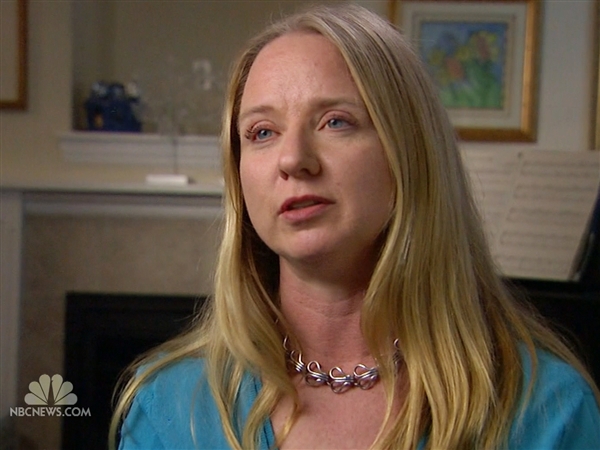 “Mentally ill patients are far less likely to become violent if they get treated,” Dr. Torrey told the House Energy and Commerce oversight committee. Assisted outpatient treatment is the solution, he said, and is particularly useful for people who experience repeat hospitalizations and suffer from anosognosia. “Mentally ill patients are far less likely to become violent if they get treated,” Dr. Torrey told the House Energy and Commerce oversight committee. Assisted outpatient treatment is the solution, he said, and is particularly useful for people who experience repeat hospitalizations and suffer from anosognosia.
The hearing was staged to show the “anguish felt by parents of mentally ill children and young adults who struggle with police and health care providers to get treatment,” according to an NBC News report (“Parents to Congress: Police no solution to mental illness).
Pat Milam, who lost his son to untreated severe mental illness after encountering innumerable obstacles to treatment, testified that he “repeatedly begged doctors in New Orleans to keep his psychotic and suicidal son hospitalized.” After being released from the hospital over Milam’s objections, his son killed himself with a propane bomb in his bedroom.
Author Pete Earley also described the struggles he has faced as the father of a son with severe mental illness. “[N]o father should ever be told, ‘Bring your son back after he tries to kill someone or tries to kill you,’" he testified. Earley reported his son “is doing great” after receiving treatment.
Liza Long, the Idaho mother who wrote the viral Internet essay, “I am Adam Lanza’s mother,” also testified. “Parents like me are struggling physically, emotionally, and financially,” she told the subcommittee members.
The message to Congress was clear: Treatment for severe mental illness would save lives and family.
Demand that they listen:
SEND a letter to your US Congressperson and Senator. Tell them you support the Treatment Advocacy Center’s proposal for a nationwide assisted outpatient treatment (AOT) demonstration project because it would help save lives and families from the negative outcomes of non-treatment. Be sure to include your personal story about how untreated mental illness impacts your family and would benefit from wider use of AOT.
To comment, visit our Facebook page.
Visit our blog archive to read all our recent posts.
|
|