Maryland, Where "Tragedy is Inevitable"
(Feb. 12, 2013) Few states in America make it harder to get treatment for someone with severe untreated mental illness than Maryland, where a University of Maryland graduate student Tuesday morning shot two roommates, killing one before turning his weapon on himself.
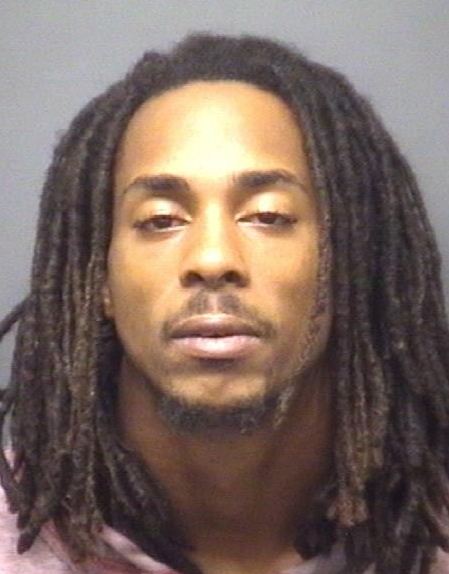 Family members of Dayon Maurice Green, 23, say he suffered from a mental illness for at least the last year and had been prescribed medication. Whether he was taking medication is not yet known. Family members of Dayon Maurice Green, 23, say he suffered from a mental illness for at least the last year and had been prescribed medication. Whether he was taking medication is not yet known.
“Whatever we learn about Green’s illness, we already know that Maryland is unique in the extent of its failure to provide involuntary treatment options for individuals who are severely ill and untreated,” said Brian Stettin, Treatment Advocacy Center policy director and advocate expert for Maryland.
Maryland is one of only four states in the country whose laws do not explicitly authorize commitment of a person who has not yet become violent or suicidal, Stettin said. Additionally, it is one of only six states that do not authorize court-ordered treatment in the community, known as “assisted outpatient treatment” or “outpatient commitment.”
“There is not another U.S. state that lacks both of these mental health policies that exist to get people into treatment before they are dangerous,” according to Stettin. “In their absence, tragedy is inevitable.”
Individuals with severe mental illness that is effectively treated are no more dangerous than the general population. Untreated severe mental illness significantly raises the risk of violence, especially suicide. Young males are at heightened risk when untreated.
A bill to broaden Maryland’s civil commitment standard to authorize civil commitment for individuals with untreated severe mental illness before they become violent or suicidal was introduced in the Maryland legislature last week.
To comment, visit our Facebook page.
Visit our blog archive to read all our recent posts.
The Plea of a Former Supreme Court Justice
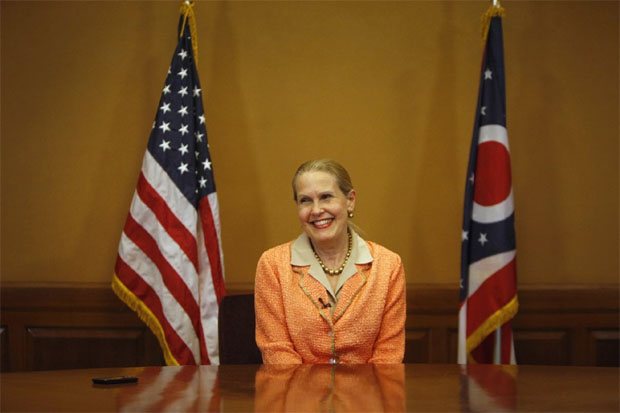 (Feb. 11, 2013) "Growing up, I had no exposure to people with mental illness. I was born in Thailand, the daughter of American missionaries. At age 6, I went to a boarding school in South Vietnam during the Vietnam War." (Feb. 11, 2013) "Growing up, I had no exposure to people with mental illness. I was born in Thailand, the daughter of American missionaries. At age 6, I went to a boarding school in South Vietnam during the Vietnam War."
So begins former Ohio Supreme Court Justice Evelyn Lundberg Stratton's swift and brilliant case for making assisted outpatient treatment (AOT) available to more people. Though Justice Stratton's op-ed in The Columbia Dispatch specifically addresses Ohio's SB 350 - which will clarify language in the state's civil commitment code to ensure greater use of AOT - her arguments ring true for every state:
- "So many defendants in my court would not have been there had they been properly cared for in the mental-health system."
- "The common denominator in mass killings has not been guns. Timothy McVeigh did not use a gun."
- "(T)here needs to be more focus on the millions of people with mental illness who will never commit a mass killing, but who are clearly in dire need of help in many different ways."
- "Families are often told that there is no help if the family member has only threatened someone but hasn’t acted on it yet. But by then, isn’t it too late?"
- "We have a tool already in court-ordered outpatient treatment, which allows probate judges to order outpatient treatment for somebody who does not need a full, expensive and often unavailable hospitalization."
Justice Stratton's case for making AOT more available through treatment law reform and use is a must-read and a must-share. Here are three things YOU can do to help make treatment available to more people, wherever you live:
- KNOW THE LAWS in your state and what needs to be changed to make sure that involuntary treatment options are available to those too ill to seek treatment voluntarily.
- FORWARD OR PRINT AND MAIL Justice Stratton's "Bill would clarify that courts can help deal with mentally ill" to your elected leaders and demand that they make the changes your state needs.
- MAKE THE CASE for treatment law reform and use in letters to the editor of your local media. Quote Justice Stratton or restate the points she makes. If your letter is published, please send us a link at
This e-mail address is being protected from spambots. You need JavaScript enabled to view it
.
To comment, visit our Facebook page.
Visit our blog archive to read all our recent posts.
“The Mental Health Community Has Abdicated Responsibility” – from the Sunday dialogue
(Feb. 8, 2013) Among the distinct perspectives the New York Times’ Sunday dialogue on involuntary treatment for mental illness produced was this one from a state prosecutor who looks at the subject from the victims’ point of view .
 “Dr. Gordon’s preference for mandating psychiatric treatment only for those mentally ill individuals who have committed serious crimes is admirable — unless you are one of the victims of that serious crime. “Dr. Gordon’s preference for mandating psychiatric treatment only for those mentally ill individuals who have committed serious crimes is admirable — unless you are one of the victims of that serious crime.
“As a state prosecutor in Maine for more than 20 years, I have had a front-row seat as the mental health community has abdicated responsibility for untreated, and obviously unbalanced, individuals until they have committed a crime. As a result, thousands of mentally ill defendants are crowded into county jails awaiting trial. But there are worse fates for these individuals.
“Sometimes they become engaged in lethal police encounters, when law enforcement officers are forced to use deadly force to protect themselves or others. In Maine, more than 40 percent of individuals shot by police officers in the last 12 years had mental health problems.
“Sometimes they kill family members. The 2010 Report of the Maine Domestic Abuse Homicide Review Panel found, “More than ever before the panel has reviewed cases involving intrafamilial homicide; a significant number of these cases involved perpetrators who have mental illness and are not medication compliant.”
“As one newspaper commentator recently observed about Maine’s mentally ill, ‘We are killing them, and they are killing us.’
“My colleagues and I regularly encounter family members of mentally ill defendants who plead with us to somehow get treatment for their loved one before they do something unthinkable.
“I sometimes wonder if Adam Lanza’s mother faced this same predicament.”
JAMES ANDREWS
Farmington, Maine
Read all the Sunday dialogue letters in the New York Times.
To comment, visit our Facebook page.
Visit our blog archive to read all our recent posts.
Dissecting the Case against Involuntary Treatment – Part II
(Feb. 7, 2013) With lawmakers across the nation taking a fresh look at their states’ involuntary treatment laws, the New York Times recently initiated a conversation about court-ordered treatment and invited readers to react.
 With this blog, we continue our examination of some of the objections raised by letter-writer Christopher Gordon, MD. With this blog, we continue our examination of some of the objections raised by letter-writer Christopher Gordon, MD.
Gordon: (F)or most patients experiencing psychotic states, mandated treatment may create more problems than it solves.
Not true. Multiple studies have found that, for patients too ill to seek treatment voluntarily, mandated treatment massively improves outcomes on a multitude of fronts: homelessness, arrest, incarceration, suicide rates, hospitalization, victimization, violence and others. At the same time, by leaving half of the nation’s population with severe mental illness untreated, we essentially have a giant social experiment in non-treatment. It’s hard to understand how people living in psychosis on the streets or behind bars would have more problems if their sanity had been restored.
Gordon: Mandated treatment is a blunt instrument that may drive more people away from seeking care than it compels into care.
Not true. We know of no study showing that more people flee voluntary care than receive involuntary care. We do know that in New York – where Kendra’s Law is perhaps the most-studied court-ordered treatment program in the country – face-to-face interviews conducted by researchers with participants found that, while about half reported feeling angry or embarrassed at the time they were committed to assisted outpatient treatment (AOT), 75% ultimately reported that involuntary outpatient treatment helped them gain control over their lives, 81% said it helped them get and stay well, and 90% said AOT made them more likely to keep appointments and take medications.
Gordon: For some suffering and alienated people – certainly not all – feeling respectfully understood can be a critical step toward recovery.
True. Feeling understood and treated respectfully are important component s of successful treatment of every kind, including psychiatric treatment. Researchers have found that, when treated with respect, most patients find voluntary and involuntary treatment equally acceptable. For those too ill to choose treatment, achieving stability through court-ordered treatment sets them on the road to recovery after which all the other steps follow.
Read "Dissecting the Case against Involunary Treatment - Part I"
Read "Involuntary Treatment as a Pathway to Recovery"
Read the enitre series of Sunday dialogue letters in the New York Times
To comment, visit our Facebook page.
Visit our blog archive to read all our recent posts.
Involuntary Treatment as a Pathway to Recovery – from the Sunday dialogue
(Feb. 6, 2013) As a psychiatrist and son of a woman with schizophrenia, Dr. Gary Tsai views court-ordered treatment from the perspective of a family member who has seen a loved one improve as a result.
 “After decades of relentless psychosis, forced treatment was the only way that my mother was able to begin her path to recovery. As a psychiatrist and a family member of a loved one with schizophrenia, I know well the challenges of caring for individuals who firmly and consistently refuse help." “After decades of relentless psychosis, forced treatment was the only way that my mother was able to begin her path to recovery. As a psychiatrist and a family member of a loved one with schizophrenia, I know well the challenges of caring for individuals who firmly and consistently refuse help."
“For me, the dilemma of forced treatment is an issue of access to care, and should be based on whether an individual is able to fully understand the nature, risks, benefits and alternatives of treatment, or of refusing that treatment. Because of a phenomenon known as anosognosia, certain psychotic and manic individuals do not recognize their symptoms. Without compelling treatment for this population, they rarely voluntarily seek the care that they desperately need and deserve, often leading to heartbreaking outcomes such as homelessness and incarceration."
“For my mother, and for hundreds of thousands of others with severe mental illness, declining treatment is not about providers not listening, side effects of medications or stubborn denial. She fundamentally does not believe she needs help, despite a wealth of reality-based evidence to the contrary."
“While mandated treatment involves complex considerations and should be an approach of last resort, for individuals with a clear history of serious mental illness who are unable to make reasonable medical decisions, it is at times the difference between empowering the person with the illness, rather than empowering the illness itself.”
GARY TSAI San Francisco
Read the series of Sunday dialogue letters in the New York Times.
To comment, visit our Facebook page.
Visit our blog archive to read all our recent posts.
Fifty Years of Failing America's Mentally Ill
By E. Fuller Torrey, MD, for the Wall Street Journal
On Feb. 5, 1963, 50 years ago this week, President John F. Kennedy addressed Congress on "Mental Illness and Mental Retardation." He proposed a new program under which the federal government would fund community mental-health centers, or CMHCs, to take the place of state mental hospitals. As Kennedy envisioned it, "reliance on the cold mercy of custodial isolations will be supplanted by the open warmth of community concern and capability."
 President Kennedy's proposal was historic because the public care of mentally ill individuals had been exclusively a state responsibility for more than a century. The federal initiative encouraged the closing of state hospitals and aborted the development of state-funded outpatient clinics in process at that time. President Kennedy's proposal was historic because the public care of mentally ill individuals had been exclusively a state responsibility for more than a century. The federal initiative encouraged the closing of state hospitals and aborted the development of state-funded outpatient clinics in process at that time.
Over the following 17 years, the feds funded 789 CMHCs with a total of $2.7 billion ($20.3 billion in today's dollars). During those same years, the number of patients in state mental hospitals fell by three quarters"”to 132,164 from 504,604"”and those beds were closed down.
From the beginning, it was clear that CMHCs were not interested in taking care of the patients being discharged from the state hospitals. Instead, they focused on individuals with less severe problems sometimes called "the worried well." Federal studies reported individuals discharged from state hospitals initially made up between 4% and 7% of the CMHCs patient load, and the longer the CMHC was in existence the lower this percentage became.
It has now become politically correct to claim that this federal program failed because not enough centers were funded and not enough money was spent. In fact, it failed because it did not provide care for the sickest patients released from the state hospitals. When President Ronald Reagan finally block-granted federal CMHC funds to the states in 1981, he was not killing the program. He was disposing of the corpse.
Fifty years later, we can see the results of "the open warmth of community concern and capability." Approximately half of the mentally ill individuals discharged from state mental hospitals, many of whom had family support, sought outpatient treatment and have done well. The other half, many of whom lack family support and suffer from the most severe illnesses such as schizophrenia and bipolar disorder, have done poorly.
Read the full article by Dr. E. Fuller Torrey, founder of Treatment Advocacy Center, in the Wall Street Journal.
Dissecting the Case against Involuntary Treatment – Part I
(Feb. 4, 2013) The merits and drawbacks of involuntary treatment have received extraordinary attention in the nearly two months since the Newtown, Connecticut, tragedy as lawmakers, mental health professionals and the public ponder how to prevent violence associated with untreated severe mental illness. 
The New York Times a week ago published a detailed letter from psychiatrist Christopher Gordon of Framingham, Massachusetts, who described court-ordered treatment as “a blunt instrument that may drive more people away from seeking care than it compels into care.” On Sunday, the Times published seven responses to Dr. Gordon’s letter reflecting a range of viewpoints – family member, consumer, physician, counselor, prosecutor - and his rejoinder to them.
Because the Treatment Advocacy Center works to eliminate barriers to treatment – including civil commitment laws and standards that make it harder for people with acute or chronic untreated mental illness to get care – we are devoting this week’s blog to the viewpoints contained in the letter and its responses.
Dr. Gordon’s letter, which sparked the dialogue, provides a timely opportunity to address common criticisms from opponents of inpatient and/or outpatient commitment and to provide caregivers and advocates with information they can use to foster a better understanding of court-ordered treatment.
Gordon: Recent tragic events have linked mental illness and violence. Some people — I, for one — consider this link dangerously stigmatizing.
Both of these statements are true.
Many studies have documented a link between untreated mental illness and violence, and many of those studies have been in the news because of recent tragedies. Research has also consistently found awareness that some individuals with mental illness are dangerous to be a major course of stigma. (See our backgrounder, “Stigma and Serious Mental Illness”). Since individuals who receive effective treatment for mental illness are no more dangerous than the general population, we maintain the way to break the link and reduce stigma is to make sure that people with untreated psychiatric disease get timely and effective treatment. Ignoring or denying there’s a link perpetuates stigma by minimizing the need for such treatment.
Gordon: People with mental illness are far more likely to be victims of violence than perpetrators.
True but irrelevant to the issue. Just because people with untreated severe mental illness are more likely to be victims of violence than perpetrators doesn’t mean they don’t perpetrate violence. People are vastly more likely to die in a car accident than walking across a street, too, but that doesn’t mean some don’t die crossing the street. Victimization and violence are not either/or conditions; they are both outcomes of untreated mental illness, and both could be reduced with treatment. (See our backgrounder “Victimization and Serious Mental Illness”).
Gordon: Moreover, psychiatrists have limited capacity to reliably predict violence.
True but only part of the story. Studies have identified several risk factors for violence in individuals with mental illness. Prominent among them are previous violence, substance abuse, non-treatment of the mental illness and paranoid delusion. Being male is another one. The presence of these factors does not predict that a specific individual with mental illness will be violent, but it does describe circumstances that heighten the risk for dangerousness. We all know that high levels of “bad” cholesterol, high blood pressure and a family history of heart attack are risk factors for heart disease and take measures to prevent it. Red flags for violence are identifiable, too, can be monitored and do offer an opportunity for prevention. (See our backgrounder “Risk Factors for Violence in Serious Mental Illness”
We’ll address whether coercion creates more problems than it solves, self-directed treatment and other topics in Part II. Click here to read all of Dr. Gordon’s letter in the Times.
To comment, visit our Facebook page.
“I Was Irresponsible about My Medication”
(Feb. 1, 2013) "Do you feel you're responsible for Kendra's death?"
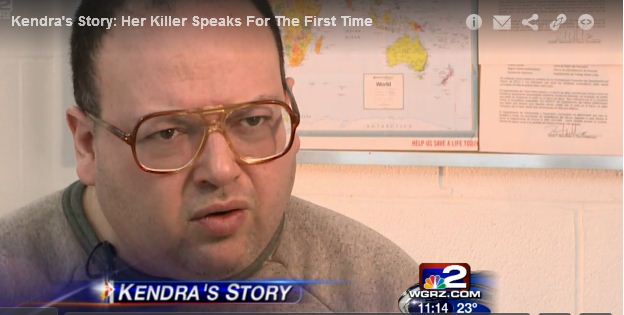 Scott Brown of WGRZ 2 in New York this week put that question to Andrew Goldstein, who pleaded guilty of pushing Kendra Webdale to her death under a Manhattan subway train 14 years ago. He now is serving a 23-year sentence in the mental health unit of a prison north of New York City as a result. Scott Brown of WGRZ 2 in New York this week put that question to Andrew Goldstein, who pleaded guilty of pushing Kendra Webdale to her death under a Manhattan subway train 14 years ago. He now is serving a 23-year sentence in the mental health unit of a prison north of New York City as a result.
“I know physically I was the pusher, I don't want to be manipulative. I was mentally ill and I was irresponsible about my medication,” Goldstein said in his first TV interview since he killed Kendra Webdale in New York City.
“I was hearing voices, and I was living in paranoia. I would miss one or two clinic appointments, and I wouldn't take my meds for a week or two.”
In the same segment, Kendra’s father Ralph Webdale told Brown, "I think we've always thought there's more than one victim here. The victim here is Kendra certainly in our case, but the family of Goldstein, but then of Goldstein himself. He was a victim of the mental health system in New York state- they did not take care of him adequately."
Ralph and his wife Pat Webdale, who also was featured, were instrumental in getting New York’s assisted outpatient treatment (AOT) law – called Kendra’s Law – passed after their daughter died. The Webdales told their interviewer they found Goldstein’s description of his illness “sad, sad.”
Several improvements to Kendra’s Law were passed by the legislature and signed into law in January as part of a gun control measure that followed the Newtown tragedies. Many additional states are looking at implementing or strengthening their own AOT laws or civil commitment standards.
You can help implement assisted outpatient treatment in your state. You’ll also find tools and tips for advocacy on our Get Involved page.
Watch the interview with Andrew Goldstein, who speaks for the first time on TV how his mental illness led to Kendra Webdale’s death.
Leaders of Faith on Civil Commitment Law: ‘Let’s Find a Way to Fix It’
(Jan. 31, 2013) “Realizing that most clergy and faith leaders do not have much extra time to explore issues around mental illness,” a team of clergy and mental health professionals has launched the “Caring Clergy Project,” complete with a website and blog that is already sounding calls for policy change we all can get behind.
 “Colorado Governor John Hickenlooper has made a proposal to update our civil commitment laws; make it easier to identify people with mental illnesses who are a danger to themselves and others; and provide safer, more-humane treatment,” writes Joanne Kelly, co-founder and treasurer of the Interfaith Network on Mental Illness, sponsor of the Caring Clergy Project.” I believe it is a step in the right direction. It should make it easier to prevent another tragedy.” “Colorado Governor John Hickenlooper has made a proposal to update our civil commitment laws; make it easier to identify people with mental illnesses who are a danger to themselves and others; and provide safer, more-humane treatment,” writes Joanne Kelly, co-founder and treasurer of the Interfaith Network on Mental Illness, sponsor of the Caring Clergy Project.” I believe it is a step in the right direction. It should make it easier to prevent another tragedy.”
Kelly, also a past president of NAMI Colorado, tells her own harrowing story as the mother of a son with schizophrenia she has struggled to get into treatment.
“Here’s the question: Why did I have to work so hard to get my son help when he was unquestionably profoundly ill?” she writes. “I know the standard answer is about protecting his civil rights. But I maintain that his mental illness is what restricts his civil liberties – not insisting that he get treatment for it.”
Though conceived to provide “resources on mental illness for clergy of all Faiths,” the Caring Clergy Project is publishing messages all of us who live and work with severe mental illness may find helpful as family members or advocates.
Visit the Caring Clergy Project here.
Read Joanne Kelly’s "Violence, mental illness and civil commitment laws – Let’s find a way to fix it” (Jan. 13).
To comment, visit our Facebook page.
Visit our blog archive to read all our recent posts.
Connecticut Considers Changes to Mental Health Laws
(Jan. 30, 2013) Connecticut – home to some of the more restrictive mental illness treatment laws in the country and to last month’s deadly Newtown rampage – is among the latest states to revisit the issue of assisted outpatient treatment (AOT) in the aftermath of the tragedy.
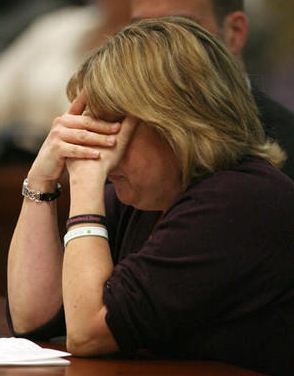 Connecticut is one of only four states without a law authorizing involuntary treatment in the community. Testimony at a legislative hearing on possible changes to Connecticut’s mental health system included support for involuntary outpatient commitment to protect people with severe mental illness. Connecticut is one of only four states without a law authorizing involuntary treatment in the community. Testimony at a legislative hearing on possible changes to Connecticut’s mental health system included support for involuntary outpatient commitment to protect people with severe mental illness.
“The mental health community has failed to do its job in providing treatment to some of its most vulnerable citizens," said Kristina Ragosta, Treatment Advocacy Center senior legislative and policy counsel, in her testimony to the Bipartisan Task Force on Gun Violence Prevention and Children’s Safety yesterday. “Our prisons and jails are overflowing with people suffering from severe mental illness as a result.”
Dr. Harold Schwartz, psychiatrist-in-chief at Hartford Hospital’s Institute of Living, said, “(I)n our efforts to protect autonomy we are acting to protect the decision making of individuals whose capacity for autonomous decision making has been severely impaired by mental illness (“Passionate pleas for better mental health care made during legislative hearing,” Jan. 29, Hartford Courant).
”The pro-AOT testimony came on the heels of a New Haven Registor editorial that opined, “The legislature needs to take up the assisted outpatient treatment legislation again this year for the good of the mentally ill who reject treatment and the public’s safety” (“Change law on mental health,” Jan. 12).
We couldn’t agree more. As Ragosta testified, “In Connecticut, a person with serious mental illness is twice as likely to be in jail or prison as in a psychiatric hospital bed.”
For more information on the need for AOT, listen to Kristina Ragosta debate the use of assisted outpatient treatment for Connecticut on WBUR’s “Here and Now.”
To comment, visit our Facebook page.
Visit our blog archive to read all our recent posts.
|
|