Second Thoughts about Mental Health Budget Cuts
(Jan. 29, 2013) States that slashed mental health spending during the recession are having second thoughts about the cuts after last year’s shooting rampages associated with mental illness, according to an Associated Press report by Thomas Beaumont (“After shootings, states rethink mental health cuts” Jan. 23).
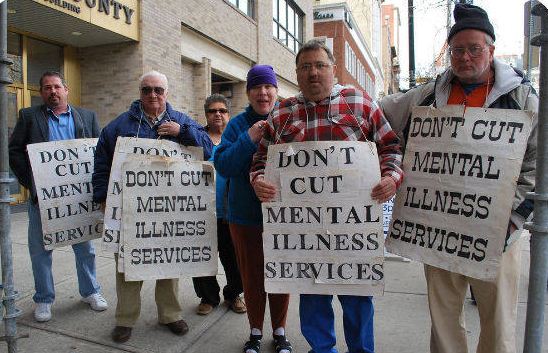 Between 2009 and 2011, cash-strapped states stripped more than $1.8 billion from their budgets for mental health services, two-thirds of which came from services for people with mental illness. Between 2009 and 2011, cash-strapped states stripped more than $1.8 billion from their budgets for mental health services, two-thirds of which came from services for people with mental illness.
“In many states, lawmakers have begun to recognize that their cuts ‘may have gone too deep,’ said Shelley Chandler, executive director of the Iowa Alliance of Community Providers. "'People start talking when there is a crisis.’”
Now Jon Thompson, spokesman for the Republican Governors Association, says “many budget cutting governors are having second thoughts, including whether to reform mental health policies ‘to further invest in the safety of their citizens.’” States rethinking their mental health cuts include South Carolina, Pennsylvania, Utah and Kansas, according to the AP report.
“The sudden pause reflects anxiety from last year's shootings in a Colorado movie theater and a Connecticut elementary school,” Beaumont writes. “Although little is known about the mental health of either gunman, the attacks have shaken state legislatures that until recently didn't intend to consider more social spending. In some cases, gun-rights advocates are seeking mental health reforms as an alternative to more gun laws.”
As legislators take a second look – while keeping an eye on their budgets – treatment advocates should be reminding them of the role assisted outpatient treatment (AOT) can play.
We have always said AOT is a cost-effective alternative to the consequences of non-treatment (homelessness, arrest, incarceration, hospitalization, violence, suicide and more). Now a new study has found that states can implement AOT without new funding if they already provide mental health services.
Share our new backgrounder on cost savings from AOT with legislators and local mental health officials whenever you advocate for AOT.
To comment, visit our Facebook page.
Visit our blog archive to read all our recent posts.
Treatment Advocacy Center In the News
(Jan. 28, 2013) Reliance on and reference to the Treatment Advocacy Center as a source of expert information and data on mental illness treatment issues continued in January as the presidents task force on reducing gun violence met and state legislatures convening around the country began reassessing their civil commitment standards and other laws in the aftermath of December tragedies, including the shootings at Sandy Hook Elementary School in Connecticut . .
Below are some of the most recent:
If one of these stories provides an opportunity to share why mental illness treatment reform is important to you, please submit a letter to the editor, online comment or op-ed to advocate for improved treatment laws and more complete use of them in your community. You'll find advocacy tips here.
To comment, visit our Facebook page.
Visit our blog archive to read all our recent posts.
The Next Battle for New York (and America)
(Jan. 25, 2013) Last week, Governor Andrew Cuomo signed legislation to close gaps in Kendra’s Law. The improvements - developed and first recommended by the Treatment Advocacy Center in 2010 - should lead to wider use, fewer premature lapses in court orders and more consistent enforcement of New York's “assisted outpatient treatment” (AOT) law.
 With that victory behind us, we are now addressing an even bigger failure of New York’s mental health system: the unavailability of court-ordered inpatient treatment for people in desperate need of hospital care. That is the focus of an op-ed piece by Treatment Advocacy Center Policy Director Brian Stettin in this week's Daily News. We also hope to make reforming the state's inpatient commitment law a priority of its legislature this session. With that victory behind us, we are now addressing an even bigger failure of New York’s mental health system: the unavailability of court-ordered inpatient treatment for people in desperate need of hospital care. That is the focus of an op-ed piece by Treatment Advocacy Center Policy Director Brian Stettin in this week's Daily News. We also hope to make reforming the state's inpatient commitment law a priority of its legislature this session.
The improvement in Kendra's Law is only one of many mental illness treatment law reforms we are working on as legislatures around the country convene for their 2013 sessions. In the wake of the Newtown tragedy, numerous states are taking a new look at their treatment laws and finding room for improvement.
YOU can help us achieve reforms!
- DONATE – We do not accept funding from companies or entities involved in the sale, marketing or distribution of pharmaceutical products. That makes individual donations essential to our success.
- LEARN more about the issues – Follow us on Facebook and Twitter, read our daily blogs and/or the weekly news roundups, use our website to familiarize yourself with topics like the dire shortage of public hospital beds and the criminalization of mental illness.
- BECOME an advocate – Help us shape and inform others by writing letters to the editor when mental illness issues are in your local news, sharing our Facebook posts, forwarding our news. You’ll find tools and tips for advocacy on our What You Can Do page.
Meanwhile, New Yorkers, please forward a link to the Daily News article to your state senator, assemblymember and Governor Cuomo. Be sure to identify yourself as a constituent and include your own personal story that illustrates why this reform is so important to you.
Please forward any replies you receive to us. It will help us identify potential allies in the New York legislature.
To comment, visit our Facebook page.
Visit our blog archive to read all our recent posts.
"Mental Illness Is Treatable" – guest blog
(Jan. 24, 2013) The tragic shooting last month in Newtown…the Aurora shooting…the shooting in Tucson…the Virginia Tech massacre…all involved mental illness. Nuts, crazy, mad, wacko – words I frequently hear used to describe the mentally ill. These people have a brain disorder, they are mentally ill, and like people with any other illness, they need medical treatment. Therein lies the problem.
 Years ago when we deinstitutionalized, states passed laws making it illegal to force mentally ill adults to be treated or take their medications. Once you turn 18, you have a civil right to refuse treatment and remain mentally ill until you become suicidal or homicidal as determined by judges at commitment hearings. Years ago when we deinstitutionalized, states passed laws making it illegal to force mentally ill adults to be treated or take their medications. Once you turn 18, you have a civil right to refuse treatment and remain mentally ill until you become suicidal or homicidal as determined by judges at commitment hearings.
I’m the mother of a bipolar son who took his life at age 40. His name was Scott. At age 27, without warning, Scotty was transformed into a different person. He became weird, maniacal, out-of-control, psychotic. He no longer required sleep. He became extremely religious…claimed that God had anointed him a prophet and commissioned him to write another book for the Bible. He developed a fixation for the President and made many attempts to get into the White House for what he thought were scheduled meetings with President Clinton. At times, he was in the Witness Protection Program along with other CIA and FBI operatives…federal agents were trying to assassinate him. He was serious and believed everything he was saying.
Following six weeks of involuntary commitment with forced meds, Scotty recovered and was able to resume his life. Treatment works. Mental illness is a lifelong illness with recurring episodes. There is currently no cure…but the good news is…mental illness is treatable. Medication compliance is the key to living with mental illness.
Scotty went on to have four additional bipolar manic episodes, each one more severe than the previous….Click here to continue reading this poignant commentary by -
Dottie Pacharis
Author of Mind on the Run: A Bipolar Chronicle
To comment, visit our Facebook page.
Visit our blog archive to read all our recent posts.
A Letter to Dr. Torrey – personally speaking
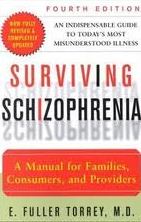
(Jan. 18, 2013) I have schizoaffective disorder and am currently reading your book "Surviving Schizophrenia." On reading the chapter on "Onset, Course and Prognosis," I decided to summarize my own story as a means of abreaction for myself, and it occurred to me that you might like to know about my case and perhaps consider using it in your research. It is as shown below.
 "Andrew, although shy, had a fairly normal childhood and was raised as one of Jehovah’s Witnesses. Gifted musically, he could easily have pursued a career as a concert pianist but did not and taught music privately instead. Always with a spiritual perspective and still living at home, at age 22, he began to be troubled by demons, became very distressed by doubts as to his religious beliefs, experienced disturbances in sleeping and eating patterns and became very withdrawn and depressed. "Andrew, although shy, had a fairly normal childhood and was raised as one of Jehovah’s Witnesses. Gifted musically, he could easily have pursued a career as a concert pianist but did not and taught music privately instead. Always with a spiritual perspective and still living at home, at age 22, he began to be troubled by demons, became very distressed by doubts as to his religious beliefs, experienced disturbances in sleeping and eating patterns and became very withdrawn and depressed.
“He responded well to initial antidepressant medication prescribed by his general practitioner, but a few years later it became evident that additional antipsychotic medication was required, and a diagnosis of schizoaffective disorder was made by a psychiatrist. His sexual indiscretion led to him being excommunicated by Jehovah’s Witnesses some years ago, and apart from some practical support from his parents, he remains in this condition and has few social outlets. As a full-time medical typist, he currently finds little time and energy to maintain his home surroundings and continues to have some problems with spending sprees, both of which are related to his belief that changes in his work situation need to be made in order for him to become a happier person.
“Apart from some paranoia which he still experiences at work, he continues to be symptom-free as long as he stays on his medication, and additional alternative therapies (such as fish oil and zinc) have also assisted his physical, mental and spiritual wellbeing considerably. His experiences have matured him spiritually.
Andrew Lorenz
Bundaberg, Queensland, Australia
P.S. Did you know that the Australian concert pianist David Helfgott also has schizoaffective disorder?
Since its first publication in 1983, Surviving Schizophrenia has helped thousands understand this complex and often stigmatized illness. In clear, sympathetic language, this definitive book describes the nature, causes, symptoms, and history of schizophrenia, taking readers inside the minds of those living with the disease.
To comment, visit our Facebook page.
Visit our blog archive to read all our recent posts.
"Treat the 1 Percent"
(Jan. 17, 2013) Erika Menendez, the 31-year-old woman who is alleged to have pushed a man to his death beneath a subway train in New York City, represents everything that is wrong with America’s system of treating the mentally ill. This was the second fatal subway pushing in New York in less than a month. In both cases the person who allegedly did the pushing was described as having a severe mental illness that was not being adequately treated.
 An attendant in the psychiatric ward at Elmhurst Hospital Center in Queens said of Menendez, “We know her very well.” State mental-health officials declined to confirm that Menendez had been diagnosed with a psychiatric condition, invoking patient privacy. Such invocations have become standard practice in mental-illness-related crimes, such as the massacres in the theater in Colorado and in the elementary school in Connecticut. In truth, these invocations of patient privacy have little to do with the privacy of the patient — federal law allows the release of information for issues of “serious threat to health and safety” and “public interest and benefit activities” — and much to do with covering up the incompetence of the mental-health institutions. An attendant in the psychiatric ward at Elmhurst Hospital Center in Queens said of Menendez, “We know her very well.” State mental-health officials declined to confirm that Menendez had been diagnosed with a psychiatric condition, invoking patient privacy. Such invocations have become standard practice in mental-illness-related crimes, such as the massacres in the theater in Colorado and in the elementary school in Connecticut. In truth, these invocations of patient privacy have little to do with the privacy of the patient — federal law allows the release of information for issues of “serious threat to health and safety” and “public interest and benefit activities” — and much to do with covering up the incompetence of the mental-health institutions.
According to the National Institute of Mental Health, there are in the United States 7.7 million people who suffer from the most severe mental illnesses — schizophrenia, schizoaffective disorder, and bipolar disorder. Among these, approximately 1 percent — 77,000 individuals — are responsible for most of the problems associated with untreated mental illness. Most of them are, like Erika Menendez, well known to the mental-health and corrections systems. They have been in and out of psychiatric hospitals, emergency rooms, jails, and homeless shelters more times than they can count. Walk into a police station in any city or town in America and ask the officers to identify the mentally ill people in their community who present law-enforcement problems, and they will have no difficulty doing so.
Read the entire article by Dr. Torrey, published in this week's National Review.
Dr. Torrey is a research psychiatrist, the founder and a board member of the Treatment Advocacy Center. He is executive director of the Stanley Medical Research Institute, the largest nongovernmental source of funds for research on schizophrenia and bipolar disorder in the United States.
To comment, visit our Facebook page.
Visit our blog archive to read all our recent posts.
Do Antipsychotic Drugs Cause Homicidal Behavior?
(Jan. 16, 2013) In response to the recent spate of mental illness-related tragedies, there have been occasional claims that the antipsychotic drugs used to treat schizophrenia and bipolar disorder cause homicidal behavior.
 Such allegations have been heard mostly on social media, on call-in radio shows and even in letters to the editor. For example, a Jan. 8 letter in the Toronto Star claims that “psychotropic drugs have horrendous side effects such as homicide and/or suicide. The perpetrators of almost every mass shooting were on psychotropic drugs.” Such allegations have been heard mostly on social media, on call-in radio shows and even in letters to the editor. For example, a Jan. 8 letter in the Toronto Star claims that “psychotropic drugs have horrendous side effects such as homicide and/or suicide. The perpetrators of almost every mass shooting were on psychotropic drugs.”
Some of these ideas come from previous allegations concerning antidepressant drugs, especially following the Columbine High School shootings, in which one of the shooters was alleged to have been prescribed an antidepressant. I am not aware of any definite resolution of this question, but studies I have seen would suggest that antidepressants decrease, rather than increase, suicidal and/or homicidal ideation (e.g., Gibbons et al, Suicidal thoughts and behavior with antidepressant treatment, Archives of General Psychiatry, 2012 Jun;69(6):580-7.)
Antipsychotics are, of course, a different class of drugs from antidepressants. In searching PubMed and the psychiatric literature, I can find no published evidence whatsoever that suggests that antipsychotic drugs increase homicidal ideation. On the contrary, those studies which have addressed this issue have concluded that homicides by individuals with severe mental illnesses are almost always committed by individuals who have never been treated or are not taking their antipsychotic medication.
For example, a meta-analysis of 10 studies of homicides and psychotic illness reported that 39% of such homicides occur in individuals with psychoses before they have ever been treated. The homicide rate in such individuals who had never been treated was 22 times higher than the rate in individuals who had been treated (Nielssen and Large, Rates of homicide during the first episode of psychoses and after treatment, Schizophrenia Bulletin 2010;36(4):702-12.)
Many other studies have noted an association between violent behavior by individuals with severe mental illness and the fact that they were not being treated at the time they committed the violent act. Several such studies are summarized on the Backgrounder on the TAC website (“Violent behavior: One of the consequences of failing to treat individuals with severe mental illnesses,” e.g., Elbogen et al 2006; Swanson et al. 2002; Swanson et al. 1997; Smith et al. 1989).
Looking at the question in another way, among all the studies THAT have examined violent behavior in individuals with severe mental illnesses, the study THE reported the lowest rate of violence was the CATIE study, in which all the patients were taking antipsychotic drugs.
Anecdotally, there is abundant evidence to support the idea that homicides committed by individuals with severe mental illness are in most instances associated with the failure to treat (Jared Loughner being exhibit A) or the failure of the individuals to take his/her antipsychotic medication. There are literally hundreds of such examples on the Preventable Tragedies Database on the TAC website.
In conclusion, there is no evidence to support the allegation that homicides committed by individuals with severe mental illnesses are caused by the antipsychotic medication they are taking. Individuals making such allegations should be asked to cite the evidence for their allegation. On the contrary, studies strongly suggest that the failure to treat such individuals is the cause of the homicides.
E. Fuller Torrey, M.D.
Dr. Torrey is a research psychiatrist, the founder and a board member of the Treatment Advocacy Center. He is executive director of the Stanley Medical Research Institute, the largest nongovernmental source of funds for research on schizophrenia and bipolar disorder in the United States.
New York Improves Kendra's Law
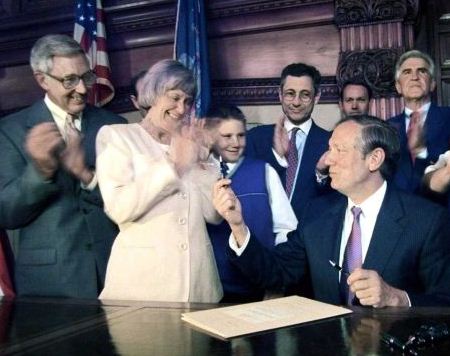
(Jan. 15, 2013) In the wake of the tragedy at Sandy Hook elementary school, New York has validated the importance of mental illness treatment in reducing violence by building improvements to Kendra’s Law into the gun violence prevention legislation passed this week. Governor Andrew Cuomo signed the bill into law January 15th, 2013.
“New York has taken the lead in recognizing the role of a strong assisted outpatient treatment (AOT) law in effort to address rampage killings and other  preventable tragedies. Our hope is that other states - including Connecticut, which has no provision for AOT - will soon follow their lead,” said Doris A. Fuller, executive director of the Treatment Advocacy Center. preventable tragedies. Our hope is that other states - including Connecticut, which has no provision for AOT - will soon follow their lead,” said Doris A. Fuller, executive director of the Treatment Advocacy Center.
The following changes will increase the effectiveness of assisted outpatient treatment in New York, improve mental health treatment outcomes and enhance public safety:
- Maximum length of an initial AOT order is extended from six months to one year.
- If a person under AOT moves to a new county, officials in the new country will be notified and enforcement responsibility of AOT will transfer to mental health officials in the new county of residence.
- Before releasing a mentally ill inmate into the community, a state forensic correctional facility is required to first assess whether the inmate meets AOT criteria. If the inmate meets AOT criteria, the director of the correctional facility must either petition the court for AOT or refer the case to the mental health authorities in the county of the inmate’s expected residence.
- Prior to the expiration of an AOT order, county mental health officials are required to evaluate the need for AOT renewal.
- County mental health officials are authorized to petition for renewal of AOT orders, even if the person cannot be located.
- The “sunset” date of the law (the expiration date, if not re-authorized) is deferred from 2015 to 2017.
The passage occured barely a week after the 14th anniversary of the death of Kendra Webdale, who was pushed into the path of an oncoming train by a man with severe mental illness and a long history of treatment non-adherence. In a recent op-ed, her parents called for improvements to Kendra’s Law “to prevent further death and grief” (“Our daughter did not die in vain,” NY Daily News, Jan. 3).
At the Treatment Advocacy Center, we have been calling for improvements to Kendra’s Law since 2010.
These calls have not gone unanswered.
“It’s Time to Stop Ignoring Mental Illness Law”
(Jan. 14, 2013) “We are the families of Laura Wilcox and Scott Thorpe.” With that, the parents of a young woman shot and killed by a man with untreated schizophrenia and the brother of the shooter raised their voices in a Sacramento Bee op-ed this weekend advocating for wider use of "Laura's Law" - the assisted outpatient treatment law named for victim Laura Wilcox ("It’s time to stop ignoring mental illness law," Jan. 13).
 And they are not the only ones who were in print urging lawmakers to embrace court-ordered outpatient treatment as a means of reducing mental illness-related tragedy.In Connecticut - home to the Newtown shootings and one of only six states without an AOT law – an editorial in the Register Citizen presses legislators to “take up the assisted outpatient treatment legislation again this year for the good of the mentally ill who reject treatment and the public’s safety,” (“Time to change the laws on mental health,” Jan. 13). And they are not the only ones who were in print urging lawmakers to embrace court-ordered outpatient treatment as a means of reducing mental illness-related tragedy.In Connecticut - home to the Newtown shootings and one of only six states without an AOT law – an editorial in the Register Citizen presses legislators to “take up the assisted outpatient treatment legislation again this year for the good of the mentally ill who reject treatment and the public’s safety,” (“Time to change the laws on mental health,” Jan. 13).
Meanwhile, in New Mexico - one of the other six states without AOT – Ron Gurley, an advocate for improved mental health care called for passage of an assisted outpatient treatment law and expansion of public psychiatric beds (“Steps needed to prevent the next tragedy,” Las Cruces Sun News, Jan. 13).
At the Treatment Advocacy Center we have been saying this for years. While no law can completely end tragedy, implemented correctly assisted outpatient treatment will save lives and reduce the consequences of untreated severe mental illness.
What the Wilcoxes and Thorpes wrote applies to every state where involuntary outpatient treatment is not being used to help people with severe mental illness: “(W)e are missing an opportunity to use a good law, save money and save lives." As long as AOT goes unused, individuals "will remain caught in a revolving door due to the failures in treating mental illness. Sadly, family members of both the victims and of the mentally ill will continue to suffer."
To comment, visit our Facebook page.
Visit our blog archive to read all our recent posts.
USA Today on Fixing the Nation’s Mental Health System
(Jan. 11, 2013) “From a classroom at Virginia Tech to a strip mall in Tucson to a movie theater in Colorado, a common thread runs through many of the nation's tragic mass murders: severe and untreated mental illness,” the USA Today editorial begins.
 “Fixing problems with the nation's mental health system is a tall order,” “Fix broken mental health system” (Jan. 10) concludes. “Some require state action, some federal. But no response to Sandy Hook will be complete without them.” “Fixing problems with the nation's mental health system is a tall order,” “Fix broken mental health system” (Jan. 10) concludes. “Some require state action, some federal. But no response to Sandy Hook will be complete without them.”
We agree. To illustrate:
“In recent years, society has learned a lot about mass killers,” the editorial says. “All but one of the 62 worst mass killings in the past 30 years were carried out by males. The perpetrators have typically been young men who are psychopaths, or are suffering from suicidal depression or psychotic breaks.”
In the cases of Virginia Tech killer Seung-Hui Cho, Tucson killer Jared Loughner and accused Aurora killer James Holmes, “even strangers noticed something terribly wrong long before the killings. Yet none was receiving treatment at the time of their crimes.”
“How can that be?”
It can be, we know, because of five decades of failed mental health policies that have focused on making treatment for the most severe mental illnesses harder to get.
The Treatment Advocacy Center has proposed three public policies to address these failures and reduce the consequences of non-treatment of mental illness:
- REFORM civil commitment laws that present barriers to treatment – and use them.
- STOP closing the public psychiatric hospitals that provide treatment to people with acute or chronic severe psychiatric disease and restore sufficient inpatient treatment facilities to treat them.
- STOP viewing mental illness as a state of freedom to be protected at all costs from involuntary treatment that would set individuals with mental illness on the road to recovery.
If you support these policies, here are three actions you can take:
- IDENTIFY the deficiencies in your state so you know what your state needs to make treatment possible.
- CALL OR WRITE your elected state leaders and demand that they take needed action.
- URGE THE VICE PRESIDENT to include our common-sense policy proposals in his upcoming recommendations to President Obama.
To comment, visit our Facebook page.
Visit our blog archive to read all our recent posts.
|
|