In Michigan, “A Crack in the System”
(Mar. 1, 2013) “If you’re lucky you get in, if not, emergency rooms child welfare and juvenile justice are your only options,” one family said about trying to get help for a loved one with severe mental illness in Michigan (“A crack in the system,” WILX, Feb. 19).
 Michigan lost 47% of its public psychiatric beds between 2005 and 2010. Now, the impact of deinstitutionalization is “bringing an increasing number of patients to local jails or state prisons. The facilities are not equipped to care for the needs of the mentally ill, but some are reporting a third or more of inmates with mental illnesses.” Michigan lost 47% of its public psychiatric beds between 2005 and 2010. Now, the impact of deinstitutionalization is “bringing an increasing number of patients to local jails or state prisons. The facilities are not equipped to care for the needs of the mentally ill, but some are reporting a third or more of inmates with mental illnesses.”
"We have a huge gap that's being created in this state that home and community-based care is not available unless you have Medicaid, or are eligible for community mental health," said Malissa Pearson, executive director of the Association for Children's Mental Health. “Unless you're suicidal, homicidal or commit a crime, mental health services are hard to come by.”
Yet there are those who recognize the importance of providing treatment before tragedy.
Ingham County Jail Director Major Sam Davis said that if mental health needs were addressed earlier, his jail wouldn’t be so full.
It should not come to a life and death situation before we can get people who desperately need help into treatment. At the Treatment Advocacy Center we believe that people should have access to treatment before they end up suicidal, homicidal, behind bars or end up suffering any of the other consequences of non-treatment.
To comment, visit our Facebook page.
Visit our blog archive to read all our recent posts.
A Preventable Tragedy Near Pittsburgh
(Feb. 28, 2013) On the morning of Feb. 19 in the Pittsburgh suburb of Richland Township, 26-year-old Levi Staver fatally stabbed his grandmother, Connie Johnston, while she ate breakfast in her home. When police arrived at the scene, Levi reportedly told them that his grandmother was a witch and that he was commanded to kill her by an Arch Angel.
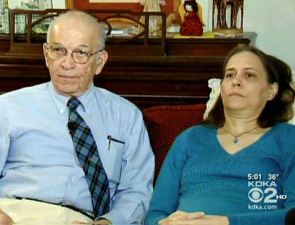 Last fall, Levi was diagnosed with schizophrenia after being hospitalized for injuries suffered in an accident. For years before that up until last week’s tragedy, Levi’s mother and grandparents waged a losing battle to secure for him the mental illness treatment he so desperately needed. Like so many other families, their struggle was compounded – first, by Levi’s inability to recognize his own illness and refusal to submit himself to voluntary care, and second, by a misguided civil commitment law that withholds the lifeline of involuntary treatment until death or severe injury appears imminent. In Pennsylvania, the law requires proof of “a reasonable probability that death, serious bodily injury or serious physical debilitation would ensue within 30 days unless adequate treatment were afforded.” Last fall, Levi was diagnosed with schizophrenia after being hospitalized for injuries suffered in an accident. For years before that up until last week’s tragedy, Levi’s mother and grandparents waged a losing battle to secure for him the mental illness treatment he so desperately needed. Like so many other families, their struggle was compounded – first, by Levi’s inability to recognize his own illness and refusal to submit himself to voluntary care, and second, by a misguided civil commitment law that withholds the lifeline of involuntary treatment until death or severe injury appears imminent. In Pennsylvania, the law requires proof of “a reasonable probability that death, serious bodily injury or serious physical debilitation would ensue within 30 days unless adequate treatment were afforded.”
On Monday, Levi’s heartbroken mother and grandfather spoke to Pittsburgh’s KDKA-TV, and the report is available online. The Johnstons explain how the public mental health system failed Levi, and announce their intent to work for reform of the Pennsylvania commitment law. Will Pennsylvania lawmakers take heed before another senseless preventable tragedy occurs? Let’s hope so.
To comment, visit our Facebook page.
Visit our blog archive to read all our recent posts.
As the Tide Turns, a Sea Change for Mental Health?
(Feb. 26, 2013) Mental-health advocates coast-to-coast are seeing a “rare and unexpected” interest in plugging the gaps in America’s mental-health-care system, according to a story by Washington Post reporters Brady Dennis and Lena H. Sun (“After Newtown, support for mental-health spending grows,” Feb. 23).
 “In the wake of the massacre in Newtown, Conn., lawmakers from both parties, along with notoriously tight-belted governors, are pushing to restore some of the estimated $4.3 billion in mental-health spending that was slashed from state budgets between 2009 and 2012,” their story reported. “At the same time, they are weighing new initiatives, such as adding beds at psychiatric hospitals and improving treatment for inmates with behavioral disorders.” “In the wake of the massacre in Newtown, Conn., lawmakers from both parties, along with notoriously tight-belted governors, are pushing to restore some of the estimated $4.3 billion in mental-health spending that was slashed from state budgets between 2009 and 2012,” their story reported. “At the same time, they are weighing new initiatives, such as adding beds at psychiatric hospitals and improving treatment for inmates with behavioral disorders.”
Treatment Advocacy Center Executive Director Doris A. Fuller was quoted at length. “We are seeing interest in reform in states that haven’t looked at it in a decade or more. . . . It’s certainly created opportunities that we have rarely seen before. We’re trying to improve the laws in such a way that legal barriers to timely and effective treatment are removed.”
Although Fuller applauded the attention, she said that “given the limited resources, the focus should be on those with the most severe mental illnesses — a population also at the highest risk for violence.”
Many of the bills introduced this legislative season do just that. Bills to authorize assisted outpatient treatment have been introduced in three of the states without AOT: Connecticut, Nevada and Massachusetts. Legislation to broaden overly restrictive inpatient standards are under consideration or in the works.
“The budget cuts of recent years have translated to fewer beds at psychiatric hospitals, fewer crisis centers and decreased access to treatment for low-income patients,” the Post reported. “The tide, advocates hope, is beginning to shift.”
The Treatment Advocacy Center not only hopes the tide is beginning to shift. We’re working to turn it every single day.
To comment, visit our Facebook page.
Visit our blog archive to read all our recent posts.
“I Am Not a SCUT (or “Nuts” or “Daffy” or “Schizo”)” – personally speaking
(Feb. 25, 2013) My antipathy to the linking pejorative terms to those of us with mental illnesses has a long history.
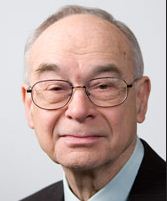 I spent 20 years working as a psychologist/administrator in what was arguably then Ohio's largest state psychiatric hospital. Upon arriving there, just out of graduate school, I noticed it was customary to refer to the majority of patients as "SCUTs." From the view of the professional staff, SCUT was an acronym for "schizophrenia, chronic undifferentiated type." In the Webster’s dictionary a “scut” was defined at the time as either the rear end of a rabbit or a "despicable person." I spent 20 years working as a psychologist/administrator in what was arguably then Ohio's largest state psychiatric hospital. Upon arriving there, just out of graduate school, I noticed it was customary to refer to the majority of patients as "SCUTs." From the view of the professional staff, SCUT was an acronym for "schizophrenia, chronic undifferentiated type." In the Webster’s dictionary a “scut” was defined at the time as either the rear end of a rabbit or a "despicable person."
I did not approve of the use of this term for our patients, but I did not seriously raise the issue until the data processing department came out with the hospital's official listing of our patients and officially categorized some 60% of them with the abbreviation, "SCUT." When I saw this I "hit the wall", sending memos to the CEO with copies to everyone of influence I could think of, short of the governor. The resistance I received from the professional, as well as the administrative, staff for my outrageous act of rebellion was extremely intense. In the end, I was able to get the CEO to produce a “cease and desist” order concerning the official use of the term, SCUT, for the patients, but many on the staff never forgave me.
A few years later, the hospital was reorganizing and created "The Committee to Re-arrange Patients," commonly referred to by staff by its initials (the "CRAP" committee). When this came to my attention, I again launched into a ferocious campaign to condemn this reference to our patients as "crap." I, of course, also won this battle, but I heard that I started to develop as reputation among the staff as being "pro-patient." Needless to say, in the state hospital at that time, being thought of as pro-patient was not considered a compliment.
A few more years later, I found myself serving on the board of directors of the Ohio Psychological Association. One day, I found myself listening to the board members having a joyful time referring to the patients in the local "loony bin" as being "wacko." At one time these psychologists happened to have a small stuffed animal which, when beat on the head, would yell out "WACKO … WACKO" and would dart around the table. The psychologists were having great fun.
At that time, I was not open about my having been hospitalized for schizophrenia. But I did muster the courage to suggest that there was a fairly new organization for family members of mentally ill persons, called NAMI, and indicated that those folks might be offended by the psychologists’ activities and their use of the terms, "loony bin" and "wacko." One very senior member of the group immediately snapped, that if that is the case, then "some people are just too sensitive."
In my interactions with various fellow mental health advocates, I have developed a habit of going into "attack mode" whenever one of them uses a pejorative term for the mentally ill. They will usually say something like: "That drives me crazy" or "that's insane." When I hear mental health professions use these pejorative terms, I go on automatic “sham” rage and publically dress them down as though I had become their drill instructor in a boot camp somewhere. Usually they try to defend themselves, but I counter with something like, "And do you use the ‘n’ word as well –as in "N-U-T-S?"
A few years ago I constructed a list of well over 100 terms I had heard mental health professionals use that I think most of us with mental illness would find objectionable. Read “Dr. Fred Frese’s Avoidable 111.” From “addle-brained” to “wacky,” what’s sobering is that the words and phrases all made the list because a mental health professional somewhere, sometime used them.
FRED FRESE, Ph.D.
Psychologist, advocate and Treatment Advocacy Center board member
To comment, visit our Facebook page.
Visit our blog archive to read all our recent posts.
RESEARCH: Treating Schizophrenia with Computer Games
(Feb. 22, 2013) A California company is seeking the FDA’s first endorsement for a product that would help combat symptoms of schizophrenia with computer games.
 “Treating schizophrenia with brain training is based on the theory that the confusion and fear the disease creates may occur because the brain’s expectations about what will happen do not match up with what actually happens,” according to a report in the Washington Post (“Trying to help schizophrenics with computer brain games,” Feb. 18). “That disconnect might be traced to a problem with verbal and auditory processing of information, something that brain training targets.” “Treating schizophrenia with brain training is based on the theory that the confusion and fear the disease creates may occur because the brain’s expectations about what will happen do not match up with what actually happens,” according to a report in the Washington Post (“Trying to help schizophrenics with computer brain games,” Feb. 18). “That disconnect might be traced to a problem with verbal and auditory processing of information, something that brain training targets.”
Posit Science of San Francisco is seeking approval from the Food and Drug Administration for its computer game. Clinical trials aimed at FDA approval are being conducted at a dozen sites in collaboration with the Schizophrenia Trials Network, a group of university-based researchers. The trials will involve 150 participants and finish next year.
The Post reported, “The idea comes from Michael Merzenich, an emeritus professor of neuroscience at the University of California at San Francisco and a co-founder of Posit Science. Merzenich is something of a living legend in neuroscience, a co-inventor of cochlear implants and one of the pioneers of the theory of neuroplasticity, which asserts that the brain continues to develop throughout a lifetime.”
To learn more about the game project, read “Trying to help schizophrenics with computer brain games.”
To comment, visit our Facebook page.
Visit our blog archive to read all our recent posts.
Is New York Really "Sweeping the Streets?"
(Feb. 21, 2013) A New York Post article this week with typically offensive headline, “Scoop the Nuts,” has brought distress to some mental health advocates and families ("Scoop the Nuts: Mentally ill roundup plan after train pushes,” Feb. 18).
 A quick glance at the story conveys an impression that the New York City Police Department has launched a campaign to “sweep the streets” of people with untreated mental illness. The story makes unsettling mention of a newly compiled “most wanted list” of 25 mentally ill individuals believed to be untreated and homeless. A quick glance at the story conveys an impression that the New York City Police Department has launched a campaign to “sweep the streets” of people with untreated mental illness. The story makes unsettling mention of a newly compiled “most wanted list” of 25 mentally ill individuals believed to be untreated and homeless.
The alarm is unwarranted. Cutting through the breathless rhetoric, it turns out that the initiative reported here is simply an effort by the city to meet its court-ordered obligations to provide treatment to people in desperate need.
Individuals on the city’s list reportedly all have documented histories of treatment non-compliance leading to violence and/or repeated hospitalization sufficient that they have qualified for assisted outpatient treatment (AOT) under New York’s Kendra’s Law. All are currently believed by their doctors to be in violation of their AOT court orders by not complying with their treatment plans and are possibly dangerous.
In this new city campaign, the police have not been asked to arrest anyone. Instead, they are fulfilling the function set out for law enforcement officers in New York’s AOT law: to bring people who are in violation of their treatment orders and believed to possibly be dangerous to a health-care facility for evaluation. Those found by doctors to not currently meet New York’s hospital commitment standard will be immediately released (with, one hopes, a re-connection to their treatment team and continued monitoring.)
Needless to say, this is exactly how AOT is supposed to work in New York. The only thing new about the “most wanted list” is that, according to the Post, in the past only non-adherent AOT patients with known addresses were pursued. Now, the NYPD is actively searching for those whose whereabouts are unknown.
To which we can only say: it’s about time! Considering that the alternative is the abandonment of people with untreated mental illness to the perils of street life, we commend NYC for its heartening new policy.
To comment, visit our Facebook page.
Visit our blog archive to read all our recent posts.
What Xavier Amador Would Have Said on CNN about Christopher Dorner
(Feb. 20, 2013) Psychologist and author Xavier Amador was scheduled to appear on CNN last week to address the mental condition of Christopher Dorner, the former Los Angeles police officer who shot and killed four people in Southern California and triggered a massive manhunt before killing himself in a remote mountain cabin. Amador was bumped for network scheduling reasons.
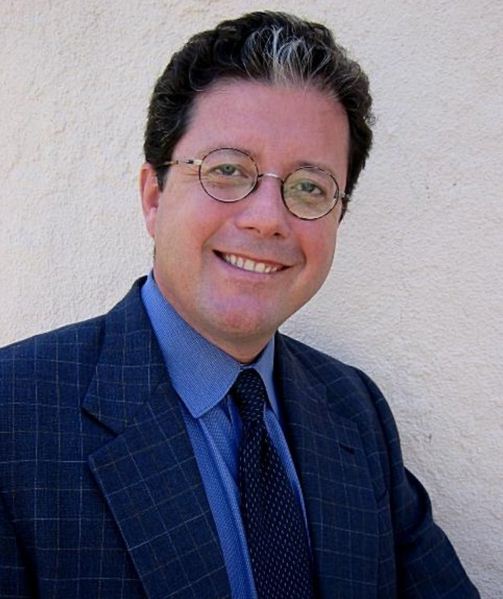 In an email to supporters that addressed the story he had hoped to share on CNN, here is what Dr. Amador wrote: In an email to supporters that addressed the story he had hoped to share on CNN, here is what Dr. Amador wrote:
“The LAPD and media focus on how to put the fire out, but ignore how the fire started....
“First there is reliable evidence of serious mental illness in former officer Dorner’s ‘manifesto’ and in the LAPD’s records I obtained from CNN. Evidence of thought disorder and delusion are present. He was experiencing psychosis, the result of a brain disorder not depravity.
"'You never even met the man, how can you diagnose him?!'
"I have testified in many trials involving mentally ill persons (state, federal and military courts,) and my testimony and that of other experts who have only the subject’s written explanations (e.g., a 11,352 word manifesto like Dorner’s) and credible collateral sources of information to rely on, were judged acceptable. Courts accept these diagnostic opinions routinely. In other words, we were never given the chance to meet with the person; nevertheless, with reliable information that others can independently review we can sometimes make a valid diagnosis. And every day in emergency rooms psychiatrists rely on the reports of family members and arresting police officers when prescribing treatments for paranoid mentally ill people who refuse to speak with them....
“Given the factual evidence I reviewed, I believe the LAPD should have guessed, or at least suspected, they had a mentally ill officer and should have sent him for help before deciding he was a liar and firing him. They essentially threw gasoline on the fire of his psychosis." Specifically, Dr. Amador says, the department failed to have Dorner evaluated by its mental health services even though he had repeatedly asked for "reintegration training" as a war veteran - and been refused.
“Perhaps better police training in identifying the warning signs of mental illness would have led to a different response. The only way to know, is to have an independent review of how Officer Dorner’s complaint was handled and an assessment of whether signs of mental illness were missed or ignored. I believe this tragedy, the lives lost and terror so many had to live with, could have been avoided had this war veteran-LAPD officer been evaluated for mental health problems."
It's too bad Dr. Amador didn't get a chance to deliver his message to a national audience. No matter what eventually is determined in Dorner's case, identifying warning signs of mental illness is important for law enforcement officers who are often the first responders in a psychiatric crisis - and for all of us.
Read our backgrounder on law enforcement and people with severe mental illness.
To comment, visit our Facebook page.
Visit our blog archive to read all our recent posts.
“I Feel for Dayvon Green’s Family” – personally speaking
(Feb. 19, 2013) In a Rosedale, Maryland, neighborhood, the mailbox outside a suburban house filled with notes from reporters, the doorbell went unanswered, the phone rang without being picked up.
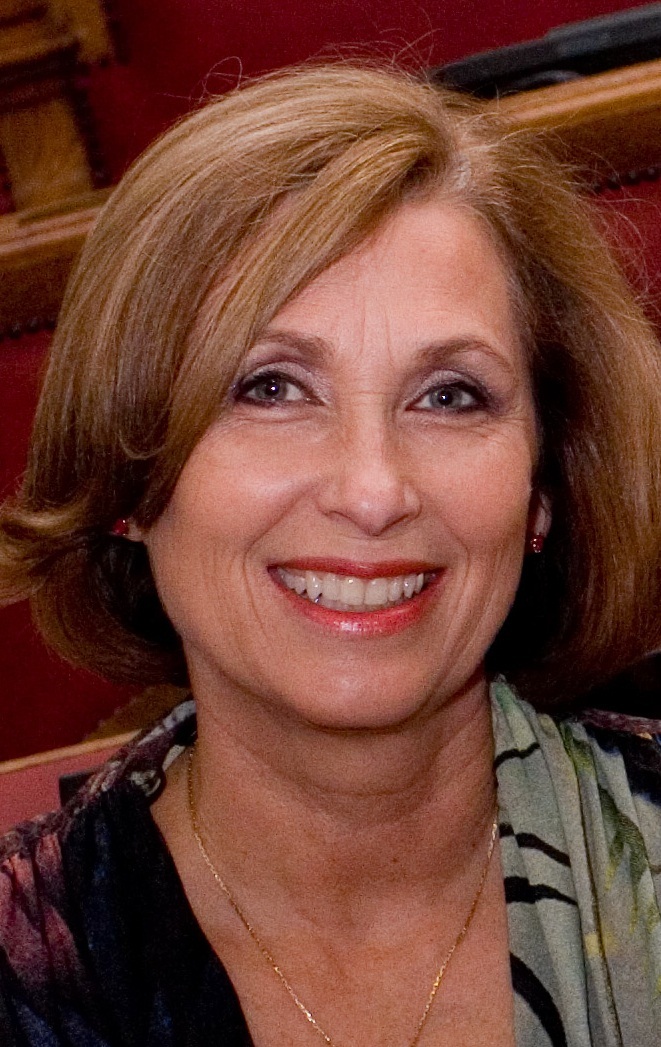 This is how the Washington Post described the home of Dayvon Green, a 23-year-old University of Maryland graduate student who last week killed one of his housemates, wounded a second and then killed himself (“U-Md. Student acted oddly before attack, friends say,” Feb. 14). Green reportedly had a schizophrenia diagnosis. His family said he had been taking medication. This is how the Washington Post described the home of Dayvon Green, a 23-year-old University of Maryland graduate student who last week killed one of his housemates, wounded a second and then killed himself (“U-Md. Student acted oddly before attack, friends say,” Feb. 14). Green reportedly had a schizophrenia diagnosis. His family said he had been taking medication.
This tragedy felt uncomfortably close to home. Just four days before it unfolded, my own 26-year-old daughter experienced a manic episode that triggered psychosis and led to a series of increasingly bizarre activities in the course of a few days. On Monday, she was making a presentation to her class as a university senior. By Saturday, she was hearing voices that commanded her to mutilate herself. In between, she engaged in behaviors that endangered herself and others.
Like the Greens have said about Dayvon, my young adult child has a mental illness diagnosis, and I believed she was taking medication, too. But I don't live with her, and it turns out she’d skipped just enough doses to unleash the mania that which in turn unleashed the psychosis that inevitably commands her to do self-destructive acts. Parents dedicated to nourishing young adults with psychiatric diseases to fulfilling lives cheer when our children are well enough to live independently, but we aren't there to know if they really are sticking to their treatment plans or to see the telltale signs that they aren't.
My daughter’s episode ended benignly compared with the Greens’: She drove her car into a ditch and miraculously hurt nobody, including herself. The crash jolted her sufficiently to realize she was at risk, and iimmediately took the necessary steps to subdue the mania and silence the commanding voices. Her car is gone, but she is already back in class. I am shaken, but I still have my daughter.
Most likely because of symptoms caused by Dayvon's mental illness, the Greens no longer have their son. Nor does the family of Stephen Rane, the 22-year-old English major Green shot and killed outside the house they shared. And the life of Neal Oa, 22, the housemate who survived the shooting, will never be the same.
Parents of young adults with severe mental illness live one day at a time. We are always holding a bit of our breath. Worry for their safety and the safety of those around for them is never far from the surface. We hope for the best - and do our best to help it happen. We know the world is full of people with severe mental illness who are living full lives and making significant contributions.
But we never stop fearing the worst. Dayvon Green’s family had reason to believe the best was still ahead. Instead, the worst happened – the life of someone else's son has ended, another is damaged, their son is gone.
I feel for the Greens and the Rane family and Neal Oa and all the unnamed millions that severe mental illness injures or steals from us. They touch us all.
DORIS A. FULLER
Executive Director
Treatment Advocacy Center
To comment, visit our Facebook page.
Visit our blog archive to read all our recent posts.
Are Mass Killings Increasing?
(Feb. 14, 2013) The high-profile mass killings in Newtown, Aurora, Tucson and elsewhere have raised two questions:
- Are such killings increasing;
- What proportion of them are attributable to persons with severe mental illnesses?
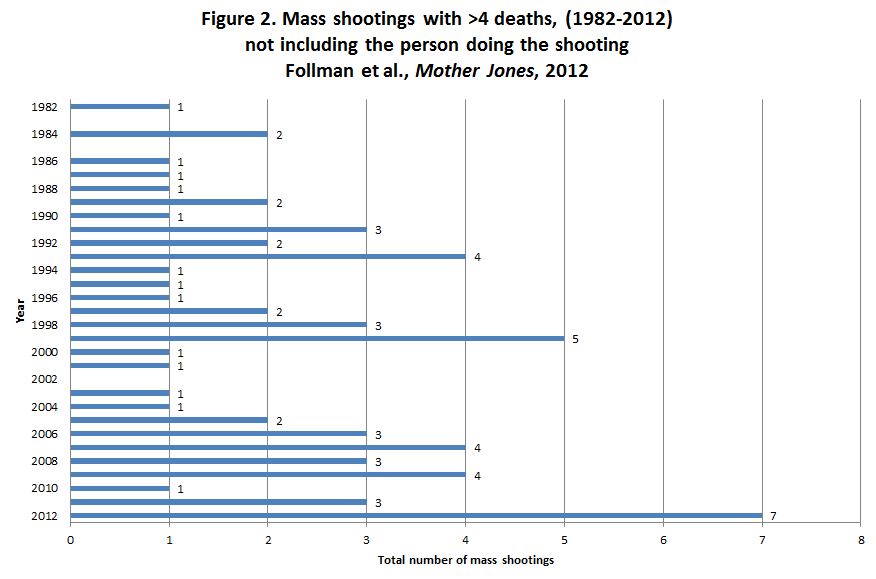 Three studies over the last 15 years indicate that rampage killings are becoming more common and that untreated severe mental illness is associated with about half of them, according to a summary by Dr. E. Fuller Torrey, founder of the Treatment Advocacy Center. Three studies over the last 15 years indicate that rampage killings are becoming more common and that untreated severe mental illness is associated with about half of them, according to a summary by Dr. E. Fuller Torrey, founder of the Treatment Advocacy Center.
- A 1999 University of North Texas study identified 30 mass killings for which extensive information was available. Even though the killings took place over a 50-year period, 70% took place in the 22 years before the study was conducted. Twenty of the 30 perpetrators had definite or probable psychosis.
- A 2000 New York Times survey of 100 “rampage killers” who committed mass killings between 1949 and 1999 found that 73 occurred in the nine years before the newspaper conducted its study. Half the killers had histories of serious mental illness.
- A 2012 Mother Jones survey found that nearly half of the mass shootings from 1982-2012 (29 of 62) took place in the most recent nine years. Seven of the killlings took place in 2012 alone. The authors made no attempt to obtain extensive psychiatric data but reported that “a majority (of the shooters) were mentally ill.”
For the complete summary, read “Are Mass Killings Increasing?”
At the Treatment Advocacy Center, we talk about the connection between violence and mental illness because we believe the way to reduce stigma is to make sure that people with untreated psychiatric disease get the timely and effective treatment needed to prevent tragedy. For more information, read our backgrounder, "Stigma: Violence by seriously mentally ill persons is its major cause."
Toward a National Assisted Outpatient Treatment Demonstration Project
(Feb. 13, 2013) Among the three mental health policy reforms the Treatment Advocacy Center proposed to the president’s task force on gun violence in January was seeding a national demonstration project to foster wider use of assisted outpatient treatment (AOT) for qualifying individuals with severe mental illness.
 “Mental health courts proliferated after the demonstration project funded by the federal government in 2000,” said Doris A. Fuller, executive director. “As a result of that project, these courts have become a widely used vehicle for getting people with severe mental illness into treatment after they commit a crime. “Mental health courts proliferated after the demonstration project funded by the federal government in 2000,” said Doris A. Fuller, executive director. “As a result of that project, these courts have become a widely used vehicle for getting people with severe mental illness into treatment after they commit a crime.
“An AOT demonstration project has the potential to introduce courts and communities to the use of court-ordered outpatient treatment so that people could get into treatment before they commit crimes or suffer other consequences of not receiving timely and effective treatment.”
Forty-five states have laws authorizing the use of AOT, but it is comprehensively implemented statewide only in New York. The proposed demonstration project would provide grants to promote wider use of AOT by seeding up to 100 AOT programs nationwide.
The Department of Justice has deemed AOT to be an effective, evidence-based program that reduces the risks of hospitalization, arrest, incarceration, crime, victimization and violence. Independent study also has shown that it results in mental health cost savings.
YOU can help foster wider use of assisted outpatient treatment to help qualifying individuals with severe mental illness get on the road to recovery.
- READ our project proposal here.
- SEND the proposal to your US congressperson and senator and tell them you support a national AOT demonstration project because it would help save lives and families from the negative outcomes of non-treatment. Be sure to include your personal story about how untreated mental illness impacts your family and would benefit from wider use of AOT.
|
|