My Son Needed More Than Three Days in the Hospital – personally speaking
(Sept. 18, 2014) My name is Nina McDaniel and I am a proud mother and advocate to my 32-year-old son, Michael, who has schizoaffective disorder.
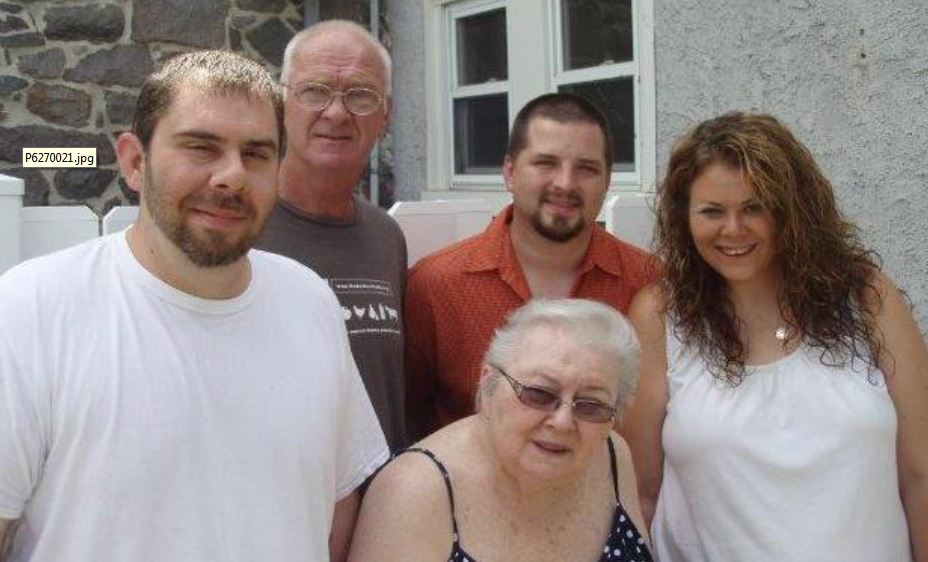 Michael was transferred from prison to the Wernersville State Hospital in 2012. This was the beginning of a new chapter for my son. (Read Parts I and II of Nina’s story) Michael was transferred from prison to the Wernersville State Hospital in 2012. This was the beginning of a new chapter for my son. (Read Parts I and II of Nina’s story)
The residents participate in groups that run like semesters in college and they even have a choice to sign up for classes that interest them. Work is offered and they can choose the amount of hours, getting paid for their time. The hospital is located in a park setting and you can see the architectural history of the buildings. There is one building that was abandoned and I thought to myself if only that building was in use, Michael have had to wait in jail for a bed.
Michael adapted quickly and we started visited him on the weekends. He started working three days per week and I could see his self-confidence growing as he learned to cope with change, developed patience and found an inner strength.
Two years later, Michael is still at Wernersville State Hospital and has become that son I missed so much throughout the past seven years but even better. Even though he says the classes at the hospital are boring, he says “it is a good boring.” He now works at two jobs which give him a sense of accomplishment, purpose and confidence.
He receives an injection every other week and understands the importance of taking medicine despite the painful side effects.
Michael also has off-campus visits to our home. He spends time with his grandmother, exercises and is slowly integrating back into the community. We have taken Michael to the grocery store and he loves scanning the products, buys his own lunch and takes care of his personal matters like going to the social security office.
As a family, we appreciate the small tasks that he can accomplish. Michael is presently preparing for discharge into another program and is doing really well.
There are those who live with severe mental illness that need more than a 3 to 5 day hospital stay to gain insight and education into their illness, and one of those people is Michael.
Nina McDaniel
Mother of Michael
To comment, visit our Facebook page.
Virginia Governor Moves to Insure Severely Ill
(Sept. 17, 2014) In light of the state legislature’s refusal to expand Medicaid, Virginia Governor Terry McAuliffe said he may take regulatory action to ensure 20,000 people with severe mental illness have health coverage, reports the Washington Post (“With Medicaid expansion blocked, McAuliffe unveils modest plan to insure more Virginians,” Sept. 8).
 McAuliffe’s promise comes at a critical juncture. Nearly 4 million people with mental illness reside in the 25 states that have refused to participate in the expansion under the Affordable Care Act, according to a study released last winter by the American Mental Health Counselors Association (AMHCA). McAuliffe’s promise comes at a critical juncture. Nearly 4 million people with mental illness reside in the 25 states that have refused to participate in the expansion under the Affordable Care Act, according to a study released last winter by the American Mental Health Counselors Association (AMHCA).
McAuliffe has fought for Medicaid expansion to provide coverage for the mentally ill, children of low-income state employees and pregnant women, among others. But when the Republican-controlled state legislature “dug in against Medicaid expansion, McAuliffe quietly began exploring other options.”
His plan will ensure coverage for the next six months, but he will need funding approval for $80 million a year from the General Assembly to guarantee coverage continues into the next fiscal year. The total cost is expected to be $160 million annually with half from the federal government.
This is great news for Virginians with serious mental illness and their families because those with serious mental illness are less likely to have health insurance of any kind. And when people with mental illness do gain health insurance, they become healthier and life expectancy increases, said Joe Miller, executive director of the AMHCA.
Even though Virginia needs to do more to ensure that people with severe mental illness have access to timely and effective treatment, McAuliffe’s plan is certainly a step in the right direction.
To comment, visit our Facebook page.
Visit our blog archive to read all our recent posts.
One Year After Navy Yard Tragedy More Must Be Done
(Dec. 16, 2014) Despite some progress at the state and federal levels in the year since the Navy Yard mass killing left 12 dead and 3 wounded, much more change is needed if the nation is to reduce the impacts of untreated severe mental illness on its families and communities. "There is no question the cascade of mass tragedy in recent years has motivated policy makers to propose and, in some cases, enact critical reforms that will increase treatment access for the individuals with untreated mental illness who are most at risk for violence and other consequences of not receiving care," said Doris A. Fuller, executive director. "At the same time, there has been too much talk and not enough action to create the mental health safety net we need to reduce tragedy, including the countless everyday tragedies that don't make headlines but routinely devastate lives and communities." Fuller cited Rep. Tim Murphy’s " Helping Families in Mental Health Crisis Act" (HR 3717) as a roadmap to the kinds of reform still needed. "The Murphy bill lays out the most meaningful and comprehensive improvements to the treatment system proposed in half a century, designed specifically to help those with the most severe psychiatric diseases," said Fuller. “But after attracting widespread support from members of both parties, law enforcement, the medical community and families grappling with mental illness, the bill’s momentum has been slowed by partisan crossfire.” A handful of states have improved their laws to help prevent tragedies related to untreated severe mental illness in the year since Navy Yard, according to the Treatment Advocacy Center. Most notably:
- Virginia enacted critical reforms to its emergency hospitalization procedures this year, shepherded by state Senator Creigh Deeds, who was stabbed by his mentally ill son Gus on the morning after the 24-year-old was released from an emergency room because the hospital failed to find a psychiatric bed for him. Gus Deeds committed suicide after attacking his father.
- California - which this May experienced its own mass killing in Isla Vista – has undergone a sea change in 2014. Three of the state's largest counties (Los Angeles, San Francisco, Orange) have recently authorized the use of court-ordered “assisted outpatient treatment” (AOT) for qualifying at-risk people with histories of treatment non-adherence.
"At the outset of 2014, only 60,000 Californians lived in counties where AOT was available to people who are most at risk for hospitalization, incarceration, homelessness or other consequences of untreated severe mental illness," Fuller said. "Today, more than 14 million live in counties that have authorized court-ordered outpatient treatment." Despite these and similar steps to increase treatment access in Ohio, Maryland, Massachusetts, New Jersey and elsewhere, Fuller said mental illness treatment reform efforts treatment too often face misguided and misinformed opposition. Too many families seeking care for loved ones are still told that nothing can be done until they hurt themselves or someone else. "There has been progress since the Navy Yard shooting and other recent tragedies, but our treatment laws are too often still outdated and ineffective. More can and must be done."
Mental Health Bill Would Help Families Before Crisis Strikes – guest column
(Sept. 15, 2014) At age 27, my son's life and the lives of his family changed forever. He was transformed into a different person. His behavior became weird, psychotic and delusional. He was obsessed with neurotic religious beliefs: He thought that God had anointed him a prophet and commissioned him to write another book for the Bible.
 He believed he was in the witness-protection program, and federal agents were trying to assassinate him because he was in possession of top-secret information that would take down important people in the government if he went public. He developed an unhealthy fixation for the president and made many attempts to get into the White House. He thought he had a top-secret White House security clearance, and that the FBI had issued him a special gun permit. He believed he was in the witness-protection program, and federal agents were trying to assassinate him because he was in possession of top-secret information that would take down important people in the government if he went public. He developed an unhealthy fixation for the president and made many attempts to get into the White House. He thought he had a top-secret White House security clearance, and that the FBI had issued him a special gun permit.
There were days he actually believed he was the president, living in the White House. He was in complete denial that anything was wrong with him. It took the assault of a police officer to get him committed to a hospital where he was diagnosed with bipolar disorder.
My son was so ill my family feared he would never recover. But recover he did after 32 days of treatment with forced medications. He suffered four additional, prolonged bipolar-manic episodes, each episode preceded by his decision to stop taking his medication. Each episode more severe than the previous and of a longer duration. The longer duration was because of judges at commitment hearings who ruled time and time again that my son was not a danger to himself or others — oftentimes against the recommendation of the treating psychiatrist.
These judges were complying with state laws that set strict controls regarding hospitalization with forced treatment, restricting it to circumstances when a person is suicidal or homicidal. These laws force families to watch their loved ones deteriorate mentally until they reach the crisis stage and meet the commitment criteria of being a danger to themselves or others. By that time, it is sometimes too late.
Each time my son was allowed to go untreated for long periods of time, he sustained further brain damage. His downward course was aided by an ineffective legal system that continually protected his civil right to refuse treatment until he became suicidal or homicidal. This illness left him trapped in a body ravaged by irreversible damage from untreated bipolar disorder. Sadly, he was allowed to reach the crisis stage one time too many. His third attempt at suicide was successful.
Following the Newtown shootings, Rep. Tim Murphy (R-Pa.), a clinical psychologist by training, raised awareness of the need to fix our broken mental-health system and led the charge on Capitol Hill for reform. He spent a year reviewing federal mental-health policies and last December introduced the Helping Families in Mental Health Crisis Act, HR3717.
This bill emerged from a series of hearings on mental-illness-treatment issues before the House Energy and Commerce Subcommittee on Oversight and Investigations, which Murphy chairs. These hearings, according to Murphy, "revealed that the approach by the federal government to mental health is a chaotic patchwork of antiquated programs and ineffective policies across numerous agencies."
Families for decades have had to work within the constraints of our broken, dysfunctional mental-health system that fails the sickest — those people who need treatment the most, but are too sick to recognize their illness, and refuse treatment. This bill addresses the obstacles families face when trying to save loved ones from untreated serious mental illness. It would expand access to treatment for individuals who miss out on mental-health services because they are too ill to seek them.
Serious psychiatric disorders, such as bipolar, schizophrenia and severe depression, require medical intervention. They are treatable. They do not have to result in suicide or mass shootings. Helping Families in Mental Health Crisis is the most comprehensive mental-health-reform legislation to be introduced in 51 years. It will lead to treatment before tragedy.
Dottie Pacharis
Author of "Mind on the Run - A Bipolar Chronicle"
This piece originally appeared in the Orlando Sentinal.
To comment, visit our Facebook page.
Visit our blog archive to read all our recent posts.
Reports of Abuse by Mentally Ill Inmates in Michigan
(Sept. 11, 2014) Mentally ill inmates at Michigan’s only women’s prison are “deprived of food and water for days and hog tied naked as punishment,” detail eyewitness reports complied by the American Civil Liberties Union of Michigan (“Mentally ill inmates at Michigan’s women’s prison report they were hog tied naked, deprived of water,” ThinkProgress, Sept. 8).
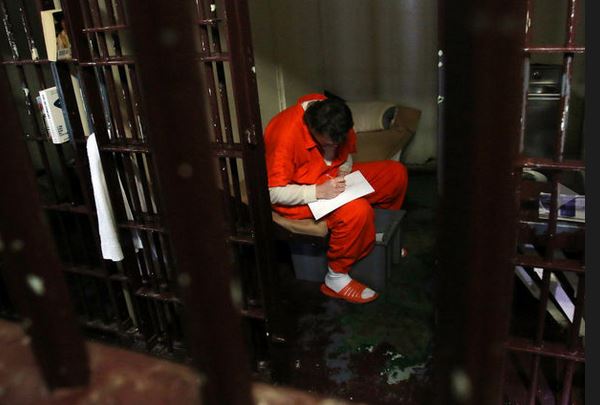 Inmates with mental illness “are being treated so inhumanely that we believe many corrections experts would characterize their experience as a form of torture,” the ACLU said. One inmate was “crying naked on the floor and unable to move because her feet were cuffed to her hands behind her back.” Inmates with mental illness “are being treated so inhumanely that we believe many corrections experts would characterize their experience as a form of torture,” the ACLU said. One inmate was “crying naked on the floor and unable to move because her feet were cuffed to her hands behind her back.”
The abuses occurred against inmates in solitary confinement in particular, which “punishes people for having a brain disorder and then exacerbates their conditions by creating an environment that is totally inconsistent with effective therapy,” the Mental Health Association of Michigan told ThinkProgress.
Reports of abuse of mentally ill inmates at the hands of corrections officers are becoming far too normal. While shocking, these eyewitness reports are no longer surprising.
In April, the Treatment Advocacy Center noted that the consequences of failing to treat mentally ill inmates are “usually harmful and sometimes tragic.” Without proper intervention and treatment, symptoms worsen of mental illness often worsen, leaving inmates vulnerable to victimization and other abuses.
The same report also found there are now ten times more individuals with serious mental illness in prisons and jails than there are in mental institutions.
Until we resolve to use proven diversion tactics, or provide court-ordered treatment before people with serious mental illness end up in jail in the first place, we will continue to see reports that mentally ill inmates are enduring practices that the Justice Department have deemed “cruel and unusual.”
To comment, visit our Facebook page.
Visit our blog archive to read all our recent posts.
A Young Man’s Death Spurs Interest in Crisis Intervention Training
(Sept. 9, 2014) Following the shooting of 18-year-old Joseph Jennings last month, who reportedly suffered from suicidal thoughts, depression and delusions, law enforcement in Kansas has renewed its interest in crisis intervention training (CIT) for police officers (“Ottawa shooting renews focus on crisis intervention,” Kaiser Health News, Sept. 4).
 “They had to have known that he was not alright,” Jennings’ aunt, Brandy Smith, said. “But . . . I want this to be about police officers getting the knowledge and training they need so that this doesn’t happen again and no other family has to go through what we’ve been through.” “They had to have known that he was not alright,” Jennings’ aunt, Brandy Smith, said. “But . . . I want this to be about police officers getting the knowledge and training they need so that this doesn’t happen again and no other family has to go through what we’ve been through.”
The day before the shooting, Jennings attempted suicide and spent that night in the psychiatric unit at Ransom Memorial Hospital. When he returned home the following day he was still agitated, according to his aunt.
That evening he walked to the local grocery store only one block away from his aunt’s house.
When Smith heard the police appeared ready to shoot her nephew in the parking lot, she ran barefoot to the scene. “I was screaming at them (police) at the top of my lungs: ‘Don’t shoot him! He’s suicidal! That’s Joseph Jennings! Don’t shoot him!’”
But it was too late.
Sadly, tragedies like these are no longer surprising. The responsibility of law enforcement officers for seriously mentally ill persons has increased sharply in recent years and is continuing to increase.
This makes tactics like training police on how best to respond to people in a psychiatric crisis even more important.
But in Kansas, only 1 in 4 law enforcement officers have received CIT training. Our report, ““Prevalence of Mental Health Diversion Practices: A Survey of the States,” awarded the state a C- for its use of CIT programs and other diversion tactics that have been consistently found to reduce deadly encounters, arrests and incarcerations that sometimes occur when people with severe mental illness meet law enforcement.
Homicides, like Jennings’, are a symptom of our broken mental illness treatment system. Ultimately, tragedies like these would be less likely to occur if people were getting treatment when they needed it.
To comment, visit our Facebook page.
Visit our blog archive to read all our recent posts.
“Better off Without Antipsychotics?”
(Sept. 8, 2014) It is not news that some psychiatrists think some patients are better off without antipsychotic drugs, writes Dr. Torrey in Psychiatric Times (“ Better off without antipsychotic drugs,” June).  “It has been known for a century that some individuals with schizophrenia recover and do not need ongoing treatment,” he writes. Citing two studies, Dr. Torrey illustrates why the key word is “some.”
- In 1939 Dr. Harry Stalker published outcome data from 3551 patients with schizophrenia that showed 21 percent were in “complete remission and another five percent had improved or were living at home.”
- A 1978 study by Dr. Joseph Stephens shows similar results. Stephens found that after 10 years, “29 percent of patients with schizophrenia were in complete remission.”
These scenarios “view the glass as half full,” writes Dr. Torrey. “But it is equally important to look at it as half empty … It is important to note that antipsychotic medications improve the quality of life for most, but not all, patients with chronic schizophrenia and most of them will require medication for many years.”
Torrey again points to Stalker’s 1939 research that also found 67 percent of the patients with schizophrenia showed little to no improvement and five percent had died. He directs the audience to later research from Stephens showing similar results.
“So yes, it has been clearly established for many years that some patients are better off without antipsychotic drugs,” Torrey writes. But in recent years, “advocates have interpreted this to suggest that most individuals with schizophrenia are better off without antipsychotic drugs.”
But, Torrey argues, during a time when approximately 1.3 million people with schizophrenia remain untreated, we need look no further than our homeless shelters, bus stations and jails and prisons to determine whether these individuals are better off without treatment.
To comment, visit our Facebook page.
Visit our blog archive to read all our recent posts.
Singer Demi Lovato Joins NAMI Convention
(Sept. 4, 2014) Demi Lovato, the 22-year-old singer who has been candid about her struggle with bipolar disorder, was on the schedule for the opening day of sessions at the National Alliance on Mental Illness (NAMI) 2014 National Convention in Washington, DC.
 “I’ve seen some dark times, especially with the depressive phase of the illness,” Lovato has said. "Our society tends to shame or ignore people with mental illness, and I want to change that too. I want people to expect more from our society and for their futures." “I’ve seen some dark times, especially with the depressive phase of the illness,” Lovato has said. "Our society tends to shame or ignore people with mental illness, and I want to change that too. I want people to expect more from our society and for their futures."
Following the death of actor and comedian Robin Williams, Lovato spoke out about treatment, calling herself “living proof that someone can live, love and be well with bipolar disorder when they get the education, support and treatment they need.”
"I want to shine a light on the people out there who, like me, are learning to live well with mental illness by getting the right diagnosis and the right treatment plan," the singer said (“Demi Lovato speaks out against the ‘shame and silence’ around mental illness,” E! News, Aug. 15).
If you are one of the thousands at NAMI 2014, please come visit us at Booth 410 in the exhibit hall. Members of our advocacy and communications teams will be on hand whenever the hall is open to introduce themselves, provide up-to-date information on critical developments in mental illness treatment laws and policies and answer your questions.
If you aren’t in Washington for the convention, follow our live posts on Twitter and other reports on Facebook.
To comment, visit our Facebook page.
Visit our blog archive to read all our recent posts.
RESEARCH: Treating Schizophrenia Sooner Rather than Later
(Sept. 3, 2014) The Washington Post recently devoted nearly half of its front-page space to an article about a “promising new approach” to intervening earlier in the development of schizophrenia (“Promising new approach helps curb early schizophrenia in teens, young adults,” Aug. 6).
 The approach involves an intensive two-year course of socialization, family therapy, job and school assistance and, in some cases, antipsychotic medication. The reported goal is to “bombard” teens and young adults with help – before they have had a psychotic episode. The approach involves an intensive two-year course of socialization, family therapy, job and school assistance and, in some cases, antipsychotic medication. The reported goal is to “bombard” teens and young adults with help – before they have had a psychotic episode.
With the continuing disintegration of America's mental health system, the need for earlier detection and treatment for severe mental illness gets bigger by the day. After all, if we are not going to treat people once they become gravely ill, it becomes all the more critical to intervene before they are. And we’ve all seen the benefits of early detection and treatment of cancer, heart disease and a host of other medical conditions.
In this vein, NIMH’s RAISE (Recovery After an Initial Schizophrenia Episode) project is nearing completion. While final results haven't yet been reported, the agency has said that early findings look promising. The early-intervention model reported in the Washington Post appears to be a different one; similar outcome studies to the ones being conducted under the NIMH will be essential to validating it.
Regardless of what those studies eventually conclude, however, the underlying message that disorders with psychotic features respond to treatment is one that can’t be repeated enough. If the public and policy makers know that treatment works, maybe they will be more motivated to fix the system that could – and should – be providing it.
In the meantime, news of additional new tools that may someday alter and improve the course of severe psychiatric disease is good news indeed.
To comment, visit our Facebook page.
Visit our blog archive to read all our recent posts.
Success of AOT in New Jersey “Beyond Wildest Dreams”
(Sept. 2, 2014) Assisted outpatient treatment in New Jersey is showing significant success, according to an early analysis of what New Jersey calls “Involuntary Outpatient Commitment.”
 New Jersey's involuntary outpatient commitment (IOC) law passed in 2009 gives judges the authority to order severely mentally ill people into outpatient treatment under some circumstances. New Jersey's involuntary outpatient commitment (IOC) law passed in 2009 gives judges the authority to order severely mentally ill people into outpatient treatment under some circumstances.
“The success we have seen is beyond our wildest dreams,” said Kim Veith, director of clinical services at Ocean Mental Health Services in the Garden State ("NJ Officials: Involuntary commitment program works," NJTV News).
The achievements for clients with severe mental illness participating in IOC include reduced hospitalization and emergency room visits, shorter inpatient stays, reduced crime and incarceration and reduced homelessness.
Of clients who were homeless prior to participating in the AOT program run by the Mental Health Association of Essex County (MHAEC):
- 20 percent are now in supportive housing;
- 40 percent are in boarding homes;
- 20 percent are living successfully with family members.
The same program has also reduced arrests among clients. Of crimes that were committed while on IOC all were misdemeanors compared to the clients’ histories “of more numerous and more serious crimes” prior to participating in the program.
Results also show that fewer than half of the clients were re-hospitalized one time and only one client was re-hospitalized twice.
Ultimately, “IOC gives us a way to watch people who tend to be dangerous and give them the support they need,” said Veith.
Programs in other counties also show significant achievements. A woman with paranoid schizophrenia and a history of noncompliance is now taking injectable medication, is stabilized and enrolled in college, said Elizabeth Cruickshank, a clinician at the Family Guidance Center of Warren County of one of her patients.
Clients have good things to say, too.
“I learned that I’m smart, that I have a good personality and that I need my medication or I go off the wall,” said an IOC client at the Jersey City Medical Center of his experience with mandatory outpatient commitment.
The Christie administration dedicated an additional $4.5 million to fund IOC in all 21 New Jersey counties last March, so we expect even more positive results ahead.
To comment, visit our Facebook page.
Visit our blog archive to read all our recent posts.
|
|