Assisted Outpatient Treatment for Homeless Individuals with Severe Mental Illness
(Dec. 1, 2014) Chris walks his route through Georgetown every day, picking through the various trash cans looking for half eaten sandwiches or pizza. He picks off his finds and eats them right there to the horror of any nearby witnesses. In the nearly thirty years that I have been working with homeless people I have learned that many of the people who live on the streets can be diagnosed with various types of brain disorders that drastically impair their ability to function in modern society.
 The worst part is they usually do not understand that the bizarre thoughts and suspicions they perceive are not reality. I cannot tell you how many times I have heard from mental health professionals in DC, "If he doesn’t want help and he isn’t holding a gun with his finger to the trigger there is nothing I can do." The worst part is they usually do not understand that the bizarre thoughts and suspicions they perceive are not reality. I cannot tell you how many times I have heard from mental health professionals in DC, "If he doesn’t want help and he isn’t holding a gun with his finger to the trigger there is nothing I can do."
When I talk to Chris about treatment he becomes angry, hostile and sometimes enraged, but never violent. Everything about his behavior seems dangerous but he never threatens to hit me or anyone else and so he is never considered a danger. Our hands are tied. We need tools to reach people like Chris, whose mental illness prevents them from understanding that they need help. Their lives would be so much better with treatment.
Gunther Stern
Georgetown Ministry Center
This article originally appeared in the Washington Psychiatrist.
To comment, visit our Facebook page.
Visit our blog archive to read all our recent posts.
A Sister Pleads to Save Her Brother’s Life – personally speaking
(Nov. 26, 2014) My brother Scott is a mentally ill man with schizophrenia set to be executed in Texas on December 3. Even though the Supreme Court has held that the Constitution forbids the execution of severely mentally ill individuals who do not understand the reason for their punishment, Scott will die (next week) unless Governor Rick Perry commutes his sentence to life in prison.
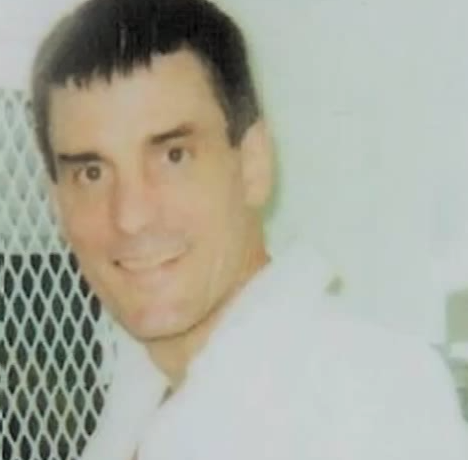 Now 56, Scott still suffers severely from schizophrenia. He was diagnosed in 1978 and later began having delusions that he was engaged in spiritual warfare with Satan. Over the years he became obsessed with the idea that the devil was in his house. In 1992, he suffered a psychotic break and killed his wife’s parents. Now 56, Scott still suffers severely from schizophrenia. He was diagnosed in 1978 and later began having delusions that he was engaged in spiritual warfare with Satan. Over the years he became obsessed with the idea that the devil was in his house. In 1992, he suffered a psychotic break and killed his wife’s parents.
Having a brother on death row is like having a terminally ill family member. But there’s one big difference: we can’t stop a terminal illness, but we can stop Texas from killing a mentally ill man.
I started a petition asking Governor Rick Perry to spare Scott’s life by commuting his sentence to life in prison. Click here to sign it.
I know it’s hard to see beyond the fact that Scott took two lives – but he suffers from a severe illness that changed the way his mind works. He doesn’t understand fact from fiction. He’s still my big brother, the strong and handsome sailor who served in the Navy.
Despite his long history of mental illness, the judge did not allow Scott’s medical records as evidence so jurors could not take his mental illness into account. Scott was even allowed to represent himself at trial. He wore a TV-western cowboy costume in court and called hundreds of people as witnesses – including the Pope, John F. Kennedy, and Jesus Christ. He even passed up a plea deal that would have saved his life.
Scott committed a terrible crime but he is not a cold-hearted killer. He is a very sick person who has suffered from severe mental illness for more than 30 years. In the decade leading up to the killings he was hospitalized more than a dozen times due to psychotic behavior.
Please sign my petition asking the Texas Board of Pardons and Paroles to recommend that Scott’s death sentence be commuted to life in prison and Governor Rick Perry to grant the commutation.
-Vicki Panetti-
"Will Texas Kill an Insane Man?" – Read what the New York Times had to say about Scott Panetti’s death sentence.
To comment, visit our Facebook page.
Visit our blog archive to read all our recent posts.
Requiring Dangerousness is Dangerous
(Nov. 25, 2014) Donna Pitcher believes the mental health system failed her son. She tried for years to have him committed to a psychiatric facility when he seemed to pose a threat to himself or someone else (“Biddeford arson case raises questions about Maine’s commitment process,” Press Herald, Nov. 16).
 “He stated that he hears things, that messages are coming to him, in and out of his brain, from far away,” Pitcher said. But each time she took him for hospitalization he presented as non-threatening. “He stated that he hears things, that messages are coming to him, in and out of his brain, from far away,” Pitcher said. But each time she took him for hospitalization he presented as non-threatening.
Now Collins stands accused of setting fire to an apartment building in Maine that left two dead and displaced dozens more.
It is not surprising that Collins wasn’t admitted to a psychiatric facility despite the fact that he clearly needed treatment. In Maine, inpatient commitments are rarely or never pursued on grounds other than imminent risk of suicide or violence.
The state does not have a need-for-treatment standard for court-ordered outpatient treatment or inpatient treatment, under which Collins most likely would have qualified for treatment.
“We can’t keep letting people fall through the cracks, especially when it leads to tragedy,” said Rep. Richard Malaby (R-Maine).
We couldn’t agree more.
To comment, visit our Facebook page.
Visit our blog archive to read all our recent posts.
Josh Needed Treatment, Instead He Got Punishment
(Nov. 24, 2014) Years before Josh Francisco, 39, hung himself in his jail cell, his family had desperately sought treatment for his mental illness (“Family devastated by son’s suicide in Farmington jail,” St. Louis Post-Dispatch, Nov. 8).
“We were just powerless to help,” said his mother, Annie Francisco. “We loved him the most of anybody and our hands were tied . . . . Josh would not believe he had an illness”
In the years leading up to Francisco’s final arrest, his family sought psychiatric hospitalization, but Josh was “convinced that psychiatrists and pharmaceutical companies were in cahoots to dispense medicine and make huge profits,” she wrote.
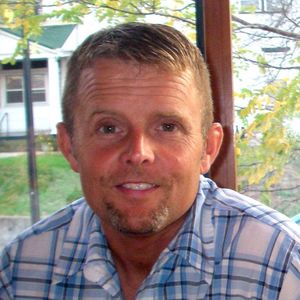 When he was finally admitted into a hospital for treatment, he was released as soon as he became stable only two days later. Francisco became stuck in the familiar cycle of homelessness, hospitalization, stabilization, release, decompensation and sometimes arrest. When he was finally admitted into a hospital for treatment, he was released as soon as he became stable only two days later. Francisco became stuck in the familiar cycle of homelessness, hospitalization, stabilization, release, decompensation and sometimes arrest.
“His illness was a cruel one in that the sicker he became, the more convinced he became that there was nothing wrong with him,” his mother wrote in a letter to Pete Earley.
In the February before his death, Josh was returned to jail to await a mental competency hearing. During his time in jail, he refused to take his medication (Read our report on state laws governing medication in jails and prisons).
Like many other people with severe mental illness who are untreated and ill-equipped to handle the harsh prison environment, Francisco ended up in solitary confinement. In his cell alone for weeks on end, “the illness consumed him.”
“Josh needed help, instead he got punishment,” Francisco’s mother said following his suicide.
There are now 10 times as many people with severe mental illness in our jails and prisons than receiving treatment in a psychiatric hospital.
To prevent these needless tragedies we must maintain a functioning public mental health system, reform our treatment laws to eliminate barriers to timely treatment and ensure that if people with a mental illness do end up in prison, they receive appropriate and necessary medical care, just as inmates with other medical illnesses already do.
To comment, visit our Facebook page.
Visit our blog archive to read all our recent posts.
What is Severe Mental Illness Anyway? – personally speaking
(Nov. 20, 2014) When I hear or read about the opinions of people opposed to psychiatry, antipsychotic medication or assisted outpatient treatment, I often think that we are talking about different things and different people.
 Sometimes I think that those opposed don’t even acknowledge the existence of people like me. I suffer from a serious brain disease that has been diagnosed as schizophrenia. Sometimes I think that those opposed don’t even acknowledge the existence of people like me. I suffer from a serious brain disease that has been diagnosed as schizophrenia.
When I talk about treatment, I am speaking about people with serious mental illness (a psychiatric brain disease). I put schizophrenia, severe bipolar disorder, schizoaffective disorder and severe clinical depression into this group. Those of us in this group experience psychotic episodes that include hallucinations and delusions, severe emotional swings and sometimes a strong desire to end all of our suffering once and for all.
I often suspect that when speaking about mental illness, some people are actually referring to those with much more moderate, less life-threatening symptoms. These people may have a “psychiatric disability” rather than a brain disease.
They might benefit from counseling, behavioral therapy or maybe even light doses of medication. But their diseases are not nearly as debilitating or life threatening as those with serious mental illness.
There is growing evidence that diseases like mine are largely physical in nature and cause. They are not caused by poor parenting, stress or extremely traumatic life events. They cannot be overcome by will power and are not related to a person’s character or intelligence, but instead require a combination of pharmacological and social support.
It stands to reason that treatments appropriate for people like me with serious brain diseases are not as appropriate for those less serious mental illnesses.
I think that much of the raging controversy surrounding treatment issues involving mental illness could be lessened if we could just agree on who and what we are talking about.
Joseph Bowers
Author of Life Under a Cloud: The Story of a Schizophrenic
Purchase a copy of the book here.
To comment, visit our Facebook page.
Visit our blog archive to read all our recent posts.
Caring for a Son with Schizophrenia: Part 2
(Nov. 19, 2014) In early 2012, Zac stopped taking clozapine, an antipsychotic with many unpleasant side effects. In April, he announced "I'm crippled," and slipped into bed in the middle of the day. He complained of pulverized ankles, a brain tumor and a broken back. "I'll get up when I'm healed," he told Laura.
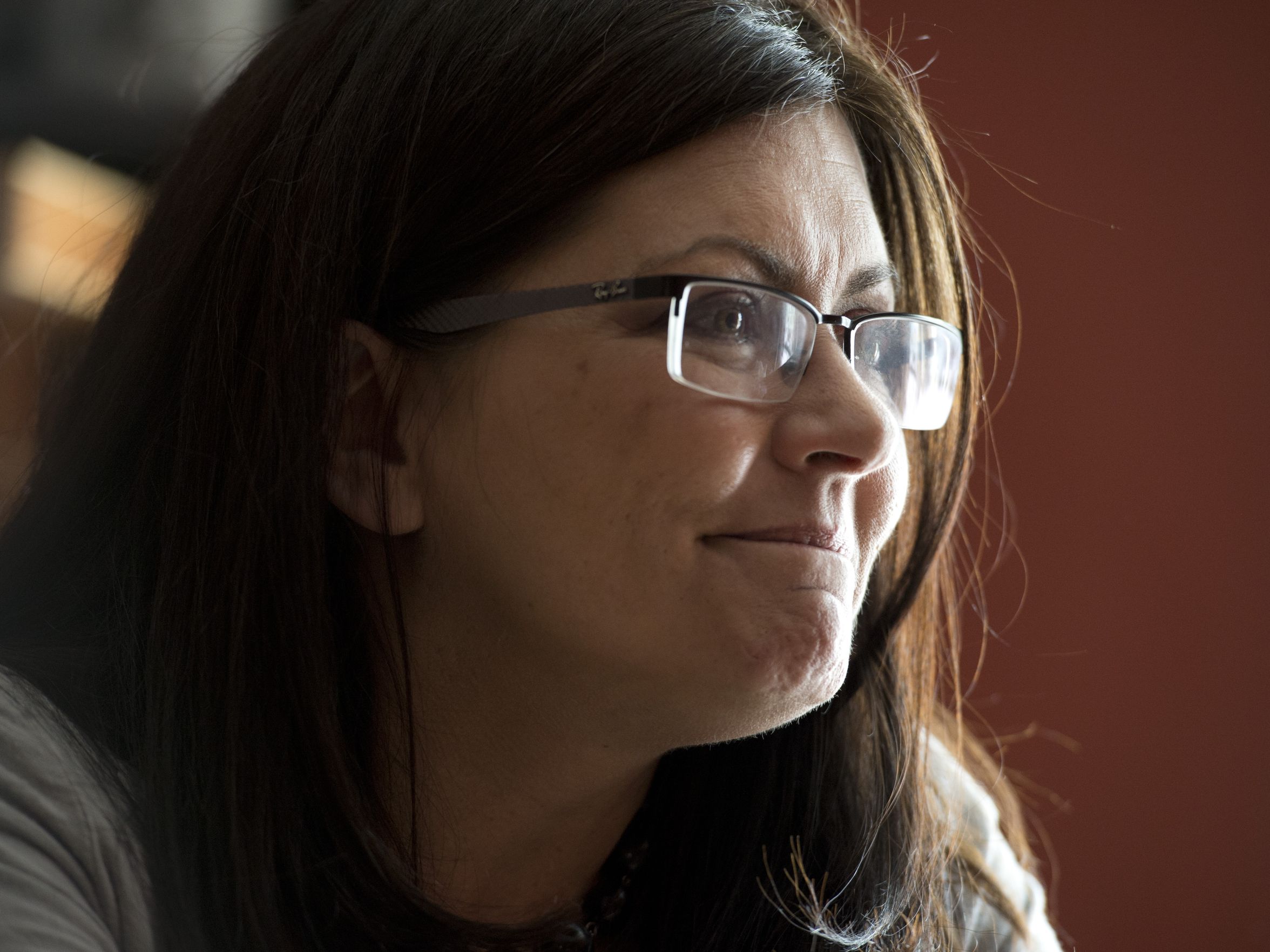 He virtually quit eating, because he didn't trust anyone to bring him uncontaminated food, and drinking, because the water supply was poisoned. He used the toilet only if Laura helped him there. He virtually quit eating, because he didn't trust anyone to bring him uncontaminated food, and drinking, because the water supply was poisoned. He used the toilet only if Laura helped him there.
He smelled. He refused to change clothes. His dehydrated lips were crusty and cracked. "I sat by his bed, putting ice chips in his mouth and wiping his face, begging him, 'Make a good decision for yourself. See a doctor,'" Laura recalls. But he was 20. She couldn't make him.
Two weeks later, she slipped out to the courthouse to appear before a judge, who ordered Zac hospitalized for evaluation. Police came and escorted him — shaking, weak, filthy — into a squad car.
But he was not treated for another 13 days. There were two hearings at the hospital, one to determine if Zac was competent to make decisions (no) and the other to determine if he was sick enough to be forcibly treated (yes).
Zac spent three months in the hospital. Laura's inability during that time to help plan Leah's wedding epitomized what the mother calls "the sick kid syndrome. He gets all the attention.'' (Two years later, on the day Leah went into labor, Laura was rushing Zac to the hospital.)
In July, Zac was released. He was able to put on a suit and walk his sister down the aisle. He seemed fine.
In August he moved with friends into an apartment.
In October he stopped talking olanzapine, a powerful antipsychotic that he said was making it hard to swallow.
In November, claiming he had spiders in his throat and stomach, he was readmitted to the Johns Hopkins schizophrenia unit. It was his 10th hospitalization.
Read the entire story from Rick Hampson in USA Today.
To comment, visit our Facebook page.
Visit our blog archive to read all our recent posts.
Caring for a Son with Schizophrenia: Part 1
(Nov. 18, 2014) She says she's lucky, even though her son's mental illness has driven her to bankruptcy, sidetracked her career and left her clinically depressed. She's lucky, even though his illness cost her the time to plan her daughter's wedding and the money to pay for it. Even though her only friends now are ones who accept last-minute cancellations of long-made plans. Even though she can't recall the last time she went out on a date.
 Lucky, even though her son has been hospitalized 13 times in six years. Even though he's repeatedly called 911 with fantasies – a gunshot wound, a heart attack. Even though he has fantasies (he's rich), hallucinations (he's being followed) and delusions (Mom is a robot). Even though he's slept with a butcher knife under his pillow. Lucky, even though her son has been hospitalized 13 times in six years. Even though he's repeatedly called 911 with fantasies – a gunshot wound, a heart attack. Even though he has fantasies (he's rich), hallucinations (he's being followed) and delusions (Mom is a robot). Even though he's slept with a butcher knife under his pillow.
Laura Pogliano calls herself lucky even though Zac, her dear boy, has lived all his young adult life with schizophrenia.
Her gratitude makes sense only when you consider the state of America's system of mental health care.
In a series of stories this year, USA TODAY has detailed the human and financial cost of caring so little about the nearly 10 million Americans who are seriously mentally ill. It's a cost borne disproportionately by patients' families, and it is crushing many of them.
About 40% of the most disabled mentally ill are cared for by relatives — but not forever. "In the end, most of them bail out. They can't take it any longer,'' says Doris Fuller of the Treatment Advocacy Center, which wants to make it easier to legally compel the recalcitrant mentally ill to accept treatment.
Families can force their psychotic members to enter an institution or receive treatment only by proving they're dangerous to themselves or others. Even then, a shortage of facilities ensures that patients often are discharged prematurely. And families face exorbitant out-of-pocket costs for all but the most basic care.
So Laura Pogliano feels lucky that she's been able to hang in, lucky that Zac is not living in jail or under a bridge.
Count her blessings: Zac's illness developed before he was 18, giving her legal control at the outset. He does not refuse his anti-psychotic medication. When he needs to be hospitalized, he usually does not object or exercise his right to deny Laura access to his medical caregivers and information.
For the past two years most of his medical bills have been covered by Medicare disability. He lives minutes from excellent psychiatric care at Johns Hopkins University. He is not homicidal or suicidal.
Despite her relative good fortune, Laura says she can never move forward because her son never stops dying. "Twice a year, right in front of me, he disappears into psychosis, and there is very little left of who he is. Then medicine resurrects him for a few months, I have much of my child back, then he dies again.''
Although she mourns the life Zac has lost — sports, pals, girlfriend, college — at 49, she also wonders: "What happened to my life?''
Read the entire story from Rick Hampson in USA Today.
To comment, visit our Facebook page.
Visit our blog archive to read all our recent posts.
Albany Psychosis – guest commentary
(Nov. 17, 2014) The story of Gregory Seifert represents everything wrong with New York’s mental health system. Last year, while touring the Erie County Holding Center—better known as the Buffalo Jail—I observed him quietly hallucinating in his cell, probably communicating with his superiors at the CIA, where he claimed to work.
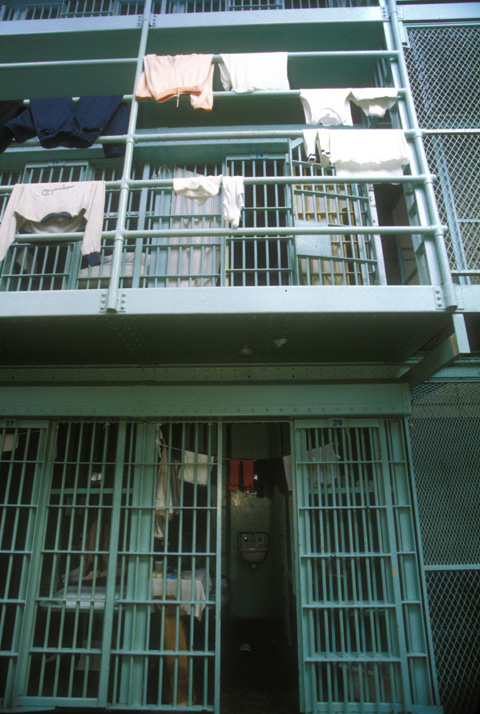 Police had arrested him 14 months earlier for cutting down three wooden power poles with a chainsaw, terminating power to 6,800 homes in suburban Buffalo in the dead of winter. Like most individuals with chronic paranoid schizophrenia, he doubtless had a logical (in his mind) reason for his actions: perhaps his voices told him that cutting off power would prevent a tsunami from Lake Erie from sweeping over Buffalo. When the police questioned him, though, Seifert denied everything. “I know this sounds weird,” he said, “but my cloned twin did it.” Police had arrested him 14 months earlier for cutting down three wooden power poles with a chainsaw, terminating power to 6,800 homes in suburban Buffalo in the dead of winter. Like most individuals with chronic paranoid schizophrenia, he doubtless had a logical (in his mind) reason for his actions: perhaps his voices told him that cutting off power would prevent a tsunami from Lake Erie from sweeping over Buffalo. When the police questioned him, though, Seifert denied everything. “I know this sounds weird,” he said, “but my cloned twin did it.”
Seifert hadn’t always heard voices. He had graduated from college with a degree in finance, got married, had four children, and held down a good job. But during his thirties, he suffered the onset of paranoid schizophrenia, and, worse, he had no awareness of his illness—a condition called anosognosia, which results from the disease’s effects on the parts of the brain we use to think about ourselves. From there, it was all downhill. As described vividly by Matthew Spina in the Buffalo News, Seifert lost his job and family, became homeless, set fire to his car (he thought it contained devices to spy on him), and was psychiatrically hospitalized for brief periods in community hospitals seven times, including just two weeks before chainsawing the poles. He mostly refused medication. After all, he thought he was fine.
Seifert’s stay in the Buffalo Jail was a difficult experience for him and everyone else there. Because of his illness, he broke jail rules, trashed his cell, and set fire to pillow stuffing that he had jammed into an air vent, which brought additional felony charges of second-degree arson. Yet he would not have been in jail at all if his schizophrenia had received appropriate treatment.
Tragically, his family’s efforts to get him medical help ran up against New York’s laws, which make the involuntary commitment of adults exceedingly difficult. And even if the laws encouraged commitment, finding a place to treat him would have been hard, too. These days, the Buffalo Psychiatric Center, a state hospital originally built to care for more than 3,500 people like Seifert, only has 190 beds, and they’re invariably full. Buffalo Psychiatric is architecturally a National Historic Landmark, its sandstone Gothic towers once standing as a symbol of the state’s enlightened protection of the sickest patients; they’re now a symbol of the state’s terrible neglect of such patients. Over the last several decades, New York State has downsized not just the Buffalo center but all of its state mental hospitals, which went from having 96,664 beds in 1955 to just 3,300 today—and the number keeps dropping. When the mentally ill do manage to get care, it’s often in the psychiatric units of community hospitals, where federal Medicaid and Medicare cover most of the costs, saving the state money—an incentive to further reductions. Claims that the seriously mentally ill get better care in community hospitals are nonsensical. Most such hospitals aren’t set up to look after the most difficult patients and tend to discharge them as quickly as they can.
The state’s abandonment of Seifert and similarly sick individuals leads to immeasurable human tragedies and very measurable social costs. Once a leader in public psychiatric services, New York State now shows how not to treat the mentally ill.
Dr. E. Fuller Torrey
Dr. Torrey is a founder of the Treatment Advocacy Center and executive director of the Stanley Medical Research Institute
Read the entire piece in the New York City Journal
To comment, visit our Facebook page.
Visit our blog archive to read all our recent posts.
Seventh California County Implements Laura’s Law
(Nov. 14, 2014) Mendocino County supervisors voted unanimously to implement a Laura’s Law pilot program earlier this week, making it the fourth county to adopt Laura’s Law this year, reports the Press Democrat (“Mendocino County to implement Laura’s Law pilot program,” Nov. 12).
 Laura’s Law will give Mendocino a critical lifeline for patients who refuse treatment and end up on the streets, a risk to themselves or others, in jail or worse. Laura’s Law will give Mendocino a critical lifeline for patients who refuse treatment and end up on the streets, a risk to themselves or others, in jail or worse.
The law is named after Laura Wilcox, a university student who was shot to death while she was volunteering in a mental health clinic by a man with untreated schizophrenia. The law was passed to provide a pathway to recovery for the individuals most at risk for violence, incarceration, homelessness and other ills because they struggle to stay in treatment.
Mendocino represents the latest in a wave of California counties to enact Laura’s Law this year. But more work remains. There are still 52 California counties – and many others around the country where individuals with mental illness, their families and their communities are not benefiting from their assisted outpatient treatment (AOT) laws. Here’s hoping they follow the rest of California and put AOT to work making treatment possible for more of their citizens who need help the most.
To comment, visit our Facebook page.
Visit our blog archive to read all our recent posts.
"Where Hell Is Other Patients"
(Nov. 13, 2014) Writing for the New York Times, Dr. Stephen Seager describes rampant patient-initiated violence in psychiatric hospitals across the United States (“Where hell is other patients,” Nov. 10, 2014).
 “At almost every state forensic facility I have encountered, there is an epidemic of assaults by violent patients,” Seager writes. “At almost every state forensic facility I have encountered, there is an epidemic of assaults by violent patients,” Seager writes.
At California’s Napa State Hospital, where Seager works, he witnesses this violence firsthand.
“Over the last three years, four psychiatrists on my inpatient unit have been badly beaten,” he said. “In another recent incident, a patient pummeled another patient with a broken chair leg — fracturing both of the victim’s arms . . . . At times, half the nurses in my unit are on disability from assaults or attempted rape.”
In Maryland the situation isn’t much better. Inpatient units have been described as “lawless environments” by the Baltimore Sun. In Texas, fifteen percent of psychiatric hospital staff are the victims of severe patient assault every year, according to a news report cited by Seager.
And what are the tactics used by officials to reduce patient-initiated violence?
Hospital executives in New York suggest the value of humor to calm patients. Other strategies include “the use of wings, water beds with vibration and music, rides around the perimeter in a car and heavily padded sumo suits.”
But these are not real solutions, Seager argues. Instead, judges should “require that patients accept therapy and medication.” As it stands, many states allow patients to refuse therapy and medication despite being court-ordered into the hospital for treatment.
The ultimate goal is to create psychiatric hospitals where patients with mental illness go to get better, rather than, “a place of hopelessness and despair,” as one patient described his hospital to Seager.
At the Treatment Advocacy Center we are working tirelessly to change this situation for patients and staff.
We research and report on the inhumanity of the system Seager describes. But we need more help. We need more people prepared to join their voices to ours and Seager’s. We need more legislators to champion reforms to create a mental illness treatment system that works for everyone.
To comment, visit our Facebook page.
Visit our blog archive to read all our recent posts.
|
|