Police and Sheriffs Are Overwhelmed – personally speaking
(Jan. 27, 2015) There is no question that law enforcement officers are increasingly the ones responding to people with mental illnesses who are in crisis.
 I remember one story in particular. Late one evening multiple motorists swerved to avoid a person walking down the road into oncoming traffic. The police were called and when they arrived they found a man standing on a bridge guardrail. Apparently the voices in his head told him to jump off the bridge. Two officers, the only two officers on duty in this particular jurisdiction, spent several hours with one person getting him one step closer to a better quality of life. I remember one story in particular. Late one evening multiple motorists swerved to avoid a person walking down the road into oncoming traffic. The police were called and when they arrived they found a man standing on a bridge guardrail. Apparently the voices in his head told him to jump off the bridge. Two officers, the only two officers on duty in this particular jurisdiction, spent several hours with one person getting him one step closer to a better quality of life.
I also know of one individual in particular who in the last three and a half year period, local law enforcement has dealt with 301 times in addition to arrests ranging from disorderly conduct and harassment to criminal mischief and assault. Known as a “frequent flyer,” hospital staff and law enforcement defuse the situation and are often dealing with her again hours later the same day. Quiet times with her are when she is incarcerated and not roaming from house to house and bed to bed. We should not be using jails and prisons as a way to treat people with serious mental illness.
“Police and sheriffs are being overwhelmed dealing with the unintended consequences of a policy change that in effect removed the daily care of our nation’s severely ill population from the medical community and placing it with the criminal justice system," said Chief Biasotti, a member of the Treatment Advocacy Center Board of Directors. "This policy change has caused a spike in the frequency of arrests of severely mentally ill persons, prison and jail population and the homeless population …(and) has become a major consumer of law enforcement resources nationwide.”
Congressman Murphy’s ”Helping Families in Mental Health Crisis Act” for mental health reform contains important provisions to send care and treatment of the seriously mental ill back to the mental health system while eliminating the need for law enforcement to co-manage the responsibility. The bill sends a strong message: a message of necessary improvements to the treatment of serious mental illness.
These improvements will begin assisting in the reduction of law enforcement, court and jail stress by sending it back to the medical professionals. This will let the criminal justice system devote less crisis response time to the mental health system while allowing for more criminal justice representation on policy boards. The discipline of law enforcement alone pours countless resources into interacting and investigating, often times leading to arresting and paperwork filing before participation with attorneys, judges and jails.
One of these improvements is increasing the use of assisted outpatient treatment, also known as AOT, or Kendra’s Law in New York. Having seen the results from Kendra’s Law myself, I know that AOT helps lessen the burden of untreated serious mental illness on law enforcement, it decreases the chances that an officer will be hurt in the line of duty and decreases the chances that the person with a mental illness or any bystanders will be hurt. AOT will lead to a better quality of life for everyone. In fact, the world’s largest law enforcement organization, the International Association of Chiefs of Police has endorsed court-ordered treatment in the community for at-risk individuals with severe mental illness.
I applaud Congressman Murphy for recommending specific measures improve and focus on those who are in need of treatment.
CHIEF MARGARET RYAN
PAST PRESIDENT NEW YORK STATE ASSOCIATION OF CHIEFS OF POLICE
To comment, visit our Facebook page.
Visit our blog archive to read all our recent posts.
A Place to Call Home
(Jan. 26, 2015) For the first time in years, Peggy Profeta, 59, is experiencing stability. She says she is grateful for her studio apartment because she is all too familiar with life on the streets (“How can O.C.'s homeless with mental illness be helped? A home is a start, and here's who's helping,” OC Register, Jan. 21).
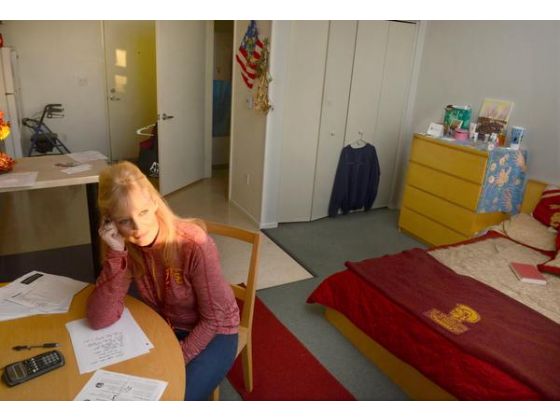 Following a psychiatric crisis resulting from her schizoaffective disorder, Profeta spent almost seven years homeless. Now she lives in a federally subsidized apartment complex in Orange County, California, that houses formerly homeless, mentally ill adults and provides the support they need to lead more independent lives. Following a psychiatric crisis resulting from her schizoaffective disorder, Profeta spent almost seven years homeless. Now she lives in a federally subsidized apartment complex in Orange County, California, that houses formerly homeless, mentally ill adults and provides the support they need to lead more independent lives.
“It’s very, very wonderful what they’ve done for me here,” said Profeta.
But Profeta is one of the lucky ones. People with untreated psychiatric illnesses constitute one-third, or between 150,000 and 200,000 people, of the estimated 744,000 homeless population, according to a Treatment Advocacy Center backgrounder on the issue.
Offering subsidized housing and services saves lives and money by reducing recidivism to emergency rooms, jails and court. But if we really want to get serious about helping the most vulnerable among the homeless – those who are homeless and mentally ill – we need to recognize that many also need psychiatric treatment and make sure they get it.
Profeta is one shining example of how much the mentally ill homeless benefit from having a place to call home. But recovery takes many steps. For many with the most serious psychiatric diseases, the road begins with treatment.
To comment, visit our Facebook page.
Visit our blog archive to read all our recent posts.
CNN Names Mental Wellness Warriors
(Jan. 22, 2015) Two members of the Treatment Advocacy Center family were recently named Mental Wellness Warriors by CNN (“Mental wellness warriors: Fighting for those who need it most,” CNN, Jan. 17).
 Ted Stanley, founder of the Treatment Advocacy Center’s supporting organization the Stanley Medical Research Institute (SMRI), is one of nine on the list of people fighting to make a difference in mental health. The Stanley family has been a longstanding champion of the Treatment Advocacy Center’s work. Ted Stanley, founder of the Treatment Advocacy Center’s supporting organization the Stanley Medical Research Institute (SMRI), is one of nine on the list of people fighting to make a difference in mental health. The Stanley family has been a longstanding champion of the Treatment Advocacy Center’s work.
“Stanley has been on a quest the last two decades to get to the root cause of mental health disorders,” said CNN. “He saw the need for effective treatment after his son, Jonathon, was diagnosed with bipolar disorder at age 19.”
Stanley's son responded well to medication, but he met countless families whose children's conditions never improved with medication. "There was no treatment in sight to end it the way ours had ended with medication solving the problem," Stanley said. "Human genomics has begun to reveal the causes of these disorders. We still have a long way to go, but for the first time we can point to specific genes and biological processes. It's now time to step on the gas pedal."
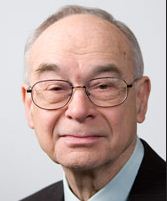 Also making the list is Dr. Frederick Frese, secretary on the Treatment Advocacy Center Board of Directors. Also making the list is Dr. Frederick Frese, secretary on the Treatment Advocacy Center Board of Directors.
“Frese stands as the epitome of successful recovery from mental illness,” said CNN. “Frese travels the nation promoting mental health treatment, giving speeches and serving as a positive example for those with severe mental illness.”
"We have abandoned, ignored and marginalized people with severe mental illness, and something has to be done," Frese told CNN.
The Treatment Advocacy Center joins CNN in saluting our members.
To comment, visit our Facebook page.
Visit our blog archive to read all our recent posts.
A Fatal Mistake in Santa Ana
(Jan. 21, 2015) Diagnosed with bipolar disorder, mother Lucero Carrera, 29, is currently on trial in California for the drowning of her two-month-old daughter, Kimberly Gutierrez in 2012 (“'I drowned her': Mental state a focus in trial of mother accused of drowning 2-month-old daughter,” OC Register, Jan. 14).
 The two-month old was discovered floating face down in the bathtub by her grandmother, who came home to find the young mother alone in her bedroom. The two-month old was discovered floating face down in the bathtub by her grandmother, who came home to find the young mother alone in her bedroom.
During questioning by police and paramedics, Carrera “was barely able to answer the questions posed by police and paramedics...and appeared to be suffering from psychosis.”
"I held her down. I drowned her in the bathtub," Carrera told detectives. "So she wouldn’t suffer what I suffered."
Carrera had a history of suicide attempts and had undergone hospitalization after being diagnosed with bipolar disorder over a decade ago. She cycled back and forth between manic and depressive episodes every six months, according to Senior Deputy District Attorney Jim Mendelson.
She had taken her bipolar medication as prescribed throughout her pregnancy, but stopped after Kimberly’s birth, in what could have been a fatal mistake.
The Treatment Advocacy Center’s recently updated backgrounder on untreated serious mental illness and dangerousness emphasizes that most acts of violence committed by individuals with serious mental illness are carried out when they are not being treated.
Had Carrera continued treatment for her bipolar disorder, Kimberly Gutierrez may still be alive today.
To comment, visit our Facebook page.
Visit our blog archive to read all our recent posts.
Advocates Mourn the Passing of a Son and Brother
(Jan. 19, 2015) Zac Pogliano, whose mother Laura, was a fierce advocate for her son and others with severe mental illness, was found dead in his apartment this weekend (“Zac Pogliano, who struggled with schizophrenia, dies unexpectedly,” USA Today, Jan. 20).
 Pogliano had struggled with schizophrenia for more than half of a decade. Pogliano had struggled with schizophrenia for more than half of a decade.
But despite his struggle, Laura said she was thankful that her son was never a victim to violence and never hurt anyone else. "All he had to look forward to was another 40 years of being tormented and friendless, of not being able to cut it and not understanding why,'' she told USA Today.
As a teenager, Zac had a “dry wit and a way with the girls,” said his sister Leah.
Advocates for mental health care reforms, who have known the Pogliano family also mourn Zac’s passing.
“We watched him grow from a beaming young boy to a handsome young man with a chiseled jaw,” said Treatment Before Tragedy, an advocacy organization. “We lived through the first experiences of psychosis, and went into his bedroom as Laura fed him ice chips to hydrate his chapped lips. We walked the halls of Johns Hopkins while Zac triumphed with treatment.”
“Everyone at TAC was touched by the passion Laura showed for her son and for others suffering with severe mental illness,” said Doris A. Fuller, executive director of the Treatment Advocacy Center. “We are devastated at the news of his passing. He, like far too many of those with a severe mental illness, is gone too soon.”
Read about the Poglianos’ perseverance in the face of mental illness in “The fortunate mother: Caring for a son with schizophrenia,” part of a series from USA Today.
To comment, visit our Facebook page.
Visit our blog archive to read all our recent posts.
Representative Tim Murphy Wins 2014 Torrey Advocacy Commendation
(Jan. 16, 2015) Congressman Tim Murphy has been chosen to receive the Treatment Advocacy Center’s highest honor in recognition of his courageous efforts to make treatment possible for more people with severe mental illness.
 The Torrey Advocacy Commendation is named for Dr. E. Fuller Torrey and awarded to an individual who, like Dr. Torrey himself, has exhibited courage and tenacity advocating for the right of individuals with severe mental illness to receive treatment even if they are unable to seek it. The Torrey Advocacy Commendation is named for Dr. E. Fuller Torrey and awarded to an individual who, like Dr. Torrey himself, has exhibited courage and tenacity advocating for the right of individuals with severe mental illness to receive treatment even if they are unable to seek it.
“Through the many Congressional hearings he has chaired and authorship of the 'Helping Families in Mental Health Crisis Act,' Congressman Murphy has taken up the need for treatment of the most severe psychiatric diseases with a determination we have never seen before in Congress," said Doris A. Fuller, executive director of the Treatment Advocacy Center. “Soon to be re-introduced, this bill is the most comprehensive federal mental health legislation in more than half a century. It would improve the lives of at-risk individuals with untreated mental illness dramatically.”
Murphy relies on his three decades as a psychologist to advocate for meaningful reforms in the US healthcare system. As one of only a handful of members of Congress with a background in healthcare, Murphy quickly established himself as a leader on the issue.
The “Helping Families in Mental Health Crisis Act” includes provisions to increase the use of court-ordered outpatient treatment for qualifying individuals with untreated mental illness, increase psychiatric hospital beds, clarify HIPAA and decrease the criminalization for mental illness, among other important provisions.
“I have heard from thousands of parents who call, write and email me, describing in painful detail how the mental health system has failed their children,” said Murphy. “This bill gives those families the tools needed to help a severely mentally ill loved one access the medical treatment and care they need to prevent tragedy and recover lives.”
The Torrey Advocacy Commendation is awarded by the Treatment Advocacy Center to recognize the courage and tenacity of individuals who selflessly advocate for the right to treatment for people too severely disabled by mental illness to recognize their own need for care.
The award was presented at the Rayburn House Office Building on Tuesday.
Plot to Kill House Speaker John Boehner Underscores the Need to Pass the “Helping Families in Mental Health Crisis Act”
(Jan. 15, 2015) News that former bartender Michael Hoyt planned to poison House Speaker John Boehner underscores the need for national reform of our broken mental health care system, advocates for mental illness treatment law reform say.  Several advocacy groups working on behalf of those with serious mental illness and their families called upon Speaker Boehner to support legislation soon to be introduced by Rep. Tim Murphy (R., Pa.) to help individuals with serious mental illness. On Oct. 29, 2014 Hoyt called the police and “told an officer he was Jesus Christ and he was going to kill Boehner because Boehner was mean to him at the country club and because Boehner is responsible for Ebola,” according to a complaint filed in federal court in Cincinnati. Hoyt has been indicted for planning Boehner’s murder and hospitalized for psychiatric observation. Rep. Murphy, a psychologist and the leading advocate for mental health care reform in Congress, last week announced he will soon reintroduce the “Helping Families in Mental Health Crisis Act,” which seeks to increase treatment and services for individuals with serious mental illnesses. Advocacy groups called on Speaker Boehner to support the legislation. Doris A. Fuller, executive director of the Treatment Advocacy Center, said, “Our broken mental health care system is designed to treat people only after they have disintegrated to being dangerous. We need to reform our system so they get the treatment they need when they need it, not after they are arrested or have hurt someone.” “Our country needs to provide treatment before tragedy for those with serious mental illness, not only to help some of our country’s most vulnerable people but to make our country a healthier and safer society for all,” said Asra Nomani, cofounder of Treatment Before Tragedy. “Fortunately, tragedy has been averted for Speaker John Boehner’s family, but families around the country face profound dangers from untreated serious mental illness, and we as a nation need to find solutions.” Hoyt was indicted last week on charges of planning to murder Boehner after being fired from his job as a bartender at Wetherington Golf & Country Club in West Chester, Ohio. “The plot by Michael Hoyt to poison Speaker Boehner illustrates the importance of passing the ‘Helping Families in Mental Health Crisis Act’ when it is reintroduced,” said DJ Jaffe, executive director of the Mental Illness Policy Org. “By ensuring treatment for the most seriously ill, Congress can help make the lives of patients, public, police and the general public safer.”
Freezing Temps Worse for the Homeless and Mentally Ill
(Jan. 14, 2015) Homeless with a history of refusing treatment, Ronald Hunter Jr. was diagnosed with schizophrenia several years before his freezing death last week on the streets of Buffalo, New York (“A lonely, frigid death on Buffalo's street,” The Buffalo News, Jan. 10).
 Hunter had sought help on and off from a mental health services provider, but “his illness worsened in recent years,” said his mother, Donna McNally. His voices were telling him to kill himself, Hunter had told his father. Hunter had sought help on and off from a mental health services provider, but “his illness worsened in recent years,” said his mother, Donna McNally. His voices were telling him to kill himself, Hunter had told his father.
“But because he was 18, it was up to him if he wanted help,” said his family.
By 9pm that night, temperatures in Buffalo had dropped to 2 degrees, while the wind chill fell to nearly 20 degrees below zero.
Hunter’s last moments captured on surveillance video camera, the 21-year-old homeless youth had discarded his jacket and attempted to remove his shirt before his death.
Hunter died because he was homeless, mentally ill and untreated. His death, like those of all homeless people who die from the cold, was preventable.
There are currently nearly 600,000 people in the United States who call the street their home, nearly one-third of whom have untreated serious mental illness. They will all be even more vulnerable this winter.
Read the Treatment Advocacy Center’s backgrounder on serious mental illness and homelessness.
To comment, visit our Facebook page.
Visit our blog archive to read all our recent posts.
My Son Refused to Believe He Was Sick– personally speaking
(Jan. 13, 2015) Our son Eric is 24-years-old. He first got sick when he was 18. Even though his first diagnosis was bipolar, a few years later he was diagnosed with schizoaffective disorder.
 We spent two years at a loss for how to treat him. He refused treatment and refused to believe he was sick, a condition called anosognosia. We spent two years at a loss for how to treat him. He refused treatment and refused to believe he was sick, a condition called anosognosia.
He thought I was poisoning him. He heard voices and would have conversations with himself in the mirror. He thought the TV was sending him messages and believed the government was after him.
Eric’s illness affected the whole family. Our youngest son stopped having friends over and spent a lot of his time trying to protect me from Eric’s violent outbursts.
Every time we tried to get him into a hospital he was turned away and was sent home with us again. The hospital would say he wasn't a danger to himself or others.
We called the police several times after he became violent. Every parent of someone with a severe mental illness knows the fear of calling the police. Many of us are reluctant to call the police because we fear that a poorly trained officer will respond and escalate our child’s crisis, leading to jail. But often we find we have no other options.
Eric also spent some time homeless during which he had several run-ins with the police for minor infractions like disturbing the peace and disorderly conduct.
Two years ago, Eric was arrested again. He went to a police station because he wanted to see his police record. He was untreated and in the middle of another psychiatric crisis. He became violent at the police station and was arrested for assaulting an employee. He was charged with a felony and taken to prison.
We want to know why he wasn’t in treatment in the first place. He spent most of his time in prison in solitary confinement. For anyone who knows what mental illness is like, I am sure you also know that solitary confinement. He finally had a hearing to send him to the hospital, where he should have been in the first place.
Eric is at least finally at a state mental hospital, in the forensic unit. Now finally, almost six years after this ordeal started and only because he was arrested does it look like he finally might get treatment in a hospital.
What kind of system is this? Where someone with a serious mental illness goes to jail instead of to treatment in a hospital? What kind of system is it that keeps the people who can give help locked out of care?
Kathy Bruno
Pennsylvania
Man with Untreated Mental Illness Killed at Ohio Airport
(Jan. 12, 2015) A man who was shot and killed last week at an Ohio airport had a history of mental illness and was untreated at the time of the deadly encounter with police (“Port Columbus officers involved in fatal shooting are identified,” the Columbus Dispatch, Jan. 8).
 Hashim Hanif Ibn Abdul-Rasheed, who arrived at the Port Columbus airport armed with knives, had been in and out of treatment centers for nearly fifteen years after being convicted of assault in 2001. Hashim Hanif Ibn Abdul-Rasheed, who arrived at the Port Columbus airport armed with knives, had been in and out of treatment centers for nearly fifteen years after being convicted of assault in 2001.
Following his conviction, Abdul-Rasheed remained under court supervision for more than a decade, transitioning from an inpatient unit to a different behavioral health care facility, then a group home with full-time supervision in 2002, semi-supervised housing and eventually independent living, according to court records. His outpatient commitment ended in 2012.
Then, nearly three years after being released from court supervision Abdul-Rasheed tried to use a woman’s ID to buy a ticket at Port Columbus airport before returning to his illegally parked car, where he confronted airport police.
An officer fired at Abdul-Rasheed after he lunged at him with a knife, then a second officer fired after Abdul-Rasheed got up and headed back into the terminal, according to Columbus police.
He appeared to do everything he could to get himself shot, said Jim Shriner, a tow-truck driver who witnessed the event at the airport. Abdul-Rasheed “left the officers with no option but to shoot,” Shriner said.
“I don’t know how he thought it was going to end,” said Shriner. “I feel horrible that somebody lost their life. At the same time, the officer tells you to stop, it’s time to stop.”
Abdul-Rasheed’s death reflects one of the tragic and deadly consequences of leaving severe mental illness untreated. A Treatment Advocacy Center study entitled “Justifiable Homicides: What is the Role of Mental Illness?,” found that untreated serious mental illness is an increasing factor in officer-involved homicides.
“Justifiable homicides involving people with untreated mental illness are a symptom of our failed mental illness treatment system,” said Doris A. Fuller, executive director. “Fewer officers would come under attack and fewer people with mental illness would die from these encounters if more people with mental illness were getting the treatment they need when they need it.”
To comment, visit our Facebook page.
Visit our blog archive to read all our recent posts.
|
|