Three of the Last Five States Coming Around On AOT
(Dec. 16, 2014) Even the most recalcitrant states are coming around on assisted outpatient treatment. Historically apathetic toward the plight of the most severely ill and their families, Maryland, New Mexico and Massachusetts have all taken great strides toward making court-ordered outpatient treatment available.
 “There should be some middle ground between the extremes of confinement to a hospital and letting someone simply spin out of control,” said an editorial in the Baltimore Sun following a Maryland state health department proposal that would allow mandatory outpatient treatment. “There should be some middle ground between the extremes of confinement to a hospital and letting someone simply spin out of control,” said an editorial in the Baltimore Sun following a Maryland state health department proposal that would allow mandatory outpatient treatment.
“Maryland is playing catch-up to well established practices elsewhere that are intended to protect mentally ill people from a downward spiral into psychosis that is ruinous to themselves, burdensome to the state and sometimes threatening to others.”
And in New Mexico, the state legislature “has failed to do anything to help ensure some of the state’s most vulnerable residents get the help they need before they harm themselves or others,” according to an editorial in the Albuquerque Journal.
But this month, Senate President Pro Tem Mary Kay Papen introduced a measure to finally bring AOT to New Mexico. “The well-respected Papen deserves credit for stepping forward and tackling this difficult issue,” said the Albuquerque Journal.
Also earlier this year, advocates in Massachusetts succeeded in securing funding in the state’s 2015 budget to implement an AOT pilot program. Funding for the pilot program is considered a huge first step toward making treatment accessible for those who are too sick to seek treatment themselves.
Massachusetts, New Mexico and Maryland are three of the five remaining states without court-ordered outpatient treatment laws. The steps forward in these states are a testament to the tireless advocacy of supporters and evidences that the country truly is at a tipping point for making treatment accessible for the most severely ill.
To comment, visit our Facebook page.
Visit our blog archive to read all our recent posts.
Outpatient Commitment Shows Compassion – guest column
(Dec. 15 2014) I want to applaud Gov. Martin O'Malley's administration for taking an active, compassionate role to address the issue of mental illness with a proposed law to enable outpatient civil commitment in Maryland ("Dispute over treating mentally ill," Dec. 11).
 Who is the opposition to an initiative that is helpful to those relative few who don't have the mental capacity to help themselves? Where are you on cold nights at bus stops when those who are mentally ill refuse to come in from the cold and lie on the bench all night, their faces covered in frozen mucus by morning? Who is the opposition to an initiative that is helpful to those relative few who don't have the mental capacity to help themselves? Where are you on cold nights at bus stops when those who are mentally ill refuse to come in from the cold and lie on the bench all night, their faces covered in frozen mucus by morning?
Where are you when the relatives of that person tell you he or she refuses to stay home or take medicine but habitually goes back to that same bus stop seat every night in the winter, spring, summer and fall? And where are you when the relatives and those who care stand waiting for an ambulance which comes on a regular basis to pick up that person before they die?
Governor O'Malley has taken a compassionate stance to address mental illness in all communities of Maryland and that it should be supported. What would you want him to do if it were you, watch you die?
This letter originally appeared in the Baltimore Sun.
Jennifer
Maryland
To comment, visit our Facebook page.
Visit our blog archive to read all our recent posts.
“I’m Waiting for the Movie Stars” – personally speaking
(Dec. 12, 2014) From her perch at the end of Wisconsin Avenue, Janice looks out over the river toward Virginia. Her things are neatly stacked against a massive iron beam that supports the freeway above.
 “I’m alright,” Janice responds, avoiding eye contact when asked if there is anything we can do for her. She tries not to respond at all, but if we don’t leave she often responds with a nonsensical answer: “I’m waiting for the movie stars.” “I’m alright,” Janice responds, avoiding eye contact when asked if there is anything we can do for her. She tries not to respond at all, but if we don’t leave she often responds with a nonsensical answer: “I’m waiting for the movie stars.”
Janice has a brain disorder. She cannot make sense of the world around her. She has formed an emotional attachment to that spot on Wisconsin Avenue and will not leave unless forced to. And, if forced to move, she will just find another spot that, for whatever reason, gives her comfort. She is stuck there, confined in a prison of delusions and paranoid ideas.
Representatives from the Department of Behavioral Health have visited her several times, but they say there is nothing they can do until she puts her own or somebody’s else’s life in immediate danger. Even then, chances of getting someone help and treatment is a lofty goal.
The other week I learned that Jeff, a homeless man who came to Georgetown Ministry Center for services had died. His death was caused by his mental disorder, which interfered with his comprehension of his out-of-control hypertension.
As I was thinking about how difficult it is to get someone the help he or she needs, the Washington Post published an article about Senator Creigh Deeds a year after his mentally ill son attacked him and left him bleeding from multiple stab wounds to crawl across a field to a road where he was found and rushed to a hospital. Senator Deeds survived with physical and emotional scars that would never heal. His son died from a self-inflicted gunshot wound. Just 24 hours before the attack, Senator Deeds was with his son at a mental health clinic seeking hospitalization. There were no beds, but there was a bad law that forced them to leave after six hours without intervention.
So what can you do about this problem? Start by learning more about the issue. Don’t stop there though. Contact your council member and tell him or her that you care and support sensible laws that allow the community to offer treatment to people when they really need it.
Gunther Stern
Georgetown Ministry Center
Read the original version of this article.
To comment, visit our Facebook page.
Visit our blog archive to read all our recent posts.
Maryland Finally Considers Treatment Options for the Most Severely Ill
(Dec. 11, 2014) In a major breakthrough, Maryland is the latest in a wave of states to consider assisted outpatient treatment (AOT) for the most severely ill (“Involuntary treatment pursued for mentally ill in Maryland,” the Baltimore Sun, Dec. 10).
In years past, lack of support from the Maryland Department of Health and Mental Hygiene (DHMH) has prevented AOT bills from advancing, leaving the state among the worst in the nation for making treatment possible for people with severe mental illness who are too sick to recognize their own illness.
But the report released Wednesday by the DHMH that outlines a proposal for court-ordered outpatient treatment shows the department has finally listened to the voices of families desperate to keep their mentally ill loved ones out of hospitals and prisons.
Those who will benefit from AOT “are a small percentage of the mentally ill but use a large portion of available resources,” said Brian Stettin, policy director at the Treatment Advocacy Center. Stettin worked alongside NAMI-Maryland and other Maryland-based advocacy groups to inform the proposal.
Under the proposal, mandatory outpatient commitment would be used where:
- The patient is an adult who has declined voluntary treatment for mental illness.
- The patient has been involuntarily admitted to a facility twice in the last 48 months.
- Outpatient care would prevent deterioration that would result in involuntary hospital care.
- Outpatient care would limit treatment interruptions and relapses.
- There is no appropriate and less restrictive alternative.
"It is very important for people with mental illness to recover and live productive lives," said DHMH secretary Dr. Joshua Sharfstein. "We are talking about a critical missing component in Maryland law that needs to be fixed in order to support certain people in Maryland getting the services they need."
To comment, visit our Facebook page.
Visit our blog archive to read all our recent posts.
California and New York Health Organizations Honor Treatment Advocacy Center Board Members
(Dec. 10, 2014) Two Treatment Advocacy Center board members are being awarded prestigious honors for their dedication to mental health reform on behalf of people with severe mental illness.
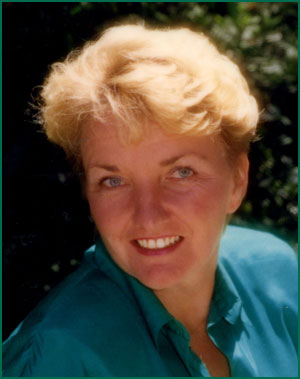 Founding board member Carla Jacobs is this year’s recipient of the Simanek Distinguished Service Award from the California Hospital Association. The award recognizes leadership that promotes vision and excellence in behavioral health care services, and outstanding contributions to hospitals or health care services in inpatient and outpatient settings. The award was presented December 9 at a luncheon held during California Hospital Association’s 9th Annual Behavioral Health Care Symposium in Los Angeles, California Founding board member Carla Jacobs is this year’s recipient of the Simanek Distinguished Service Award from the California Hospital Association. The award recognizes leadership that promotes vision and excellence in behavioral health care services, and outstanding contributions to hospitals or health care services in inpatient and outpatient settings. The award was presented December 9 at a luncheon held during California Hospital Association’s 9th Annual Behavioral Health Care Symposium in Los Angeles, California
Chief of Police Michael Biasotti received the highest award from the National Alliance on Mental Illness of New York State for “outstanding advocacy on behalf of the seriously mentally ill.” The Muriel Shepherd Award was presented before a crowd of 500 on November 14 in Albany.
Jacobs says the impact of criminalizing mental illness is prompting change. “The crowding of our prisons and jails with the mentally ill, along with other tragic consequences, are finally compelling legislators to implement laws that provide timely and effective treatment and reduce these consequences of untreated illness.”
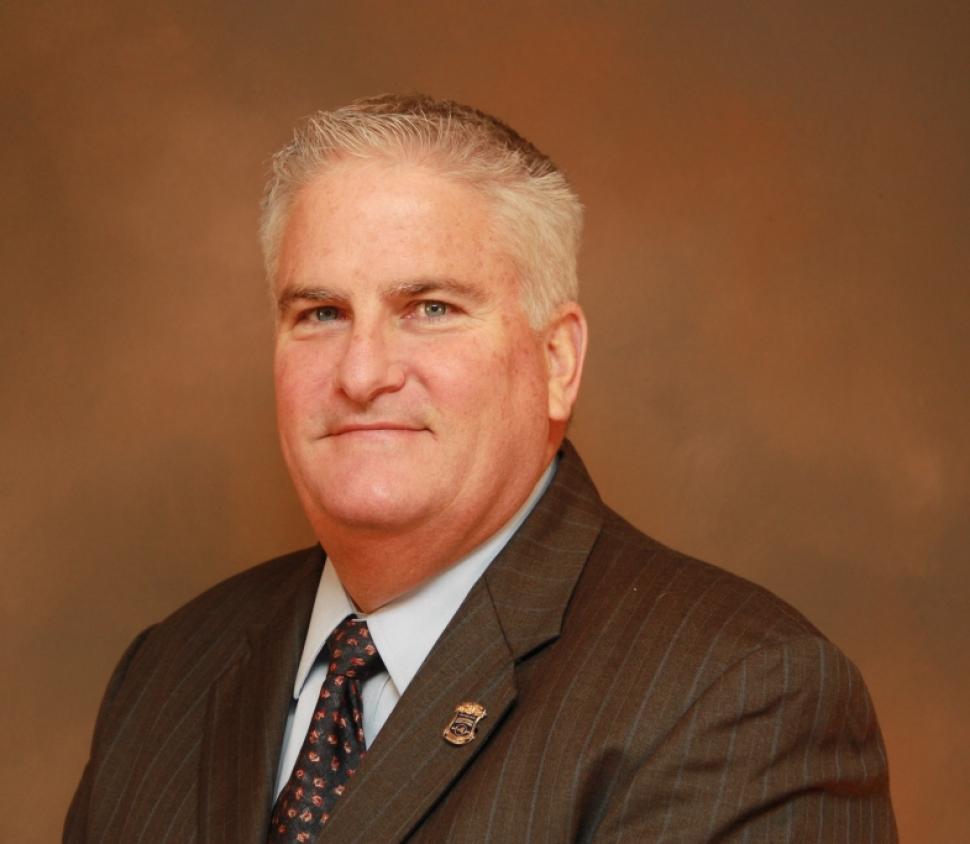 Biasotti decries the reliance on law enforcement instead of treatment. “Unfortunately law enforcement often ends up being a family’s last resort to get help for their loved one. It shouldn’t be that way. Treatment keeps patients safer. It keeps the public safer and it keeps officers safer. But more importantly, it’s the humane thing to do.” Biasotti decries the reliance on law enforcement instead of treatment. “Unfortunately law enforcement often ends up being a family’s last resort to get help for their loved one. It shouldn’t be that way. Treatment keeps patients safer. It keeps the public safer and it keeps officers safer. But more importantly, it’s the humane thing to do.”
Carla Jacobs tells the story of how she became involved in treatment advocacy here. Watch Mike Biasotti and his wife Barbara tell their story on video here.
The Treatment Advocacy Center joins the National Alliance on Mental Illness and the California Hospital Association in saluting our board members. These awards could not have gone to more deserving – or effective – advocates.
To comment, visit our Facebook page.
Are Antipsychotics The Best Treatment?
(Dec. 8, 2014) Each time Elyn Saks attempted to get off her antipsychotic medication her voices returned, reports journalist Sarah Glazer in a story about treating schizophrenia (“Treating schizophrenia: Are antipsychotic drugs the best treatment?,”CQ Researcher, Dec. 7).
 “To me drooling at night is better than being psychotic,” Saks said of her choice to endure the side effects and remain on medication. “To me drooling at night is better than being psychotic,” Saks said of her choice to endure the side effects and remain on medication.
Eleanor Longden had her first psychotic break while in college. Eventually she would be hospitalized, diagnosed with schizophrenia and prescribed antipsychotics. Longden, now 32, says she no longer takes her medication and has learned to live with her voices.
It is not news that some psychiatrists think some patients are better off without antipsychotic drugs. But Eleanor Longden is one of “only about 20 percent of people diagnosed with schizophrenia who go on to lead normal lives,” Glazer writes.
Meanwhile, family members, like Marilyn Martin who spoke with Glazer, experience firsthand the consequences of leaving severe mental illness untreated.
Martin’s son has been diagnosed with schizophrenia and believes the FBI is after him. Recently, he stopped taking his medication and stopped seeing his psychiatrist. “He has lost any awareness that he has an illness now that he is not taking his prescribed drugs,” Martin told Glazer.
Because there is no assisted outpatient treatment (AOT) law in Maryland, Martin has no way of ensuring that her son stays on his medication to prevent a downward spiral. She has testified twice in support of court-ordered outpatient treatment for her state – one of only five without the lifesaving tool.
What remains clear is that during a time when approximately 1.3 million people with schizophrenia remain untreated, we need look no further than our homeless shelters, bus stations and jails and prisons to determine whether these people are better off without treatment.
To comment, visit our Facebook page.
Visit our blog archive to read all our recent posts.
New Mexico Lawmakers Consider AOT
(Dec. 5, 2014) Lawmakers in New Mexico are considering an assisted outpatient treatment (AOT) program for people with severe mental illness (“NM lawmakers endorse mental health treatment law,” the Associated Press, Dec. 5).
 The city of Albuquerque tried to pass a similar law in 2006 but was unsuccessful. But support for mandatory outpatient treatment was renewed when James Boyd, a 38-year-old homeless man alleged to have been suffering with schizophrenia was fatally shot by Albuquerque police last March. The city of Albuquerque tried to pass a similar law in 2006 but was unsuccessful. But support for mandatory outpatient treatment was renewed when James Boyd, a 38-year-old homeless man alleged to have been suffering with schizophrenia was fatally shot by Albuquerque police last March.
The intention of the bill is to get those suffering into help before they become violent, said Senate President Pro Tem Mary Kay Papen, D-Las Cruces. Papen believes the bill could help around 300 of the state’s most severely ill residents.
“Based upon results achieved elsewhere, it should lessen homelessness and lower rates of suicide while reducing hospitalization, arrests and incarceration,” said Senator Papen.
The proposed bill would allow families, caseworkers and mental health professionals to file petitions to mandate outpatient treatment for some people who are dangerous and chronically mentally ill.
It’s about time for New Mexico. The state has nearly 3x more people with serious mental illness in jail than receiving treatment in a hospital, has only 18 percent of the beds necessary to meet the needs of people with a psychiatric disease and
Studies of AOT in other places have produced positive results. A Duke University study found that people under involuntary outpatient commitment orders were less likely to be admitted for hospital treatment and less likely to end up in jail.
New Mexico also one of only five without a court-ordered outpatient treatment law, which has placed the burden of untreated severe mental illness onto individuals, their families and their friends.
To comment, visit our Facebook page.
Visit our blog archive to read all our recent posts.
New York City Announces Plan to Overhaul Criminal Justice System for People with Mental Illness
(Dec. 4, 2014) New York City announced a plan Monday to overhaul the way its criminal justice system interacts with people who have a mental illness. The emphasis will be on treatment, rather than punishment (“New York City unveils unprecedented overhaul of mental health care for inmates,” ThinkProgress, Dec. 2).
 This plan comes at a critical time for the city and the country. This plan comes at a critical time for the city and the country.
In the last year, jails and prisons across the nation have come under increasing scrutiny for their treatment of mentally ill inmates. Two of the most high-profile deaths occurred in New York at Rikers, involving one inmate who “baked to death” in a cell and another man who sexually mutilated himself after spending seven consecutive days in a cell.
It has also been long known that incarceration does nothing to help people with serious mental illness, but instead often exacerbates their symptoms.
The plan, announced by Mayor Bill de Blasio, will include efforts to keep people with mental illness out of jail in the first place, but also include better training for corrections officers and treatment for people with behavioral health problems who are already behind bars.
The proposed changes will also provide support for people who are transitioning from jail back into the community to reduce recidivism. “We see these frequent fliers, people who commit relatively small low level offenses, cycling through the system over and over and over again,” said Elizabeth Glazer, the mayor’s criminal justice coordinator.
"[This plan] means a lot to me," said Alma Murdough, the mother of Jerome Murdough, a mentally ill inmate who died in Rikers earlier this year. "Knowing that Jerome's death was not in vain."
To comment, visit our Facebook page.
Visit our blog archive to read all our recent posts.
When Will We Stop Executing Mentally Ill Prisoners?
(Dec. 3, 2014) Scott Panetti, a man diagnosed with schizophrenia, is set to die Wednesday by lethal injection in Texas for a gruesome double homicide he committed in 1992.
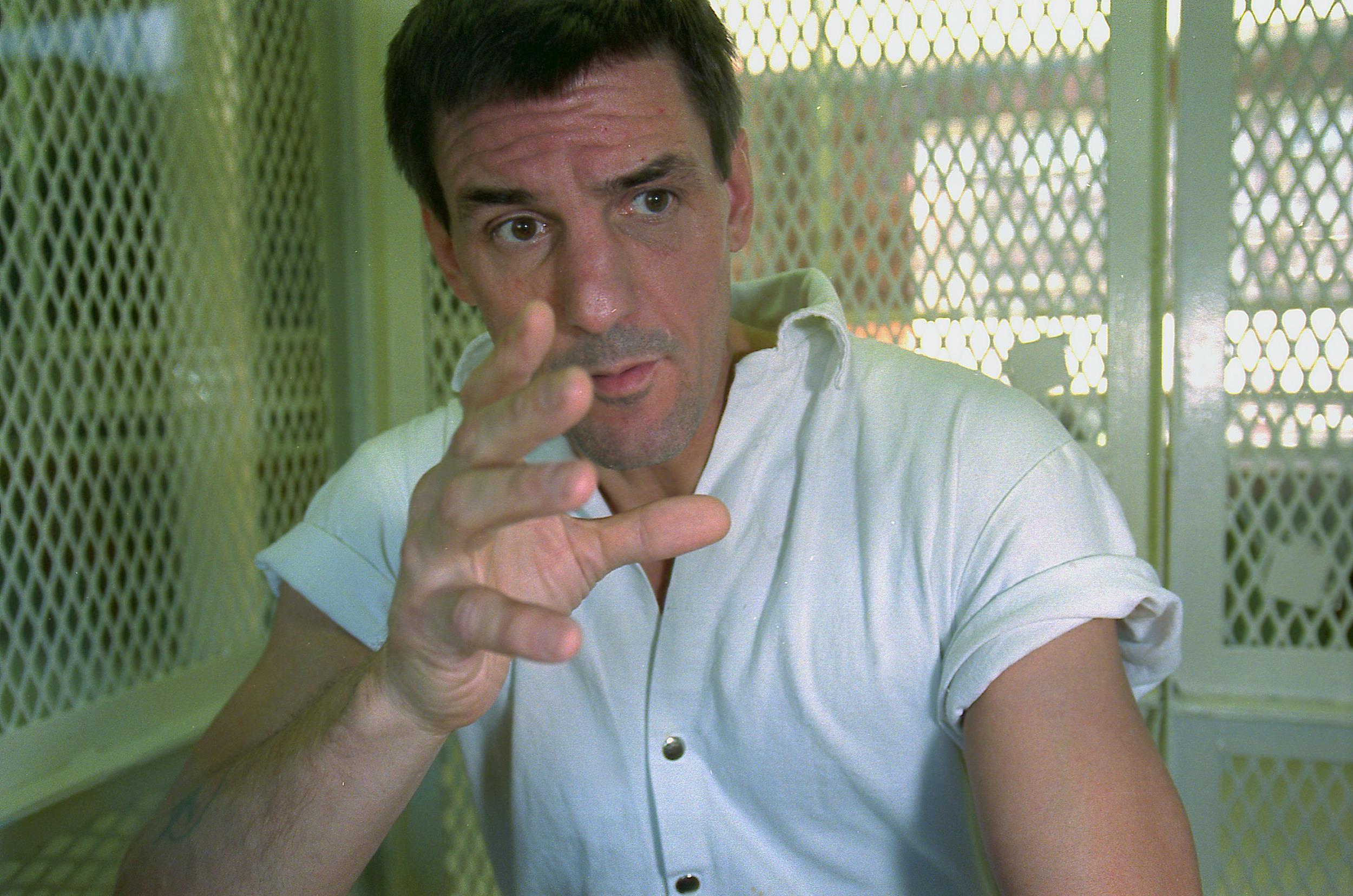 Prior to the murders Panetti had been hospitalized at least a dozen times in just over a decade for hallucinations and delusions related to his severe mental illness. Prior to the murders Panetti had been hospitalized at least a dozen times in just over a decade for hallucinations and delusions related to his severe mental illness.
Following the murder, Panetti drove to the police station and turned himself in claiming that he had acted under the control of a personality called “Sarge.”
“Panetti’s long-standing history of mental illness is undisputed,” writes Sally Satel in Bloomberg (“Don’t execute schizophrenic killers,” Dec. 1).
Throughout the nearly twenty year process of trials, motions and appeals, Panetti has “seemed to lack a rational understanding of his execution: He believed he was being put to death because Satan was working with the state of Texas to stop him from preaching,” Satel said.
Last month, volunteer lawyers for Panetti filed a stay of execution that was denied.
“This is unjust,” Satel implores. “It is wrong to execute, even to punish, people who are so floridly psychotic when they commit their crimes that they are incapable of correcting the errors by logic or evidence.”
We couldn’t agree more. As long as mental illness policy and systems fail to recognize and address this connection with timely and effective treatment, homicide victims and their killers alike will continue dying as a consequence of non-treatment.
To comment, visit our Facebook page.
Visit our blog archive to read all our recent posts.
3.9 Million Reasons to Give to Us on Giving Tuesday
(Dec. 2, 2014) An estimated 3.9 million adults in America are living with untreated schizophrenia or severe bipolar disorder – and those are only the patients. Their family members, friends, neighbors and others number in the millions more.
Today is Giving Tuesday in America. Every one of these 3.3 million men and women are a reason to give to the Treatment Advocacy Center, but here are three more:
1. The Treatment Advocacy Center is the only national nonprofit dedicated exclusively to eliminating barriers to treatment for people with the most severe mental illnesses.
2. The Treatment Advocacy Center is the only national nonprofit that accepts no funding from the pharmaceutical industry (see Another Reason We Don’t Take Money from Big Pharma).
3. The Treatment Advocacy Center is the only national nonprofit improving access to treatment for those too ill to seek help for themselves. In our 16 years, we have spearheaded improved mental illness treatment laws to save lives and families in 27 states and are actively promoting their use.
You can help us do more! Your gift of any size today will help us make treatment possible for more people who need it the most.
Please give now.
To comment, visit our Facebook page.
|
|