”My Nephew Was Not a Bad Person, Just a Sick Person”
(Nov. 12, 2014) Just two days before a psychiatry appointment for medication, Derek Ward beheaded his mother, Professor Pat Ward, before jumping in front of an oncoming train in Long Island and ending his own life, reports the New York Daily News (“Farmingdale mom was beheaded by disturbed son two days before meeting psychiatrist to obtain his medication,” Oct. 31).
 Thirty-five-year-old Ward had struggled with psychiatric problems over the course of the past decade, which included hearing voices and a six-week stay in a Long Island psychiatric hospital in August 2013. Thirty-five-year-old Ward had struggled with psychiatric problems over the course of the past decade, which included hearing voices and a six-week stay in a Long Island psychiatric hospital in August 2013.
But his uncle, Robert Lubrano, said Ward had never been violent before.
“He never raised his hand to [his mother] before this,” Lubrano said. “Never had a gun. This is all about mental illness and the difficulty of getting a psychiatrist.”
In the days before the attack, Ward had become increasingly unstable. He was unable to get his medication because he couldn’t find a doctor that accepted Medicaid. His mother reportedly begged to have her son visit the emergency room but he refused.
“We tried to convince her to go to police, but she was terrified of the police. She thought they might hurt him,” Ward’s uncle told the New York Daily News.
“She had an appointment set up for (Friday). She finally met a compassionate psychiatrist, but she’ll never make it to see him.”
Despite the gruesome tragedy and the death of his sister, Ward’s uncle said,”My nephew was not a bad person, just a sick person.”
To comment, visit our Facebook page.
Visit our blog archive to read all our recent posts.
Two Toddlers Missing in 'Worst' State for Treatment
(Nov. 11, 2014) Following a family excursion to watch a soccer game and enjoy the park, 27-year-old Catherine Hoggle took one of her toddlers, Jacob, to eat pizza and returned alone (“Family implores mentally ill mother to tell them where she left her missing children,” the Washington Post, Nov. 10).
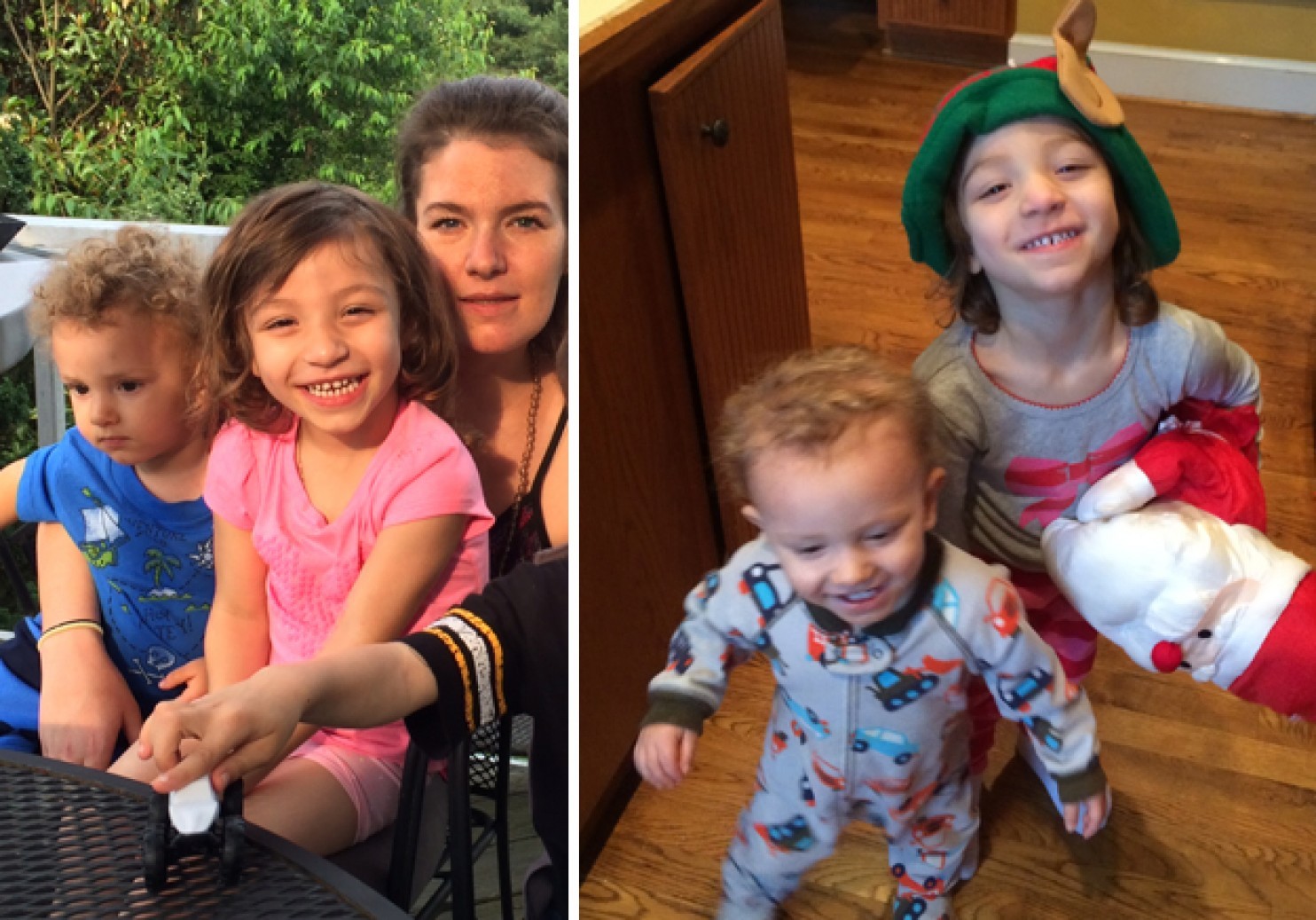 The next morning, the other toddler, Sarah, disappeared and Hoggle claims to have taken her to daycare. Both children have been missing ever since. The next morning, the other toddler, Sarah, disappeared and Hoggle claims to have taken her to daycare. Both children have been missing ever since.
Diagnosed with paranoid schizophrenia, Hoggle had been showing increasing signs of paranoia in the year leading up to the children’s disappearance, even going so far as to file a restraining order against her sister-in-law for following her.
“We go to the grocery store, she shows up there,” Hoggle told Montgomery County Judge Barry Hamilton when she filed the order. “We start going to a different grocery store, she starts showing up there. I go to take my kids to the pediatrician, she shows up there. I go to my mom’s house, she shows up there.”
Disturbed by the young mother’s behavior, family members sought a court-ordered psychiatric evaluation and Hoggle was committed to inpatient treatment at Sheppard Pratt two times in 2013.
Throughout Hoggle’s struggle with severe mental illness, Troy Turner, the children’s father, “encouraged Catherine to go to therapy and take her medication but he couldn’t be sure she was doing either.”
After multiple hospitalizations have failed, family members should be able to do more than just encourage their loved ones into treatment. While we don’t know much about Hoggle's history of non-adherence to medication, we do know that few states in America make it harder to get treatment for someone with a severe mental illness than Maryland.
Maryland is one of only five states that remain without an assisted outpatient treatment (AOT) law, and it has a high threshold for providing mandatory treatment in a hospital.
A bill introducing AOT is expected by the end of the year, but it can’t come fast enough for people with severe mental illness and their families.
Police in Montgomery County, Maryland, have asked anyone with information about the Hoggle children or the case to call 240-773-5070.
To comment, visit our Facebook page.
Visit our blog archive to read all our recent posts.
.
Mental Health Calls Stretch Police Resources
(Nov. 10, 2014) Police have received a twenty-five percent increase in calls from people in a psychiatric crisis in the last two years reports KTVU News in Berkeley, California (“ Mental health calls increase, while resources still slim,” Nov. 6).  Responding to these mental health emergencies are “part of a growing portfolio of duties that are required in today’s world by today’s cops,” said Officer Chris Scott, part of the Berkley Police Department’s Crisis Intervention Team (CIT). “You couple homelessness with a severe mental illness and the fact that they are not on medication, often times that spells danger for us,” Scott continued. “It’s a kind of red zone.” Sometimes, the officers are responding to one person multiple times in one day or several times over the course of a few months, draining time and resources. In fact, in one case earlier this year, officers responded to one man nine times over a four-month period. The man was reportedly experiencing suicidal thoughts, displaying psychotic behavior and was even placed on a psychiatric hold two times in one day, the Berkeley Police Department reports. By the end of this year, police in Berkeley will have responded to more than 1,000 calls from people in a psychiatric crisis this year. It is no surprise then that earlier this month the world’s largest law enforcement group, the IACP, endorsed assisted outpatient treatment (AOT) for people with severe mental illness. " AOT will help those treatment the most, which will improve outcomes for this population and reduce the burden on law enforcement," said Chief of Police Richard Beary, IACP's president. “Untreated severe mental illness is highly associated with arrest and incarceration,” said Chief of Police Michael Biasotti, a member of the Treatment Advocacy Center board of directors. “A disproportionate number of these individuals are ending up in the criminal justice system when they should be receiving treatment.” We couldn’t agree more.
Destruction of Religious Monument Shines Spotlight on Mental Illness
(Nov. 6, 2014) A stone monument of the Ten Commandments that has been the subject of much controversy since its placement at the Oklahoma statehouse several years ago was once again propelled into the spotlight last month.
 Michael Reed, 29, broke it into several pieces when he drove his car onto the grounds of the statehouse. Michael Reed, 29, broke it into several pieces when he drove his car onto the grounds of the statehouse.
Reed’s actions were “an act of violence,” said state Representative Mike Ritze, who donated the monument to the state’s capitol.
But Reed’s actions were not an act of violence, rather they were the result of his mental illness, Reed’s family told reporter Jacylyn Cosgrove (“Oklahoma man accused of damaging Ten Commandments monument struggles with mental illness, family says,” News Oklahoma, Nov. 3).
“His mind is broken,” Reed’s mother said.
In the year prior to the incident, Reed’s behavior had become increasingly erratic, his family told Cosgrove. He started smoking and hoarding and became increasingly religious. He isolated himself in his bedroom for long periods of time and rarely talked to anyone.
Following an incident where Reed attempted to shut down the electricity for an entire building by locking himself inside, Reed was taken to a psychiatric hospital and prescribed medication for schizophrenia. When he was on medication, he was as “close to himself as he had been in months,” his sister said.
But without insurance the medicine cost $900, which neither Reed nor his family could afford.
Months later, just days prior to the incident and off of his medication, Reed told his sister he heard God speaking to him.
Reed said the devil made him drive his car into the monument.
Reed is currently at a psychiatric facility where doctors are working to stabilize him.
Reed’s mother says she is thankful he is not in jail.
To comment, visit our Facebook page.
Visit our blog archive to read all our recent posts.
A Prisoner Who Should Have Been a Patient
(Nov. 4, 2014) Labeled a career criminal by the prison system, Donnie Battles had been incarcerated for most of his adult life, until his release two years ago (“Donnie Battles: Prisoner, Patient,” Rapid City Journal, Oct. 26).
 Diagnosed with paranoid schizophrenia, Battles is one of the countless people with severe mental illness caught in a cycle of arrest, release and re-incarceration. Diagnosed with paranoid schizophrenia, Battles is one of the countless people with severe mental illness caught in a cycle of arrest, release and re-incarceration.
Despite a history of psychiatric problems, including at least one inpatient stay and symptoms that included hallucinations and delusions while he was incarcerated, Battles was not diagnosed with a severe mental illness until he was middle aged. This meant he went nearly two decades without the treatment that may have prevented him from ending up in prison in the first place.
It is not surprising, then, that left untreated and incarcerated, Battles spent time in solitary confinement. Designed as a way of controlling inmates with behavioral problems, the isolation drove Battles’ delusions to new heights - including the belief that a 5-inch tall cartoon character perched on his shoulder.
But even if Battles had been diagnosed earlier, he may not have had better luck. South Dakota began slashing the number of psychiatric beds for people with a psychiatric disease in the 1950’s and continues to do so today. Between 2005 and 2010 the state cut 23 percent of its beds and only has 62 percent of the beds necessary to meet the needs of people like Battles.
Today, Battles has been out of prison for two years and depends on psychotropic medication to reduce symptoms associated with paranoid schizophrenia.
On medication, his paranoia has died down immensely and he no longer has conversations with the 5-inch tall man who whispered advice in his ear throughout his stay behind bars. For the first time in years, he can sleep through the night, he says.
To comment, visit our Facebook page.
Visit our blog archive to read all our recent posts.
“You Did Not Fail Your Son, the System Did”
(Nov. 3, 2014) A powerful story in the Washington Post shows in excruciating and tragic detail how easily families of people with severe mental illness can be overwhelmed, and how little our laws and mental health system do to help them (“A father’s scars: For Va’s Creigh Deeds, tragedy brings unending questions,” Nov. 1).
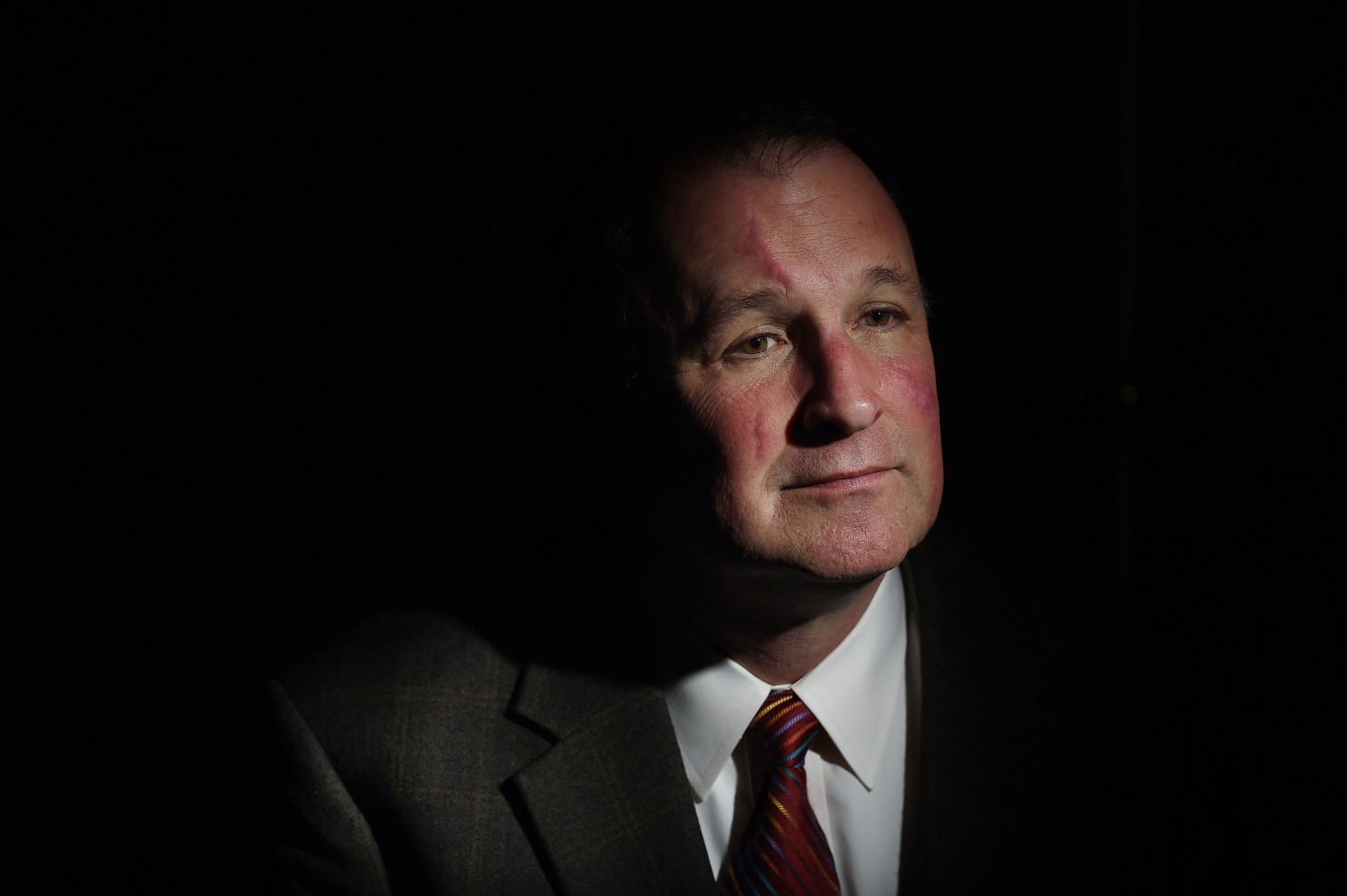 “Sometimes I’d say to Gus, ‘Come on, pull yourself up,’ Senator Creigh Deeds told reported Stephanie McCrummen about his son’s psychiatric deterioration. “I believed in Gus. I believed he would snap out of it . . . I just didn’t know what to do.” “Sometimes I’d say to Gus, ‘Come on, pull yourself up,’ Senator Creigh Deeds told reported Stephanie McCrummen about his son’s psychiatric deterioration. “I believed in Gus. I believed he would snap out of it . . . I just didn’t know what to do.”
Then, nearly a year ago, less than a day after Gus was released from an emergency hold at a Virginia hospital - reportedly because no psychiatric beds were available - the young man stabbed his father in the head and torso before fatally shooting himself.
In the year since his son’s death, Deeds has returned to legislative work determined to change the laws that prevented Gus from getting the help he needed. He has had some success, but it’s not enough, he told McCrummen.
He knows it is not enough because he has been contacted by countless family members of people with a psychiatric disease who also feel their hands are tied.
“My brother has been diagnosed with schizophrenia since he was 16, and he’s now 33, and we can’t make him take his medications,” explained one family member to Deeds at an event in West Virginia. Her brother has had three psychiatric commitments in the last six months and now he is in jail.
“We had a family member with schizophrenia and spent $10,000 trying to help her,” said another woman at the same event. “She’s stayed in nine different places. . . . She can’t stay with us, because we are afraid she will poison our food.”
Deeds has also received innumerable letters, emails and phone calls, all telling a familiar story:
“My son, Joseph . . .”
“My daughter Teresa . . .”
“My brother’s suicide by starvation . . .”
“There were no beds available for Matt . . .”
“The police arrived and were absolutely clueless . . .”
Like many of these letter and email-writers, Deeds will continue to wonder what he could have done to prevent the loss of his own family member.
But like one family member so aptly said, “You did not fail your son the system did.”
To comment, visit our Facebook page.
World's Largest Law Enforcement Group Endorses Court–Ordered Outpatient Treatment For At–Risk People With Severe Mental Illness
(Oct. 31, 2014) The world’s largest law enforcement organization this week endorsed court-ordered treatment in the community for at-risk individuals with severe mental illness.
Voting at their annual convention in Florida, the International Association of Chiefs of Police (IACP) endorsed unanimously , the “authorization, implementation, appropriate funding, and consistent use of assisted outpatient treatment (AOT) laws to ensure treatment in the least restrictive setting possible for individuals whose illness prevents them from otherwise accessing such care voluntarily.” The IACP represents more than 20,000 members in more than 100 countries.
"AOT will help those who need help the most get the treatment they need, which will improve outcomes for this population and reduce the burden on law enforcement," said Chief of Police Richard Beary, IACP's president.
The IACP joins the National Sheriffs’ Association on record in support of AOT, which the U.S. Department of Justice has deemed an evidence-based practice for reducing crime and violence.
“Untreated severe mental illness is highly associated with arrest and incarceration,” said Chief of Police Michael Biasotti, a member of the Treatment Advocacy Center board of directors who championed the resolution. “A disproportionate number of these individuals are ending up in the criminal justice system when they should be receiving treatment.
“We expect AOT to reduce the burden of untreated severe mental illness on law enforcement and also produce taxpayer savings,” he said. “This tool will help increase law enforcement capacity and return the care of the most severely ill to the mental illness treatment system.”
The Treatment Advocacy Center in 2012 published excerpts from a study by Biasotti on the impact of untreated mental illness on law enforcement. The Treatment Advocacy Center has also served as a resource on this issue by publishing the following reports about the intersection of the criminal justice system and untreated severe mental illness:
Long ER Waits for People in Psych Crisis in California
(Oct. 28, 2014) Marty Naftel once spent nine hours in the emergency room waiting for a psychiatric bed to open up but was ultimately sent home without treatment for his bipolar disorder (“Psych patients pack emergency rooms," Orange County Register,” Oct. 25).
 Naftel’s experience is not uncommon. Sharp decreases in psychiatric beds spurred by deinstitutionalization have turned emergency rooms across the country into warehouses for people with mental illness in crisis. Naftel’s experience is not uncommon. Sharp decreases in psychiatric beds spurred by deinstitutionalization have turned emergency rooms across the country into warehouses for people with mental illness in crisis.
The practice, called “psychiatric boarding” is the santitized term for keeping psych patients waiting in the ER for days, or sometimes months.
“I’m hearing from all over the state about ERs being overrun by psych patients,” says Randall Hagar, director of government relations at the California Psychiatric Association in Sacramento. “I’ve heard stories many times about the difficulty of finding placement for individuals. They can be kept in the ER three, four, five, even up to seven days.”
Warehousing patients like this has had far reaching consequences, leaving fewer ER beds available for the public while psychiatric patients do not get the timely and necessary medical care they would have received in a treatment facility.
The practice is so contentious that Washington recently made boarding illegal. While Washington’s decision that patients cannot be warehoused in ER rooms is a humanitarian one, but it also means that authorities will have to find a suitable treatment facility for people in a psychiatric crisis.
While California isn't considering making the practice illegal, the state should still provide suitable treatment facilities for people like Naftel.
To comment, visit our Facebook page.
Mental Illness Makes Families Sick – personally speaking
(Oct. 27, 2014) Before my brother got sick, really sick, I had started taking masters level psychology classes and what I learned has come in handy over the past few years. Even when he hasn’t wanted it, I’ve been able to help my sick brother. I’ve been able to help my sick family navigate the confusing, frightening, and very tumultuous seas that are mental illness.
 That’s something I’ve realized, just now in this moment: serious mental illness doesn’t just impact the person who is sick, but it effects and infects those closest to that sick person, making them sick too, in a very real way. That’s something I’ve realized, just now in this moment: serious mental illness doesn’t just impact the person who is sick, but it effects and infects those closest to that sick person, making them sick too, in a very real way.
Mental illness makes mothers cry. It makes siblings fight. It makes fathers afraid in their own homes, afraid of loved ones who refuse to keep psychiatrist appointments and who refuse to take meds.
Mental illness leaves pits in the stomachs of those who aren’t ill – those who listen to the delusions; who watch the abnormal behavior; those who care; those who want to heal every part of the broken brain that turns water into poison that twists memories into horrible misrepresentations of the truth.
Mental illness sucks.
It sucks the color and order from this beautiful intricate life of ours and replaces it with a black and white jigsaw puzzle missing dozens of very important pieces. In other words, mental illness is no fun at all. Did I mention that it sucks?
My brother is very sick right now. My parents are with him in his college town 10-hours away, taking turns in the ER while they wait for a bed in the psych unit.
We are lucky this is happening in Nevada, where the laws are more balanced and allow family members and concerned doctors provide treatment to people like my brother.
This is not the case in our county in California, where you have to commit a crime before they’ll take your severe mental illness seriously.
My poor parents are exhausted. My poor brother is chasing his tale around a cage of paranoia and anger and fear. And all I can do from here, hundreds of miles away is research treatment centers and blog and pray.
You know how we all want to cure cancer? Parkinsons? Lou Gehrig disease? Clearly there are lots of things we all want to cure. Well, I’d like to add one more to the list: can we please find a cure for mental illness too? Please.
Stephanie Mignon
Family Member and Advocate
To comment, visit our Facebook page.
Visit our blog archive to read all our recent posts.
“My Son Tried to Enter the White House” – guest column
(Oct. 24, 2014) My adult son suffered from severe bipolar disorder. During his first manic episode in January 1994, while he lived in northern Virginia, he became psychotic, paranoid, and lost touch with reality. He developed an unhealthy fixation for the president and made many attempts to get into the White House for what he actually thought were scheduled meetings with President Bill Clinton.
 But he was in denial that anything was wrong with him. It took the assault of a police officer to get him committed. He spent his 27th birthday in a padded cell in the psychiatric ward at a Virginia hospital. He was diagnosed with bipolar disorder and transferred to a mental hospital where, after six weeks of involuntary commitment and forced meds, he recovered and resumed his life. Six years later, when he stopped taking his meds, he suffered a second psychotic break, this time fixating on President George W. Bush. But he was in denial that anything was wrong with him. It took the assault of a police officer to get him committed. He spent his 27th birthday in a padded cell in the psychiatric ward at a Virginia hospital. He was diagnosed with bipolar disorder and transferred to a mental hospital where, after six weeks of involuntary commitment and forced meds, he recovered and resumed his life. Six years later, when he stopped taking his meds, he suffered a second psychotic break, this time fixating on President George W. Bush.
He claimed he was in possession of very important information for both these presidents and he needed to share it. As seems to be the case with the two alleged White House fence-jumpers this month, Dominic Adesayana and Omar Gonzalez, his sickness propelled him there.
After 9/11, my son told his family he had obtained a top secret security clearance at the White House, that the FBI had issued him a special gun permit, and that he was exercising his constitutional right to purchase a gun. Several days later, he showed up at the White House and told the Secret Service he was there for his scheduled appointment with Bush.
State laws vary, but all states set strict controls on involuntary hospitalization, limiting it to circumstances when a person is an imminent danger to self or others, or likely to become so. These laws give people with severe mental illness the right to decide when, where, how, or even if they will receive treatment.
Today’s laws, although well intended, were mostly written decades ago, in response to an era when doctors and hospitals had broad control over patients’ lives. Mental institutions, as they were called then, became a dumping ground not only for the mentally ill, but for the disabled, the handicapped, and the elderly. Eventually a public outcry led to laws forbidding the state from forcing treatment or medications on mentally ill people. Once you turn 18, you have a civil right to refuse treatment and remain mentally ill.
Yet some serious mental illnesses make it difficult for sick people to assess their own need for treatment. Families watch their loved ones descend, sometimes slowly, into Code Red territory, but current laws do not allow them to push help onto a deteriorating person until he or she reaches crisis stage. Only when a sick person becomes a danger, as determined by a judge at a commitment hearing, can he or she be committed.
But by this time, it is sometimes too late.
When patient rights exceed necessary protections, individuals with severe untreated mental illness can die because we’ve protected their civil liberties to remain mentally ill and refuse treatment. Many—like my son, who committed suicide on his third attempt in 2007—do die. Sometimes they harm others along the way.
Mental illness is not going away. We must find a balance between protecting the rights of mentally ill people and also getting them the treatment they require to recover and not be a threat to society.
Rep. Tim Murphy has introduced a bill, the “Helping Families in Mental Health Crisis Act,” that does just that. It would require states to have commitment criteria broader than “dangerousness” in order to receive Community Mental Health Services Block Grant funds. It would clarify HIPPA to assure caregivers are able to receive protected health information when necessary to safeguard the well-being of a patient or the safety of another. It would require states to have “assisted outpatient treatment” laws. AOT is for a small segment of the most seriously mentally ill individuals who have accumulated multiple episodes of homelessness, hospitalization, arrest, or violence associated with not taking their medications. AOT allows judges to order them to stay in six months of mandated and monitored treatment while living in the community. My son would have been a perfect candidate.
Sometimes the best way to neutralize a threat (and prevent a tragedy) is to preempt it.
Dottie Pacharis
Author of "Mind on the Run - A Bipolar Chronicle"
Read Dottie's entire article in the Washington Post.
|
|