(March 29, 2016) Collecting and reporting national statistics for more than 100 years, Sweden's National Patient Register (NPR) is a virtual mother lode of statistical gold for health researchers.
For example, county governments in Sweden have been required to submit statistics on inpatient psychiatric care to the NPR since 1987 and on outpatient psychiatric treatment from both public and private caregivers since the early 2000s. Such a wealth of longitudinal data makes it possible to identify trends and patterns that might be undetectable in local data alone or in data collected over shorter periods.
Seena Fazel, MD, of the University of Oxford department of psychiatry in the United Kingdom, and Paul Lichtenstein, PhD, of the Karolinska Institutet in Sweden, have worked with a variety of collaborators to examine the NPR for associations between psychiatric disease and specific negative outcomes, including criminal violence. Following are three examples of their findings.
Medication and Violence
- "Antipsychotics, mood stabilisers, and risk of violent crime" (2006-2009)
Premise: The authors aimed to "establish the effect of antipsychotics and mood stabilisers on the rate of violent crime committed by patients with psychiatric disorders in Sweden."
Finding: Mentally ill individuals were substantially less likely to commit violent crimes when taking psychiatric medication. Among the estimated 83,000 Sweden patients prescribed antipsychotics or mood stabilizers during the study period, violent crime fell by 45% in patients who were receiving antipsychotic medications and 24% in patients with bipolar disorder who were prescribed mood stabilizers. Reductions in violence were greater in patients who were prescribed higher drug doses.
- "Depression and violence: A Swedish population study" (2001-2009)
Premise: The authors aimed "to determine the risks of violent crime in patients with depression and to investigate the association between depressive symptoms and violent crime in a cohort of twins."
Findings: Individuals with depression were significantly more likely to commit violent crimes than the general population even after discounting for factors such as substance abuse and prior violent conviction. When the additional risk factors were present, risk increased further.
- "Violent crime, suicide, and premature mortality in patients with schizophrenia and related disorders: a 38-year total population study in Sweden" (1972-2009)
Premise: The authors investigated to what extent conviction of a violent crime, suicide and premature death were specific to schizophrenia and related disorders.
Findings: Over the 38-year study period, male patients were 7.5 times more likely and female patients 11.1 times more likely to suffer the three adverse outcomes than control subjects matched by age and sex from the general population. The analysis of nearly 25,000 individuals with schizophrenia and related disorders found that 13.9% of the men and 4.7% of the women were convicted of a violent offence, died from suicide or died from other causes within the first five years following diagnosis. Substance abuse disorders, previous criminal conviction and a history of self-harm increased risk further
The authors noted that, while Sweden's incarceration rate is low compared to other countries, the prevalence of psychiatric and substance abuse disorders is "largely similar to those in the USA and other high-income countries." Unlike the Swedes, the United States systematically overlooks the role of mental illness in a host of social and health conditions. Whether the Swedish findings would be replicated in the US will remain unknown until we begin collecting similar statistics.

Doris A. Fuller
Chief of Research and Public Affairs
References:
- Fazel, S., Zetterqvist, J., Larsson, H., Langstrom, N., Lichtenstein, P. "Antipsychotics, mood stabilisers, and risk of violent crime." (7 May 2014). The Lancet.
- Fazel, S., Wolf, A., Chang, Z., Larsson, H., Goodwin, G.M., Lichtenstein, P. (March 2015). "Depression and violence: A Swedish population study." The Lancet Psychiatry.
- Fazel, S., Wolf, A., Palm, C., Lichtenstein, P. (June 2014). "Violent crime, suicide, and premature mortality in patients with schizophrenia and related disorders: a 38-year total population study in Sweden." The Lancet Psychiatry.
Next week: Research Weekly will report daily from the 5th Biennial Schizophrenia International Research Society Conference
Research Weekly is a summary published as a public service of the Treatment Advocacy Center and does not necessarily reflect the findings or positions of the organization or its staff. Full access to research summarized may require a fee or paid subscription to the publications.
To comment, visit our Facebook page.
Visit our blog archive to read all our recent posts.
Read more »
(Mar. 22, 2016) Given the stakes involved with antipsychotic medication - the side effects that can result either from taking or not taking them for psychotic conditions can be life-changing - it should come as no surprise that they are a recurring source of controversy in the mental health community.
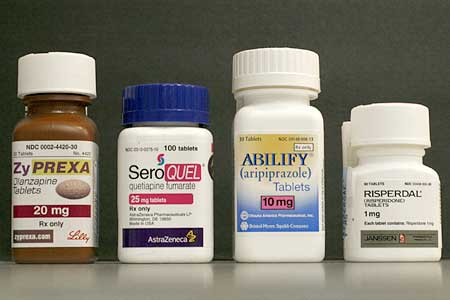 Two psychiatrists with long careers in treating psychotic disorders have recently analyzed the literature and controversies around the long-term use of antipsychotics, in light of criticiism that antipsychotics worsen psychosis and the clinical outcomes in schizophrenia. Two psychiatrists with long careers in treating psychotic disorders have recently analyzed the literature and controversies around the long-term use of antipsychotics, in light of criticiism that antipsychotics worsen psychosis and the clinical outcomes in schizophrenia.
Ronald W. Pies, MD, professor of psychiatry at SUNY Upstate Medical and Tufts universities, comments on recent studies and their interpretations in "Long-term antipsychotic treatment: Effective and often necessary, with caveats" in Psychiatry Times. Allen Frances, professor emeritus and former chair of the department of psychiatry at Duke University School of Medicine and chair of the DSM-IV task force, examines the topic in Psychology Today and mass media.
Here is a brief summary of what the authors say. Links to complete versions are provided in the references below.
What the Literature Says
"It is important to understand that only a portion of people with a first psychotic episode have schizophrenia, which is usually a very chronic illness," Pies writes in Psychiatry Times. "Many have quite brief bouts of psychosis that never return, making long-term antipsychotic treatment unnecessary." He suggests that some confusion about long-term antipsychotics usage results when this population is inappropriately conflated with the population living with chronic psychotic disorders.
According to Pies's review of related psychiatric literature, "There is no convincing evidence that maintenance treatment causes worsening of schizophrenia or related psychotic illnesses, or leads to poorer outcomes, when compared with discontinuation of the antipsychotic." To the contrary, he says, "the preponderance of evidence points to the net benefits of long-term (antipsychotic) use in patients with schizophrenia," including lower overall mortality.
"We need to make modest claims - not sweeping generalizations - about the literature on long-term use of antipsychotic medication," says Pies. "Indeed, these medications are almost certainly over-used - without substantial evidence for their efficacy - in patients with ordinary anxiety disorders or insomnia; for adolescent 'acting out'; and for 'agitation' in geriatric or nursing home populations."
That said, Pies continues, while "'gold-standard,' randomized, placebo-controlled studies are fewer than we would like" and subject to different interpretations, "most randomized, long-term studies of schizophrenia support the net benefit of antipsychotics in preventing relapse of the illness. Some data also show better 'quality of life' with maintenance antipsychotic treatment, compared with drug discontinuation."
Risks vs Benefits
In the end, Pies says, "Discussion of long-term (antipsychotic) use must be placed in the larger perspective of general medical care, in which physicians are constantly struggling with the perennial 'risk vs. benefit' equation. Many life-saving treatments in other medical specialties - from cancer chemotherapy to cardiac surgery - are associated with significant risks. But we must also consider the risks of absent or inadequate treatment, and the inherent morbidity and mortality of the illness itself."
Pies's reader-friendly analysis of the literature examining long-term antipsychotic use is available online in its entirety from Psychiatry Times.
Psychiatrist Allen Frances of Duke University describes his own research and clinical experience with long-term antipsychotic medications and quotes from an interview with Pies in "Setting the record straight on antipsychotics," published in Psychology Today, where he authors the column Saving Normal. "The misleading idea that antipsychotic medications cause or worsen psychosis legitimizes the incorrect view that long-term medication is bad for everyone," Frances concludes. "A minority of people with chronic, severely impairing psychotic symptoms may eventually do fine off meds, but the majority will have relapses that are always disruptive and often dangerous."
Frances offers further analysis of the antipsychotic controversy in a Huffington Post blog, "Do antipsychotics help or harm psychotic symptoms?"
The Treatment Advocacy Center has long decried the overuse and misuse of psychotropic medications, especially for off-label applications and children. At the same time, the preponderance of evidence continues to document the usefulness of antipsychotic medications in saving and improving the lives of at-risk individuals with severe and persistent psychotic disorders.
Doris A. Fuller
Chief of Research and Public Affairs
References:
Research Weekly is a summary published as a public service of the Treatment Advocacy Center and does not necessarily reflect the findings or positions of the organization or its staff. Full access to research summarized may require a fee or paid subscription to the publications.
To comment, visit our Facebook page.
Visit our blog archive to read all our recent posts.
Read more »
(Mar. 15, 2016) What does "asylum" mean in the context of mental illness treatment?
In popular usage, "asylum" has long been linked to state psychiatric hospitals, once known as "insane asylums." What asylum should mean, two authors maintain in a recent publication, is "sanctuary" - a place that provides "protection, safety, security and social support."
In "Rediscovering the concept of asylum for persons with serious mental illness," H. Richard Lamb, MD,* and Linda E. Weinberger, PhD, call for a recognition that many individuals with severe mental illness still need the functions state hospitals once performed in order to live optimally.
The Functions of Asylum
They identify five such functions:
- Lowering stress
- Providing protection and social support
- Matching demands for performance to capabilities
- Providing adequate treatment services
- Supplying structure
"Asylum can be provided in the home by the patient's family or in a community facility, such as a board-and-care home," the authors write in the Journal of the American Academy of Psychiatry and the Law. "In many cases, the structure of a psychiatric hospital is needed."
"Serious problems will most likely arise whenever a community lacks adequate equivalents for the full range of functions traditionally served by state mental hospitals. This includes the provision of asylum to those patients who need it. Indeed, it is apparent that many of the problems plaguing deinstitutionalization today derive, first, from our failure to recognize that some psychiatric patients with serious mental illness still have a need for asylum and, second, from our failure to offer that asylum even when we recognize the necessity."
Practical Realities
The authors describe four situations in which the concept of asylum has practical impacts:
- Rehabilitation. Effective rehabilitation can reduce the need for asylum but, for individuals in need of shelter or structure, "the elements of asylum often need to be supplied concurrently if rehabilitation programs are to achieve maximum results."
- Expectations. There is "a narrow line" between two dangers in treatment - too much and too little stimulation - and it needs to be walked with a recognition that "fruitless efforts to push people to adjust to a lifestyle beyond their capabilities" causes the patients anguish and runs the risk of contributing to their relapse.
- Institutionalism. This syndrome of withdrawal, disinterest and excessive reliance on other institutions was once thought to be entirely the result of living in institutions providing asylum. Increasingly, institutionalism is viewed at least in part as a reflection of the schizophrenic disease process. "A place of asylum should include treatment interventions that increase the individual's ability to tolerate stress. Testing these interventions in a safe and supportive environment can assist in assuring successful transition to less structured settings in the community."
- Incarceration. Mentally ill offenders have additional needs for the functions of asylum when they are released from jails and prisons. Offenders without access to such functions are at higher risk for reoffending and relapse.
"Treating persons with serious mental illness requires more than just making the correct diagnosis, prescribing the right medications and providing the appropriate psychotherapeutic approach," Lamb and Weinberger conclude. "There should be an in-depth understanding of patients' needs for structure and their ability to cope with stress, as well as an assurance that they are in suitable living situations. Above all, the importance of asylum and sanctuary cannot be underestimated."
* H. Richard Lamb is a member of the Treatment Advocacy Center Board of Directors
Doris A. Fuller
Chief of Research and Public Affairs
References
Lamb, H. Richard, Weinberger, Linda E. (1 March 2016). (1 March 2016). Rediscovering the concept of asylum for persons with serious mental illness. Journal of the American Academy of Psychiatry and the Law.
Research Weekly is a summary published as a public service of the Treatment Advocacy Center and does not necessarily reflect the findings or positions of the organization or its staff. Full access to research summarized may require a fee or paid subscription to the publications.
To comment, visit our Facebook page.
Visit our blog archive to read all our recent posts.
Read more »
(Mar. 8, 2016) Nobody has a greater stake in progress toward new treatments for severe mental illness than the patients, caregivers and professionals who live and work with psychiatric disease. Yet, as we noted in our February 23 Research Weekly, the end users of mental health science are typically the "last to know" about research findings that might improve our lives and work now.
The first-episode psychosis protocols promoted in the Recovery After Initial Schizophrenia Episode (RAISE) are a good example. The model developed  with grants from the National Institute of Mental Health moved from clinical trial to implementation in just seven years. Publication of the promising findings was greeted with front-page stories and top-of-the-hour reports last year. with grants from the National Institute of Mental Health moved from clinical trial to implementation in just seven years. Publication of the promising findings was greeted with front-page stories and top-of-the-hour reports last year.
Yet aggressive, multidisciplinary, first-episode intervention practices have been widely used, studied and validated in other countries, for decades; the "breakthrough" of RAISE was that the model underwent clinical trials in the US, was validated on US soil and has now been funded and is being implemented here.
This is progress, to be sure. But the generations of American young adults who experienced first-episode psychosis when the model wasn't well-known here are illustrations - some might say victims - of the practical implications when research does not reach its end users in a timely fashion.
The Research-Practice Gap
Addressing the International Society for CNS Clinical Trials and Methodology (ISCTM) in February, the Treatment Advocacy Center identified three ways that end users fall into the gap between research and practice:
- Research exists, but it's aimed at someone other than us. This would be the case with findings released at professional conferences or published only in professional journals.
- We can find the research, but it's not freely accessible. The recent news that scientists have "moved closer to understanding schizophrenia's cause" was published in Nature. The article can currently be "rented" for 48 hours with printing and saving restrictions or purchased in a printable format for $32. "Pay walls" like these are common and can be prohibitive.
- We can access the research, but it's not easily understood. The promising report that a 12-week course of omega-3 fish oil may reduce the risk of early psychotic symptoms progressing to schizophrenia is available, free in its entirely (and highly recommended) from Nature Communications. But is written for scientists, not lay readers, which makes it difficult to translate into action.
Bridging the Gap
In our comments to the ISCTM, we identified a few of the work-arounds available to members of the public who want to bridge the research-to-user gap for their own benefit.
- Make yourself part of the target audience. Just because you don't subscribe to one of the journals publishing brain and behavior studies doesn't mean you have to be left out of the news. Use Google Alerts to track the conditions, treatments, medications, policies and other topics important to you as an end user. Download apps that allow you to set up a custom news stream for schizophrenia, bipolar disorder, antipsychotics or whatever matters to you. The news will find you.
- Familiarize yourself with the Internet sources that make science publicly available. Hunt for abstracts and articles on Google Scholar, PubMed and similar browsers and databases. Use ClinicalTrials.gov to search for data about clinical studies of humans worldwide.
- Seek out the translators. Research Weekly summarizes one study a week of relevance to the most severe mental illnesses. Hogg Foundation's MH Daily publishes a daily digest of blurbs and links to a variety of topics, including research. Subscribe to Research Weekly and other resources that translate science.
Useful information for patients, families, medical providers, the media and other members of the public falls into the science-to-practice gap. Building our own bridges is one way to shrink it.
Doris A. Fuller
Chief of Research and Public Affairs
References:
Research Weekly is a summary published as a public service of the Treatment Advocacy Center and does not necessarily reflect the findings or positions of the organization or its staff. Full access to research summarized may require a fee or paid subscription to the publications.
To comment, visit our Facebook page.
Visit our blog archive to read all our recent posts.
Read more »
(Mar. 1, 2016) It may not come as news to anyone who cares for a mentally ill loved one that the stress is enormous, but a new survey of 1,600 unpaid caregivers still contains startling - and sobering - findings about the toll such caregiving takes on those of us in this role.
 Three-quarters of the participants reported "high emotional stress" as a result of their caretaking responsibilities. They described the experience as living on "pins and needles." About 4 in 10 said they found it difficult to take care of their own health, and 6 in 10 said caregiving had made their own health worse. Three-quarters of the participants reported "high emotional stress" as a result of their caretaking responsibilities. They described the experience as living on "pins and needles." About 4 in 10 said they found it difficult to take care of their own health, and 6 in 10 said caregiving had made their own health worse.
Overall, the caregivers of loved ones with psychiatric diseases were found to be spending significantly more hours a week and years of their lives caring for their loved ones, who were significantly more likely to be living with them.
Describing "Experiences and Challenges"
The purpose of "On pins & needles: Caregivers of adults with mental illness" was to "describe the experiences and challenges" of mental health caregivers. Prepared by consultants Greenwald & Associates, the study published by the National Alliance for Caregiving (NCA) analyzed a September 2015 survey of 1,601 caregivers of adults with serious-to-moderate emotional or mental health issues.
The report said mental health caregivers of adult children "are in an especially unique situation" because most (64%) report their sons or daughters are financially dependent on friends and family, yet barely one-third of the family caregivers have a plan in place for someone else to provide care once the parent no longer can.
"The findings in this report illustrate how mental illness can impact not only an individual patient, but the family caring for that patient," according to the report drafted by Greenwald & Associates, with input from NCA, National Alliance on Mental Illness and Mental Health American.
Among the findings
- Mental health caregivers average 54 years old. The recipients of their care average 46 years old, but most (58%) are between 18 and 39.
- More care for an adult child (45%) than for any other related person (parent, 14%; spouse, 11%).
- Mental health caregivers average 32 hours of care per week compared with 24 hours for other caregivers.
- Mental health caregivers provide nine years of care on average, more than double the typical four years provided by others.
- In nearly half the cases (45%), the care recipient lives with the caregiver. This compares with 34% of family members for caregiving associated with non-psychiatric conditions.
- About half (48%) the caregivers said they found it difficult to talk to others about their loved one's condition, and about the same number reported "feeling alone" because of their role.
The caregivers also described many challenges to getting diagnosis and treatment for a family member in their care. About half reported healthcare providers had withheld information about their loved one's condition and about the same number said they were included in care conversations less often than they should have been.
Seven policy recommendations are made to address the "unique challenges" facing mental health caregivers.

Doris A. Fuller
Chief of Research and Public Affairs
References:
National Alliance for Caregiving. (February 2016). On pins & needles: Caregivers of adults with mental illness.
Next Week: Transparency on the Front Lines" - Part 2
Research Weekly is a summary published as a public service of the Treatment Advocacy Center and does not necessarily reflect the findings or positions of the organization or its staff. Full access to research summarized may require a fee or paid subscription to the publications.
To comment, visit our Facebook page.
Visit our blog archive to read all our recent posts.
Read more »
(Feb. 23, 2016) We who are patients, caregivers and professionals live on the front lines of mental health progress - or lack of it. We are impacted daily by advances in diagnosis, treatment, services and all the other aspects of living or working with chronic psychiatric diseases. Yet we are more often than not the proverbial "last to know" about new studies and findings about these conditions.
 This gap between evidence and practice too often leaves us woefully underequipped for the life-and-death battles we fight. As a member of the Treatment Advocacy Center team, I am blessed with routine access to brain and behavior research. Nevertheless, I continue to come across information I'd never seen when I was supporting my own daughter's losing war with terminal mental illness. This gap between evidence and practice too often leaves us woefully underequipped for the life-and-death battles we fight. As a member of the Treatment Advocacy Center team, I am blessed with routine access to brain and behavior research. Nevertheless, I continue to come across information I'd never seen when I was supporting my own daughter's losing war with terminal mental illness.
Researchers are on the front lines, too. At the National Institute of Mental Health (NIMH), in laboratories and at regulatory agencies, researchers theoretically are positioned to be the first to know what reaches end users so many years - sometimes decades - later. Yet they, too, face hurdles to research access - and their challenges make the challenges on our front lines even greater.
Transparency on the Scientific Front Lines
The International Society for CNS Clinical Trials and Methodology (ISCTM) is made up of more than 300 members who focus on diseases of the central nervous system such as schizophrenia, bipolar and other mood disorders, Alzheimer's and Huntington's Disease. At their annual scientific meeting February 16-17 in Washington, D.C., the group devoted an afternoon to issues in data transparency on both their front lines and ours.
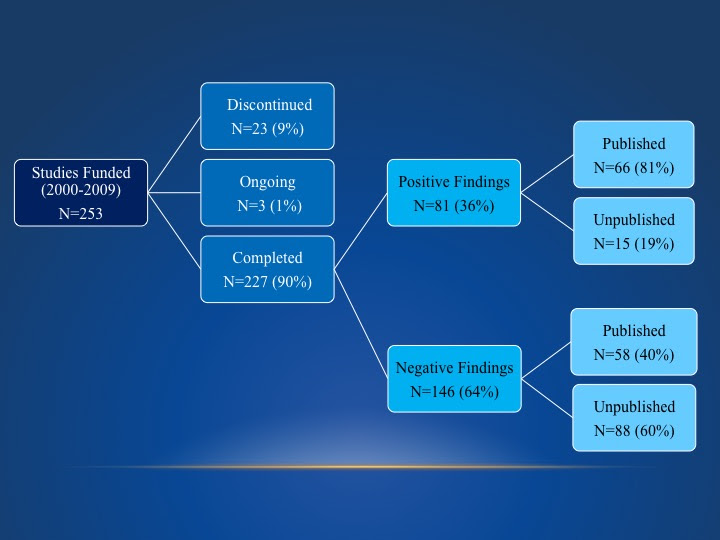
Mark Weiser, chair of the department of psychiatry at Tel Aviv University and associate director for treatment trials for the Stanley Medical Research Institute (SMRI), has been analyzing the publication rates for clinical trials conducted with funding from SMRI, the largest private funder of research into the causes and treatment of schizophrenia and bipolar disorder in the U.S.* Clinical trials test how proposed new treatments work in patients.
Of 253 clinical trials funded by SMRI from 2000 to 2009 and completed, Weiser found, publication rates barely topped 50% per year on average (54.6%). The greatest likelihood of publication was for "positive" studies - those that validated the theory under investigation. Yet most of the completed studies (64%) had "negative" results - meaning the findings did not support the theory being tested - and less than half of those (40%) found publishers (see chart).
"Bad for Everyone"
"This is bad for everyone," Weiser told the audience. "We get up in the morning scratching our heads about how we are going to help patients, and it's very bad if something already has been found not to work, but that information is not available." Unnecessary exposure of patients to study procedures or placebo and wasted funds that might be used for more effective treatments are among the results, he said. The fact that non-publication and positive-finding publication bias are issues in non-psychiatric specialties doesn't make them any less problematic, he said.
Moreover, the results of a majority of even the positive studies (53%) were not reproduced in a subsequent study, a critical benchmark for validity. The average time from the completion of a study to its publication was approximately two years, which meant that even if a treatment had positive findings and a journal accepted it for publication, other scientists - and the public - went on without the benefit of them for an extended time.
Some measures and market developments in recent years have improved access to both positive and negative data for scientists and the rest of us. Those will be the subjects of Transparency on the Public Front Lines - Part 2 on March 8.
Doris A. Fuller
Chief of Research and Public Affairs
* Stanley Medical Research Institute is a supporting organization of the Treatment Advocacy Center.
References:
- Weiser, M. "Improving transparency of clinical trial data." ISCTM 12th Annual Scientific Meeting. The Fairmont, Washington, DC. 16 February 2016. Conference presentation.
Next Week: February Roundup
Research Weekly is a summary published as a public service of the Treatment Advocacy Center and does not necessarily reflect the findings or positions of the organization or its staff. Full access to research summarized may require a fee or paid subscription to the publications.
To comment, visit our Facebook page.
Visit our blog archive to read all our recent posts.
Read more »
(Feb. 16, 2016) The findings of a recent survey of emergency room physicians will come as no surprise to anyone who has been or accompanied someone in psychiatric crisis to an emergency room.
More than 8 in 10 emergency room physicians surveyed by the American College of Emergency Physicians (ACEP) in 2015 said the mental health care system was not working for the patients in their region, leading to more psychiatric patients in hospital ERs waiting longer to see doctors.
90% of ERs are boarding patients
According to ACEP:
- "Nearly 9 in 10 emergency physicians reported psych patients were being 'held' in their emergency departments" - a practice known as "boarding."
- 91% of the responding doctors reported the practice led to "distracted staff, bed shortages or violent behavior by distressed psychiatric patients, all of which may harm patients or health care staff or both."
- Long waits in hospital ERs "do not help patients in psychiatric crisis and sometimes actually exacerbate the problem."
ACEP reports that 4% of all visits to emergency rooms each year are made by people in psychiatric crisis because of insufficient mental health resources in communities, particularly hospital beds. "Psychiatric patients may wait DAYS in an emergency department until a psych bed becomes available," ACEP said in a statement. In a 2014 review of the literature on psychiatric patient care in the ED, the organization reported "one study has demonstrated that 70% of institutions have to board psychiatric patients for more than 24 hours and 10% for a week or more."
More Psych Patients with Worse Symptoms
Arica C. Jesper et al. set out to quantify these impacts by examining the emergency department of an academic university hospital in Sacramento, California, when the county eliminated 50 of the 100 beds in a public inpatient facility and closed the facility's outpatient unit. The results starkly illustrate what the emergency physician survey responses.
Comparing ER use at the university hospital in the eight months before the beds and outpatient facilities were closed and the eight months following, the researchers found:
- The number of ER visits requiring psychiatric consultation tripled after the county cut its inpatient bed numbers in half.
- The average time psychiatric patients spent waiting to be seen by a psychiatric clinician increased from an average of 14 hours to nearly 22 hours.
- The average number of psychiatric patients held in the ER longer than 24 hours skyrocketed from 28 patients in the eight months before the county closures to 322 in the eight months afterward.
- The number of psychiatric consultations when the most serious symptoms of psychiatric crisis - assaultive or suicidal behavior - were the chief complaint ballooned from 58 to 283. The number of patients presenting with hallucinations shot from 18 to 79.
- A smaller percentage of the patients - who now included more severely ill patients - were ultimately transferred to hospital beds; more were discharged home instead.
- The number of hours per day that psychiatric patients occupied bed space in the ER rose from approximately 18 hours to 97 hours, substantially affecting the flow of other patients through the ER. Care for as many as 13-20 non-psychiatric patients may have been delayed or "displaced" as a result.
Toward Better Practices
"With the unique responsibility to care for every patient and serve as a safety net, the ED is particularly influenced by changes in community resources," the authors wrote. The paper noted that the Washington State Supreme Court already has found the boarding of psychiatric patients in the ED to be unconstitutional and projected that legal action elsewhere "will likely have an important influence on the care of psychiatric patients in the ED" going forward.
"Boarding is a significant problem in emergency medicine," the emergency physicians group summarized in its 2014 literature review. "For psychiatric patients, the problem is significantly worse, with psychiatric patients remaining in the ED far longer than medical patients. Research indicates that boarding negatively affects patient quality of care, hospital operations and the system's finances.
Labeling the situation a "national disconnect," Elizabeth M. La et al. from Duke University in December 2015 proposed an evidence-based computer model for calculating the supply of hospital beds needed to reduce ER stays in one region of North Carolina. ACEP advanced eight best practices for reducing the number of psychiatric patients presenting in emergency rooms, including the use of "psychiatry ED observation" units where patients in mental health crisis may be kept "in a quiet environment separate from the chaotic environment of the main ED." Any number of practices exist to reduce the emergency in America's emergency rooms. What is lacking is implementation.
Doris A. Fuller
Chief of Research and Public Affairs
References:
Next Week: Why Data Transparency Matters for Patients, Families and the Public
Research Weekly is a summary published as a public service of the Treatment Advocacy Center and does not necessarily reflect the findings or positions of the organization or its staff. Full access to research summarized may require a fee or paid subscription to the publications.
To comment, visit our Facebook page.
Visit our blog archive to read all our recent posts.
Read more »
(Feb. 9, 2016) News that scientists have "moved closer to understanding schizophrenia's cause" had barely been published when social networks began trending with excitement that a cure for the disease might be on the horizon. Clinician phones at the same time began ringing with calls from eager patients and families.
The Thesis of Sekar et al.
The paper by Aswin Sekar et al. published in the journal Nature is an important study, and the authors are to be applauded for their elegant, creative and careful work. However, it is important to understand the underlying assumptions of this study, and the overall complexity of the findings, in order to put them in context.
The thesis of the paper is that the cerebral cortex of the brain becomes excessively thin in people with schizophrenia due to an abnormally active form of "synaptic pruning" that occurs in all individuals in late adolescence. "Synaptic pruning" is in part controlled by a protein called complement component 4 (C4), which is also used by white blood cells in the immune system to communicate with one another.

According to the study by Sekar et al., people with schizophrenia are more likely to have a genetic variant of C4 that allows for the overly rapid elimination of synapses. The study is important and unique in that it identifies a specific molecular target that is linked to a plausible neurobiological process and which may be amenable to new forms of treatment.
What We Know and Don't Know
First, there appears to be broad agreement in the scientific literature that there is loss of volume of the cerebral cortex in schizophrenia. Recent analyses of this finding have gone a long way towards showing that the thinning of the cortex occurs early in the course of the illness and that it cannot be fully explained by exposure to antipsychotic drugs.
However, the process of cortical thinning appears to vary considerably in its timing and in the parts of the brain that are most effected. Furthermore, while the degree of thinning is statistically different from that seen in unaffected persons, the distribution of cortical volumes overlaps significantly between people with schizophrenia and other individuals. This means it is quite unlikely that a "cortical volume" test could identify individuals who may be at risk for schizophrenia in a reliable way.
Second, the thinning of the cerebral cortex seen in schizophrenia may be due to excessive synaptic pruning as proposed in the current study, but it may also be due to other processes that we do not yet understand. The abnormal forms of the C4 gene that the authors identified were associated with a 1.1 to 1.3 greater chance of having schizophrenia. This means that if schizophrenia occurs randomly in 10 per 1,000 people, having a copy of the abnormal genes increases the risk to 11-13 per 1,000.
Earlier genetic studies of schizophrenia determined there may be a large number of other genes close to the C4 gene that also contribute to the risk for schizophrenia. Some of these genes may turn out to be more important than C4, or perhaps they work in concert with C4 to increase risk for disease.
Likewise, when C4 gene expression levels were measured in brain samples, patients with schizophrenia showed levels that were statistically higher, but only 1.4 times greater than that seen in samples from other patients. Thus, it is also hard to see that measurement of protein or gene expression levels as tests for schizophrenia risk would be accurate or reliable on their own.
The Future for Treatment
Finally, if the C4 protein were to be a viable target for drug development, several obstacles would need to be overcome.
We would need to identify drugs that inhibited the activity of C4 in the brain during the period of synaptic pruning but were not toxic to other parts of the body, particularly the immune system. In other branches of medicine, immune-related proteins are usually modified by giving antibodies, which are themselves proteins, directed towards the target molecules. It has been notoriously difficult to find antibodies that can cross the "blood-brain barrier" which is designed to keep proteins out. It may be possible to develop "small molecule" or non-protein chemicals that alter C4 activity, but the study of this problem will take significant time and investment of resources.
These drugs would also be likely to be more effective if they were given before illness onset. This means we will have to become much more accurate in our prediction of who is at risk for schizophrenia before these drugs can be given safely.
MICHAEL KNABLE, DO
Executive Director, Sylvan C. Herman Foundation
Board Member, Treatment Advocacy Center
MAREE J. WEBSTER, Ph.D.
Executive Director, Stanley Medical Research Institute, a supporting organization of the Treatment Advocacy Center
References:
Sekar, A., et al. Schizophrenia risk from complex variation of complement component 4. (27 January 2016). Nature.
Next Week: Emergency in the Emergency Room
Research Weekly is a summary published as a public service of the Treatment Advocacy Center and does not necessarily reflect the findings or positions of the organization or its staff. Full access to research summarized may require a fee or paid subscription to the publications.
Read more »
(Feb. 2, 2016) In the second half of 2015, the Food and Drug Administration (FDA) approved two new antipsychotic medications for oral use in the United States. Both are simply "me-too" drugs and do not add anything useful to the list of antipsychotics already available.
The first of these is brexpiprazola (trade name: Rexulti). The conception and birth of this drug makes an interesting story. It is manufactured by Otsuka Pharmaceuticals in partnership with Lundbeck. Otsuka also manufactures aripiprazole (Abilify), approved and heavily promoted for the treatment of schizophrenia, bipolar disorder, depression and autism. Sales of Abilify from mid-2013 to mid-2014 totaled $7.2 billion which, according to the research firm IMS Health, made Abilify the most profitable drug in the United States.
When Abilify Went Generic
Unfortunately for Otsuka, Abilify's patent expired; in 2014, a generic version was introduced. This means that, over time, the price of generic aripiprazole will fall sharply, along with Otsuka's profits. So what did Otsuka do? It simply introduced a chemically slightly altered version of aripiprazole, tested it against a placebo as the FDA requires, and presto—brexpiprazole (Rexulti) is being marketed as a new drug ... and sold for the treatment of schizophrenia and depression at about the same high price as Abilify was originally sold for. This is all perfectly legal. Since brexpiprazole has never been compared to aripiprazole in any published trial, it is not known whether it is any different at all.
In fact, aripiprazole (Abilify) is only an average antipsychotic when compared to other antipsychotics. In a definitive comparison of 15 antipsychotic drugs published in 2013 in Lancet, aripiprazole was rated as only average on efficacy and acceptability, considerably behind clozapine and amisulpride1 (which is sold in Europe, but not in the US).
Bottom line: According to the highly respected Medical Letter of August 17, 2015, "There is no reason to prescribe brexpiprazole over generic aripiprazole, which has a much longer record of efficacy and safety and should soon cost much less."
Cariprazine (Vrylar)
The other new antipsychotic to come to market in 2015 was cariprazine (trade name: Vraylar), manufactured by Forest Laboratories. Like the majority of existing antipsychotics already on the market, cariprazine has effects on both dopamine and serotonin receptors. There appears to be nothing unusual about it, including its side effects. Approved by the FDA for the treatment of both schizophrenia and bipolar disorder, it can be taken by mouth once daily, with or without food. The recommended dose for schizophrenia is 1.5 to 6 mg. per day and for bipolar disorder 3 to 6 mg. per day.
Consistent with FDA regulations, cariprazine was only tested against a placebo and to date no study has been carried out comparing it to any other existing antipsychotic. Bottom line: There is no reason so far to expect cariprazine to be any better than any of the existing antipsychotics. As a new antipsychotic on patent, it is likely only to be distinguished by its high cost.
E. FULLER TORREY, MD
Associate Director of Research, Stanley Medical Research Institute
Founder and member of the board, Treatment Advocacy Center
Co-chair, Psychiatric Advisory Board to the Treatment Advocacy Center
* Disclosure: John Davis, MD, the senior author on the Lancet paper, is on the staff of the Stanley Medical Research Institute, a supporting organization of the Treatment Advocacy Center, and a member of the Treatment Advocacy Center's Psychiatric Advisory Board.
References:
1 Leucht S, Cipriani A, Spinali L, et al. Comparative efficacy and tolerability of 15 antipsychotic drugs in schizophrenia: a multiple-treatments meta-analysis. Lancet 2013; 382: 951-962.
Next Week: What the Latest Schizophrenia News Means to Patients, Families and Communities
Research Weekly is a summary published as a public service of the Treatment Advocacy Center and does not necessarily reflect the findings or positions of the organization or its staff. Full access to research summarized may require a fee or paid subscription to the publications.
To comment, visit our Facebook page.
Visit our blog archive to read all our recent posts.
Read more »
(Jan. 26, 2016)
-
Natural Defense against Bipolar Disorder
Naturally occurring neurological resiliency may explain why some individuals at high risk for bipolar disorder do not develop the disease even when other members of their families do. The finding suggests that neuroplasticity could become the basis for developing new interventions.
Dima, D., et al. (5 January 2016). Connectomic markers of disease expression, genetic risk and resilience in bipolar disorder. Translational Psychiatry. (Summary on Medical Daily)
-
Bipolar and sleep.
A comparison of the sleep and circadian patterns in 136 people with bipolar disorder and 422 of their relatives without the condition found significant differences in a dozen specific characteristics such as average length of time spent awake per day and average amount of activity per day. "These variants, in turn, could provide clues to new approaches for both preventing and treating BP."
Pagani, L., et al., Genetic contributions to circadian activity rhythm and sleep pattern phenotypes in pedigrees segregating for severe bipolar disorder. Proceedings of the National Academy of Sciences. (Summary on Medical News Today)
-
Negative Symptoms and Lost Neurons
Significant loss of one type of cell in a tiny area of the brain's memory center called CA2 was found linked to the social deficits of schizophrenia in a mouse study. The same changes, which emerge during the equivalent of young adulthood in the mice, were found in postmortem examinations of people with the disease. There currently are no medications for the "negative symptoms" of schizophrenia: social withdrawal, reduced motivation and decreased emotional involvement common. A better understanding of the mechanisms underlying these symptoms could suggest new directions for treatment.
Piskorowski, R.A., et al (6 January 2016). Age-Dependent Specific Changes in Area CA2 of the Hippocampus and Social Memory Deficit in a Mouse Model of the 22q11.2 Deletion Syndrome. Neuron. (Summary on Health Daily)
-
Marijuana Use and Schizophrenia Risk
"Considerable evidence" suggests that a key ingredient of marijuana increases the risk of developing schizophrenia-related symptoms in early adulthood. The ingredient changed the brains of adolescent rates at the molecular level.
Renard, J., et al. (4 January 2016). Adolescent Cannabinoid Exposure Induces a Persistent Sub-Cortical Hyper-Dopaminergic State and Associated Molecular Adaptations in the Prefrontal Cortex. Cerebral Cortex. (Summary on Medical News Today)
-
Mental Illness, Young Adults and the ER
Emergency room visits by young adults with mental illness have increased significantly since implementation of the Affordable Care Act. "Significant barriers to care for mental health issues persist, leaving these patients little choice but to seek care in the only place they know they can get it: the ER."
Hernandez-Boussard, T., et al. (6 January 2016). Relationship of Affordable Care Act implementation to emergency department utilization among young adults. Annals of Emergency Medicine.

Doris A. Fuller
Chief of Research and Public Affairs
Summarized in RESEARCH WEEKLY in January:
Next Week: Two New Antipsychotics: What do We Know About Them?
Research Weekly is a summary published as a public service of the Treatment Advocacy Center and does not necessarily reflect the findings or positions of the organization or its staff. Full access to research summarized may require a fee or paid subscription to the publications.
To comment, visit our Facebook page.
Visit our blog archive to read all our recent posts.
Read more »
|
|