

(Feb. 9, 2016) News that scientists have "moved closer to understanding schizophrenia's cause" had barely been published when social networks began trending with excitement that a cure for the disease might be on the horizon. Clinician phones at the same time began ringing with calls from eager patients and families.
The Thesis of Sekar et al.
The paper by Aswin Sekar et al. published in the journal Nature is an important study, and the authors are to be applauded for their elegant, creative and careful work. However, it is important to understand the underlying assumptions of this study, and the overall complexity of the findings, in order to put them in context.
The thesis of the paper is that the cerebral cortex of the brain becomes excessively thin in people with schizophrenia due to an abnormally active form of "synaptic pruning" that occurs in all individuals in late adolescence. "Synaptic pruning" is in part controlled by a protein called complement component 4 (C4), which is also used by white blood cells in the immune system to communicate with one another.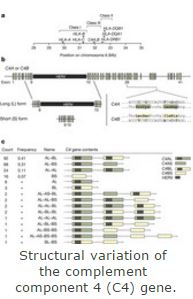
According to the study by Sekar et al., people with schizophrenia are more likely to have a genetic variant of C4 that allows for the overly rapid elimination of synapses. The study is important and unique in that it identifies a specific molecular target that is linked to a plausible neurobiological process and which may be amenable to new forms of treatment.
What We Know and Don't Know
First, there appears to be broad agreement in the scientific literature that there is loss of volume of the cerebral cortex in schizophrenia. Recent analyses of this finding have gone a long way towards showing that the thinning of the cortex occurs early in the course of the illness and that it cannot be fully explained by exposure to antipsychotic drugs.
However, the process of cortical thinning appears to vary considerably in its timing and in the parts of the brain that are most effected. Furthermore, while the degree of thinning is statistically different from that seen in unaffected persons, the distribution of cortical volumes overlaps significantly between people with schizophrenia and other individuals. This means it is quite unlikely that a "cortical volume" test could identify individuals who may be at risk for schizophrenia in a reliable way.
Second, the thinning of the cerebral cortex seen in schizophrenia may be due to excessive synaptic pruning as proposed in the current study, but it may also be due to other processes that we do not yet understand. The abnormal forms of the C4 gene that the authors identified were associated with a 1.1 to 1.3 greater chance of having schizophrenia. This means that if schizophrenia occurs randomly in 10 per 1,000 people, having a copy of the abnormal genes increases the risk to 11-13 per 1,000.
Earlier genetic studies of schizophrenia determined there may be a large number of other genes close to the C4 gene that also contribute to the risk for schizophrenia. Some of these genes may turn out to be more important than C4, or perhaps they work in concert with C4 to increase risk for disease.
Likewise, when C4 gene expression levels were measured in brain samples, patients with schizophrenia showed levels that were statistically higher, but only 1.4 times greater than that seen in samples from other patients. Thus, it is also hard to see that measurement of protein or gene expression levels as tests for schizophrenia risk would be accurate or reliable on their own.
The Future for Treatment
Finally, if the C4 protein were to be a viable target for drug development, several obstacles would need to be overcome.
We would need to identify drugs that inhibited the activity of C4 in the brain during the period of synaptic pruning but were not toxic to other parts of the body, particularly the immune system. In other branches of medicine, immune-related proteins are usually modified by giving antibodies, which are themselves proteins, directed towards the target molecules. It has been notoriously difficult to find antibodies that can cross the "blood-brain barrier" which is designed to keep proteins out. It may be possible to develop "small molecule" or non-protein chemicals that alter C4 activity, but the study of this problem will take significant time and investment of resources.
These drugs would also be likely to be more effective if they were given before illness onset. This means we will have to become much more accurate in our prediction of who is at risk for schizophrenia before these drugs can be given safely.
MICHAEL KNABLE, DO
Executive Director, Sylvan C. Herman Foundation
Board Member, Treatment Advocacy Center
MAREE J. WEBSTER, Ph.D.
Executive Director, Stanley Medical Research Institute, a supporting organization of the Treatment Advocacy Center
References:
Sekar, A., et al. Schizophrenia risk from complex variation of complement component 4. (27 January 2016). Nature.
Next Week: Emergency in the Emergency Room
Research Weekly is a summary published as a public service of the Treatment Advocacy Center and does not necessarily reflect the findings or positions of the organization or its staff. Full access to research summarized may require a fee or paid subscription to the publications.