(Jan. 21, 2016) The study of mental health is characterized by what is known as the "evidence-to-practice" or "science-to-treatment" gap. "Chasm" would be more fitting.
Around the world, thousands of scientists and academics are at work to explore and define the causes, mechanisms and treatments of psychiatric diseases and to examine the public health, policy, economic and other impacts of them. Yet few of these discoveries make their way into general public awareness and usefulness.
The gap has huge practical implications. Hypotheses are being tested, treatments are being tried, and evidence is being amassed that directly bears on the everyday lives and work of patients, families, clinicians and policymakers, who don't learn about it in a timely way - or at all. RESEARCH WEEKLY was launched by the Treatment Advocacy Center as one small step toward bridging the gap. When we publish and distribute a blog like "Fish oil may delay onset of schizophrenia," it is our contribution to getting treatment evidence into the hands of people who could benefit from it. When we calculate the risk mental illness adds to police incidents in a study like "Overlooked in the Undercounted: The Role of Mental Illness in Fatal Law Enforcement Encounters," it is because lawmakers cannot make evidence-based policy without evidence.
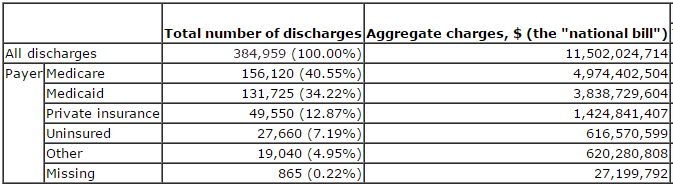
FIGURE 1: The National Bill for Schizophrenia Hospitalization, By Payer (2013)
The Cost Factor
One of the many factors that influence the transfer of evidence to policy or practice is money. From city halls to the halls of Congress, the savings or cost associated with treating or not treating people with severe mental illness is often decisive in whether treatment policies and practices fly or die. Fortuitously, when it comes to the single biggest driver of direct costs for severe mental illness - hospitalization - the federal government itself operates a robust and user-friendly resource.
The Healthcare Cost and Utilization Project (called HCUP) is "a family of health care databases and related software tools and products" operated by the Agency for Healthcare Research and Quality (AHRQ) within the Department of Health & Human Services. Among a multitude of data points, HCUP reports the cost of all hospital stays in the US - including mental health hospital stays - by year, region, state and many other variables. HCUP labels these aggregated costs "the national bill."
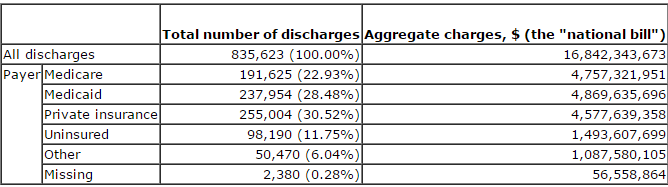
According to HCUP, there were 1.2 million hospital stays for treatment of mood disorders and schizophrenia in 2013 (the most recent year reported,) and the "national bill" for this inpatient treatment was $28,344,368,387 - $28 billion, in rounder numbers. Mood disorders (primarily bipolar disorder and depression) accounted for the lion's share of the absolute cost - $16.8 billion. With roughly half as many people diagnosed, schizophrenia was more costly per capita at $11.5 billion.
HCUP's data shows that the public invests heavily in hospitalizing these critically ill patients. Through Medicare and Medicaid, the public paid 75% of the national bill for hospitalization related to schizophrenia and 50% of the bill for mood disorders in 2013 (Figures 1 and 2). The combined cost to Medicaid for hospitalizations related to the two conditions was topped only by the costs of hospitalizations for live births and septicemia ("blood poisoning"). At almost $9.2 billion, inpatient care for the two psychiatric diseases cost Medicaid more than twice what either respiratory failure or heart attack did.
FIGURE 2: The National Bill for Mood Disorder Hospitalization, By Payer (2013)
In the winter 2016 edition of Issues in Science and Technology, researcher Judith Teich writes, "Making progress on helping people with (serious mental illness) will depend not just on new drugs but on good information on which effective policies and treatment regiments can be based."
Psychiatric hospitalization is the most expensive treatment modality that exists for severe mental illness. It takes place when psychiatric symptoms become so acute that inpatient care becomes a medical necessity, provided a bed is available. The national bill details the high cost that results when mood disorders and schizophrenia are not treated until psychiatric symptoms become so acute that inpatient care becomes necessary. It's a resource that can help address the "service-to-practice" gap by providing "good information" for discussing "effective policies and treatment regiments" of two of the most disabling - and costly - psychiatric diseases.

Doris A. Fuller
Chief of Research and Public Affairs
References:
Next Week: January Digest
Research Weekly is a summary published as a public service of the Treatment Advocacy Center and does not necessarily reflect the findings or positions of the organization or its staff. Full access to research summarized may require a fee or paid subscription to the publications.
To comment, visit our Facebook page.
Visit our blog archive to read all our recent posts.
Read more »
 (Jan. 12, 2016) Two theories have for decades dominated research on the causes of schizophrenia: genetics and neurotransmitters. Over the past two years, a third theory – the infectious/inflammatory theory—has become the first major new addition to schizophrenia study in the last half-century and, with less evidence, to the study of bipolar disorder and depression. (Jan. 12, 2016) Two theories have for decades dominated research on the causes of schizophrenia: genetics and neurotransmitters. Over the past two years, a third theory – the infectious/inflammatory theory—has become the first major new addition to schizophrenia study in the last half-century and, with less evidence, to the study of bipolar disorder and depression.
This theory states that infections play an important role in causing schizophrenia, probably in conjunction with predisposing genes or the effects of infectious agents on neurotransmitters.*
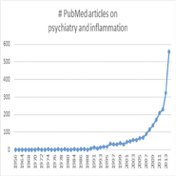
Evidence of the growing focus can be seen in the recent outpouring of professional papers proposing to use anti-infective and anti-inflammatory drugs to treat schizophrenia and bipolar disorder (see figure below). Also indicative is the emergence of infectious/inflammatory theory in mainstream scientific media and books, including Infectious Madness: The Surprising Science of How We “Catch” Mental Illness, by science writer Harriet Washington (Little, Brown, 2015).
Now In Treatment Trials
 The Stanley Medical Research Institute (SMRI), a supporting organization of the Treatment Advocacy Center, has been funding research into the role of infection and inflammation in the causes of and treatment for schizophrenia for more than 20 years. Half of SMRI’s current 52 treatment trials involve the use of anti-infective or anti-inflammatory agents/drugs to alter the immune system. Slightly more than half of its newly funded trials also will be testing anti-infective or anti-inflammatory agents in the treatment of schizophrenia. The Stanley Medical Research Institute (SMRI), a supporting organization of the Treatment Advocacy Center, has been funding research into the role of infection and inflammation in the causes of and treatment for schizophrenia for more than 20 years. Half of SMRI’s current 52 treatment trials involve the use of anti-infective or anti-inflammatory agents/drugs to alter the immune system. Slightly more than half of its newly funded trials also will be testing anti-infective or anti-inflammatory agents in the treatment of schizophrenia.
An example is Valacyclovir, an antiviral widely used against herpes family viruses. In 2014, a small SMRI trial reported improved cognitive functions of individuals with schizophrenia; a much larger replication trial is in progress using 12 American sites. Treatment trials also are underway utilizing anti-inflammatory drugs (e.g. aspirin) specifically on patients with schizophrenia who have elevated levels of inflammatory markers in their blood (e.g., high C-reactive protein). The aspirin study will be completed in mid-2016.
Meanwhile, the American Journal of Psychiatry in November 2015 published a review of 200 research papers on inflammation and depression that found a similar link. “Depression and inflammation are intertwined, fueling and feeding off each other,” Janice K. Kiecolt-Glaser et al. wrote in the provocatively titled “Inflammation: Depression fans the flames and feasts on the heat.” “This bidirectional loop, in which depression facilitates inflammatory responses and inflammation promotes depression, has clear health consequences.”
Practical Implications
As director of the NIMH in 2012, Dr. Thomas Insel described what he called the “crisis of medication development for mental disorders.”
“There is diminishing activity in research and development for new medications within either the biotech or pharmaceutical industries,” he wrote in “Experimental Medicine.”
“While the development of psychosocial interventions and devices, including the use of mobile technologies, is promising, the absence of a robust development pipeline for more effective medications would be worrisome in any area of medicine and should be a grave concern to the mental health community.” He reported that creating new medications, on average, is a 15-year endeavor that costs more than $2 billion and fails 95% of the time.
In such an environment, the growing focus in psychiatric research on the role of conditions that can be treated with an existing arsenal of proven drugs and medications is one with significant practical implications for individuals who live or work with the most severe mental illnesses.
* Infections as measured by antibodies in the blood; inflammation, as measured by markers such as C-reactive protein and various cytokines.
JOHN M. DAVIS, M.D.
Professor of Psychiatry and Research Professor of Medicine
Department of Psychiatry, University of Illinois at Chicago
Member, Psychiatric Advisory Board of the Treatment Advocacy Center
References:
Next Week: "The National Bill" for Severe Mental Illness
Research Weekly is a summary published as a public service of the Treatment Advocacy Center and does not necessarily reflect the findings or positions of the organization or its staff. Full access to research summarized may require a fee or paid subscription to the publications.
To comment, visit our Facebook page.
Visit our blog archive to read all our recent posts.
Read more »
(Jan. 5, 2016) Those who live with psychotic disorders – the individuals, their family members, caregivers and others nearby – inevitably live with the issue of medication adherence. Literature reviews on the subject typically report average rates of adherence in the 40-60% range; the NIMH estimates that approximately half the population with severe bipolar disorder or schizophrenia is not receiving treatment on any given day.
Yet medication adherence is the linchpin of improved outcomes. Antipsychotic medications are effective in controlling the hallucinations and paranoid delusions of schizophrenia and other psychotic conditions – symptoms that can severely disrupt daily living. Individuals with psychotic disorders who adhere to prescribed antipsychotics are less likely to be violent or victimized, involved with the criminal justice system, homeless, hospitalized or to experience a host of other circumstances. They also report higher quality of life.
Zachary Predmore et al. of the RAND Corporation have now added an economic dimension to the discussion of adherence. Using a financial model based on published data, the authors concluded that an annual net savings of $3.28 billion would be realized by states if patients with schizophrenia receiving public benefits adhered more completely to their antipsychotic medication prescriptions.* Despite the increase in costs for prescription drugs with higher adherence rates (projected at $462 million), net savings were estimated at $1,580 per patient. Most of the estimated savings would result from lower hospitalization rates ($2.54 billion), lower rates of criminal justice system involvement ($684 million) and lower costs for outpatient care ($514 million).
Strategies for Improving Adherence
Evidence that some interventions improve adherence to antipsychotic medications and improve outcomes exists. Stefan Priebe et al. conducted a randomized controlled trial in the United Kingdom to assess the influence of small economic incentives (under $25) on adherence to antipsychotic injections over a 12-month period. The researchers reported “significantly higher” adherence among study participants who were given a cash payment immediately after receiving their injections. On average, the financially incentivized group received 85% of their prescribed antipsychotic injections; the control group, which received no incentives, received 67% of prescribed injections. The odds of patients adhering at a rate of 95% also were significantly higher. More than one-quarter of the incentivized group achieved adherence of at least 95% compared with 5% of the controls that received no incentives.
Other intervention strategies that have produced mixed or contradictory results include replacing oral medications with long-acting injectable antipsychotics, medication management programs and the use of signs, alarms, checklists and electronic medication monitoring.
Ultimately, improving antipsychotic medication adherence – with all its attendant impacts on costs and outcomes – requires a better understanding of what influences adherent behavior. K.V. Sendt et al. conducted a tightly focused review of adherence studies published between 1980 and June 2012 involving 6,235 patients. They report that positive attitude toward medication and insight into illness were the only factors consistently associated with greater adherence. Evidence about the role of side effects – commonly blamed for non-adherence – was weak or contradictory.
* The authors do not define “adherence.” Generally, taking medication as prescribed 75-80% of the time has been considered an adequate level of compliance.
Doris A. Fuller
Chief of Research and Public Affairs
References:
Next Week: The Growing Focus on Inflammation in Schizophrenia Research
Research Weekly is a summary published as a public service of the Treatment Advocacy Center and does not necessarily reflect the findings or positions of the organization or its staff. Full access to research summarized may require a fee or paid subscription to the publications.
To comment, visit our Facebook page.
Visit our blog archive to read all our recent posts.
Read more »
(Dec. 29, 2015) Research Weekly did not begin arriving in mailboxes until the end of 2015, but interesting, illuminating and even hopeful mental illness research was in circulation throughout the year. Among the Treatment Advocacy Center’s staff favorites, in reverse chronological order, are the following.
- Comprehensive treatment of first-episode psychosis improved outcomes in clinical trials.
Nearly a dozen articles in multiple publications reported on the first two years of results from RAISE (Recovery After Initial Schizophrenia Episode) projects. The mostly young-adult participants were found to be more likely to be in treatment, experiencing fewer symptoms, enjoying improved quality of life and working or going to school than non-participants. Programs based on the findings are currently being rolled out across the country. (Referenced in Research Weekly, December 2015.)
- People with untreated mental illness are 16 times more likely to be killed during a police encounter.
Doris A. Fuller et al. conclude that untreated mental illness is so prevalent in fatal police incidents that reducing encounters between on-duty law enforcement and individuals with the most severe psychiatric disease may represent the single most immediate, practical strategy for reducing law enforcement homicides in the United States. (“Overlooked in the undercounted: The role of mental illness in fatal law enforcement encounters,” Treatment Advocacy Center, December 2015).
- Dramatic differences exist in how widely clozapine is prescribed from state to state.
E. Fuller Torrey et al. report dramatic differences in prescription rates for the antipsychotic clozapine among the states. Clozapine (trade name Colzaril) is the only drug ever approved by the FDA for treatment-resistant schizophrenia or suicide prevention. Usage in the US dramatically trails other countries. Among the states, usage ranges from 2% in Nevada, Oregon and Louisiana to 16% in South Dakota. Usage of 10-20% in the candidate population is estimated to be appropriate. (“Clozapine for treating schizophrenia: A comparison of the states,” Treatment Advocacy Center, November 2015)
- Can a child's contact with cat litter lead to schizophrenia?
Researcher and author Harriet A. Washington examines whether humans “catch” mental illness through viruses, prions and bacteria and argues against the “false dichotomy of mental versus physical disease.” She also proposes practical strategies for reducing psychiatric conditions such as schizophrenia, autism and OCD by making greater use of medical tools. ("Infectious madness: The surprising science of how we ‘catch’ mental illness,” Little, Brown, October 2015)
- Ex-inmates with serious mental illness are more likely to be violent.
Zheng Chang et al. find that former prisoners with psychiatric disorders or substance abuse are “substantially more likely” to commit a violent crime after release than other prisoners. The authors estimate there could be 1 million fewer violent crimes a year in the US if prisoners with these conditions received better health care behind bars and after release to the community. (“Psychiatric disorders and violent reoffending: a national cohort study of convicted prisoners in Sweden,” The Lancet, September 2015)
- Fish oil, taken in the earliest stages of schizophrenia, may slow development of schizophrenia.
Amminger et al. report that symptoms suggestive of later schizophrenia were reduced for more than six years among a study population that took a 12-week course of omega-3 fish oil. (“Longer-term outcome in the prevention of psychotic disorders by the Vienna omega-3 study,” Nature Communications, August 2015).
- Coercion during hospital admission does not hurt outcomes.
Stephen Shannon et al. examine the impact of coercion during psychiatric admission and find it unrelated to functioning and quality of life one year after discharge. “Quality of life” was measured by factors such as employment, housing or engagement with friends.” (“Quality of life and functioning one year after experiencing accumulated coercive events during psychiatric admission,” Psychiatric Services, August 2015)
- Criminal acts, incarceration and repeat offenses among individuals with bipolar disorder.
Thomas Fovet et al. review 35 academic articles and find criminal acts to be “common” among patients with bipolar disorder and the prevalence of bipolar among prison populations to be “high” (2%-7% of all inmates). Bipolar inmates also were found to be at higher risk for re-incarceration and suicide. The authors conclude that “many improvements should be made both within and outside prison” to improve care for individuals with bipolar disorder. (“Individuals with bipolar disorder and their relationship with the criminal justice system: A critical review,” Psychiatric Services, April 2015)
- States could generate substantial savings and human suffering could be reduced by improving adherence to antipsychotic medications among individuals with schizophrenia.
Zachary Predmore et al. estimate annual net savings of $3.28 billion if all patients with schizophrenia took their prescribed antipsychotics. Adherence to medication is associated with lower rates of victimization, criminalization, hospitalization and other consequences of non-treatment. (“Improving antipsychotic adherence among patients with Schizophrenia: Savings for States,” in Psychiatric Services, April 2015, will be summarized in a January 2016 Research Weekly.)
- Assisted outpatient treatment (AOT) reduces net taxpayer costs.
Health Management Associates analyzes cost data from the use of assisted outpatient treatment (AOT) in seven jurisdictions using dramatically different AOT to assess cost effectiveness of the treatment option in qualifying publications. Cost reductions in hospitalization, Medicaid and other services significantly offset the cost of the programs reviewed in New York and Ohio, resulting in net savings. (“State and community considerations for demonstrating the cost effectiveness of AOT services,” Treatment Advocacy Center, February 2015)
Research Weekly is a summary published as a public service of the Treatment Advocacy Center and does not necessarily reflect the findings or positions of the organization or its staff. Publications cited in Research Weekly reports may require a fee or paid subscription before providing full access to the articles.
To comment, visit our Facebook page.
Visit our blog archive to read all our recent posts.
Read more »
(Dec. 23, 2015) The Treatment Advocacy Center is a leader in tracking and reporting the declining population of state psychiatric hospital beds, a vanishing breed whose numbers have shrunk by at least 95% in the last half-century. Now a team of North Carolina researchers has created a simulation model to analyze how many non-forensic beds it would take to reduce the amount of time people in psychiatric crisis currently spend waiting for a hospital bed.
The results dramatically illuminate what the authors call a “national disconnect between increasing demand for psychiatric inpatient care and decreasing supply” and what practically might be described as the size of the cracks in the inpatient mental health system.
To develop their model, Elizabeth M. La et al. studied a 25-county region of North Carolina where 3.4 million people are served by a 398-bed state psychiatric hospital. This translates into 11.7 state hospital beds per 100,000 residents, significantly fewer than the 50 beds per 100,000 people considered the minimum number for adequate public psychiatric services.
The Continuing Role of State Hospitals
In addition to the state hospital beds, the study reports that community-based crisis services in the region were providing 494 adult psychiatric beds in 14 general or private psychiatric hospitals and 66 non-hospital crisis beds in five facilities during the study period (July 1, 2010 to July 31, 2012). Though the resources increased the total number of available beds, they did not eliminate the role of the state psychiatric hospital, according to the study.
“When outpatient services are unable to help people prevent or manage crises, swift access to inpatient care in community general hospitals can be essential to ensure safety while medications are recalibrated and formal and informal supports are organized . . . ,” La et al. write in, “Increasing access to state psychiatric hospital beds: Exploring supply-side solutions.” “In contrast to community general hospitals, state psychiatric hospitals are designed and staffed to care for people with severe mental illness, including those who may become violent. Observers now believe that state hospitals will continue to serve patients whom general hospitals and private psychiatric hospitals cannot accommodate. In this respect, state psychiatric hospitals are the ultimate safety net for people with mental illness.”
What the Model Found
During the last six months of 2012, the authors found that an average of 520 adults in psychiatric crisis waited an average of approximately three days for admission to a hospital. (Not all patients on waitlists were ultimately admitted.)
Running variables through the model found that dramatic increases in state hospital beds would be needed to significantly decrease wait times for psychiatric beds and improve access to inpatient treatment. Projections included:
- Adding 24 beds increased the number of admissions by 9% (115.2 patients) and decreased average wait time by 6% (slightly less than four hours).
- Reducing average wait times to less than two days required increasing beds in the study hospital by 84%.
- Reducing average wait times to less than one day required increasing beds in the study hospital by 165%.
The model assumed unchanged demand for hospital treatment and supply of alternative psychiatric beds and intensive outpatient services in the community; a demand-side analysis would be needed to project how these service changes would affect the need for state hospital beds.
“However, many community facilities are not currently staffed to care for the most acutely ill psychiatric patients and those who become violent” the authors noted. “Thus, although buying community hospital beds may initially be less costly than adding state hospital beds, making community beds the sole solution would change community hospital staffing requirements, possibly increasing total costs for North Carolina.”
In economics, equilibrium is what occurs when supply and demand for products or services are equal. Consumers are getting the goods or services they want; sellers are selling the goods or services they produce. Demand is met, supply is consumed.
Equilibrium in psychiatric hospital beds was lost long ago. Elizabeth M. La et al. have developed a tool for mapping the disequilibrium. As grim as the map is, the authors have also demonstrated it is possible to analyze demand and project the supplies needed to meet it.
Doris A. Fuller
Chief of Research and Public Affairs
References:
Next Week: Top 10 Mental Illness Research Stories of 2015
To comment, visit our Facebook page.
Visit our blog archive to read all our recent posts.
Read more »
(Dec. 16, 2015) Two days before the Treatment Advocacy Center released its new study on the role of mental illness in fatal police encounters, an essay by a group of Harvard University researchers was published about the nation’s lack of reliable data on deadly law enforcement incidents.
In “Police killings and police deaths are public health data and can be counted,” the authors liken deaths that result from police encounters to other conditions that pose a preventable or treatable threat to public health. They report, for example, that the estimated 2015 civilian deaths resulting from fatal law enforcement encounters by mid-September exceeded 2015 deaths in the US for pneumonia and influenza, measles, malaria, mumps – “diseases of considerable concern,” as the authors put it – and were on a par with the national number of cases of Hepatitis A. Nancy Krieger et al. propose that “law-enforcement-related deaths be treated as a notifiable condition” and tracked by public health departments in real-time to provide “data needed to understand and prevent the problem.” Like epidemics, the authors say, police use of deadly force can “imperil communities’ social and economic well-being.”
“We have a world-class public health system that reports, nationally, in real-time, on numerous notifiable diseases and also on deaths occurring in 122 cities with populations (more than) 100,000,” Krieger wrote. “It is stunning that we in the US must turn to a UK newspaper website (The Guardian) for timely and detailed reporting on deaths due to police violence.”
Even More Stunning
 What we find even more stunning is how brazenly, completely – even systemically – the US government fails to track or report the variable of severe mental illness in a host of public health and policy arenas that imperil individuals and communities far more widely than any of the diseases cited by the authors. “Overlooked in the Undercounted: The Role of Mental Illness in Fatal Police Encounters” found that only one federal data system has ever set out to “systematically collect and publish mental health information” about victims of fatal police incidents. Operated by the Bureau of Justice Statistics, the Arrest-Related Deaths program is currently suspended because the data available for its reports “did not meet the agency’s quality standards.” What we find even more stunning is how brazenly, completely – even systemically – the US government fails to track or report the variable of severe mental illness in a host of public health and policy arenas that imperil individuals and communities far more widely than any of the diseases cited by the authors. “Overlooked in the Undercounted: The Role of Mental Illness in Fatal Police Encounters” found that only one federal data system has ever set out to “systematically collect and publish mental health information” about victims of fatal police incidents. Operated by the Bureau of Justice Statistics, the Arrest-Related Deaths program is currently suspended because the data available for its reports “did not meet the agency’s quality standards.”
What we don’t know does hurt us. In a data-driven world, failing to quantify the real and significant impacts untreated mental illness exerts upon our public health, criminal justice, social services and other systems makes it easier to ignore those impacts and thus not seek to prevent them. From all appearances and reliable anecdote, severe mental illness is a factor in a minimum of 1 in 10 law enforcement responses, 1 in 5 incarcerations, 1 in 4 fatal police encounters, 1 in 3 solitary confinements, 1 in 3 men living homeless on the streets. “Overlooked in the Undercounted” concluded that reducing encounters between on-duty law enforcement and individuals with the most severe psychiatric diseases may represent the single most immediate, practical strategy for reducing the use of deadly force by officers in the United States. Reducing untreated mental illness might similarly reduce a host of other impacts from overcrowding in emergency rooms to homicides in families.
We need and deserve more than appearances and anecdote to understand these conditions – and prevent them.
Filling the Gaps
The Treatment Advocacy Center from its founding in 1998 has produced original research that makes use of what official data, verifiable anecdote, international research and other reasonably reliable sources are available to fill in gaps left by the neglect of mental illness as a significant public health condition. Our reports and findings to date include:
- “Overlooked in the Undercounted: The Role of Mental Illness in Fatal Police Encounters”: individuals with untreated mental illness are 16 times more likely to die after being stopped or approached by law enforcement than other civilians.
- “The Treatment of Persons with Mental Illness in Prisons and Jails: A State Survey”: the number of mentally ill persons in prisons and jails in 2012 was 10 times the number remaining in state hospitals; in 44 of the 50 states and the District of Columbia, a prison or jail in that state holds more individuals with serious mental illness than the largest remaining state psychiatric hospital.
- “Mental Health Commitment Laws: A Survey of the States”: only 18 states recognize the need for treatment as a basis for civil commitment to a hospital; in the other 32, grave disability or danger to self or others must develop before the state can order treatment for individuals too ill to seek care.
- “No Room at the Inn: Trends and Consequences of Closing Public Psychiatric Hospitals”: public psychiatric beds for individuals with acute or chronic psychiatric disease decreased 14% from 2005 to 2010 and sunk to a per capita level not seen in the US since 1850.
Author and mental health advocate Pete Earley on Monday named the Treatment Advocacy Center the “most impactful mental health group in 2015.” Announcing the selection on his widely read blog, Earley wrote that the Treatment Advocacy Center has with its research “consistently and unrelentingly revealed flaws in our system that need repair – and it’s done it louder and often more effectively than other advocacy organizations. (It’s also done it on a yearly budget of slightly more than $1 million — that’s not much in Washington’s advocacy circles.)”
 DORIS FULLER DORIS FULLER
CHIEF OF RESEARCH AND PUBLIC AFFAIRS
References:
Next week: The 'National Disconnect' of Disappearing Hospital Beds.
To comment, visit our Facebook page.
Visit our blog archive to read all our recent posts.
Read more »
(Dec. 9, 2015) The goal of the NIMH-funded project called RAISE – Recovery After Initial Schizophrenic Episode – was to develop and test a “real world” early-intervention approach that would work in the fragmented US health care system to change the course and prognosis of psychotic disorders. Other countries had been using coordinated first-episode models with good results for decades. Could the US replicate their results with its far-flung, multi-payer system?
The answer, according to authors of several papers in an issue of Psychiatric Services devoted largely to first-episode treatment, is a virtually unqualified “Yes.” Authors describing both of the RAISE-funded models and an independent early intervention program in Connecticut declare that the core components can be carried out in a variety of non-academic community settings.
If successful early intervention models are to become widely available to the mostly young adults at risk for first psychotic episodes, this transferability is essential. The following is a summary of reports in Psych Services’ special section on first-episode response describing how RAISE-like programs work across multiple settings and what is still to be learned about them.
Core Components
The two NIMH-funded RAISE programs – NAVIGATE and RAISE Connection – and Connecticut’s Specialized Treatment Early in Psychosis (STEP) program share four core components.
- Individual therapy (sometimes called “individual resiliency training” or IRT) to help participants develop coping strategies, learn how to manage psychosis and set and achieve personal goals. Addressing the trauma of experiencing a first episode of psychosis and resulting self-stigmatization are among the specialized aspects of this therapy.
- Individualized medication management that relies on shared decision-making for the selection of medications to reduce symptoms and minimize side effects and medical impacts. Because the participant has not previously taken antipsychotic medications, lower dosages are utilized.
- Family education and engagement to educate loved ones about psychosis and treatment, reduce family stress, increase family support for the individual in treatment and to “instill hope.”
- Supported employment and education to help the individual recovering from a first episode return to work or school in a competitive environment.
The components are delivered by multidisciplinary teams that typically include a medication prescriber (physician or nurse), clinicians who provide training and case management and a specialist in re-entry to school or work. The teams tend to work with smaller caseloads.
Results from the first two years of RAISE programs and from Connecticut’s STEP program are encouraging. A randomized controlled trial involving 120 enrollees found that STEP care reduced hospitalization and improved employment within the first year of participation. RAISE Connection, operating in New York and Maryland, found that participation improved symptom control and increased the likelihood individuals stayed in treatment.
The Unknowns
For all their early success, a number of questions remain to be answered about the early-intervention models.
At a briefing at the NIMH in September, Nina R. Schooler, one of the researchers involved in NAVIGATE, told an audience, “We have seen the results for two years,” but we have yet to see what they will be after five years. Will the positive outcomes be sustained over time?
NIMH grants and other subsidies got RAISE off the ground; funding mechanisms will need to be found to keep them there. “For RAISE to work, considerable program effort and cost must be devoted to finding people in the early stages of illness and persuading them to engage in treatment,” the authors of one Psych Services paper wrote. Yet an increasing number of states are cutting their mental health budgets or “treading water,” according to a National Alliance on Mental Illness study released December 7. How will the comprehensive early intervention be paid for?
The research to date has focused on outcomes from the combined components. As the programs roll out in varying settings with variable funding and staffing levels, ad hoc, “real world” adjustments to the model are inevitable. As they are made, understanding the role each component plays could minimize the impact on outcomes these compromises are likely to have. What is the impact of each core component?
Half the counties in the United States do not have a single mental health professional within their limits. The best models in the world will be ineffective without the clinicians and specialists to staff them. Where will the professionals come from?
doris fuller
Chief of Research and Public Affairs
References from Psychiatric Services, 66(7), July 2015:
- Dixon, L. B., et al. Implementing coordinated specialty care for early psychosis: The RAISE connection program; pp. 691-698.
- Frank, R. G., et al. Paying for early interventions in psychoses: A three-part model; pp. 677-679.
- Lucksted, A., et al. Client views of engagement in the RAISE Connection program for early psychosis recovery, pp. 699-704.
- Mueser, K. T., et al. The NAVIGATE program for first-episode psychosis: Rationale, overview, and descriptions of psychosocial components; pp. 680-690.
- Srihari, V. H., et al. First-episode services for psychotic disorders in the US public sector: A pragmatic randomized controlled trial; pp. 705-712.
See also: The Why and Who of RAISE (Part 1).
Next week: What We Don’t Know Is Hurting Us
To comment, visit our Facebook page.
Visit our blog archive to read all our recent posts.
Read more »

(Dec. 2, 2015) With recent mass media coverage, the NIMH’s seven-year-old Recovery After Initial Schizophrenia Episode project – RAISE, for short – has gone mainstream, not necessarily with all its details intact. In the first of two reports, Research Weekly highlights the more precise reporting in a special section on RAISE and other early-intervention services published in the July issue of Psychiatric Services.
Why RAISE?
Recognition that comprehensive and aggressive early treatment can change the trajectory and prognosis of schizophrenia and other psychotic disorders is not new. Damage to cognitive and social functioning from psychosis is known to be most dramatic in the first five years after the onset of psychosis. Thus, shortening the duration of untreated symptoms has become seen as a key to improving long-term outcomes.
In countries with unified health systems – Canada, Australia, Great Britain, Norway – collaborative, multidimensional early intervention treatment models have been widely used for decades. (Dr. E. Fuller Torrey advocated them more than 30 years ago in his groundbreaking book, Surviving Schizophrenia.) In Great Britain, for example, there is a statutory requirement for response to initial psychotic episode within two weeks; median durations of 50 days were reported in 2013. In the US, Addington et al. write in Psych Services, median duration is 74 weeks.
The goal of RAISE was to develop and test an early-intervention model that would work in “real world” of the fragmented US health system, with its thousands of community settings and multitude of payers. The NIMH funded two contracts to this end, from which emerged:
- NAVIGATE, which was tested in 34 sites in 21 states and was the subject of the widely publicized September 2015 report in The American Journal of Psychiatry.
- RAISE Connection, which was tested at two sites, one in Baltimore and one in New York City.
Unassociated with RAISE, Connecticut has operated STEP (Specialized Treatment Early in Psychosis) since 2006, which has also reported improved outcomes that are included in the special Psych Services section.
Beyond the success of established early intervention models combining therapy, family support and other treatment modalities with medication, the Affordable Care Act created a new awareness among lawmakers that the existing approach to financing care for long-term disorders was expensive. States and the federal government were beginning to consider that, if earlier intervention produced better outcomes, it might reduce taxpayer costs. Headline violence involving young adults was heightening public awareness of the “paucity of readily available, youth-friendly mental health services” in the United States.
The convergence of all these factors led to RAISE.
The Who of RAISE
RAISE was developed for and tested in a narrow population, a key feature that has been overlooked in some general reporting on its results.
Both NAVIGATE and RAISE Connection primarily targeted individuals from 15-35 years of age, when psychotic spectrum disorders such as schizophrenia and schizoaffective disorder are most likely to develop and before treatment has begun. (Individuals up to the age of 40 were accepted only if they were experiencing a first episode of psychosis.) The duration of symptoms and whether symptoms were active or stable were not determining factors, but being untreated was. Generalizing from the RAISE findings to the entire population of people with psychotic disorders, as some mass media reports have done, is a misrepresentation of the findings.
As the authors of “The NAVIGATE program for first-episode psychosis” wrote in Psychiatric Services, “People with a first episode of psychosis often encounter challenges, barriers and contradictory information about engaging with mental health services, with long delays and multiple pathways into treatment, often through the criminal justice system. When treatment is found, it is often not well suited to address the unique needs of those persons who, along with their family members, often struggle with the dual challenges of understanding the complex and confusing nature of psychosis and entering the similarly complex and often confusing mental health system.” The authors describe this moment as “the haze of mental illness and the maze of the mental health system.”
References from Psychiatric Services, 66(7), July 2015:
- Addington, J., et al. Duration of untreated psychosis in community treatment settings in the United States; pp 753-756.
- Dixon, L. B., et al. Implementing coordinated specialty care for early psychosis: The RAISE connection program; pp. 691-698.
- Essock, S. M., et al. State partnerships for first-episode psychosis service; pp 671-673.
- Mueser, K. T., et al. The NAVIGATE program for first-episode psychosis: Rationale, overview, and descriptions of psychosocial components; pp. 680-690.
Next week: How RAISE Models Cut through the Haze and the Maze
To comment, visit our Facebook page
Visit our blog archive to read all our recent posts.
Read more »
|
|