After Navy Yard Shooting, the Media Want to Know ‘Why?’
(Sept. 23, 2013) As the only national organization focusing exclusively on untreated severe mental illness and its consequences, the Treatment Advocacy Center was flooded with inquiries when reports surfaced that the Navy Yard mass killer Aaron Alexis suffered from paranoid schizophrenia.
 We released this statement to the press in response to questions about why Alexis did not receive the treatment he needed. We released this statement to the press in response to questions about why Alexis did not receive the treatment he needed.
Following are some of stories where Treatment Advocacy Center professionals or resources appeared in the news.
“How Did Aaron Alexis Get Security Clearance to Be a Defense Contractor?” – Founder Dr. E. Fuller Torrey after reports that Aaron Alexis suffered from paranoid schizophrenia – PBS NewsHour
“After Attacks, Seattle Rethinks How to Treat Mentally Ill” – If you look at the 12 deadliest shootings in our history, six of them occurred in the last decade, Executive Director Doris A. Fuller tells reporter Martin Kaste – NPR, All Things Considered
“We Have the Tools to Prevent Another Shooting Spree” – Psychiatrist Sally Satel, MD, on the role need-for-treatment standards can play in reducing tragedy - Bloomberg
“The Navy Yard Shooting: Déjà vu All Over Again?” – The Community Mental Health Centers Act of 1963 is partially responsible for the lack of treatment available for people with serious mental illness, writes Dr. Torrey – National Review Online
“Could Routine Mental Health Care Have Prevented Navy Yard Shooting?” – Doris Fuller talks about why people with serious mental illness need to be treated just as those with physical illnesses are treated – NBC Nightly News with Brian Williams
“Tough Questions on Mental Illness and Mass Shootings” – “Being mentally ill doesn’t mean you’ll be violent. However, more than two dozen studies show that the untreated mentally ill are disproportionately represented in the criminal justice arena,” said Dr. Torrey – Wall Street Journal
To comment, visit our Facebook page.
Visit our blog archive to read all our recent posts.
Finally: A Serious Proposal About Serious Mental Illness – guest blog
(Sept. 20, 2013) "Most of the Congressional proposals that come forward after mass carnage like that at the Navy Yard have been focused on “improving mental health” rather than treating serious mental illness. They are doomed to accomplish nothing. That could be about to change," writes DJ Jaffe, a former member of the Treatment Advocacy Center board of directors, in a National Review op-ed (Sept. 20).
"Yesterday, Representative Tim Murphy (R., Pa.), a former child psychologist, head of the Mental Health Caucus and founder of the GOP Doctor Caucus, announced thoughtful proposals resulting from extensive work by his Oversight and Investigations Subcommittee of the House Energy and Commerce Committee. In a speech on the house floor and an accompanying press release, he announced a plan to:
 "1. Preserve sufficient hospital beds for persons with serious mental illness who need hospital access. Believe it or not, this is controversial. The mental-health industry wants the public to believe everyone with mental illness can function in the community. This is letting wishful thinking trump science. Most can, many cannot. Beds are needed for those who cannot. "1. Preserve sufficient hospital beds for persons with serious mental illness who need hospital access. Believe it or not, this is controversial. The mental-health industry wants the public to believe everyone with mental illness can function in the community. This is letting wishful thinking trump science. Most can, many cannot. Beds are needed for those who cannot.
"2. Increase the use of assisted outpatient treatment (AOT)." (See our Assisted Outpatient Treatment web page for information about the role and effectiveness of court-ordered outpatient treatment for mental illness.)
"3. Fix “HIPAA Handcuffs.” The Health Information Privacy Act (HIPAA) and Family Education Rights and Privacy Act (FERPA) provide important patient-confidentiality provisions. But some of these provisions prevent parents of persons with mental illness from knowing when their loved ones are being discharged from hospitals, what their medications are and when the next appointments are. Parents are blamed when something goes wrong,but not given the tools to help them go right. They are given the responsibility to provide care but not the information needed or the ability to enforce compliance. Small fixes to HIPAA and FERPA can fix that.
"4. Eliminate anti-treatment activities within the Substance Abuse and Mental Health Services Administration (SAMHSA). These have been extensively and almost exclusively reported on by National Review and NRO. The lead government agency responsible for reducing the impact of serious mental illness on our communities goes mute after incidents of violence like that at the Navy Yard and funnels money to organizations working to prevent the most seriously ill from receiving treatment.
"5. Increase research on serious mental illness — versus ‘improving mental health’ at the National Institute of Mental Health (NIMH). NIMH used to rarely focus on serious mental illness. Under Director Thomas Insel, that problem was fixed,and serious mental illness is now the NIMH priority. They deserve and will use well any additional funds.
"6. Increase police training. Law enforcement is called in to clean up the mess when the mental-health system fails. The mental-health system should do its own job and help the most seriously ill. But when they won’t, there are tools police can use to defuse situations if they have not yet spiraled out of control. Dr. Murphy’s bill will increase law-enforcement awareness of them.
"Citizens should rally behind the proposals of Representative Murphy. President Obama said he would accept good ideas no matter where they came from. These are excellent ideas."
D.J. Jaffe is executive director of Mental Illness Policy Org.
The article originally appeared in the National Review Online, September 20, 2013. In its original form, the article contained inaccurate information about assisted outpatient treatment that has been deleted from this reprint.
To comment, visit our Facebook page.
Visit our blog archive to read all our recent posts.
Mass Killing at Navy Yard Could Have Been Prevented
(Sept. 18, 2013) Shot by a man whose hallucinations were so serious he called police in terror barely a month ago, the 12 people killed Monday at the Navy Yard in Washington September 16 are the latest victims of America’s failed mental health policies and civil commitment laws that need to be improved
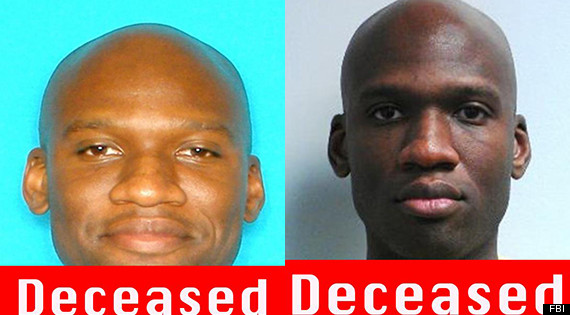 “This is a classic example of the failure of our mental health system – and the price we all pay for that failure,” said Doris A. Fuller. “Aaron Alexis was clearly suffering an acute psychiatric crisis. He was like a man in the grip of a terrible heart attack. But because of our dysfunctional approach to mental illness treatment and weak civil commitment laws in the state where he was deteriorating, he wasn’t treated like the victim of a severe medical emergency in need of intervention. Now 13 people including Alexis are dead, eight more are injured, and the lives of innumerable others are forever changed.” “This is a classic example of the failure of our mental health system – and the price we all pay for that failure,” said Doris A. Fuller. “Aaron Alexis was clearly suffering an acute psychiatric crisis. He was like a man in the grip of a terrible heart attack. But because of our dysfunctional approach to mental illness treatment and weak civil commitment laws in the state where he was deteriorating, he wasn’t treated like the victim of a severe medical emergency in need of intervention. Now 13 people including Alexis are dead, eight more are injured, and the lives of innumerable others are forever changed.”
FAILED FEDERAL POLICIES
Passage of the Community Mental Health Centers Act of 1963 and the resulting wholesale closure of public psychiatric hospitals decimated the inpatient system that once provided care for the most acutely and chronically mentally ill individuals. Today, the nation has 5% the number of public beds it had in the late 1950s, and untreated mental illness is a factor in an estimated 50% of rampage killings and 10% of all homicides. It is also a major contributor to homelessness, jail and prison overcrowding, victimization of individuals with mental illness and suicide.
Research shows that individuals receiving effective mental illness treatment are no more likely to commit violent acts than the general public, but the system for providing timely and effective treatment to those most at risk for violence has been dismantled and nothing has replaced it.
WEAK STATE CIVIL COMMITMENT LAWS
At the same time we were emptying the nation’s psychiatric hospitals, civil commitment became increasingly limited to individuals demonstrating an imminent danger to themselves or others.
Rhode Island provides a case in point. Just over a month ago, Newport, Rhode Island, police responded to a call from shooter Aaron Alexis’s hotel room, where he told officers he was being followed by someone who “had sent three people to follow him and to keep him awake by talking to him and sending vibrations to his body” via a microwave. Alexis, 34, moved to three different hotels in a single night to elude the voices and the people he believed were sending the vibrations, according to a police report.
The responding officers told Alexis to stay away from the individuals he thought were following him and concluded, “No further action was required.”
“Under the laws of some states, Alexis could have been taken to a hospital for emergency evaluation,” said Fuller, “but in the absence of violent or suicidal acts or threats, it appears he was not considered committable in Rhode Island,” which requires that an individual with mental illness demonstrate “likelihood of serious harm” to qualify for involuntary treatment.
The Navy Yard Shooting: Déjà Vu All Over Again?
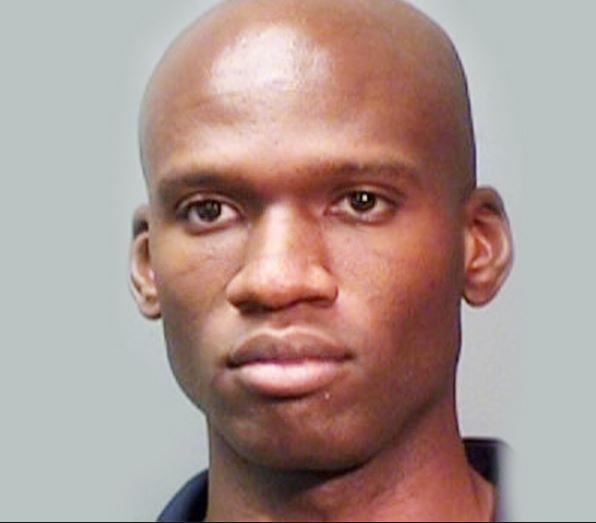
(Sept. 18, 2013) Do you have the impression that mass shootings are happening more often? Your impression is correct. In 2000, the New York Times published a detailed survey of 100 “rampage killers” who committed mass killings between 1949 and 1999. Of the 100, 73 had taken place between 1990 and 1999. Two other studies have also reported a definite increase in such shootings over approximately the past 25 years. So why are they happening? Approximately half of them are caused by individuals with untreated severe mental illness. For example, this was true for the shootings at Virginia Tech, Tucson, Aurora, and Newtown and, based on preliminary reports, may also be the case for the Navy Yard shootings. Over the past half century we have emptied out our state mental hospitals so that today we have only 5 percent of the public psychiatric beds compared to 50 years ago. And in discharging the patients, we have failed to insure that they get ongoing treatment. Exactly 50 years next month, President John Kennedy signed the Community Mental Health Centers Act, effectively federalizing what had been until then, a state responsibility. It turned out to have been the most well-meaning but misguided act of the Kennedy administration. The consequences are now everywhere visible among our homeless, among the mentally ill in jails and prisons, and in these mass killings. I have detailed this history in American Psychosis: How the Federal Government Destroyed the Mental Illness Treatment System being published by Oxford University Press next month. E. Fuller Torrey, MD, is founder of the Treatment Advocacy Center This article originally appeared in the National Review Online, September 17, 2013.
Mass Killing at Navy Yard: Horrifying but Not "Unimaginable"
(Sept. 17, 2013) Reports that Navy Yard mass killer Aaron Alexis, 34, suffered from paranoid schizophrenia should not surprise us. Mental illness has emerged as a factor in an estimated 50% of rampage killings and 10% of all homicides since the wholesale closure of public psychiatric hospitals began a half century ago.
 “The federal government in 1963 dedicated itself to bringing an end to the mental health system that had provided treatment to individuals with acute or severe mental illness for the preceding 100 years,” said Doris A. Fuller, executive director. “It succeeded. Today, the nation has 5% the number of public beds we had in the late 1950s and exponentially more mass homicides, among other dreadful consequences.” “The federal government in 1963 dedicated itself to bringing an end to the mental health system that had provided treatment to individuals with acute or severe mental illness for the preceding 100 years,” said Doris A. Fuller, executive director. “It succeeded. Today, the nation has 5% the number of public beds we had in the late 1950s and exponentially more mass homicides, among other dreadful consequences.”
Only one mass killing occurred in the 1940s, the last decade before deinstitutionalization; 73 occurred in the 1990s. Six of the nation’s 12 deadliest mass shootings have occurred in the last six years; severe mental illness has been implicated in two-thirds of those tragedies.
Research shows that individuals receiving effective mental illness treatment are no more likely to be violent than anyone else, but the system for providing timely and effective treatment to those most at risk for violence has essentially been dismantled without being replaced.
The Treatment Advocacy Center in 2012 called for a moratorium on state hospital bed closures until replacement facilities to meet inpatient treatment need are created. We also promote improved civil commitment standards to increase treatment access for people too ill to volunteer for treatment and the universal use of court-ordered treatment in the community – often called “assisted outpatient treatment” or “AOT” – for qualifying at-risk individuals with the most severe mental illnesses. AOT is a less-restrictive and less-costly alternative to hospitalization and to the homelessness, incarceration and other consequences that individuals with untreated severe mental illness often suffer.
To comment, visit our Facebook page.
Visit our blog archive to read all our recent posts.
Police Beatings Prompt Calls for Change
(Sept. 16, 2013) Before the brutal police beating of Porfirio Santos-Lopez, 46, in Long Beach, California, multiple calls to police and paramedics to obtain psychiatric treatment for the victim went unreturned (“Long Beach police beating casts ugly glare on failure of mental health care,” Los Angeles Wave, Sept. 12).
 This makes the second California county to witness the police beating of a man with severe mental illness who wasn’t able to get the treatment he needed. This makes the second California county to witness the police beating of a man with severe mental illness who wasn’t able to get the treatment he needed.
Just like the 2011 police beating of Kelly Thomas, a homeless man with untreated schizophrenia, the video of Lopez’s beating has gone viral and is triggering outrage. After Thomas’s death, Orange County began looking more closely at implementing Laura’s Law for people with serious mental illness.
Los Angeles County, home of last week’s police beating, has a very small but successful assisted outpatient treatment (AOT) pilot program. It’s not possible to know whether Lopez would have qualified for AOT, but we do know that, for individuals who do, law enforcement contact – and confrontation – falls.
This story also emphasizes the importance of Crisis Intervention Team (CIT) policing for law enforcement officers, a proven tactic for training police officers on how to respond to incidents involving mental illness. Yet only 49% of people live where these teams are used. To find out whether your county is one of them, see our August 2013 report, “Prevalence of Mental Health Diversion Practices: A Survey of the States.”
For more evidence of what happens when police are used as frontline mental health workers and treatment is withheld until tragedy, watch for our upcoming report “Justifiable Homicides by Law Enforcement Officers: What is the Role of Mental Illness?” later this week.
To comment, visit our Facebook page.
Why Families Need to Be Heard – personally speaking
(Sept. 13, 2013) As a practicing therapist I have witnessed firsthand the need to reform America’s approach to treating severe mental illness.
 It wasn’t until I worked with young adults that I began to recognize the problem. I encountered one of the most difficult cases involving an 18-year-old girl, diagnosed with oppositional defiant disorder, ADHD, and bipolar disorder. Her mother called me one morning after waking up to one of her most dreaded nightmares, her daughter standing over her with an iron bat while she slept. “Kayce” intended to harm, maybe even murder, her mother and 1-year-old brother. It wasn’t until I worked with young adults that I began to recognize the problem. I encountered one of the most difficult cases involving an 18-year-old girl, diagnosed with oppositional defiant disorder, ADHD, and bipolar disorder. Her mother called me one morning after waking up to one of her most dreaded nightmares, her daughter standing over her with an iron bat while she slept. “Kayce” intended to harm, maybe even murder, her mother and 1-year-old brother.
Although “Kayce” did well in group therapy, she was different at home. She would fight her mother and threaten to kill her brother almost daily and exhibited extreme explosiveness. On a few occasions, I feared for my own safety. In the end, this mother was faced with two decisions: turn her daughter in to the police (making her a criminal) or commit her to a residential treatment facility (making her a patient). I blame the above and similar incidents on two things:
Families, like those of Kayce need to be heard. Many would agree we are long overdue for a better system, better education, and better awareness.
The dilemma is quite simple and so too can be the remedy. What is precluding us from moving forward? An outdated mental health system that abandons people by leaving them untreated until they end up in jail or worse.
Stay tuned for my book Mental Health In A Failed American System: What Every Parent, Family & Caregiver Should Know coming April 22, 2014 to Amazon.com
Tamara Hill is a Mental health therapist practicing in Pennsylvania
To comment, visit our Facebook page.
Visit our blog archive to read all our recent posts.
A Look at Why Diversion (and AOT) Work
(Sept. 12, 2013) Though it strikes us as primitive and punitive to reserve court-ordered mental illness treatment for people who commit crimes, diversion practices like mental health courts do serve a valuable service once an individual crosses that line, as we detailed in our recent state survey of mental health diversion practices. For example, a study published in Law and Human Behavior reports a 25% decline in the likelihood a mentally ill criminal defendant will be re-arrested in the year following completion of a mental health court program, among other positive outcomes (June 2013).
 A blog in the lawyers’ magazine LegalTimes followed up on the study by unexplored the question of why mental health courts are effective in reducing arrest (“Study: DC mental health court yields positive results,” Sept. 3). We found the discussion of interest because of parallels to the success of assisted-outpatient treatment (AOT), the civil court procedure we champion for qualifying individuals with mental illness at risk for criminalization. A blog in the lawyers’ magazine LegalTimes followed up on the study by unexplored the question of why mental health courts are effective in reducing arrest (“Study: DC mental health court yields positive results,” Sept. 3). We found the discussion of interest because of parallels to the success of assisted-outpatient treatment (AOT), the civil court procedure we champion for qualifying individuals with mental illness at risk for criminalization.
For example, the legal theory known as procedural justice holds that defendants are more likely to obey the law if the system seems legitimate, which often results when a defendant believes they have input and are treated with fairness and respect. For mentally ill defendants, who likely have had prior contact with the criminal justice system, the experience of mental health court and regular face-time with a judge interested in their progress represents a "huge" contrast” from previous encounters with the criminal justice system, the blog said.
We find this positive response highly analogous to the concept of “the black robe effect” often observed among recipients of court-ordered outpatient treatment. Far from being “coercive,” observers and participants often say AOT works precisely because patients perceive the court as fair, respectful and concerned for the participant’s welfare.
To see the black-robe effect at work, watch our 30-minute AOT documentary film “Stopping the Revolving Door.”
To see how your state ranks in using mental health courts to reduce the criminalization of mental illness, see “Prevalence of Mental Health Diversion Practices: A Survey of the States” on our special website dedicated to Treatment Advocacy Center research and reports.
To comment, visit our Facebook page.
Visit our blog archive to read all our recent posts.
Let’s Stop History from Repeating Itself
(Sept. 11, 2013) “I’m the mother of a bipolar son who took his life at age 40. His name was Scott. At age 27, without warning, Scotty was transformed into a different person,” writes mother Dottie Pacharis about the loss of her son to severe mental illness. “He became . . . out-of-control, psychotic. He no longer required sleep. He became extremely religious.”
 Pacharis isn’t the only mother to suffer the loss of a child. Pacharis isn’t the only mother to suffer the loss of a child.
Suicide accounts for approximately 29,000 deaths each year in the United States. About 5,000 or more of those who commit suicide have schizophrenia or bipolar disorder. Studies indicate that most of these individuals, like Scotty, were not receiving adequate psychiatric treatment at the time of their death, and adequate psychiatric treatment could have saved many of those lives.
Whether you or your loved one are experiencing a mental health crisis, the more you know – about the laws where you live, the treatment options available, the people who can make a difference in a crisis, and strategies other families have found successful – the better prepared and more powerful you will be if an emergency arises.
This week is National Suicide Prevention Week, which helps raise awareness of this preventable loss of life. Resources exist to help, including our own psychiatric crisis app. Open this link on your smartphone to get help for a loved one in a crisis.
Other resources include:
Read more about suicide and mental illness here.
To comment, visit our Facebook page.
Visit our blog archive to read all our recent posts.
Mental Illness “Nearly Invisible” in Church Congregations
(Sept. 10, 2013) It should come as no surprise to us that a Baylor University study has found church congregations “blind to mental illness.” Most of the world outside the mental health community (and some inside it) is blind to the psychiatric disease. Human nature being what it is, it follows that church congregations would be, too.
 But the Baylor study is a vivid illustration of just how thoroughly the blindness isolates those of us living with a severe mental illness. For example, families with mentally ill loved ones ranked depression and mental illness as their second priority issue for help from the church. Families without mentally ill loved ones ranked the issues 42nd (“Baylor study finds church congregations blind to mental illness,” Baylor University, Sept. 3; study not currently available online). But the Baylor study is a vivid illustration of just how thoroughly the blindness isolates those of us living with a severe mental illness. For example, families with mentally ill loved ones ranked depression and mental illness as their second priority issue for help from the church. Families without mentally ill loved ones ranked the issues 42nd (“Baylor study finds church congregations blind to mental illness,” Baylor University, Sept. 3; study not currently available online).
"The difference in response is staggering, especially given the picture of distress painted by the data: families with mental illness reported twice as many problems and tended to ask for assistance with more immediate or crisis needs compared to other families," said study co-author Dr. Matthew Stanford, professor of psychology and neuroscience at Baylor, an expert in mental illness and the church. "The data give the impression that mental illness, while prevalent within a congregation, is also nearly invisible."
Caregiver strain is an enormous “hidden” cost of untreated mental illness, this and other studies consistently show. The Treatment Advocacy Center has developed the following resources to help:
To comment, visit our Facebook page.
Visit our blog archive to read all our recent posts.
|
|