Schizophrenia Treatment: Before and After
(Jan. 15, 2014) For those who haven’t witnessed the torment of someone in the throes of psychosis, or seen someone recover from their symptoms, a new video provides an opportunity see both (Schizophrenia treatment: Before and after).
 Several people with severe mental illness were interviewed and the difference between the interviewees prior to treatment for their hallucinations and after is remarkable. Several people with severe mental illness were interviewed and the difference between the interviewees prior to treatment for their hallucinations and after is remarkable.
The first video shows “Jon,” who describes his visual hallucinations. He tells that interviewer that it is his belief that the birds flying outside his window are trying to communicate with him by the way that they fly and “the way they sit on the wire.”
After treatment, five years later, Jon says, “I am a different person because I’m in reality now.” He reports that he has an apartment and a car and is “living a normal lifestyle.” (Watch Jon’s video.)
“Carol Ann” meets with the interviewer before treatment, and her speech is unintelligible. After 6 weeks of medication, she clearly explains her hallucinations and getting ready in the morning to start her day. After 2.5 years of medication she has earned her driver’s license and lives in her own apartment. (Watch Carol Ann’s video.)
Other than the transformations, the most notable part of these before and after videos is the recognition by the interviewees themselves that treatment has brought about a positive change to their lives.
To comment, visit our Facebook page.
Visit our blog archive to read all our recent posts.
“An Unsparing and Lively Takedown of American Psychiatry” – A Book Review
(Jan. 14, 2014) “By the 1950s, slightly more than half a million psychiatric patients resided in overcrowded and underfunded state mental hospitals, often under appalling conditions,” writes Dr. Richard A. Friedman in the New York Times review of American Psychosis: How the Federal Government Destroyed the Mental Illness Treatment System (“A solution that now looks crazy,” Jan. 13).
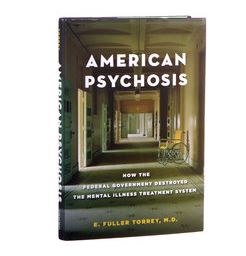 The review continues: The review continues:
“Enter a group of high-minded psychiatrists with a vision to ‘create a brave new world, a mentally healthy America,’ in Dr. Torrey’s words. Armed with little more than optimism, they helped start the National Institute of Mental Health and set in motion an ambitious agenda for the next half-century: closing the state mental hospitals, initiating a federal takeover of the mental health system, and creating a nationwide network of community mental health centers.
“In hindsight, the therapeutic zeal of these professionals was impressively naïve: They were certain that severely mentally ill patients in state hospitals — many living there for decades — would magically adjust to the community and do well with outpatient treatment. How wrong they proved to be.
“The sorry tale of what happened to the half-million Americans who were deinstitutionalized over the past 50 years is the subject of this unsparing and lively takedown of American psychiatry by Dr. Torrey, a longtime critic of national mental health policy and the founder of the Treatment Advocacy Center.”
Read the complete review.
To comment, visit our Facebook page.
Visit our blog archive to read all our recent posts.
Freezing Temps Turn Deadly for an Elderly Man with Schizophrenia
(Jan. 13, 2014) The freezing temperatures that covered the United States last week turned deadly for AC Anderson, an elderly man with schizophrenia, who froze to death outside his own home in Milwaukee, reports Meg Kissinger for the Milwaukee Journal Sentinel (“Mentally ill man froze to death days after police were called,” Jan. 7).
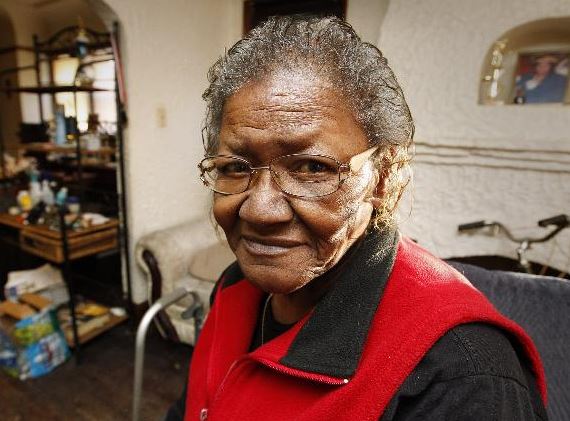 Anderson had gone off his medications for schizophrenia in 2009. In the years since, his wife, Beverly Anderson, made multiple attempts to get him back on medicine “so he wouldn’t see rabbits coming out of floorboards or imagine that little men were coming through the heat vents to stab him.” Anderson had gone off his medications for schizophrenia in 2009. In the years since, his wife, Beverly Anderson, made multiple attempts to get him back on medicine “so he wouldn’t see rabbits coming out of floorboards or imagine that little men were coming through the heat vents to stab him.”
Records show she “called 911 more than 60 times trying to get help for her husband,” reports Kissinger. But “police told her that unless he threatened to hurt himself or someone else there wasn't anything they could do.”
Beverly found her husband frozen to death outside their home just three days after her most recent attempt to get her husband into a hospital. She guesses that he woke up in the middle of the night, as he often did, and went outside to escape his hallucinations.
“The law limits what police can do with a patient who is not obviously in danger,” said Jim Kubicek, acting director of Milwaukee County’s Behavioral Health Division, who commented on Anderson’s death in the Journal Sentinel. “These are the standards we have to work with.”
While Wisconsin’s laws and treatment standards are better than many states, it seems they were either misunderstood or underused in this case.
Read more about Wisconsin’s law here.
To comment, visit our Facebook page.
Visit our blog archive to read all our recent posts.
Thirteen Years Ago Today
(Jan. 10, 2014) Thirteen years ago today, Laura Wilcox, a 19-year-old high school valedictorian, was shot to death at a Nevada County mental health clinic by a man suffering from paranoid schizophrenia who consistently refused treatment.
 The Wilcox family was instrumental in passing “Laura’s Law” in California in 2002. The law provides community-based, assisted outpatient treatment (AOT) to a small population of people with severe mental illness who meet strict legal criteria and who – as a result of their mental illness – are unable to access community mental health services voluntarily. The Wilcox family was instrumental in passing “Laura’s Law” in California in 2002. The law provides community-based, assisted outpatient treatment (AOT) to a small population of people with severe mental illness who meet strict legal criteria and who – as a result of their mental illness – are unable to access community mental health services voluntarily.
To date, Laura’s Law has been authorized in Nevada, Los Angeles and Yolo counties. Last year the California legislature solved a funding issue by passing a new law which clarifies that the state’s Mental Health Services Act funds may be used to pay for AOT programs. Hopefully this will lead more counties in California to continue implementing Laura’s Law and make it possible for those who struggle with treatment adherence to live safely in the community.
Our hearts go out to the Wilcox family on this sad anniversary, and every day. We look forward to the day when their selfless efforts are rewarded by statewide implementation of Laura’s Law, giving millions of Californians the chance to find treatment before tragedy.
To comment, visit our Facebook page.
Visit our blog archive to read all our recent posts.
Mental Heath Reform Begins at Home – Again
(Jan. 8, 2014) Virginia State Senator Creigh Deeds has returned to the state capital, healed of the external injuries inflicted when his son stabbed him multiple times in November 2013, a day after being released from a brief psychiatric hold.
 What doubtless will never heal is the internal wound of being attacked and then losing his mentally ill son, “Gus,” 24, to a suicide that might have been prevented had the young man received timely care. What doubtless will never heal is the internal wound of being attacked and then losing his mentally ill son, “Gus,” 24, to a suicide that might have been prevented had the young man received timely care.
Like so many other family members, Deeds appears determined to turn his personal loss into a public gain. On his first day back in Richmond, he introduced two bills that might have made a difference for Gus (“Deeds returns to Richmond determined to reform mental health system,” Washington Post, Jan. 7).
Virginia SB 260 would extend the length of time an individual in crisis can be held for emergency evaluation from the current maximum of six hours to 24 hours. Passage of this bill would still leave Virginia with one of the shortest emergency evaluation periods in the nation (48-72 hours is much more common), but it would be an improvement over the ridiculously brief 4-6 hours the state currently allows.
SB 263 would establish a real-time registry of available psychiatric beds. When Gus Deeds was released from a hold for psychiatric evaluation the day before he stabbed his father and killed himself, mental health officials said no psychiatric bed could be found before the six-hour hold expired.
The Treatment Advocacy Center has met and worked with scores – if not hundreds – of family members like Deeds, grieving men and women who have found comfort and meaning in their personal loss by trying to spare other families similar ones. Some, like Deeds, have been legislators. Others have been retailers, bankers, carpenters, homemakers, journalists – everyday folks transformed by mental illness tragedy.
It shouldn’t take violence and death to produce reform and progress. In a more compassionate world, policy makers would be motivated to make treatment possible for more people suffering the most profound psychiatric diseases just because it was the right and necessary thing to do for everyone’s sake.
Until that day, mental health reform will continue to begin at home, where the wounds never heal but sometimes catalyze reform that saves others.
If you want to help catalyze reform, here are a few ways to get involved.
“Have You Seen My Brother Standing In the Shadows?”
(Jan. 6, 2014) “The system is broken, especially for homeless people with severe mental illness,” writes Sarah Dusseault about her brother’s struggle with schizophrenia in a powerful plea for better treatment and care (“Have you seen my brother standing in the shadows?,” Los Angeles Times, Jan. 5).
 John’s bouts of homelessness always start when he stops taking his medication, Dusseault says. “Today he is still attractive and wickedly smart at times, but his skin is weathered from years of homelessness and he is missing half of a finger on his right hand from one of his ‘stays’ in a county jail.” John’s bouts of homelessness always start when he stops taking his medication, Dusseault says. “Today he is still attractive and wickedly smart at times, but his skin is weathered from years of homelessness and he is missing half of a finger on his right hand from one of his ‘stays’ in a county jail.”
Dusseault estimates that the government has spent over $1 million providing services for her brother in the last year alone. “For most of the chronically mentally ill we waste large sums of money on ineffective interventions,” she says.
Dusseault’s brother is not alone in his experience. About 200,000 people - one-third of the homeless population in the United States – are individuals with untreated psychiatric disease.
If we want to get serious about helping people like John, we need to recognize that many of the homeless need psychiatric treatment to escape the consequences of untreated mental illness.
Read our backgrounder on homelessness as a consequence of failing to treat severe mental illness.
To comment, visit our Facebook page.
Visit our blog archive to read all our recent posts.
Fifteen Years After Tragedy
(Jan. 3, 2014) Fifteen years ago today, 32-year-old Kendra Webdale was pushed to her death in front of an oncoming subway train in New York City by Andrew Goldstein, a man with untreated schizophrenia.
 New York recognized the significance of her preventable death by passing an assisted outpatient treatment (AOT) law, known as Kendra's Law, six months later to help those with severe mental illness who struggle with treatment adherence. New York recognized the significance of her preventable death by passing an assisted outpatient treatment (AOT) law, known as Kendra's Law, six months later to help those with severe mental illness who struggle with treatment adherence.
In the years since, New York has emerged as a leader in the use of court-ordered outpatient treatment, though the state’s criteria for providing court-ordered treatment in a hospital remain woefully inadequate, as noted by the Treatment Advocacy Center’s Brian Stettin in a 2013 New York Daily News op-ed.
Multiple studies have documented the effectiveness of Kendra’s Law in improving outcomes for its target population, enhancing public safety, and conserving scarce mental health resources.
As we do every year on this date, we pause today to pay tribute to the remarkable and inspiring Webdale family, who almost immediately after Kendra’s death began channeling their grief into advocacy for mental health reform. Thanks to them, something horrible led to something great. Our thoughts are with the family on this painful anniversary.
To comment, visit our Facebook page.
Visit our blog archive to read all our recent posts.
Tamerlan Tsarnaev Showed Signs of Severe Mental Illness
(Dec. 19, 2013) The Boston Globe published a stunning investigative piece this week on Tamerlan and Dzhokhar Tsarnaev, perpetrators of the Boston Marathon bombing in April. Among the article’s many revelations: new reason to believe that Tamerlan, the elder brother, suffered from an untreated severe mental illness (“The fall of the house of Tsarnaev,” Dec. 16).
 According to multiple sources, Tamerlan struggled for years with “inner voices,” which grew louder and more insistent as he aged. He confided to one friend that the voices had begun commanding him to perform certain (unspecified) acts: According to multiple sources, Tamerlan struggled for years with “inner voices,” which grew louder and more insistent as he aged. He confided to one friend that the voices had begun commanding him to perform certain (unspecified) acts:
“He said, ‘Someone is in my brain, telling me stuff to do,’ ” recalled [the friend]. “He said he was trying to ignore it but it was hard to do. Whatever it was he was being told to do, he didn’t want to do it.”
According to an acquaintance of the family, the mother of the brothers at one point confided her concerns about Tamerlan’s auditory hallucinations. But the mother reportedly brushed off advice to seek medical treatment for her son.
Unlike some other recent high profile mass killings, the Boston Marathon bombing cannot be explained as a simple consequence of untreated mental illness. We cannot even say with certainty that Tamerlan Tsarnaev was mentally ill. But it seems fair to wonder whether the myriad other factors that led to the carnage in Boston would have been enough to light the fuse, if only Tsarnaev had received timely and effective mental health evaluation and treatment.
For that to have occurred, it would have taken more than just a decision by the family to seek medical intervention. It also would have required a functional public mental health system, equipped and willing to take the measures necessary to ensure Tsarnaev’s receipt of the treatment he appears to have needed.
The Treatment Advocacy Center will continue working to make that second part of the equation a nationwide reality, in the hope that we can help prevent future senseless tragedy.
To comment, visit our Facebook page.
Visit our blog archive to read all our recent posts.
Mental Illness and the Criminal Justice System
(Dec. 18, 2013) Another series has emerged that focuses on severe mental illness. Reporter John S. Hausman explores the intersection of mental illness and criminal justice in a series of articles published this week on MLive.com in Michigan.
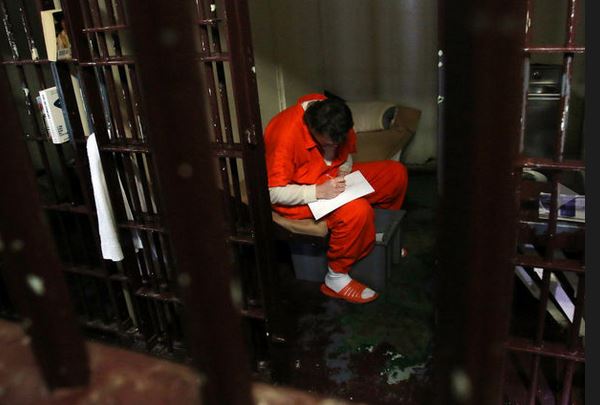 “Not every mentally ill criminal defendant belongs in jail,” Hausman writes about the criminalization of mental illness. “Some may need to be hospitalized. Some might belong in an in-patient substance abuse program. Others may more appropriately be required to comply with out-patient mental-health treatment they’d been avoiding….” “Not every mentally ill criminal defendant belongs in jail,” Hausman writes about the criminalization of mental illness. “Some may need to be hospitalized. Some might belong in an in-patient substance abuse program. Others may more appropriately be required to comply with out-patient mental-health treatment they’d been avoiding….”
Zeroing in the tragic human impact of mental illness treatment policies, Hausman tells the story of Lorenzo Martinez. A young man who upon being discharged from a psychiatric hospital, “suddenly grabbed the steering wheel of the Durango his mother was driving…and jerked it, sending the vehicle straight into the path of an oncoming trailer.” Martinez currently awaits his trial for vehicular manslaughter.
Then, on mental health courts he writes, “[t]he goal is to protect the public by reducing repeat crimes by mentally ill criminal defendants, at the same time improving the participants' lives.”
Hausman also acknowledges the strain that deinstitutionalization has placed on local police departments: “[P]olice regularly have to cope with crimes committed by mentally ill people…. Some also present an ‘easy target for street crime.’”
This series is a must-read.
Please show your support for Hausman’s work in the comments section.
To comment, visit our Facebook page.
Visit our blog archive to read all our recent posts.
A Personal Message from Dr. Torrey
(Dec. 17, 2013) Thirty years ago I published my first assessment of America’s failed mental illness treatment system, an op-ed in the Washington Post about a homeless woman with untreated schizophrenia (“The Real Twilight Zone,” Aug. 26 1983). That same year, I published the first edition of Surviving Schizophrenia in which I said: “Nothing is going to change for persons with schizophrenia in the United States until an effective lobby begins to fight for their interests.
 Fifteen years ago, we started the Treatment Advocacy Center to be that “effective lobby” for individuals with severe mental illnesses. During the intervening years, we have changed a lot of state laws and educated a lot of people about severe mental illnesses, anosognosia, and the consequences of failing to treat these diseases. Given our small size and limited resources, I think TAC has been remarkably effective, but the public mental illness treatment system is still deplorable. Fifteen years ago, we started the Treatment Advocacy Center to be that “effective lobby” for individuals with severe mental illnesses. During the intervening years, we have changed a lot of state laws and educated a lot of people about severe mental illnesses, anosognosia, and the consequences of failing to treat these diseases. Given our small size and limited resources, I think TAC has been remarkably effective, but the public mental illness treatment system is still deplorable.
Within the past year, the landscape has changed dramatically. The continuing drumbeat of Tucson, Aurora, Newtown, etc., has convinced the public and many lawmakers that something must change. Rep. Tim Murphy of Pennsylvania has just introduced exciting legislation to fix federal aspects of the mental illness treatment system. State legislators around the country already are at work with us on bills to introduce when they reconvene. The opportunities for real changes are unlike anything I have seen in the 30 years I have followed this.
The Treatment Advocacy Center exists only through the generosity of people like you.
If you have ever considered donating, or donating more to TAC, this is the time to do it. We have opportunities we have never had before to make significant changes. But we cannot do so without your help. Please click here to give today.
Thank you and best wishes for the holidays.
To comment, visit our Facebook page.
Visit our blog archive to read all our recent posts.
|
|