(June 7, 2016) Going, Going Gone - the Treatment Advocacy Center's newest survey of psychiatric beds in the 50 states and District of Columbia - does not report numbers for one category: beds in psychiatric units on state prison grounds.
 "Some states have built high- or medium-security forensic hospitals on prison grounds for mentally ill inmates . . . ," said the report subtitled Trends and Consequences of Eliminating State Psychiatric Beds, 2016. "Beds behind bars are not counted in this survey because we regard this practice as an inhumane and unacceptable public policy for the treatment of disease."
Psychiatric beds are increasingly being opened behind bars to "solve" or reduce state bed shortages by diverting mentally disordered offenders from state hospitals to prisons. While this may reduce demand for state hospitalization, it frames serious mental illness as a crime and subjects acutely ill individuals to settings like the ones illustrated in the accompanying photographs by Nancy West of the New Hampshire Center for Public Interest Journalism - hardly the picture of therapeutic care.
Growing, Growing Beds
We did not survey for psychiatric beds on prison grounds because they may not be certified and are not therapeutic. Therefore, they are not comparable to state hospital beds. Nonetheless, a number of states reported their beds behind bars to the survey conducted by our Office of Research & Public Affairs or publish their numbers online. These anecdotes illustrate a range of approaches.
- California reported 5,905 total state hospital beds in the first quarter of 2016. Of those, the vast majority - all but about 1,500 beds - were occupied by forensic patients. However, the state reports an additional 1,077 beds on the grounds of medium- or high-securityprisons. This means nearly 80% of all state-operated beds left in California are occupied by people admitted to a bed through the criminal justice system.
- Massachusetts reported 608 state psychiatric beds, of which only 11.5% were occupied by forensic patients - among the lowest forensic occupancy rate in the nation. However, the state houses an unreported number of additional forensic patients at Bridgewater State, a "hospital" run by the Department of Corrections.
- Kentucky, Minnesota, New Hampshire and South Dakota reported no forensic beds in their state hospitals because all criminal offenders who require psychiatric services are hospitalized on state prison grounds. This applies whether the patient - typically in acute psychiatric crisis - has been convicted of a crime or not. In New Hampshire, even selected civil (non-criminal) patients also are confined to in the state's Secure Psychiatric Unit (SPU) within the prison compound (see photographs).
Registered nurse Beatrice Coulter worked for four days in New Hampshire's SPU (or "spew," as state officials refer to the unit) before quitting in disgust. Writing in the Concord Monitor, Coulter summed up several of the issues with beds behind bars succinctly.
- Purpose: "Detention in a prison is not treatment. It is custodial management."
- Milieu: A prison is not a "therapeutic environment."
- Oversight: In states like New Hampshire and Massachusetts, where beds behind bars are under control of the state's corrections system, they are run by people who "are not subject matter experts on the treatment of the mentally ill."
As the authors of Going, Going, Gone wrote, "Beds behind bars effectively bring the criminalization of mental illness full circle-back to colonial times and the early 19th century, when the mentally ill were routinely jailed or kept in poor houses.We would not call it just to incarcerate a man who crashed his car because he had a heart attack behind the wheel. Why would a just society incarcerate those with serious mental illness for the equivalent?"

Doris A. Fuller
Chief of Research and Public Affairs
References:
Next week: Conflicting Messages on Violence and Serious Mental Illness
Research Weekly is a summary published as a public service of the Treatment Advocacy Center and does not necessarily reflect the findings or positions of the organization or its staff. Full access to research summarized may require a fee or paid subscription to the publications.
To comment, visit our Facebook page.
Visit our blog archive to read all our recent posts.
Read more »
(May 31, 2016) In 1939, a psychiatrist and mathematician named Lionel Penrose looked at the relationship between prison and mental health populations in 18 European nations. He arrived at a startling and controversial observation about "mental disease and crime": if mental hospital populations are reduced, prison populations grow.
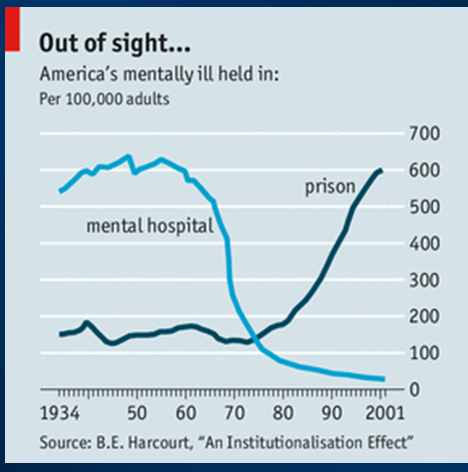 In 2016, we view the "Penrose hypothesis" across the 50-year social experiment known as "deinstitutionalization." Of the nearly 560,000 state hospital beds that existed at their peak in 1955, fewer than 40,000 remain today. At the same time, about 1.8 million jail bookings per year involve individuals with mental illness, and an estimated 350,000 adults with serious mental illness are currently living behind bars, at least 30,000 of them in solitary confinement.
The United States manages to incarcerate more mentally ill adults per 100,000 people than other high-income countries incarcerate, period. Presumably, Lionel Penrose would feel vindicated, albeit without any satisfaction.
A New Look at Trends and Consequences of Closing State Hospital Beds
The criminalization of mental illness is widely regarded as among the most widespread and devastating impacts of the half-century effort to eliminate state hospital beds, yet the Penrose hypothesis remains controversial and under study.
Into this crossfire, the Treatment Advocacy Center tomorrow releases its latest and arguably most dire report on the status of last-resort hospital beds in the United States. Combining original data collection with statistics developed for the federal government, the study will document, state by state, how America's state psychiatric hospitals are being repurposed as the clinical wings of the nation's jails and prisons, and the price this is exacting on the prisoners, corrections systems and communities.
The study, entitled Going, Going, Gone: Trends and Consequences of Closing State Hospital Beds, 2016, does not take up the debate over the Penrose hypothesis. Instead, it comes from the perspective that, for the men and women living with serious mental illness behind bars - typically without treatment - and for the family members and others who advocate on their behalves, the Penrose hypothesis is academic.
What matters in 2016 is that those in need are many, the beds for them are few and the consequences of trading hospital beds for jail beds can be deadly.
Visit our website tomorrow to read Going, Going, Gone.
Doris A. Fuller
Chief of Research and Public Affairs
References:
Next week: Behind Going, Going, Gone
Research Weekly is a summary published as a public service of the Treatment Advocacy Center and does not necessarily reflect the findings or positions of the organization or its staff. Full access to research summarized may require a fee or paid subscription to the publications.
To comment, visit our Facebook page.
Visit our blog archive to read all our recent posts.
Read more »
(May 24, 2016) One of the most important, but difficult to understand, aspects of serious mental illness is that approximately half of all people with schizophrenia and bipolar disorder do not realize they are sick - a condition called anosognosia. Individuals with this co-occurring disorder really believe that they are being followed by the CIA or that God is speaking to them through the voices they hear. They believe there is nothing wrong with them; therefore, they see no reason to take medication.
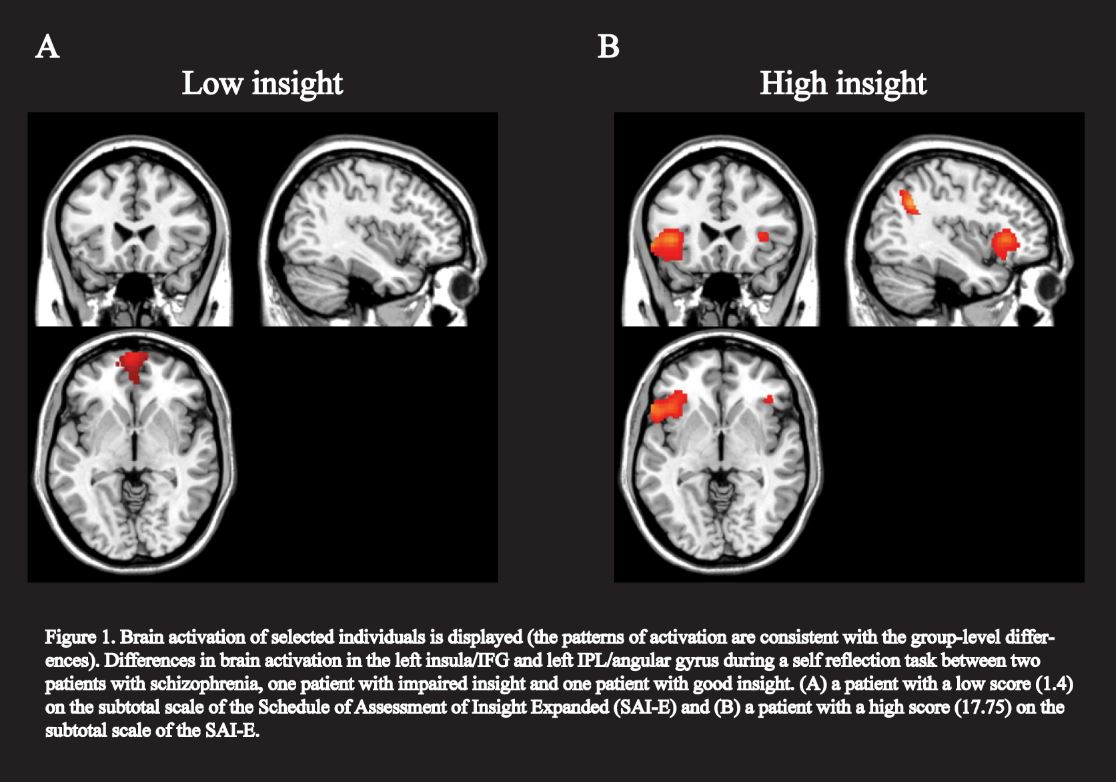 This lack of awareness of illness is seen in most cases of advanced Alzheimer's disease and Huntington's disease. Neurologists have known about it for more than 100 years, but psychiatrists just became aware of it about 25 years ago. Since then, the question has been: Why do some people with schizophrenia or bipolar disorder have anosognosia while other people with the conditions are fully aware of their illness?
Brain Differences
The answer to this question is now very clear: The brains of people who have and do not have anosognosia are different, and more than 30 studies support this conclusion.
The Stanley Medical Research Institute (SMRI), a supporting organization of the Treatment Advocacy Center, has been keenly interested in this research because of its important implications for medication adherence. For this reason, SMRI supported one of the early studies of the condition.
The most recent studies are using sophisticated techniques, with results that have become increasingly interesting.
Two of these studies come from Toronto and Moscow. A research group at the University of Toronto in 2014 published a study using the newer functional magnetic resonance imaging (fMRI) technique and reported that people with schizophrenia who have anosognosia show evidence of connectivity problems between specific brain areas. Another was carried out by researchers in Moscow using postmortem brains from the SMRI brain collection. These researchers found fewer glial cells - part of the white matter connectivity system of the brain - in people with anosognosia.
New techniques for studying the brain are yielding evidence-based findings for understanding the anatomical basis of anosognosia.
E. FULLER TORREY, MD
Associate Director of Research, Stanley Medical Research Institute
Founder and member of the board, Treatment Advocacy Center
Co-chair, Psychiatric Advisory Board to the Treatment Advocacy Center
Dr. Torrey serves as associate director of SMRI, where he oversees groundbreaking research on the causes and treatment of schizophrenia and bipolar disorder.
For More about Anosognosia
The Miyashiro family of Hawaii learned about anosognosia the way so many families do - when a family member, the mother in this case, became gravely ill and didn't believe anything wrong. After seven years in the revolving door of struggle and searching for hope and help, "Mom" is now in recovery. The family shares their story and offers encouragement and resources to others at the Anosognosia Caregiver Alliance.
Answers to "What is anosognosia?" can be found on the Treatment Advocacy Center website.
References:
Next week: Lionel Penrose, Psychiatric Beds and Mental Illness Behind Bars
Research Weekly is a summary published as a public service of the Treatment Advocacy Center and does not necessarily reflect the findings or positions of the organization or its staff. Full access to research summarized may require a fee or paid subscription to the publications.
To comment, visit our Facebook page.
Visit our blog archive to read all our recent posts.
Read more »
(May 17, 2016) The number of people with schizophrenia or severe bipolar disorder now tops 8 million adults in the United States, according to a new population analysis by the Office of Research & Public Affairs. Close to half are untreated at any given time.
Applying National Institute of Health (NIMH) prevalence statistics to the U.S. Census Bureau population estimates for 2015 produces the following findings:
- 8.1 million U.S. adults had schizophrenia or severe bipolar at the combined NIMH prevalence rate of 3.3%.
- 3.8 million people were estimated to be untreated at any given time.
- Schizophrenia affected 2.7 million persons, based on a prevalence rate of 1.1%. Of them, slightly fewer than 1.1 million people were untreated.
- Bipolar disorder (formerly called manic-depressive disorder) affected 5.4 million individuals, based on a prevalence rate of 2.2%. Of them, slightly fewer than 1.8 million were untreated.*
- As the state with the most adults, California’s combined population with the two diseases was 979,168, of whom 464,779 were estimated to be untreated.
- As the state with the fewest adults, Wyoming’s combined population with schizophrenia or severe bipolar was 14,738, of whom an estimated 6,996 were untreated.
A chart with every state’s numbers can be found on the Treatment Advocacy Center website.
No Academic Matter
 To put this in context, the 8.1 million combined population of people living with the two diseases is more than the entire adult populations of 44 states and more than twice the population of 26 of them. It is roughly the same number of persons in the US with attention deficit disorder, 1.5 times the population with Alzheimer’s disease and nearly 8 times the number of individuals with HIV. The prevalence of these serious mental illnesses is almost double the rate of autism (1.4%) and Down syndrome (0.9%) combined.
The numbers help illustrate how overrepresented mental illness is in some of the most pressing social and economic issues the nation faces.
For example, with an estimated 356,000 inmates with serious mental illness in America’s jails and prisons and 3.8 million adults untreated for one of the two most serious mental illnesses, the risk of being incarcerated is nearly 10% for those whose schizophrenia or severe bipolar is not treated.
In emergency rooms, there were an estimated 640,000 visits for symptoms of schizophrenia or other psychosis in 2013, the most recent year for which there is federal data. That’s more than 1 ER visit for every 2 people with untreated schizophrenia. While the actual risk factor for an ER visit is lower because some individuals are seen in the ER more than once, the ratio is still far in excess of the likelihood of an ER trip in the general population.
Meanwhile, an estimated 4.2 million Americans are caring for an adult family member with bipolar disorder or schizophrenia, according to a recent report from the National Alliance for Caregiving. That means half the people with one of the diseases is cared for by a family member, whose employment, health and finances are impacted by the role and contribute to the indirect costs of serious mental illness.
Numbers are not adequate to describe the personal challenges, risks and suffering that schizophrenia and bipolar disorder introduce into the lives of the millions who live with them, particularly those who are untreated. However, data are essential ingredients to an informed national conversation about the impact and costs of these diseases and the need for public health policies that better address them.
Doris A. Fuller
Chief of Research and Public Affairs
*The NIMH estimates an additional 0.4% of the adult population has mild- to moderate-bipolar disorder.
References:
NEXT WEEK: The Anatomical Basis of Anosognosia
Research Weekly is a summary published as a public service of the Treatment Advocacy Center and does not necessarily reflect the findings or positions of the organization or its staff. Full access to research summarized may require a fee or paid subscription to the publications.
To comment, visit our Facebook page.
Visit our blog archive to read all our recent posts.
Read more »
(May 10, 2016) "In November of last year, Olfson and colleagues reported that clozapine use for individuals with schizophrenia continues to be very low in the United States, compared to other western countries. Equally concerning, however, was their finding that there is a 7-fold variation in clozapine use by state, from South Dakota, where 15.6% of Medicaid recipients with schizophrenia receive clozapine, to Louisiana, where only 2% receive clozapine. This report was subsequently enlarged using pharmacy data by the Treatment Advocacy Center.
"Many reasons have been put forth for the overall low rate of clozapine use, including the administrative complexity of the monitoring program, the low Medicaid reimbursement system and the role of pharmaceutical companies who promote their patented antipsychotic. However, I am not aware of any study that has attempted to ascertain the reasons for the 7-fold difference in clozapine use among the states.
Not Related to Availability of Psychiatrists
"In my quest to understand the reasons for the differences, I found several factors that affect the numbers of prescriptions for clozapine. Because of its mandatory blood monitoring requirements, clozapine is usually prescribed by psychiatrists rather than by other medical practitioners. There is a more than 5-fold difference in the number of psychiatrists among states, which is reflected in the number of prescriptions for clozapine. For example, there are 3,545 people per psychiatrist in Massachusetts and 18,997 people per psychiatrist in Idaho.
"I compared the rank order of the states by clozapine use with the rank order by people per psychiatrists and found that the association was only slightly positive (Spearman's nonparametric; rho = 0.26) and not statistically significant. Thus, the distribution of psychiatrists in the United States explained very little of the differences in clozapine use among states.
"Next I looked at the urban-rural differences. It is easier to monitor clozapine use in urban areas, where patients can get to clinics relatively easily, than in rural areas where patients may have to travel great distances. As seen in the Table, however, many of the states with the highest use of clozapine, such as South Dakota, Vermont, North Dakota, Wyoming and Montana, are among the most rural of all the states. Urbanicity clearly is not the answer.
Use by Type of Provider
"The next question that I examined was what organization has clinical responsibility for providing psychiatric care to each state's Medicaid population. According to data from the Kaiser Family Foundation, 34 states and the District of Columbia use for-profit managed care companies to manage medical care, including behavioral health, for at least some of the state's Medicaid population. The other 16 states do not.
"As seen in the Table, the states not using for-profit are disproportionately represented at the top of the list of clozapine use. In fact, 8 of the 16 states that do not use for-profit managed care are included among the 13 states with the highest clozapine use. When the average clozapine use rate for the 34 states using for-profit managed care (4.7%) is compared with the 16 states not using for-profit managed care (6.9%), there is a strong association between lower clozapine use and for-profit managed care, although the association does not achieve statistical significance (Wilcoxon rank sum test; p = 0.08). To examine this association in greater detail would require a detailed analysis on the use of managed care for each state for 2006 to 2009, the same years as the clozapine use data....
"Since clozapine is administratively more expensive to use initially but has been proven to save money in the long run by decreasing re-hospitalization rates, are the for-profit managed care companies only interested in short-term profits? And are for-profit managed care companies associated with other indicators of inferior psychiatric care? Since for-profit managed care is spreading rapidly, these questions need answers."
E. FULLER TORREY, MD
Associate Director of Research, Stanley Medical Research Institute
Founder and member of the board, Treatment Advocacy Center
Co-chair, Psychiatric Advisory Board to the Treatment Advocacy Center
Excerpted from Psychiatric Times
References:
Next week: Prevalence of Treated and Untreated Severe Mental Illness by State
Research Weekly is a summary published as a public service of the Treatment Advocacy Center and does not necessarily reflect the findings or positions of the organization or its staff. Full access to research summarized may require a fee or paid subscription to the publications.
To comment, visit our Facebook page.
Visit our blog archive to read all our recent posts.
Read more »
(May 3, 2016) The latest suicide statistics from the Centers for Disease Control (CDC) are disturbing.
Disturbing enough is that, at a time of generally declining mortality, suicide rates have risen significantly over the last 15 years, and the growth rate has accelerated. In 2014, 42,773 people in the United States died by suicide, making it the 10th leading cause of death in the nation and the 2nd leading cause of death for 15-24 year olds. More than 100 Americans die by suicide every day.
Trends
Among the trends the CDC reported:
- The age-adjusted suicide rate in 2014 was13.0 per 100,000 population - 24% higher than the rate of 10.5 per 100,000 in 1999.
- The suicide rate is increasing at a faster pace. From 1999 to 2006, the average annual increase in the age-adjusted suicide rate was about 1% per year. From 2006 through 2014, it rose 2% per year.
- Though men continued to complete suicide more often than women, the suicide rate among women increased at nearly three times the pace as the rate among men – a 45% increase over the last 15 years compared with a 16% increase for men. This is consistent with our recent survey of negative outcomes women with serious mental illness are more likely to experience than men.
- Suicide rates are sharply rising among middle-aged Americans of both genders.
“After a period of nearly consistent decline in suicide rates in the United States from 1986 through 1999, suicide rates have increased almost steadily from 1999 through 2014,” the report said.
Beyond the Trends
Disturbing as these are, also disturbing is how little alarm suicide trends provoke.
Suicide killed more people in 2014 than car accidents. It killed about three times as many people as prescription opioids overdose, which makes almost daily headlines. It killed seven times as many people as acquired immune deficiency syndrome (AIDS), which has its own budget line item and receives more than 10% of the National Institute of Mental Health (NIMH) budget every year.
Suicide is an outcome of mental illness. The suicide risk for individuals with bipolar disorder is 15 times higher than in the general population; half of people diagnosed with the disease attempt suicide at some point in their lives. Nearly as many people with schizophrenia attempt to kill themselves and they complete more often than those with bipolar. A World Health Organization study found suicide to be the most common cause of death in schizophrenia.
Bipolar, schizophrenia and depression, also highly associated with suicide, are diseases that are treatable that consistently are untreated in half of all patients. “The reasons for suicide are often complex, and officials and researchers acknowledge that no one can explain with certainty what is behind the rise,” the New York Times reported in its coverage of the new CDC data.
Perhaps not, but suicide is epidemic and preventable. We can start with what we do know: As a cause of death, it is virtually always rooted in mental health conditions that respond to treatment. More treatment, fewer suicides.
Doris A. Fuller
Chief of Research and Public Affairs
References:
Next week: Why Clozapine Use Varies by State
To comment, visit our Facebook page.
Visit our blog archive to read all our recent posts.
Read more »
(Apr. 26, 2016) Race and ethnicity significantly influence the likelihood of being diagnosed and treated for psychiatric disease, but the reasons why remain to be determined.
Karen J. Coleman and colleagues searched for patterns by analyzing rates of diagnoses, medication prescription and psychotherapy sessions for 7.5 million adult patients enrolled in private, not-for-profit health care organizations in 11 states. The analysis is the first to examine racial-ethnic differences based on service utilization instead of patient self-reports, which are not considered entirely accurate. The Coleman analysis used de-identified medical and pharmacy record data instead.
Differences in Diagnoses
Of the 7.5 million health system patients in the analysis, 15.6% were diagnosed with one or more of nine psychiatric conditions: bipolar disorder, schizophrenia, other psychoses, depression, anxiety, substance use disorders, attention-deficit disorders, autism spectrum disorders and dementia.
Among the findings:
- Native American/Alaskan Native patients had the highest rates for all diagnoses (20.6%), followed closely by non-Hispanic whites (19.8%).
- Persons from all the other racial-ethnic minorities - Hispanic, Asian, non-Hispanic black, Native Hawaiian/other Pacific Islander - had lower rates of overall diagnosed psychiatric conditions with one clear exception:
- Non-Hispanic blacks were nearly twice as likely as non-Hispanic whites to be diagnosed with schizophrenia.
- At 7.5%, Asians were significantly less likely to be diagnosed with any diagnosis than any other race or ethnic group. They were two-thirds less likely than non-Hispanic white patients to be diagnosed with depression and also less likely to receive medication if diagnosed.
Treatment Differences
In the study population, 73% of the patients received a psychotropic medication in the study year; 34% received formal psychotherapy.
Just as they were more likely to be diagnosed, non-Hispanic whites and Native American/Alaskan Natives were more likely to receive psychotropic medications than other groups, with the exception of schizophrenia and other psychosis. Even though they were twice as likely to be diagnosed with the disease, non-Hispanic blacks were less likely to receive medication for schizophrenia or other psychosis than non-Hispanic whites. Asian patients also were less likely than whites to receive medication for other psychoses.
Overall and unlike diagnoses and treatment, no clear differences in psychotherapy treatment were found across racial and ethnic groups. When diagnoses were analyzed separately, however, patients from any racial-ethnic minority were found more likely than non-Hispanic whites to receive psychotherapy for depression. Non-Hispanic blacks were as likely as whites to receive psychotherapy though less likely to receive a medication prescription.
The Meaning in the Differences
"Our study does not provide answers to why racial-ethnic differences in the diagnosis and treatment of psychiatric conditions persist, especially for non-Hispanic black patients," the authors concluded. "There are many patient- and provider-level factors that could contribute...."
The authors cited evidence that some cultures prefer complementary and alternative medicine (such as herbal remedies) to pharmaceuticals for some conditions. They noted that factors such as immigration status, language preference, socioeconomic status and subsidized insurance coverage are all known to relate to diagnosis and medication.
Provider-level factors also are known to account for some differences, they wrote. The same mental health symptoms are more likely to result in non-Hispanic blacks being diagnosed with bipolar or schizophrenia and non-Hispanic whites being diagnosed with major depression.
"Further research is necessary to understand how patient preferences and provider practices determine the differences we have reported," the authors closed.
Doris A. Fuller
Chief of Research and Public Affairs
References:
Next week: The Disturbing New Suicide Statistics
Research Weekly is a summary published as a public service of the Treatment Advocacy Center and does not necessarily reflect the findings or positions of the organization or its staff. Full access to research summarized may require a fee or paid subscription to the publications.
To comment, visit our Facebook page.
Visit our blog archive to read all our recent posts.
Read more »
(Apr. 19, 2016) With patients in psychiatric crisis waiting days and even weeks in emergency rooms before being admitted to hospitals, it has never been more urgent to quantify how many mental health beds America needs in order to provide people experiencing acute psychiatric symptoms with the same level of intensive care that people in cardiac or other medical emergencies receive.
In a new Treatment Advocacy Center backgrounder, E. Fuller Torrey, MD, founder of the Treatment Advocacy Center, reviews previous bed surveys and new bed supply projections and finds concurrence around a target of 40 to 60 public psychiatric beds per 100,000 population as the "minimum standard currently needed for reasonable psychiatric care in the US." More effective outpatient services in a community would relieve some need for psychiatric hospital beds, according to "How Many Psychiatric Beds Does America Need?" but "the ultimate safety net of the state psychiatric hospital" will continue to be required for some severely ill patients.
"It is important that we recognize that fact and establish a minimum standard for how many psychiatric beds are needed," according to the paper, originally published in Psychiatric Times. Specifically, "what percentage of the 40 to 60 beds per 100,000 population should be in state psychiatric hospitals"? No standard exists at this time.
'No Room at the Inn'
The Treatment Advocacy Center's 2012 bed survey, "No Room at the Inn," reported that 14.1 state hospital beds per 100,000 people remained by the end 2010, essentially the same level that existed in 1850. A Duke University team used a computer simulation program in 2015 to model how many psychiatric beds would be needed in one region of North Carolina to reduce emergency room waits to less than one day. The answer was 39 beds, exclusive of those beds for children and inmates with mental illness who have been court-ordered into hospital care.
"The gap between the supply and demand for psychiatric beds grows larger by the day," said John Snook, executive director of the Treatment Advocacy Center. "Until Congress and the states address the gap by reforming the IMD Exclusion and taking other actions to increase inpatient treatment access, severe psychiatric disease will continue to extract an exorbitant and unnecessary toll from the people who suffer from these conditions and their communities."
Read the backgrounder now.
Doris A. Fuller
Chief of Research and Public Affairs
References:
Next week: How Race and Ethnicity Affect Psychiatric Outcomes
Research Weekly is a summary published as a public service of the Treatment Advocacy Center and does not necessarily reflect the findings or positions of the organization or its staff. Full access to research summarized may require a fee or paid subscription to the publications.
To comment, visit our Facebook page.
Visit our blog archive to read all our recent posts.
Read more »
(Apr. 12, 2016) The first step in helping individuals with mental illness is not to hurt them, says psychiatrist Allen J. Frances.
 “Unfortunately, the US approach of exclusion and neglect often makes people get much sicker, rather than helping them get well,” he writes in a recent “Saving Normal” column he authors for Psychology Today. “The specific forms of mistreatment have changed dramatically during the past 50 years, but their cumulative dehumanizing impact has been a constant.”
On Antipsychotics
In “Setting the record straight on antipsychotics,” the professor emeritus and former chair of the department of psychiatry at Duke University School of Medicine discusses the role of medication in improving or worsening psychiatric outcomes. Frances says “dangerous misuses of antipsychotic medication,” including “reckless over-prescription,” can worsen outcomes. But he cites evidence that the majority of people with chronic severe mental illness “will have relapses that are always disruptive and often dangerous” without maintenance medication.
The former chair of the DSM-IV task force faults psychiatry critics who claim, in the face of substantial research to the contrary, that antipsychotics cause or worsen psychotic symptoms and should not be taken long-term as a result. “This generalizing, and the proselytizing that often comes with it, has dangers for others who go on to have a very different lived experience. Influenced by popular books and blogs, people who truly need antipsychotic medications discontinue them-sometimes with disastrous consequences.”
Writes Frances, “even factoring in all the side effects, going off antipsychotic medication is usually a bad bet for the severe and chronically ill. The consequences of relapse can be unpredictable and sometimes horrible…. Patients, families and prescribers need to understand both the real benefits and the very real risks of antipsychotic medications. The mistaken idea that antipsychotics cause psychosis is an unnecessary and dangerous distraction from what is already a tough enough risk/benefit calculation.”*
Frances catalogues the mental health system failures in the United States in a column entitled, “World’s best and worst places to be mentally ill.” The US is arguably “the worst place in the developed world to have a severe mental illness,” he says because of failures including a focus on scientific research to the exclusion of clinical research, underfunding of mental health programs and overarching American attitudes toward mental illness.
* Allen details the evidence for and against antipsychotic therapy for chronic psychotic disorders in a Huffington Post blog, “Do antipsychotics help or harm psychotic symptoms?”
Doris A. Fuller
Chief of Research and Public Affairs
References:
Next week: How many psychiatric beds does America need?
Research Weekly is a summary published as a public service of the Treatment Advocacy Center and does not necessarily reflect the findings or positions of the organization or its staff. Full access to research summarized may require a fee or paid subscription to the publications.
To comment, visit our Facebook page.
Visit our blog archive to read all our recent posts.
Read more »
(Apr. 4, 2016) One of the standing criticisms about the treatment of schizophrenia and other psychotic disorders is the heavy reliance on medications, which do not address the full range of symptoms and have side effects, many of them significant.
 This is not for lack of interest in the alternatives, based on projects and studies described during “Improving identification and treatment of early phase psychosis” on the opening day of the 5th Schizophrenia International Research Society Conference, underway from April 3-6, 2016, in Florence, Italy.
“Improving identification and treatment” focused on 21st-century tools and strategies that illustrate both the opportunities and obstacles to improving outcomes.
Social Media
The Internet and social media are “powerful potential tools” to enhance mental health literacy, facilitate early identification of symptoms and engage adolescents and young adults as they begin to experience psychotic symptoms, according to John Kane, MD, of Hofstra University.
Few online resources encourage potentially psychotic youth to seek professional evaluation, he said. Instead, most lead to unmonitored chat forums that lack a unified message, promote stigma and/or normalize potentially psychotic experiences. Kane described a current campaign of Facebook, Twitter and Instagram ads that have reached 10,000 college students with a screening for psychotic disorders and an opportunity to consult at no cost with a professional for those who scored positively.
“Mental health literacy is one of the biggest challenges we face in our field,” he said. “The average person knows very, very little about mental illness, particularly psychotic disorders.” Because young people experiencing early signs of psychosis typically reach out first to family or friends, he said, “clearly, we have to reach out to families and friends about how to respond.”
Social media offers a means to do so, but its translation into action remains in doubt. Of the 10,000 students reached by the campaign, he said, fewer than 1,000 have taken the screening quiz, and only one respondent has sought a consultation.
Social Marketing
Connecticut has operated a comprehensive early intervention program for psychosis for nearly a decade. Now STEP, as the program is called, is conducting a five-year study to determine whether the period between the onset of psychosis and initial treatment (the “duration of untreated psychosis” or DUP) can be reduced in a 10-town regional around New Haven by changing the route that patients follow to find their way into treatment.
Vinod Srihari, MD, of Yale University, described the project as a multi-media social marketing campaign to educate the public about mental illness and to “make a pitch” for individuals with emerging symptoms to seek help sooner through “pathways to care” advertised by the campaign.
Srihari said reaching the target audiences required using words and phrases that are “not the ones we would have chosen as clinicians.” Googling “schizophrenia” may produce accurate and detailed information about psychosis, he said, but people experiencing early signs of psychosis are more likely to search “Am I going crazy?” Or “Am I losing my mind?” Reflecting that reality, the posters designed by the project for its website and on public buses pose questions like, “Feeling paranoid?” “Seeing or hearing things?”
The effort – based in New Haven and localized to surrounding towns – can be viewed on Mindmapct.org. The project launched in February 2015 and is funded for five years.
Mobile Behavioral Modeling
Social media and social marketing are active tools that require participants to engage with them, said Dror Ben-Zeev, MD, of Dartmouth University. Dartmouth is actively at work on the potential role of mobile applications for studying, assessing, treating or preventing psychotic illness. These include person-to-person mobile applications, automated applications that are visible (e.g., appointment reminders) and automated applications that are invisible (e.g., tracking sleep).
Ben-Zeev described the capabilities of CrossCheck, a mobile application he called “a new paradigm for illness monitoring and relapse prevention in schizophrenia.” The app uses a combination of observational and self-report data to determine the participant’s “relapse signature” – the changes in patterns of movement, speech or sleep unique to a patient that may indicate the onset of psychotic symptoms. The goal is to increase the amount of time between relapses and decrease the number of relapses.
Ben-Zeev described a study in which small groups of inpatients and outpatients given smartphones responded positively to the app. He also acknowledged that privacy concerns remain to be resolved before widespread use of applications that run in the background to monitor behavior is likely.
Dartmouth describes and reports on its work on mh4mh.org.
First-Episode Intervention
Coordinated, specialized response to a first episode of psychosis has been practiced in Europe for decades and is currently being implemented across the US as “RAISE,” “NAVIGATE, “STEP” (in Connecticut) and under a variety of other names.
Christopher Correll, MD, of Hofstra University, described a review of nine randomized, controlled trials of early intervention for psychosis: five from Europe, two from the US and two from Mexico. Correll said the goal of the review was to answer “Why use coordinated, specialized care?” Compared with “care as usual,” is coordinated care more effective? Combined, the studies reported on 2,000 patients with an average age of 27 years, most of them male.
Correll said all the studies reported statistically significant “small to medium” reductions in relapse, re-hospitalization and hospital days with greater remission of symptoms and improved likelihood of being employed or in school at the end of the early-intervention treatment. But the good news came with a large caveat.
“Once you stop the intervention, the effects dwindle,” he told the audience. “The advantages seem to disappear after coordinated specialized response stopped.”
In a closing overview of the session, Robert Zipursky, MD, of McMaster University, noted that only 1% to 5% of overall functional and symptomatic outcomes likely result directly from duration of untreated psychosis. “So we have to be skeptical about whether investing in (first-episode psychosis intervention) will significantly change outcomes.”
The Office of Research and Public Affairs is reporting daily from the Schizophrenia International Research Society Conference. For news and reports from the conference, follow us on Twitter.
Next: Schizophrenia and Mortality
To comment, visit our Facebook page.
Visit our blog archive to read all our recent posts.
Read more »
|
|