

(Mar. 18, 2013) Paul Smith is mentally ill and in a maximum security prison in Maryland. Because of his inability to conform to prison rules, he’s been in solitary confinement for the last four years. In other words, behavior driven by mental illness is keeping him in solitary confinement, and solitary confinement is only exacerbating his mental illness.
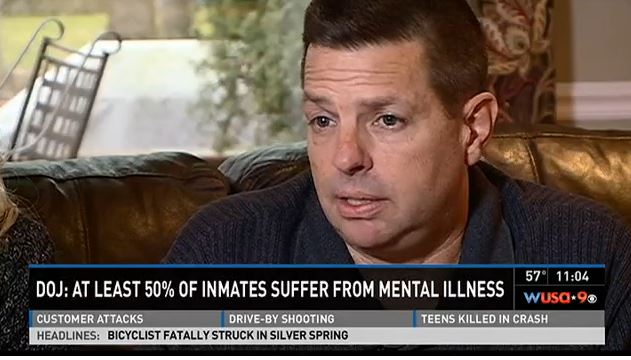 Smith’s parents described this cruel Catch 22 in a WUSA-9 interview March 12. “As far as we know, he is not receiving any treatment,” Paul’s father, Mike Smith, said.
Take this as further evidence - as if we needed it - that correctional settings are utterly unsuitable for people with significant mental health needs. And yet after decades of deinstitutionalization and rigid interpretation of state commitment laws, there are today more than three times as many people with severe mental illness in America’s jails and prisons than in mental hospitals.
Paul Smith’s parents believe their son - serving 20 years for a series of unarmed home burglaries - would not be in prison at all if Maryland law had not made it so difficult for them to commit him to treatment when he turned 18 and stopped taking his medication.
As we have said before, Maryland is one of the worst places to be mentally ill and unable to recognize it.
But there is reason to hope that other Marylanders will avoid Paul Smith’s fate. A bill currently pending in the Maryland legislature would broaden civil commitment criteria to cover individuals with untreated severe mental illness who cannot meet their basic survival needs without assistance, regardless of whether they are demonstrably violent or suicidal.
The Treatment Advocacy Center is hard at work for its passage.
To comment, visit our Facebook page.
Visit our blog archive to read all our recent posts.