
(Aug. 4, 2015) Bipartisan legislation to address the needs of people with severe mental illness was introduced in the US Senate today ("Mental-health reform gaining momentum in Congress," National Journal, Aug. 4).
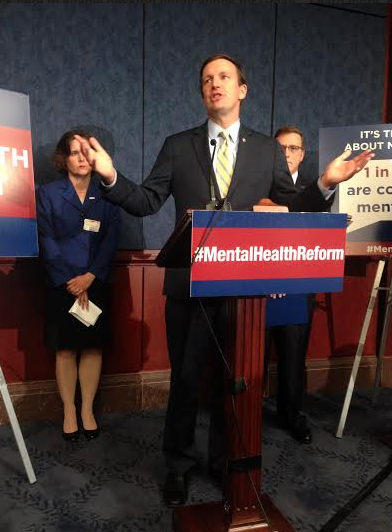 Senators Chris Murphy (D-CT) and Bill Cassidy (R-LA) said the Mental Health Reform Act of 2015 "identifies the weaknesses in our current mental health care delivery system and seeks to reform America’s mental health system so that it meets the needs of all patients."
“Many provisions in this bill are similar to those in the landmark bipartisan Helping Families in Mental Health Crisis Act recently reintroduced in Congress by Representatives Murphy and Johnson,” said John Snook, executive director of the Treatment Advocacy Center. “Together, the two bills demonstrate that members of our federal government are finally tackling the extreme inequities in our nation’s mental health system - a system that has ignored and discouraged treating our most vulnerable and ill."
Among other important provisions the bill would:
- Make it easier for states to implement assisted outpatient treatment (AOT) programs by extending a federal grant program for local jurisdictions until 2020. AOT has been found to reduce homelessness, repeat hospitalizations, incarceration and episodes of violence among people with severe mental illness, but only New York has fully implemented its AOT law.
- Increase insurance coverage for people with severe mental illness by easing the IMD exclusion to allow Medicaid reimbursement for acute stays for adult patients in psychiatric care facilities.
- Clarify HIPAA to ensure that families of people with severe mental illness have access to critical information concerning their loved ones.
“This legislation comes at a time when we can see the consequences of untreated severe mental illness in our jails and emergency rooms, among families desperate for help and in communities that have been shattered by violence,” Snook said. “If passed into law these provisions would expand access to treatment through proven outpatient treatment programs, increase insurance coverage and provide guidance to families and providers."
"We might finally see a better mental health system," the executive said.
To comment, visit our Facebook page.
Visit our blog archive to read all our recent posts.