By the Book: Summer reading recommendations from the Treatment Advocacy Center staff
By the Book: Summer reading recommendations from the Treatment Advocacy Center staff

|
 Caregivers (family and professional) have needed a book like Against All Odds for some time. I’m grateful to Dr. Gary Tsai for writing this, as it will help so many family members understand the system of mental health care much better. It’s a must-read! Caregivers (family and professional) have needed a book like Against All Odds for some time. I’m grateful to Dr. Gary Tsai for writing this, as it will help so many family members understand the system of mental health care much better. It’s a must-read!
Kathy Day, senior family liaison
|
|
|
|
 Following Dreamland, his powerful book on the human impact of the opioid epidemic, in The Least of Us, Sam Quinones introduces America to a related scourge that has become its own tragedy. Synthetic drugs, now widely available, are causing psychosis, leaving people to struggle with schizophrenia-like symptoms and systems at a loss for how to address a new type of patient. The intersection between mental illness, our broken treatment system, and the dangerous impact of new synthetic drugs threatens to overrun our overwhelmed system. Those of us pushing for reform will need to absorb the in-depth understanding of this new wrinkle offered by Quinones in this excellent work of investigative journalism. Following Dreamland, his powerful book on the human impact of the opioid epidemic, in The Least of Us, Sam Quinones introduces America to a related scourge that has become its own tragedy. Synthetic drugs, now widely available, are causing psychosis, leaving people to struggle with schizophrenia-like symptoms and systems at a loss for how to address a new type of patient. The intersection between mental illness, our broken treatment system, and the dangerous impact of new synthetic drugs threatens to overrun our overwhelmed system. Those of us pushing for reform will need to absorb the in-depth understanding of this new wrinkle offered by Quinones in this excellent work of investigative journalism.
Lisa Dailey, executive director
|
|
|
 Biography has become my favorite literary genre of late. Having just finished Blake Gopnik’s Warhol, I am now reading Carrie Fisher: A Life on the Edge. The Star Wars actress, who had a dual diagnosis of bipolar disorder and substance use disorder, was not only a purveyor of endless witticisms and one-liners -- “the absolute funniest talker in the world” – but was also an intensely generous and devoted friend. That generosity extended to the readers of her advice column in The Guardian, with whom she shared hard-won wisdom about living with mental illness until the month before she died of a heart attack at age 60. Wrote Fisher to a person with bipolar disorder in her final column: “We have been given a challenging illness, and there is no other option than to meet those challenges.” Biography has become my favorite literary genre of late. Having just finished Blake Gopnik’s Warhol, I am now reading Carrie Fisher: A Life on the Edge. The Star Wars actress, who had a dual diagnosis of bipolar disorder and substance use disorder, was not only a purveyor of endless witticisms and one-liners -- “the absolute funniest talker in the world” – but was also an intensely generous and devoted friend. That generosity extended to the readers of her advice column in The Guardian, with whom she shared hard-won wisdom about living with mental illness until the month before she died of a heart attack at age 60. Wrote Fisher to a person with bipolar disorder in her final column: “We have been given a challenging illness, and there is no other option than to meet those challenges.”
Geoffrey Melada, director of communications |
|
|
|
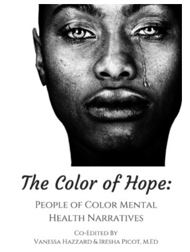 The common admonition, “You can't understand someone until you've walked a mile in their shoes,” comes to life in The Color of Hope: People of Color Mental Health Narratives. Edited by Vanessa Hazzard and Iresha Picot, the book centers the diverse experiences and identities of people of color struggling with severe mental illness. This moving collection of first person narratives touches on some of the most nuanced issues on the forefront of mental health policy through an intersectional perspective. The common admonition, “You can't understand someone until you've walked a mile in their shoes,” comes to life in The Color of Hope: People of Color Mental Health Narratives. Edited by Vanessa Hazzard and Iresha Picot, the book centers the diverse experiences and identities of people of color struggling with severe mental illness. This moving collection of first person narratives touches on some of the most nuanced issues on the forefront of mental health policy through an intersectional perspective.
Samantha Delman, communications associate
|
|
|
 Shortly after adopting a sibling group of three school-aged children, my husband and I quickly came to realize that we were in way over our heads. I wasn’t sure if the peculiar behaviors we were witnessing were due to attachment disorder, trauma from abuse and neglect, mental illness, or were just typical youthful behavior. Without knowing the cause, it was hard to know how to respond. So, when everyone else was sleeping, I poured over every parenting book I could get my hands on looking for answers. It wasn’t until I read, Adopting the Hurt Child: Hope for Families With Special Needs Kids by Gregory Keck and Regina Kupecky, that I finally found the answers I needed and I no longer felt so overwhelmed and ill-euipped. Shortly after adopting a sibling group of three school-aged children, my husband and I quickly came to realize that we were in way over our heads. I wasn’t sure if the peculiar behaviors we were witnessing were due to attachment disorder, trauma from abuse and neglect, mental illness, or were just typical youthful behavior. Without knowing the cause, it was hard to know how to respond. So, when everyone else was sleeping, I poured over every parenting book I could get my hands on looking for answers. It wasn’t until I read, Adopting the Hurt Child: Hope for Families With Special Needs Kids by Gregory Keck and Regina Kupecky, that I finally found the answers I needed and I no longer felt so overwhelmed and ill-euipped.
Betsy Johnson, AOT policy adviser
|
|
|
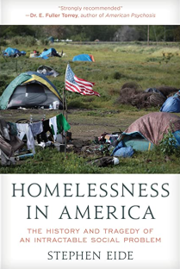
I recently read Homelessness in America: The History and Tragedy of an Intractable Social Problem by Stephen Eide, senior fellow at the Manhattan Institute, and I cannot recommend it enough. Eide provides a thorough account of the shifting landscape of the construct of homelessness in the United States in the past 100 years and describes how modern homelessness is not a single problem, but a complex array of issues requiring multiple solutions. Eide takes a renewed look at an issue that has plagued policymakers for years with logical arguments backed by copious research. His new book is a must-read for mental illness, social justice and housing advocates.
Elizabeth Sinclair Hancq, director of research
|
|
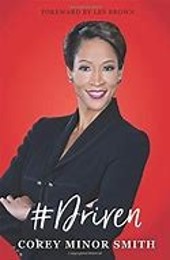
I rarely smile or feel seen while reading about severe mental illness. Corey Minor Smith’s book #Driven takes a lifetime of poverty and instability and turns it into empowerment. #Driven is celebratory, as Smith describes growing up in the 80’s and 90’s listening to My Lyte and hanging out with a rambunctious group of friends, then at times it’s heartbreaking, as she shares the first time she had to use a warrant or involuntary commitment to get her mother into a hospital for untreated severe mental illness. Smith has made the difficult choices no daughter wants to make for their parent and has come out successful. #Driven is part inspiration, part mental illness advocacy, and wholly worth a read.
Sabah Muhammad, senior legislative and policy counsel
|
|