

Felines: Friend or Foe?
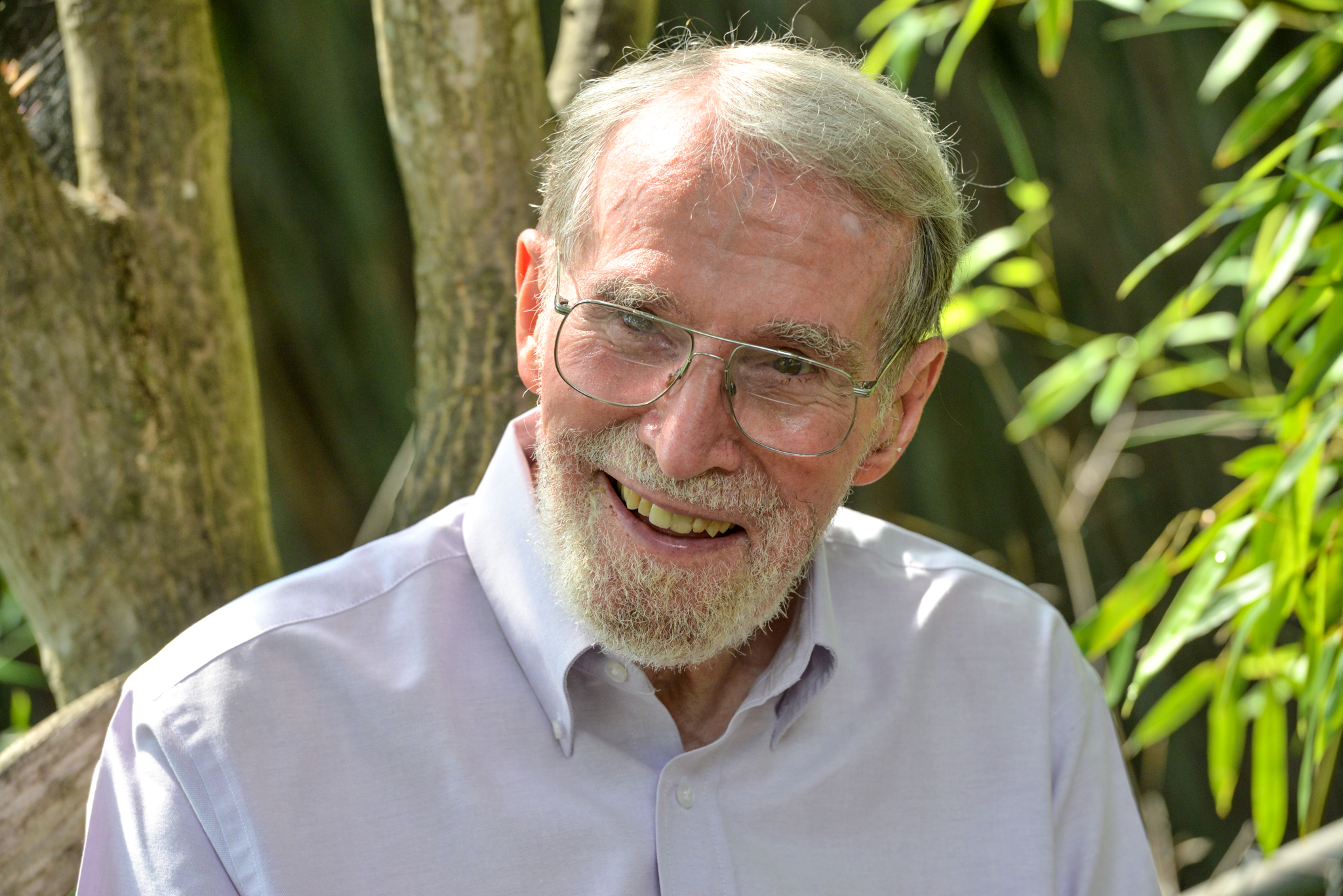
Questions and answers with author and Treatment Advocacy Center Founder Dr. E. Fuller Torrey
By Treatment Advocacy Center News
As part of our ongoing author series, we were privileged to interview author and Treatment Advocacy Center Founder Dr. E. Fuller Torrey about his brand-new book, published by Spring Publishing, “Parasites, Pussycats and Psychosis: The Unknown Dangers of Human Toxoplasmosis.”
Torrey’s latest book, his 21st, explores the connection between human psychosis in the United States and infection from Toxoplasma gondii, a parasite that humans can acquire from cats. The book is open access, ensuring that everyone will be able to read the book and understand the implications of this problem. Read it here.
What follows are highlights from our conversation:
How would you describe the book?
The book is a summary of all the data that suggest that a parasite,Toxoplasma gondii, plays a role in causing some cases, not all the cases, some cases of schizophrenia and bipolar disorder. It is a compilation of the data that's been accumulated over the last 30 years.
What was the inspiration behind this book?
I started being interested in infectious agents as a cause of schizophrenia and bipolar disorder in the seventies and so over the years, 50 years now, I've been working on this. The infectious agent that I found most interesting was the parasite Toxoplasma gondii, which is carried by cats. And so, this book is an attempt to put together all the data on that one parasite.
Can you explain the main takeaway of the book?
In my book, I describe that if you owned a cat, that was outside, as a child, it’s a risk factor for later developing schizophrenia. I go into some length in the book describing what the data is on that and, it's not uniform, there are some studies that don't support this, but the majority of the studies do support this. Cat ownership in childhood is a risk factor. Therefore, the book concludes that having a cat in childhood, if the cat is allowed to go outside, is not safe. Cats that stay inside are safe.
That is huge—what do we do about it?
There is clearly a lot of work that needs to be done. First, we must research to develop an effective vaccine. There's one that's used in sheep and in some goats, but it's not available for humans. Education is also important. Most people still are not aware of the risks involved with the parasite or how the parasite is transmitted. The parasite is transmitted in many, many ways, including even breathing the parasite in. That's why pregnant women are strongly advised not to change cat litter. Because even if you don't touch it, you could breathe it in and become infected that way.
Why does the book matter?
The book matters because if in fact I'm right and having a cat in childhood is a risk factor for schizophrenia and bipolar disorder, that's very important. That's a risk factor that we can control. There is a way to decrease the risk. Also, it’s important because if this is true, and one of the estimates in the book is that these parasites cause 20% of cases, that would open up treatment for people that we don't have available now. If we could treat 20% of the cases of schizophrenia with a more effective medicine than we have now that would be a big step forward. So, this has real implications for both preventing and treating the disease.
Do you believe cat owners will agree to a vaccine?
I think that people will get a vaccine because they want to keep cats as pets. People feel very strongly about cats. And people who are cat lovers will, I think, do whatever is necessary to make their cats safe pets. There are cat people and there are dog people, in my experience, both feel very strongly about their pets. And if they understand the risk of having a cat, they will do whatever is necessary to minimize that risk. Cats make nice pets!
Do you own a cat, or did you ever?
I had a cat in childhood, my sister’s cat. And I became attached to the cat next door that used me to come inside in the winter. The cat had nowhere to go in the winter because the woman who lived next door put it out when she went to work for the day. I think having a pet now would be one more thing that I would have to worry about so we don't have any pets.
What is your favorite kind of cat?
I spent two years in Ethiopia with the Peace Corps and I started to like lions. One of the women who was in the Peace Corps with me had two young baby lions. I spent a lot of time with the baby lions. I’m partial to lions. The baby lions made very nice pets.
Why was it important for you to make this book public access?
The book is open access, which means that it can be downloaded by anybody for free because there is a lot more interest in this research in middle income and lower income countries. It’s available free online and I did it purposely to make it available widely.
You’ve written a staggering 21 books. What advice do you have for younger writers aspiring to write a book?
My advice for young writers is that it's most important to write something that you're interested in. And to not take on too much at once. Start modestly with something that you can handle.
-- Elizabeth Warner