

Personally Speaking: Keep Moving
By Geoffrey Melada
A few days before my 17th birthday, my father disappeared. 
The night of his disappearance, I stood sentry at my mother’s dining room window, noiseless and pale as the splinter of moon that stared back at me through the cold panes of glass. As the hours passed, and the stars brightened against the ever-darkening sky, I could not be talked away from that spot, not by the fluttering in my stomach, and not by the appeals of my fretful grandmother.
It took the sound of a telephone ringing in the next room to stir me from my post. I listened as my mother answered, and I watched as she disintegrated into endless, wild tears. Her pathos confirmed my worst fears: My father, a prominent Pittsburgh physician, had taken his own life.
Hearing this, a swell of anger overcame me. I rushed back to the same window, beating it with my fist until it shattered all around me. The cold rushed in, jarring me back to consciousness. Then my mother’s arms were around me so that I could see nothing.
For the next few months, it felt as if my grief would never subside, and I began to lose momentum in my life. I could no longer imagine the future I once saw for myself.
My favorite high school English teacher, Mary Beth Fry, gave me a book that offered me the first words of solace I could comprehend. “In the Midst of Winter,” a compilation of essays, poems and diaries about death written by the world’s great writers, took its title from a quotation by Albert Camus:
“In the midst of winter, I found there was, within me, an invincible summer. And that makes me happy. For it says that no matter how hard the world pushes against me, within me, there's something stronger -- something better pushing right back.”
From this book, I learned three lessons:
- Grief is part of what it means to be human.
- Resilience is possible, even after trauma.
- Storytelling has the power to heal.
I saw this power first-hand, when I worked with survivors of child abuse in the Allegheny County District Attorney’s Office. The victims who tended to fare the best were the ones like Alicia Kozakiewicz, who could share their stories, helping other people to learn from their experiences. In the process of constructing their trauma narratives, they managed to fashion order out of chaos and transmute trauma’s ineffable power over them.
After spending seven years as a prosecutor and criminal defense attorney, I left the practice of law in 2013 to commit myself full-time to journalism. I wanted to learn more about how people overcome adversity.
My need for answers went beyond journalism, though. It was personal. If children like Alicia proved resilient after all they had been through, perhaps I could find hope for myself, and a path out of grief.
When the Robert Wood Johnson Foundation awarded me a fellowship at Columbia University’s Graduate School of Journalism, I spent a year studying adverse childhood experiences (ACEs), meeting with researchers, clinicians and survivors of child abuse, including some whose cases I had prosecuted.
I flew to Alaska in the middle of winter to interview Michael Mawhinney, whose case was one of the most horrific cases I had worked on. His 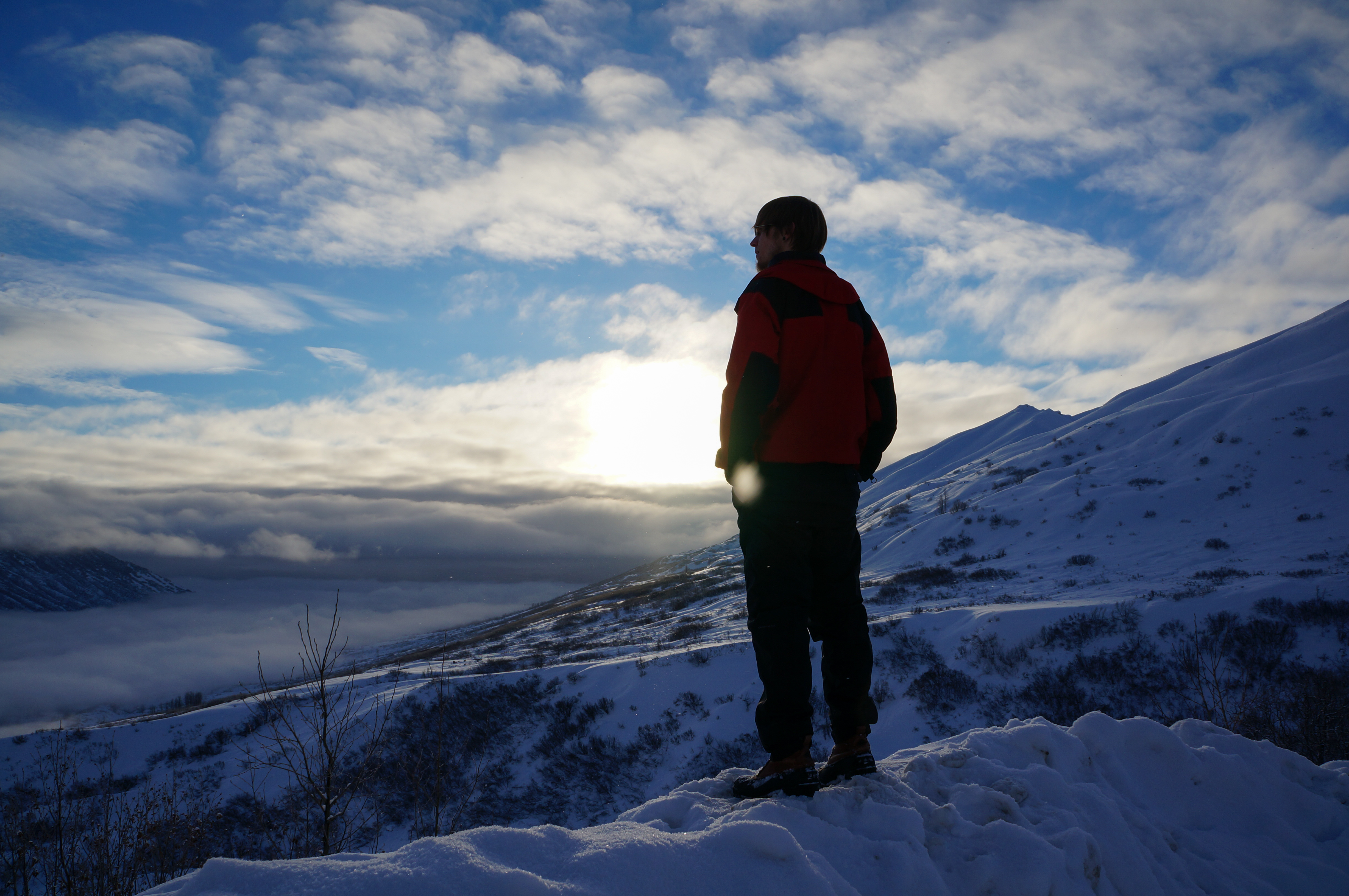 story of overcoming years of abuse at the hands of his father taught me the true meaning of resilience.
“I have feelings as strong now as I did 10 years ago,” Michael told me over dinner in Anchorage. “What I went through had a serious impact on me. Sometimes I hit a wall. But I have to keep moving. That’s my motto. Keep moving. The longer I am down, the harder it is for me to get back up. So it is important for me to keep moving.”
From Michael, I learned that resilience does not mean a complete return to one’s pre-traumatic self, or the mere absence of psychological symptoms. Resilience is a stable trajectory, the ability to keep moving despite day-to-day setbacks.
I will admit that there are times when I am tempted to give up. My father’s suicide – the guilt I feel over my inability to save him -- still weighs heavily on my mind. However, hearing other people’s stories of overcoming trauma gives me hope. Sharing those stories gives me purpose.
I cannot rescue my father. But perhaps there’s another family that could be helped by the work I do at the Treatment Advocacy Center, another teenage boy whose father could still be saved.
That thought gives me comfort, and the courage to keep moving.
Geoffrey W. Melada is the director of communications at the Treatment Advocacy Center.