

Donor Spotlight: Questions and Answers with Evelyn Burton
By: Caroline Nesbit
Evelyn Burton is a Maryland advocate who has devoted more than 20 years to serious and persistent mental illness. She has previously served on the boards of NAMI Montgomery County and NAMI Maryland and currently serves on the Board of Directors at Treatment Advocacy Center. In her 20 years as an advocate, Burton has led efforts to pass legislation on the state and federal level. She has advocated for the expansion of the criteria for the danger standard 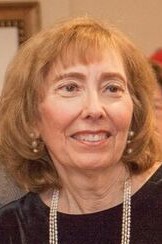 for involuntary patient evaluation and coordinated testimony supporting Assisted Outpatient Treatment (AOT). Burton continues to focus her efforts on improving treatment and services for those with serious mental illnesses and their families.
Q: Why did you get involved with mental health advocacy?
Evelyn: I got interested in mental illness because of a family member that came down with mental illness. My husband has bipolar disorder. At that point, I became familiar with psychiatric hospitals and police and all sorts of things that people with serious mental illness encounter.
I joined a support group that was based in NAMI Montgomery County. They convinced me to join the board of NAMI Montgomery County which I did and then I became Vice President and then I became Co-President of NAMI Montgomery County. But all along I was mainly interested in advocacy. I think – partly because my relative wasn’t able to get the services they needed, and I felt things needed to change.
Q: What has surprised you most in your work with Treatment Advocacy Center?
Evelyn: I guess the thing that surprised me the most is the breadth of expertise that’s on the board and experience and professionalism. It’s just been amazing to work with them and learn from them in terms of what they’re doing in various states and nationally as well. The only other board I had ever been on, in terms of an organization, was NAMI board and that was basically all family members, so it was a very different board. And this board, I find, is incredibly confident and devoted and just a lot of expertise. I’ve been really impressed.
Q: What does successful advocacy look like?
Evelyn: Well it has a lot of faces. There’s legislative advocacy, which is what I’ve been involved in, and that looks, that can be very much based on personal experiences, family experiences, individual experiences. I find legislators pay more attention to families than they do to lobbyists or professional people who may not be as devoted to the cause. So that’s one face of advocacy. But even there, you need legal expertise and lobbying expertise to wrap the job up.
There’s administrative advocacy, which deals with convincing administrators to do things that help people with mental illness. Again, it can be driven by families, but it can also be driven by professionals, doctors, psychiatrists and so forth.
And then there’s federal advocacy, which I just sort of dipped my toe into. I did a lot of advocacy around the Helping Families in Mental Health Crisis Act that the federal government passed, but it was mainly bringing out families at hearings and talking to legislators and that sort of thing. But with that I realized a lot - on the federal level, it seems more driven by professional lobbying. Having a good professional lobbyist on the federal level is indispensable.
The press can be a great way to get advocacy done too. It certainly helps us too, like when we have bills before the legislature, if we can get editorials or letters to the editor and the legislators read those, that can make a difference too. There’s a lot of moving parts to getting something changed. The more parts you can utilize the better your chances are.
And then there can be advocacy from the judicial branch. You know, we saw that the judges in Florida who did the AOT advocacy there. It can be from a lot of different sources.
And then there’s of course the research advocacy, which Dr. Torrey is amazing at, in terms of getting research done in the right areas and his work with shedding light on the National Institutes of Health and their research portfolio. And that is best done by people like him who have real expertise and are going to be listened to. So it comes from all directions.
But I think the best advocacy is when all these different, various groups can work together: the families the judges, the lobbyists, the doctors. The more groups you can have working together, the more effective it is.
But sometimes it takes one individual to get it started. I’ve been amazed how much I’ve been able to get passed in the legislature. Just being the initial spark, so to speak. I certainly haven’t done it all by myself, and I don’t think I could – just one person – I don’t think I could, but one person can get other people doing thing and organized and getting groups together. So never discount the individual.
Q: Why do you think Treatment Advocacy Center’s work is crucial today?
Evelyn: Well I think TAC’s work is especially crucial today but has always been ever since it was founded. Because they are the only organization that really focuses exclusively on the legal barriers especially, and barriers in general, to treatment to people with the most serious mental illness. Other organizations that I belong to and I worked for, focus on people with psychotic illnesses, but it’s not exclusively on barriers to treatment like Treatment Advocacy Center does; their scope is broader. Since TAC focuses pretty much exclusively on barriers to treatment with mental illness, they can be much more effective in that arena, especially in terms of the legal barriers – nobody else really focuses on that. So that can have a huge impact on the treatment that people with serious mental illness can get.
Q: How has mental health advocacy evolved since you started your work in mental health?
Evelyn: I think more families are involved than they used to be. Another thing is, especially since Newtown, there’s been a lot more interest by legislators in mental health treatment and mental illness in general.
Q: What is the most important lesson you’ve learned at Treatment Advocacy Center?
Evelyn: I think the most important lesson I’ve learned is that there are a lot of amazing people out there who are willing to help with the advocacy and never give up. If you just reach out, there are a lot of people that can help you accomplish the advocacy that needs to be done.
Q: What is your advice to those looking to start advocating for people with severe mental illness?
Evelyn: I think my advice would be to join an advocacy organization because, if you’re with an organization, you’re taken much more seriously than just as an individual. Not that an individual can’t do advocacy, I just think it’s much more effective when you’re a part of an organization. I remember one time, I was actually testifying against a bill that I thought was not good, and I had one other family member with me. And even though I thought we had very compelling testimony, and the legislators asked us questions about why we were opposing this, it did pass. And I asked my own senator, in the state legislature, why he thinks they didn’t listen to us and he said, “well, you came in as two individuals and then these other groups came as several organizations, so they’re reluctant to listen to, or follow, what two individuals are telling them over several organizations.” I sort of learned from that if you want to be listened to or taken more seriously, then individual voices are good if they help strengthen the case but testifying on behalf of an organization carries more weight. And so that’s what I would advise people to do, is not do it on their own but work with an advocacy organization whose beliefs they agree with, that can join many voices to make themselves heard more.
Q: How would you describe yourself in five words or less?
Evelyn: A driven, passionate advocate.
Q: Do you have a motto that you live by?
Evelyn: Yes in a way, it’s a funny story. When I was looking for a sponsor for our bill that had to do with a 30 hour emergency room stay. I had a sponsor and then they backed out because of other advocates that opposed the bill. And they backed out at last minute. So I was desperately scrambling for a new sponsor. So I went to this one legislator that I had known for a long time who I knew was not afraid to stand up to other organizations. And when I went to his office, he had a cartoon taped to the outside of his door. And it was a quote by Churchill that said “You’ve got enemies? Good. That means you stood up for something in your life.”
Caroline Nesbit is the communications intern at Treatment Advocacy Center.