

Iowa's Unique Opportunities
Living in Iowa has allowed my husband, Scott, and I the ability to advocate with most of the many presidential candidates over the past two years, to encourage them to come out with Mental Health Plans that incorporate substantive polices that would help to improve the treatment of people with serious brain disorders like Schizophrenia, Schizoaffective and Bipolar Disorders. But, truly, our story began long before two years ago.
Our son began getting sick in 2008, and over the years since then, he has had the typical progression for someone with an illness that evolves to be a Schizoaffective Disorder. It was episodic, with lots of really difficult times for him and our family, with occasional reprieves that I sometimes believed indicated that he had a chance for living a more normal life with less suffering. One of those times was in the late summer & fall of 2015, shortly after we had attended our local NAMI affiliate’s Family to Family class. During the advocacy class, they showed us a speech that Pete Earley gave some years prior while visiting Iowa City. As I sat listening and watching him, I found myself both crying and enraged. It helped me to see so many more parts of the system that were broken, and some of the history that led us into the mental healt h crisis. It lit a fire in me that has only grown more intense as I have learned even more. Pretty soon, it consumed me more and more, to the point that I am compelled to fix this broken system.
Our son had significant side-effects of Clozaril and after much pleading, we eventually got the doctors to lower his dose, since it wasn’t helping with the voices and delusions anyway. Eventually, he was switched to another medication, Saphris, which combined with Lithium, brought the son we knew back to us. It seemed like a wonderful cure and he was able to live independently in his apartment, work at a part time job and drive. During this time of hope and reprieve, we began volunteering with the Hillary Clinton campaign, and began advocating with her by giving her progressive written messaging. (Sadly, our son’s illness severely worsened in the spring of 2016 and he didn’t improve much until September, and finally they doctors and judge decided to do a civil court order for a residential treatment facility after he “failed” one last attempt to live in an apartment.) We didn’t know as much then, but we soon found that by showing up repeatedly at her events, and events with former President Bill Clinton and Chelsea Clinton, we were able to at least provide the written messaging. Scott spoke with her at another event and began asking questions publicly when the events provided that opportunity. Secretary Clinton sent a wonderful letter to us, and eventually did come out with a Mental Health plan. Now, it didn’t have a lot of specific policy for those with SMI, but it was a start. And, we didn’t know as much back then in 2015 as we do now in 2020. Well, we all know that she didn’t end up being president, so some might feel we wasted our time. Luckily, that wasn’t the case. Instead, while attending all these events, we began meeting more of our local and state elected officials, and from there, and other work in Iowa, we have established wonderful relationships with them.
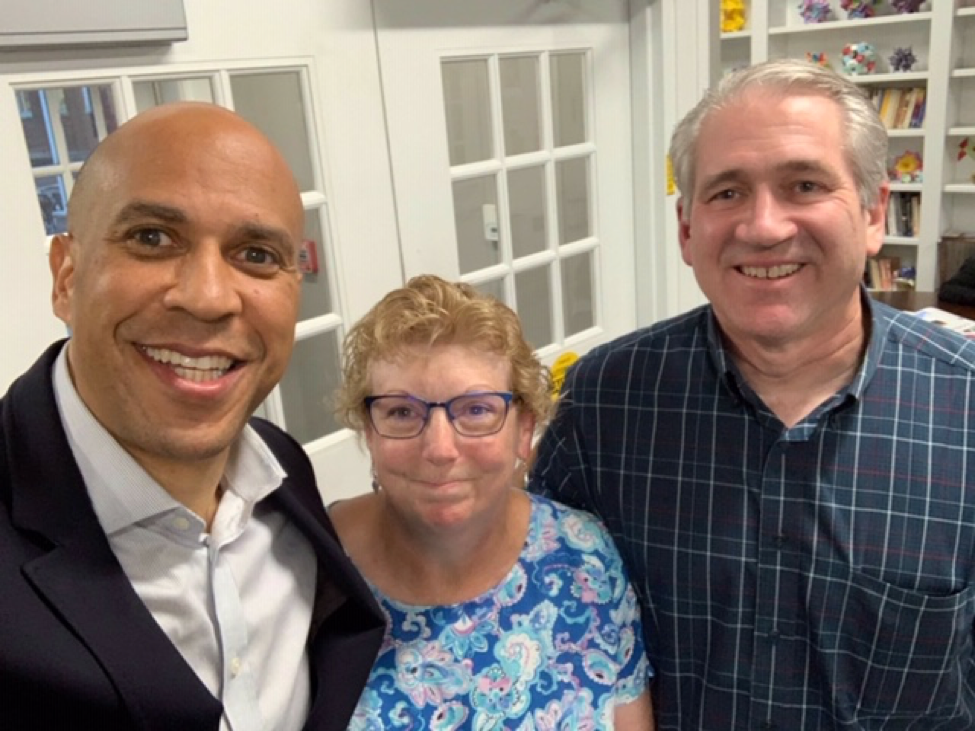 During the 2018 Iowa Gubernatorial primary and election, we advocated with all the democratic candidates and volunteered for the democratic nominee, Fred Hubbell. In addition, we were working on improving the Commitment Law here in Iowa, with help from the Treatment Advocacy Center. We were able to get our bill attached to a much larger bill, the Complex Needs Mental Health Bill that had a lot of political momentum, and within just a few months, our bill became law! We advocated at the Capitol, speaking with both democratic and republican legislators here in Iowa. During all this time, we continued to establish and build relationships with more legislators, here in Iowa, which has led to more advocacy opportunities.
During the 2018 pre-election season, several national legislators came to Iowa to help fundraise and campaign for people running for office at that time. Wewould meet them, advocate with them, and give them information about ending the IMD exclusion. (Senator Cory Booker, Representative Eric Swalwell, Secretary Julian Castro, and Governor Steve Bullock). When the Presidential Campaign began in earnest, the candidates began visiting Iowa, and the number of events was much greater than during the 2015 pre-caucus campaign, due to the significant increase in the number of candidates.
On the ground here in Iowa, it is possible to not only meet all of the candidates in person, it is also possible to be able to advocate with their local campaign staff, regional staff and for some, their state staff as well. Scott & I were approached by many campaign staffers to meet with them and we seized this opportunity to advocate with them all. Soon it became clear having a specific candidate PowerPoint presentation on our phones and/or devices would help us to efficiently tell our son’s story, educate them about the history of the country’s serious mental illness treatment crisis, and provide specific, substantive policy recommendations. We actively chose to take the time to meet wit
h all these campaign staffers for several reasons: 1) Many will be involved in politics in their future in one format or another. 2) All of them are bright, caring and compassionate young people who would benefit from learning this information, no matter what their futures would be. 3). It allowed us a “foot in the door” with their campaigns to begin getting improved access to their candidates. (We were often included in pre-event or post-event “clutches” for a select group of local elected officials, campaign volunteers and activists that got time with the candidates.)
Scott and I attended many events for all the candidates, as well as several events where most of the candidates would attend. We provided them with written policy recommendations, starting out with Dj Jaffe’s Federal and State recommendations to decriminalize the treatment of people with serious mental illnesses (with his permission, and with our contact information as well as his.) In May, staffers from Pete Buttigieg’s campaign were able to get his policy person to reach out to me and I advocated over the phone with him about the need to end the IMD exclusion, expand funding for AOT & mental health courts, increase MH professionals, and several other policies. When his policy was published sometime after that, I was pleased to see that many of our recommendations were included.
Also, in May, Senator Amy Klobuchar had published her Mental Health and Addiction Plan, which we did not have input into. However, local legislators recommended to her team that she include us on a panel in Iowa City for her announcement of her plan and we were able to do that. It was during this that Scott (seated at the left side of this picture) mentioned that we only have 64 adult & 32 children state mental health beds and that we are ranked 51st in the country by TAC. She was stunned to learn those numbers. I happened to be sitting next to her on the panel, and could see she wrote those numbers down, and circled them vigorously on her paper that she was taking notes on. She repeated these numbers often on the campaign trail.
Later, Dede Moon Ranahan had compiled a voting amongst SMI advocates of their top 5 recommendations for Presidential Candidates, as well as an extended list, and a cover letter which all the advocates listed a brief reason for their involvement. I provided this packet to all the candidates, most of them in one very productive evening at the “Wing Ding” event in Clear Lake, Iowa. Scott & I had made t-shirts with mental health messaging for this event, and to wear on TV as well during the CNN post-debate panel we participated with through the pre-caucus season. The “Wing Ding” was the first time we wore them, and I soon learned they helped me get backstage access, as the security staff clearly had law enforcement backgrounds. They were so helpful, they shared the order of the candidate appearances, so I was able to maximize my effectiveness at catching them as the arrived or left from giving their 5’ speeches.
Eventually, we were able to secure a 15-20-minute meeting with Senator Cory Booker, after his local campaign staff had advocated, on our behalf, to do so, along with a friend of ours, State Representative Amy Nielsen. We sat down with him, and a couple other people in this little “clutch” like group and talked through our candidate PowerPoint presentation. He responded with immediate empathy, compassion, and outrage when listening to our son’s story and the barriers we faced with trying to get him mental illness treatment. At the end, he immediately instructed his staff and us, that this couldn’t & shouldn’t wait until after the 2020 election, that in addition to already having his campaign policy staff work on a campaign mental health plan, he was going to put his Senate policy staff in touch with us to work on legislation. And he did.
That same week, I had suddenly developed appendicitis & had to have an appendectomy on that Monday, and we had met briefly with both Senator Kamala Harris and Senator Elizabeth Warren in clutches prior to their events, just 3 days later. We provided them both with a printed version of our talk and requested a chance to meet with them. That eventually happened, with both, but not til sometime later.
The first one was with Senator Kamala Harris after an event right here in Iowa City. She had looked at our written handout but talking her through it allowed us to share further information. And then, it seems that perhaps the typed letter that I gave her that evening, along with Dj Jaffe’s book, “Insane Consequences: How the Mental Health Industry Fails the Mentally Ill”, moved  her. Within just a few days, her policy team reached out to us and we began working with them on developing a plan. At an event not long after that, the Democratic Liberty & Justice Dinner in Des Moines, she had a friend of ours, Sue Dvorsky, come find us so that she could see us. It was very nice; in that I was able to hug her in person and thank her for working on a plan. Scott captured a very nice photo of Senator Harris and me, as I was taking a selfie. It has become one of my favorite pictures.
At some point after that, we were finally also able to spend about 10 minutes with Senator Elizabeth Warren to take her very quickly through our talk and ask her to please come out with a mental health plan. She did finally agree to this, and we have been in communication with her policy team as well. Many of our recommendations did make it into her Criminal Justice Plan (ending solitary confinement, decriminalizing the treatment of people with mental illness &/or addiction), and more recently, in her plan for people with disabilities. She had expressed to me during one of our short discussions in her selfie line, that “you know, there are forces on the other sides of these issues.” I replied briefly to that at the time, but during the meeting, I addressed that head on. I said that their opinions matter, but that we were there to advocate for those who had no ability to advocate for themselves. Despite the money and power of some of those forces, with Bazelon, the ACLU, and other “disability rights groups, that a strong leader needs to step up and stand up for reasonable policy to help those who were so much more sick and untreated due to policies that were put in place during the 1960’s. She sat back, and said, “You’re right. I can see that now.” We are still in touch with her policy staff and campaign staff, as they are seeking our endorsement for Senator Warren, and we are hoping she will commit to having a plan out soon that includes substantive SMI policy.
Governor Bullock had his policy team reach out to us shortly after the “Wing Ding.” His policy team was top notch and worked vigorously on a mental health plan. This happened based upon us just meeting him a few times and providing him with the written materials, and even though we didn’t get to give him our “candidate talk.” His policy people also talked with Peggy Huppert, NAMI Iowa’s Executive Director and several other experts around the country we recommended they speak with. His plan was quite comprehensive, like the Harris MH Plan. We were able to meet his lead policy person, Marc Heinrich, at a party just prior to the big Liberty & Justice Dinner. We were shocked that he was so young!! He had put together a wonderful plan with most all the elements we had advocated for. Later, we were also able to attend an event in Grinnell, Iowa to thank Governor Bullock in person, for his plan.
We haven’t been successful in getting specific plans with all the candidates, but we still feel our interactions with them have been helpful. Vice President Joe Biden feels very strongly about improving the treatment of people with mental illnesses, and he is unique in that he always asks how our son is doing. This is a picture of the first opportunity for me to talk with him, just prior to the Fourth of July parade in Independence, Iowa. A local newspaper photographer captured this image of us, and it is another favorite of mine, as it captures just how sincerely he was listening to me, despite the crowd and noise that surrounded us.
Now, many have asked us, but what if the candidates that devise plans you like are not the person that becomes the next President? Well, to be frank, that wasn’t truly the main reason for us dedicating so much time, energy and effort during this pre-caucus season. Instead, we understood that we would have the unique opportunity of meeting and advocating with all these candidates over the course of the season while they were here working for our votes in the “First In The Nation” caucus. And, most of them already hold positions in our federal, state or local governments, and most would in the future as well. Our goal has been to take advantage of our ability to meet them, speak with them and to advocate, on behalf of the advocates from all over the country, and more importantly, on behalf of the 11.9 million people in our country living with serious brain disorders. If we have been effective, we will now have many leaders in our country with a clearer understanding of the crisis, and the steps we need to take to help fix the broken “treatment” system.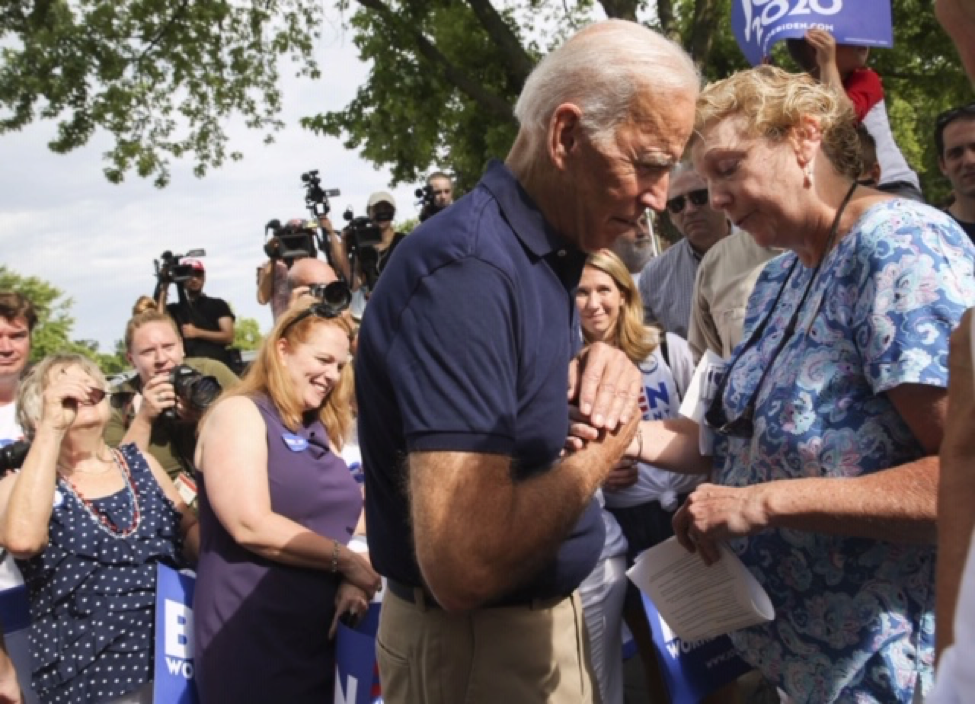 We understand that for many advocates, we are not getting things done fast enough. We also know that grass roots advocacy takes a huge amount of time. However, I believe that we have educated these candidates, grabbed their hearts with our son’s story and our persistent advocacy, on behalf of so many more people with SMI than just our son. I believe that many will follow through with working on legislation in the future, and that we will, hopefully, see some changes in the future that will benefit people with serious brain disorders.
I would be remiss if I didn’t share that much of our advocacy for people with serious brain disorders has been informed by many tremendous advocates who have worked for many decades doing this work, and the books that they have written. We are grateful to Dj Jaffe, for his amazing policy-based book mentioned above. We are also grateful to Ron Powers, our friend and Pulitzer Prize winning author for his amazing book, “No One Cares About Crazy People.” We are grateful to Betsy Johnson, John Snook, Lisa Dailey, and Michael Gray with the Treatment Advocacy Center for all their help and advocacy leadership. And finally, we are grateful to the many advocates across the country who have educated us and soothed our souls with their touching social media posts: Teresa Pasquini, Laura Pagliano, Janet Hays, Linda Harris Mimms, Lauren Rettagliata, Kathy Day, and so many more. We continue to learn more every day and are grateful for this as well.
For anyone out there who has not begun to advocate yet, due to the current status of your loved one or your illness, please know that we were there once as well. We grant you grace to do what you need to do for now and know that so many others are working on your behalf. We didn’t know exactly how to start, or even what policies to recommend. We just started by telling of our son’s story and educating people about how broken the system is. And if that is where you start, that’s wonderful. These candidates are listening to everyone who speaks with them, and the more that they hear our stories, the better.
I do recommend trying to provide specific solutions, though, whenever you can. Most legislators and leaders want to help, but many do not know exactly what to do. They are eager for solutions and often very willing to do what they can to help to put them in place. By combining specific stories with substantive policy, we believe anyone can be effective advocates and can help to improve the situation for people with serious brain disorders. We hope that over the course of the months between now and November, many more will be working to advocate with all these candidates to advocate with them as they visit your states as they campaign. Please consider getting involved, attending events and helping us to motivate them to prioritize fixing the very broken “treatment” system for people with serious brain disorders. The more people they hear from, the better!
Leslie Carpenter
Mental Health Advocate and Family Member