

(Oct. 2, 2017) October 1 kicked off mental illness awareness week, and for the first time in a long while my family has some unreservedly good news to share. After years of battling the criminal justice system to have his illness recognized, my son Danny finally had all criminal charges against him dismissed last month. The system sees him now as I see him: as a young man with a medical condition, and not as a criminal. Danny’s “crime” was lashing out while in a secure hospital after being in isolation and restraint at Napa State Hospital.
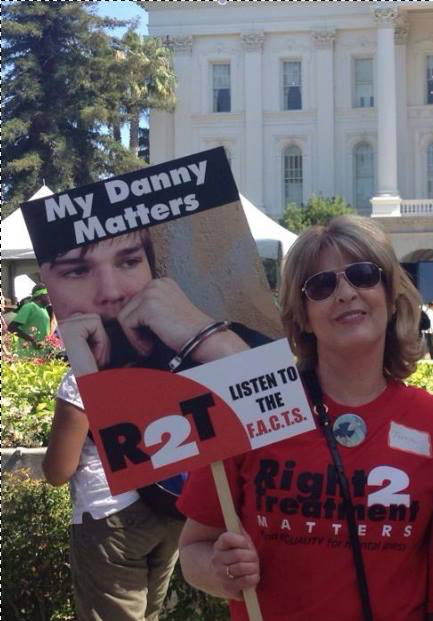
It took four years of fear and uncertainty before the courts finally acknowledged that conduct arising in psychosis is not the same as a decision to commit a crime. It may sound bizarre, but Danny is one of the lucky ones. Many with serious mental illness enter the prison system, where they are at high risk for victimization. Many more are placed in solitary detention for safety, which can cause permanent damage.
When civil commitment standards require dangerousness before treatment can be ordered, we create a system that demands criminal behavior to get help. When you can only get treatment behind bars or when we charge a person with a crime when he acts out during a psychosis, we are making it illegal to be mentally ill. We have wrongly accepted this reality as the status quo.
Sometimes advocating for people with serious mental illness can feel like an overwhelming job, but if we want to decriminalize mental illness, we can. One story at a time, one policy and one law at a time can mean the difference between having a system that treats people with serious mental illness and one that punishes them for something they have no control over. Nobody chooses psychosis.
For this mental illness awareness week, I want to speak directly to lawmakers, law enforcement, prosecutors, judges, and anyone else who has a hand in the futures of people like Danny. Be aware of what it means to criminalize mental illness. Look at the policies and laws you enforce and ask whether they contribute to the problem. If they do, work with family members and advocates to change them. If you have discretion to keep people with serious mental illness out of the criminal justice system, exercise it.
The sign I carry says “My Danny Matters.” Danny does matter. And so does every other person with serious mental illness at risk for being swept into the criminal justice system when treatment is what he or she needs. Your first step for mental health awareness week should be to look at what’s right in front of you, and then roll up your sleeves to get started.
by Teresa Pasquini