

(Sept. 28, 2017) Individuals with serious mental illness continue to be victims of fatal law enforcement shootings despite national efforts to improve crisis response.
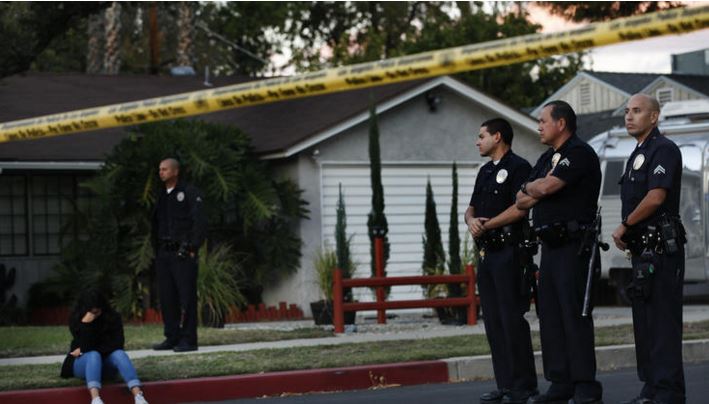
Johnathon Rose, diagnosed with schizophrenia, was shot and killed by a Sacramento County sheriff deputy on January 17, 2012. Responding to a call from Rose’s parents for help with their agitated son, Deputy McEntire entered the Rose household and within minutes was engaged in an altercation with an unarmed Rose, according to an article in The Sacramento Bee. This past week, jurors awarded $6.5 million to Rose’s family in a wrongful death lawsuit (“Jurors award $6.5 million to family in deputy’s shooting of mentally ill son” The Sacramento Bee, September 27, 2017).
“Justice and truth prevailed today. We hope what happened to my brother will never happen to another family,” Ted Rose Jr., Rose’s brother, was quoted in the article.
Unfortunately, fatal shootings like Rose’s continue to occur. Eddie Russell Jr., was shot and killed by an Illinois police officer on September 20, 2017. This event has been reported by a number of major news outlets due to Russell being a cousin of T-Boz, a singer from the hit group TLC. Russell was reported to have serious mental health issues and had recently been released from a mental health facility.
More than one in four fatal law enforcement encounters involve individuals with serious mental illness, a widely cited statistic generated by the Treatment Advocacy Center in Overlooked and the Undercounted: The Role of Mental Illness in Fatal Law Enforcement Encounters. When published in December of 2015, this study produced the only numbers on the role that mental illness plays in the deadly use of force by law enforcement. Since the study was published, the 21st Century Cures Act, passed by Congress and signed by President Obama in December 2016, included a mandate for the US attorney general to collect and report data on the role of serious mental illness in fatal law enforcement encounters.
Such incidents may no longer be undercounted, but they are still being overlooked as evidenced by headlines such as those of the deaths of Johnathon Rose and Eddie Russell Jr. More work is needed to reduce law enforcement encounters with individuals with serious mental illness.
As Rose’s lawyer is quoted saying in The Sacramento Bee, “this is a wake-up call to law enforcement that people won’t tolerate this behavior.”
There is hope. Crisis Intervention Training (CIT) programs teach law enforcement officers how to recognize signs and symptoms of mental illness, and how to best respond to situations involving individuals in crisis. These programs are implemented to a varying degree in jurisdictions throughout the country. CIT is known to have positive effects in reducing fatal law enforcement encounters with individuals with serious mental illness and to promote diversionary practices from the criminal justice system.
If you have a story of how CIT has made a difference in your area, please let us know at This e-mail address is being protected from spambots. You need JavaScript enabled to view it .
by Elizabeth Sinclair