

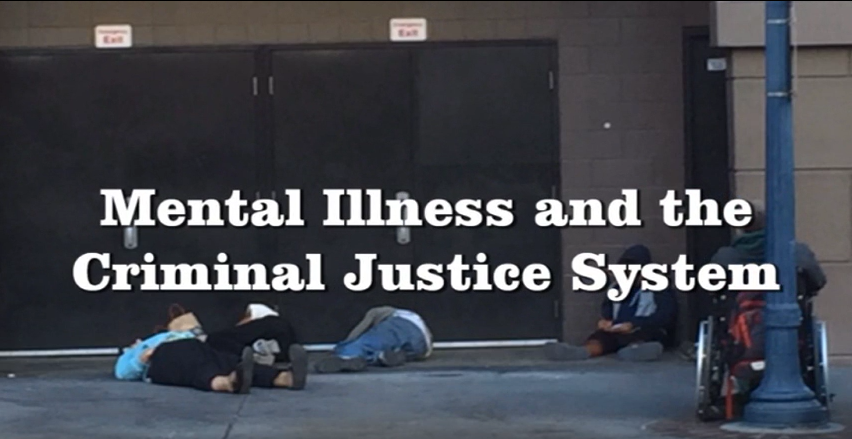
 (Feb. 27, 2017) The New York State Association of Chiefs of Police last week posted a YouTube video examining the intersection between mental illness and the criminal justice system.
In this two-part series, former Police Chief and President of the Committee on Untreated Severe Mental Illness for the New York State Association of Chiefs of Police Michael Biasotti is interviewed along with his wife Barbara, a former psychologist.
The couple has been advocating for mental health reforms for more than 20 years and discuss how a lack of mental health resources often causes individuals with serious mental illness to become involved in the criminal justice system.
“We have two mental health systems in the United States today,” said Mike Biasotti. “One exists that is well funded and has plenty of programs to help mentally ill people who seek and want to get the help. But those that are too ill to get the help or refuse help become criminal justice issues, and it seems that the mental health community isn’t concerned about that second group. They’re letting the criminal justice system handle that with jails.”
Barbara Biasotti points out the toll untreated mental illness takes on both families and law enforcement.
“Families have no place else to turn but to the police because things get very much out of control,” Barbara said. “They’re picking up the phone and calling 911 because the medical [professionals] have not been able to respond. Many times, their loved one with serious mental illness has been brought to the emergency room and turned away and not given the care that they needed. It’s really falling on the hands of law enforcement, and it’s very problematic.”
Untreated mental illness is an issue of great personal significance to the Biasottis: they and their daughter, who has been diagnosed schizophrenia, have faced many of the same problems that families affected by serious mental illness routinely encounter.
Problems like the critical shortage of psychiatric beds and the criminalization of mental illness in the United States, which leads ten times more individuals suffering with psychiatric diseases to be placed behind bars than in a hospital bed.
“The hospitals are starting to have fewer and fewer beds, so they’re starting to release more and more persons who truly need hospitalization to be stabilized,” said Mike. “This is when you see the criminalization of mental illness come in because these people are now displaced from the hospital that was caring for them. Many of them do not seek treatment on their own, and they end up committing small crimes. So, they become stuck in this revolving door of the criminal justice system.”
Somehow, the criminal justice system has become a de facto mental health facility tasked with managing an overwhelming problem. It places law enforcement in an unfair position and is a horrible way to treat our sickest and most vulnerable citizens.
“Psychiatric disorders are brain diseases no different from kidney disease or heart disease, and to think that somebody with that type of problem would go to a jail to get treatment is completely illogical,” said Barbara. “So, we’re really trying to turn this around and take the responsibility for psychiatric care and give it back to the medical and social services professions."
Watch Part 1 and Part 2 of “Mental Illness and the Criminal Justice System” to learn more.
To comment, please visit our Facebook page.
Visit our blog archive to read all our recent posts.