

 (Feb. 15, 2017) Members of the media regularly call the Treatment Advocacy Center to ask, "Why is your estimated total of people with 'serious mental illness' so different from -" before naming another group or agency or similar resource.
The answer inevitably lies in how SMI is defined.
At the Treatment Advocacy Center, where the mission is to remove barriers to treatment for the most disabling serious mental illnesses (SMI), we define SMI as severe psychiatric diseases with symptoms that put individuals who experience them at the greatest risk for criminal justice involvement, homelessness, hospitalization and/or involuntary treatment. Typically, these are disorders with psychotic features, although mania also can elevate risk.
To develop estimates, we apply the National Institute of Mental Health (NIMH) schizophrenia prevalence rate of 1.1% and the severe bipolar disorder rate of 2.2% to US Census Bureau data for the adult population. In 2016, that produced an estimated 8.2 million adults with one of the two conditions. Organizations that include in their calculations milder bipolar, which affects an additional 0.4% of the population, report respectively higher totals.
Still other organizations include additional mood disorders, such as unipolar depression, in their calculations and arrive at even larger numbers as a result. The frequently cited estimate that 1 in 4 Americans experiences a mental illness in any given year comes from a definition broad enough to include attention deficit disorder, autism, anxiety and many other neurological conditions. Meanwhile, the SteppingUp Initiative to divert people with mental illness from jails into treatment includes co-occurring substance-use disorders in its definition, while the federal government and other groups exclude them.
What Government Agencies Say
The Substance Abuse and Mental Health Administration (SAMHSA) publishes a helpful orientation to the history and use of language about SMI, including the federal definition that was published under Congressional mandate in 1993:
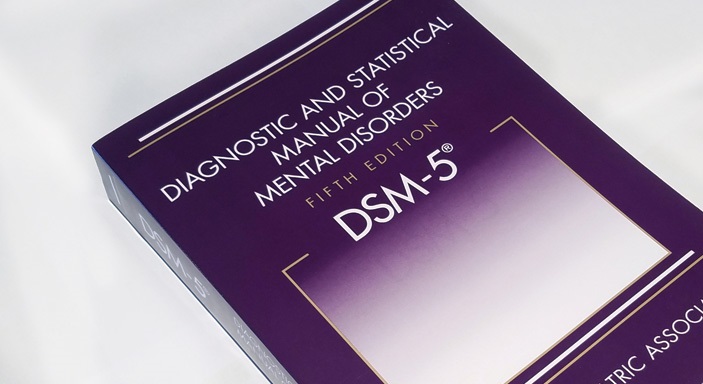
"Adults with a serious mental illness are persons: (1) age 18 and over, (2) who currently or at any time during the past year, (3) have a diagnosable mental, behavioral, or emotional disorder (excluding developmental and substance use disorders) of sufficient duration to meet diagnostic criteria specified within the Diagnostic and Statistical Manual of Mental Disorders (DSM)-III-R, (4) that has resulted in functional impairment which substantially interferes with or limits one or more major life activities," such as activities of daily living.
The definition was later amended to exclude dementias and psychiatric conditions resulting from other medical conditions. For children, the analogous "serious emotional disturbance" or "SED" was developed. Both definitions focus on criteria established in DSM expanded to incorporate a degree of impairment.
Legal definitions used in the criminal justice system are far more variable. Though many states essentially mirror DSM categories in their definitions, no two state definitions are identical, and many others are quite individualized. New Jersey defines SMI as a "mental health problem" sufficient to warrant admission to a mental health unit, for example. Alabama substitutes the term "mental disorder" for SMI and calls it a "syndrome" even though diseases like schizophrenia do not fit the clinical criteria for syndromes. Delaware doesn't appear to establish a legal definition at all.
Research Challenges
Because different definitions produce different numbers, populations and population characteristics, the lack of a common definition complicates analyzing and reporting the role and impact of SMI. If the 50 states and DC are each defining mental illness in their inmate populations somewhat differently, for example, it is hard to combine or compare their data to identify broad trends. A study that recognizes co-morbid substance abuse as an SMI will identify a different population than one studying psychiatric disease alone.
Though the use of different SMI definitions complicates the study and conversations around SMI, they are valid, defensible and practical in their own contexts. The NIMH needs a clinical definition for clinical trials, the criminal justice system needs definitions relevant to criminal defendants, and the Treatment Advocacy Center needs a definition specific to the population for which we advocate, whose needs are quite different from the needs of people with other mental health conditions.
What is universal and essential is the need for clarity and transparency about how SMI is being defined in each context to explain the differences that result.
Doris A. Fuller
Chief of Research and Public Affairs
References:
- Federal Register Volume 58 No. 96 published Thursday May 20, 1993, pages 29422-29425.
- Development Services Group. (2016). Behind the term: Serious mental illness. Substance Abuse and Mental Health Services Administration.
- Haneber, R et al. (January 2017). Reducing the number of people with mental illnesses in jail: Six questions county leaders need to ask. The SteppingUp Initiative.
- National Association of State Mental Health Program Directors Research Institute. (2016). Jurisdictions' definition of serious mental illness.
Follow ORPA on Twitter at @TACResearch.
Research Weekly is a summary published as a public service of the Treatment Advocacy Center and does not necessarily reflect the findings or positions of the organization or its staff. Full access to research summarized may require a fee or paid subscription to the publications.
To comment, please visit our Facebook page.