

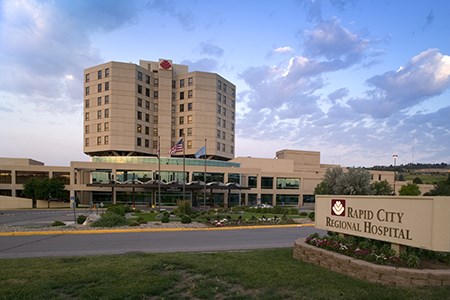
 (Feb. 13, 2017) A South Dakota hospital has come under fire for refusing to admit would-be patients suffering from severe mental illness. Instead, hospital staff are directed to contact police to take such individuals to jail, even though they haven’t committed a crime (“Jail cells await mentally ill in Rapid City,” Rapid City Journal, Feb. 8)
The Rapid City Regional Hospital recently announced a major policy change regarding the handling of people with psychotic disorders seeking hospital admission. Under the new policy, the hospital will deny treatment to the most severely ill and instead contact the Pennington County Sheriff’s Office to take them into custody.
Yes, you read that right; People with severe mental illness are being incarcerated for no reason other than the fact that they are sick.
A spokesperson for the hospital justified the new policy, explaining that psychotic individuals may be disruptive and frighten other patients, so the hospital must turn them away.
Unsurprisingly, the new policy has sparked outrage from mental health advocates and law enforcement officials alike.
“In my view, this is the biggest step backward our community has experienced in terms of health care for mental health patients, said Rapid City police Chief Karl Jegeris. "And though it’s legally permissible by statute to put someone in an incarceration setting, it doesn’t mean that it’s the right thing to do.
"This is fundamentally flawed because we're using a criminal justice response for what should be a medical situation."
A Disease Like Any Other
Severe mental illness is a brain disease akin to any other disease that may require treatment in a hospital. Imagine if a person suffering from cancer or diabetes went to the hospital seeking treatment and was not only sent away but sent to jail. It flies in the face of human decency, but this is what is happening to people suffering with psychiatric diseases who come to Rapid City Regional Hospital for help.
And under South Dakota law, a person can be detained by law enforcement for 24 hours, even if they have not been charged with a crime.
“It’s horrible on so many different levels,” said Dr. Stephen Manlove, a psychiatrist who works for the Pennington County Jail, about the hospital’s policy change. “It’s highly stigmatizing to mentally ill people. That’s probably the least severe piece of it. It’s poor health care.”
Manlove argues that he and his small team at the jail would be unable to handle the significant influx of non-criminal mentally ill persons the hospital’s policy change will cause.
“There’s not, at this moment, a plan for how to deal with them in the jail," Manlove said. "There’s no provision to get them any kind of psychiatric or mental health care there.”
The Rapid City Regional Hospital is a poster child for the criminalization of mental illness. It’s outrageous but not surprising considering the severe shortage of psychiatric beds in the state.
South Dakota saw psych bed numbers plummet by 46% from 2010 to 2016, and the state currently maintains just 14.9 beds per 100,000 people. The critical shortage is compounded by the backlog of mentally ill inmates who have been found incompetent to stand trial, but who sit in jail waiting for months for a treatment bed to become available at a hospital. These “forensic patients” are essentially competing against civil patients for psych beds that don’t exist.
We must do better for those suffering with severe and persistent mental illness in South Dakota. After all, a society can perhaps best be judged by the way it treats its sickest members. Refusing to provide treatment and criminalizing people because of their illness is disgraceful and should not be accepted.
The Treatment Advocacy Center's latest study, “Emptying the ‘New Asylums,'" presents a mathematical model for reducing both the psychiatric beds crisis and the crisis of mental illness behind bars. South Dakota officials would be well-advised to consult it as they address this outrage.
Read the full report, “Emptying the ‘New Asylums’: A Beds Capacity Model to Reduce Mental Illness Behind Bars,” to learn more.
To comment, please visit our Facebook page.