

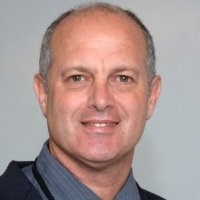
 (Jan. 3, 2017) Mark Weiser has become the hound of research transparency in neuroscience clinical trials, which makes him the friend of mental health patients and consumers.
As we have said here before, nobody has a greater stake in progress toward new treatments for severe mental illness than the patients, caregivers and professionals who live and work with psychiatric disease. Yet the end users of mental health science are typically the last to know about research findings that might improve our lives and work now.
Research Weekly is the Treatment Advocacy Center's effort to somewhat bridge that gap by regularly summarizing and digesting psychiatric studies that typically don't reach general audiences. Weiser is trying to bridge the gap by encouraging the scientists conducting those studies to be more transparent about what they find by sharing data and being forthright when findings don't confirm theories.
The Case for Transparency
Weiser is chair of the department of psychiatry at Tel Aviv University and associate director for treatment trials for the Stanley Medical Research Institute (SMRI). For the February 2016 annual scientific meeting of the elite and prestigious International Society for CNS (Central Nervous System) Clinical Trials and Methodology in Washington, DC, he brought together a panel of researchers to evaluate how well scientists and the scientific literature are doing with transparency.
Not very, he told the audience. "We get up in the morning scratching our heads about how we are going to help patients, and it's very bad if something already has been found not to work, but that information is not available."
In December, he was at it again, this time at the annual meeting of the American College of Neuropharmacology, a professional organization of leading brain scientists. In a panel entitled "Improving Transparency of Clinical Trial Data," Weiser described what he called "the cardinal sins of neuroscience transparency," including:
- Investigators have pet theories and, when their study produces negative findings, they don't want people to know. In part as a result, negative findings are much less likely to be reported
- Science editors send papers for review by people who have their own pet theories, thus who have their own pet reasons for why studies are too horrible to be published
- The focus of research changes because what's published is not complete and representative of what's being found
- We want to see good things, and negative findings don't interest anybody as much as a result so they are less likely to be reported or published.
"People are testing compounds, people are on placeboes, and nobody knows about it," Weiser said. "This means patients are having unnecessary exposure to placebos, compounds already found ineffective are being re-tested, and funds are wasted."
Also on the panel, Joseph Ross, MD, associate professor, Yale University School of Medicine, characterized underreporting research as "scientific misconduct." "Open science is good for patients, and families need open science," he said.
Weiser included the Treatment Advocacy Center among the panelists to remind the audience about the stake that end users of research - patients, their families, non-psychiatric medical providers, policymakers and others - have in their research.
"People suffer and even die waiting for studies to be completed and published" was the message. "You have to do better for those of us who wait."

Doris A. Fuller
Chief of Research and Public Affairs
References:
- Research Weekly. (March 8, 2016). Getting to the science you need and want. Treatment Advocacy Center.
- Research Weekly. (23 February, 2016). Transparency on the front lines. Treatment Advocacy Center.
Follow ORPA on Twitter at @TACResearch.
Next Week: Our Research Recommendations for SAMHSA
Research Weekly is a summary published as a public service of the Treatment Advocacy Center and does not necessarily reflect the findings or positions of the organization or its staff. Full access to research summarized may require a fee or paid subscription to the publications.
To comment, please visit our Facebook page.