
(Sept. 23, 2016) Last week, California Gov. Brown vetoed AB 2279, a bill proposed to increase accountability for mental health treatment funds. The moneys from the Mental Health Services Act of 2004 (MHSA) are by law to be designated for unserved (or underserved) individuals with severe mental illness. Treatment Advocacy Center has long been concerned that far too much of this vital funding was being diverted to issues well outside that scope.
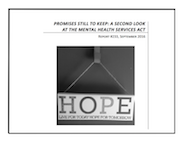
In total, over $17 billion has been distributed to counties in the twelve years since its passage, yet very little information is available on how it was spent. Strong criticism of MHSA oversight arose in response to a 2015 report from the Little Hoover Commission, an agency that provides independent oversight of state agencies in California.
A follow-up report from the Little Hoover Commission released Sept. 8 concluded that the lack of transparency and failure to account for funds by the counties persists. The Commission specifically called for Gov. Brown to sign AB 2279.
The 2015 report concluded that counties receiving funds earmarked for treatment of individuals with severe mental illness were providing insufficient data to illustrate that the funds they received were actually being spent on that population, or if the programs they chose to fund used evidence-based practices.
The report revealed widespread failures to account for the billions of dollars in funding received by counties under the Act, as well as improper spending outside the scope of the statute. Among the controversies highlighted in 2015, the Commission pointed to:
- Questionable use of funds for “prevention,” despite a lack of evidence that SMI is preventable
- Lack of control over the size of local government hold-backs for ‘administrative’ fees
- Use of funds for general, not mental, health initiatives outside the voters’ mandate
- Absence of sanctions for improper use of funds or failure to file reports
- Failure to create data systems to evaluate the success or failure of individual programs.
The governor’s veto included a statement outlining his belief that efforts already underway by the Department of Health Services will provide much of the data and transparency outlined in the bill.
Unfortunately, failure to sign the bill continues the de facto situation where counties face no real mandate or deadline to account for public funds and no sanction for raiding money designated for one of the most vulnerable and unserved populations in California.