

(Aug. 15, 2016) A new report released by the U.S. Department of Justice last week reveals that Baltimore, Maryland police routinely end up in “unnecessarily violent” confrontations with people in psychiatric crisis and often use excessive force against them, even when they pose no immediate threat (“Baltimore police cuffed, stunned and shot people in mental health crisis, even if they posed no threat,” the Washington Post, Aug. 12).
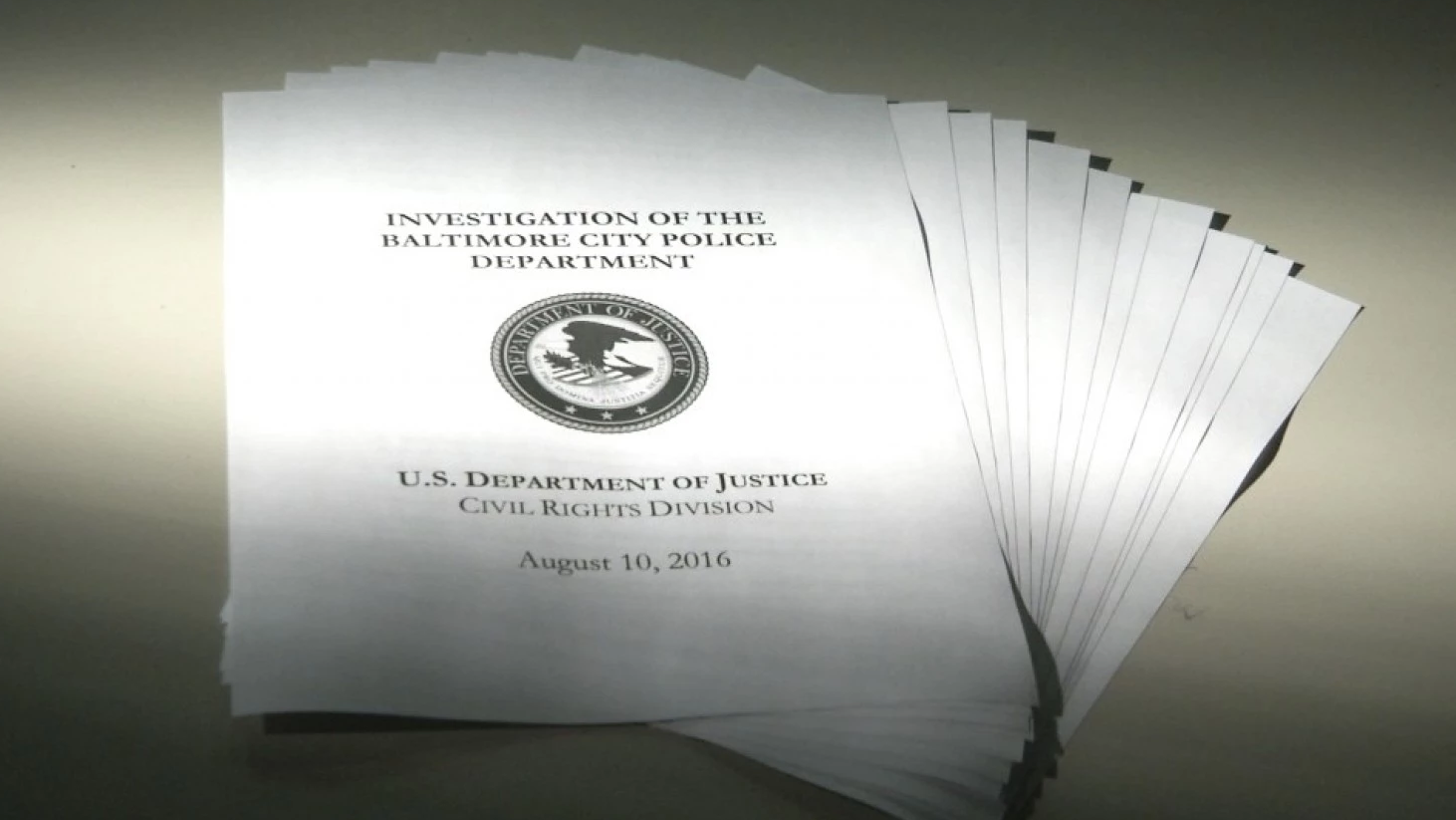 Justice Department investigators found that in the past six years, mental illness played a role in at least 1 of every 5 cases in which a Baltimore officer used force through the use of handcuffs, stun guns and guns, among other methods.
And, if this statistic isn’t compelling enough, the report uses specific examples to further drive home the point.
One example is the story of a woman named Ashley. In 2013, Baltimore police were called to transport Ashley to the hospital for a mental health evaluation.
When officers arrived, Ashley was sitting on the ground behind a house, with one fist clenched tightly shut.
One of the officers on the scene asked Ashley to empty her hands and she refused, according to the report. “You have to shoot me first, I am not giving it up,” she said.
Without trying to calm Ashley down “in any way,” the report says, the officers attempted to physically pry her hands open. Frightened, she began kicking and swinging at them. An officer drew his stun gun and repeatedly fired it.
“Use of the taser in drive-stun mode three times against a woman experiencing crisis, who was unarmed, posed no serious threat to the officers or others, and was not being arrested for any crime, was unnecessary and unreasonable,” the Justice Department found.
The report concludes that violent confrontations like this are due in large part to a lack of police training. Officers routinely failed to de-escalate situations and often escalated them, it says. In many cases, officers’ goal was to “bring the individual into immediate custody at all costs.”
“In cities and states around the nation, the systems to provide services to support persons with mental illness are underfunded and inadequate,” said Jonathan Smith, former chief of the special litigation section of the Justice Department’s civil rights division. “Police have become the first, and in many cases the only, responders to people in a mental health crisis. Officers need the tools to ensure that these encounters are safe for both the officer and the person in crisis and that mental health issues are taken into account.”
The Justice Department’s findings echo those of several Treatment Advocacy Center reports. Most recently, “Overlooked in the Undercounted: The Role of Mental Illness in Fatal Law Enforcement Encounters,” found that “the risk of being killed during a police incident is 16 times greater for individuals with untreated mental illness than for other civilians approached or stopped by officers.”
We commend the DOJ for bringing attention to this issue and underscoring the importance of crisis intervention training (CIT) for police officers. One missing point, however, is that other programs, like assisted outpatient treatment (AOT), should also be utilized. Maryland is one of only four states that do not currently have AOT. Adding this lifesaving tool to the tool box can only help to further reduce the incidence of fatal law enforcement encounters involving people with mental illness.
To comment, visit our Facebook page.
Visit our blog archive to read all our recent posts.