

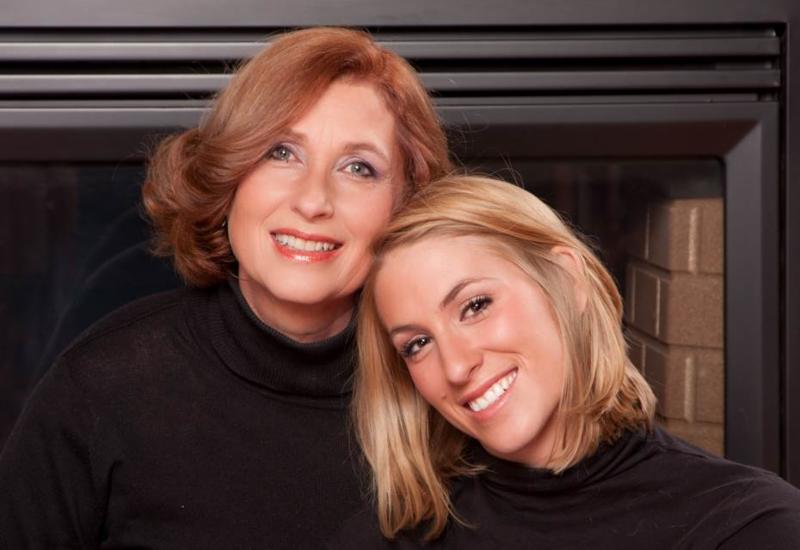
(Mar. 14, 2016) It was a year ago today that my daughter Natalie ended her six-year battle with severe mental illness by stepping in front of a train in Baltimore.
 I could tell you all the pain and guilt and sheer hunger for her presence have been at least as bad as you might imagine. I could say I've decided "closure" is the dumbest word in the English language. I could describe how scary and humbling it is to feel like your brain has gone into a fogbank that will never clear.
People often ask me how I have kept going. I say it just happens. You put one foot in front of the other. A day passes, a week, a month. And now a year. It's not easy.
Sometimes people ask how I'm able to talk to audiences about mental illness when she died of it. Answering that is easy. I say I'm one of the lucky ones because I'm an advocate. I can channel my sorrow into change for all the other Natalies.
After I wrote about her death in the Washington Post, I heard from so many people who aren't lucky like me. Young adults with mental illness fighting for their lives. Families shunned by neighbors and friends because they had a son or daughter or spouse who was sick. Suicide survivors who had lost not one child but two, or whose loved one took someone else's life, too. A world of hurt.

I wrote in the Post, "The pain I feel from her loss is but a drop in the ocean of pain created by untreated mental illness." In the weeks and months that people continued to find the story, the breadth and depth of that ocean has grown ever more into focus.
But, over and over again, I saw in others what I've felt myself: Advocacy gives struggle and grief an outlet. It finds the hope that survives despair. It lightens the horizon. Whether we are fighting for ourselves, like Natalie did, or our loved ones or clients or our communities, advocacy is good for us. It is good for others.
Natalie was the bravest person I have ever known. Her suicide didn't change that, and it left a legacy of courage and advocacy, including my own.
She would have loved that.
Sincerely,

Doris A. Fuller
Chief of Research and Public Affairs
To comment, visit our Facebook page.
Visit our blog archive to read all our recent posts.