

(Feb. 11, 2016) When you walk into the laundry room and find your father hanging, you know that life is never going to be the same. That is a sight you can’t unsee and a pain you can’t unfeel.
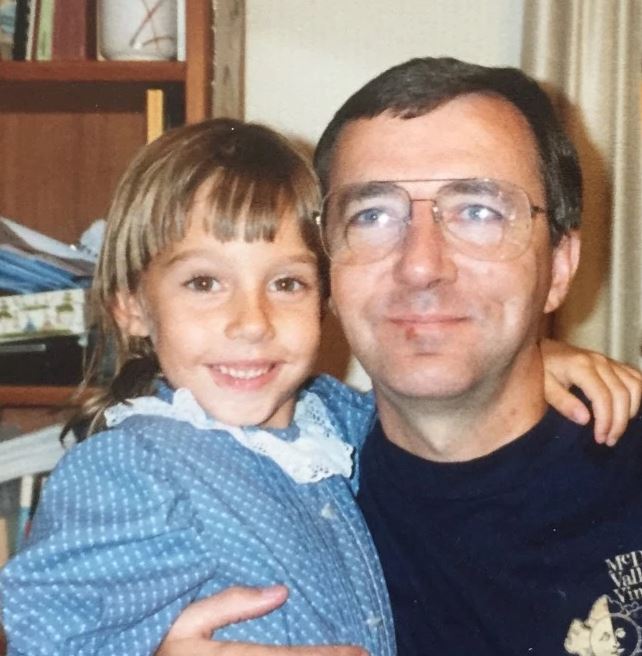 I was 13 years old and I didn’t know about depression, didn’t know that my dad had struggled silently with his mental health for years. I didn’t know the name for what started to change him. Why he became so tired, so withdrawn. Why he seemed weighed down with a heavy sadness.
Wrung with a fear that I couldn’t name I finally asked him, “Dad – what’s wrong?” His blue eyes clouded over as he said, softly, “I…don’t feel good.” Needing to know more, I asked, “When are you going to feel better?” He said nothing as his eyes filled with tears. I had never seen him cry before and it scared me. I raced out of the room and slammed the door like the teenage girl that I was. I expected him to follow, to explain.
He never did. Three days later, he was gone. My childhood ended and I became a survivor of suicide loss and a trauma victim.
From my 13-year-old perspective depression was to blame. I viewed it as an unstoppable evil, not a mental illness. As he had become increasingly and more obviously sick our family never discussed it.
Through my teens and twenties I carried that pain inside of me like a sleeping dragon – I knew it was in there and I tried my best not to wake it up.
Finally, at the age of 31, the sleeping dragon woke up. Under the advice of a doctor I tapered off my antidepressants in the hopes of getting pregnant.
After six months of struggling through withdrawal and becoming more and more depressed I bottomed out. I felt myself losing control – the sadness and anxiety and shame and trauma of the past 18 years seemed to hit me with the force of a tsunami.
That first panic attack was the beginning of a long and slow dive into a year-long mental health crisis. I often thought that I had descended into hell and I didn’t know how to come back. Unable to stabilize and feeling unsafe I checked myself into a psychiatric hospital. Twice. I spent nearly six months in a partial hospitalization program. Once again my whole life changed.
Getting so sick forced me to accept that depression and anxiety are real illnesses – not my flaws and not my fault. I found that treatment was helping me and that recovery was possible. I dug deep and finally accepted that I could live with depression. I could cope with anxiety. I came to see that depression didn’t have to end with suicide. And growing into these truths helped me to find compassion for my dad.
Hear me now: I’m not ashamed of his life or his mental illness or his suicide. The burden of silence ends with me.
AMY MARLOW
RESTON, VIRGINIA
The full version of this story was originally published in the Washington Post. Amy McDowell Marlow is a 20-year survivor of suicide loss and lives with depression and generalized anxiety disorder. She writes about her journey through mental illness at www.bluelightblue.com.
To comment, visit our Facebook page.
Visit our blog archive to read all our recent posts.